


By Erin Free
FilmInk salutes the work of creatives who have never truly received the credit that they deserve. In this installment: late director Peter Medak, who helmed The Ruling Class, A Day In The Death Of Joe Egg, The Krays, Let Him Have It, Romeo Is Bleeding and more.
With the sad passing of director Peter Medak this week at the age of 88, the decision of who to include in the Unsung Auteurs column was a very, very easy one. Though an essential behind-the-scenes player in the creation of essential TV shows like Breaking Bad, The Wire, and Homicide: Life On The Street; a helmer of all manner of small screen episodic work (on everything from House and Chicago Hope to Law & Order: SVU and Crime Story); and the director of an impressive clutch of telemovies (including 2017’s The Dating Game Killer, 1981’s Mistress Of Paradise, 1980’s The Babysitter and 1973’s The Third Girl From The Left), Peter Medak was also an auteur filmmaker with a curious and well-developed penchant for the dark and unusual.
Peter Medak was born in Budapest, Hungary in 1937 into a Jewish family. In 1956, he fled Hungary for The United Kingdom amidst the chaos of the Hungarian Uprising. Once settled in England, Medak embarked on a career in the film industry, serving an apprenticeship that included work as a sound editor, film editor, assistant director and second unit director. Coming up at just the right time with The Swinging Sixties kicking into gear, Medak made his feature directorial debut in 1968 with Negatives, a trippy erotic drama starring Glenda Jackson and Peter McEnery as a couple who fully embrace their growing kinkiness.
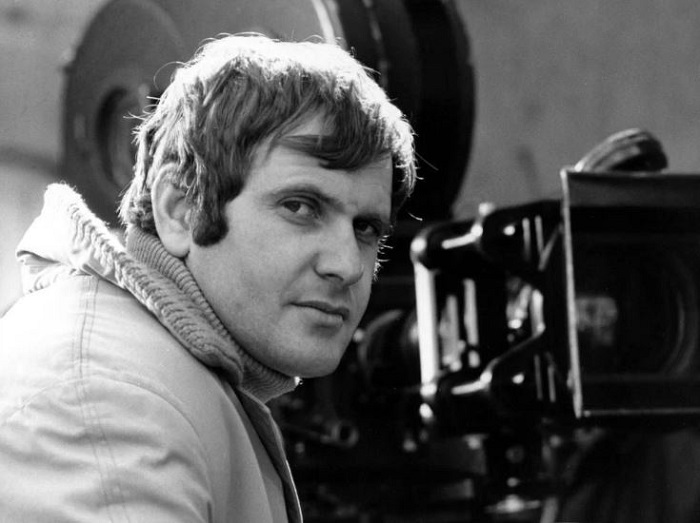
From this lurid little number, Medak made an enormous jump upward and forward with his next two films. Though rightly hailed as a cult favourite, 1972’s The Ruling Class should be revered with a lot more passion, not too dissimilar to the manner with which Ken Russell’s torrid oeuvre is wholly frothed over. Starring Peter O’Toole in a performance for the ages as a privileged and mentally unstable nobleman who thinks he’s Jesus Christ (and later Jack The Ripper), The Ruling Class is a social satire of ferocious acidity, with Medak displaying an admirable lack of compromise and a keen visual sense.
Though The Ruling Class failed at the box office (as most cult movies do), Peter Medak certainly didn’t back away from difficult material. His next film was 1972’s A Day In The Death Of Joe Egg, an adaptation of Peter Nichols’ unrelenting play in which Alan Bates and Janet Suzman brilliantly play a depressed couple who use cruel, self-lacerating black humour to deal with the savage blankness of their lives, with most of their time spent with their teenage daughter, who has a severe intellectual disability and is unable to care for himself or even hold a conversation. As with The Ruling Class, Medak fully immerses himself in the gallows humour of his film, and crafts something truly stunning. Medak should be lauded for this pitch-black comedy double, but both films are inexplicably diminished today.
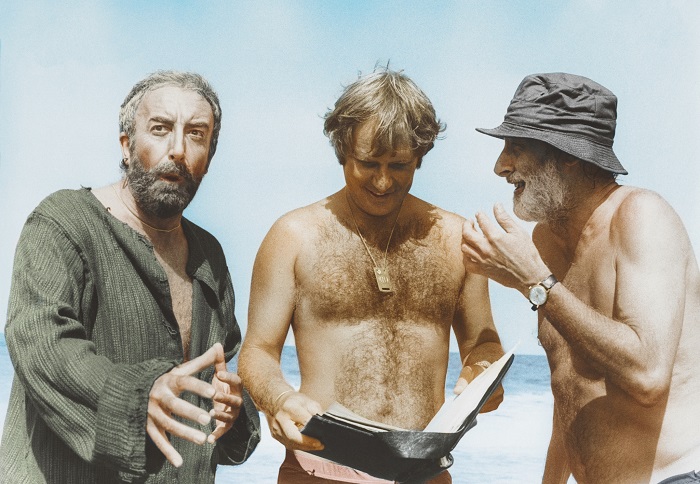
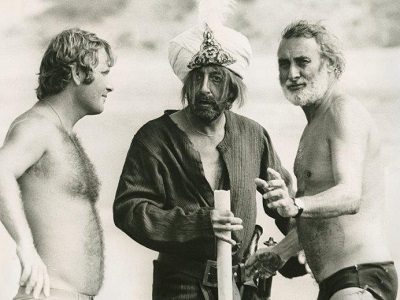
Medak stumbled somewhat after these two extraordinary films, helming the unreleased Peter Sellers pirate movie Ghost In The Noonday Sun, which rated as a major debacle for all concerned. “It turned out to be the biggest disaster of my life,” Medak told Filmmaker. “When something goes wrong in a movie – and a lot went wrong – the director gets all the blame. So I was blamed for it, and I blamed myself for it for 43 years. I completely buried the memory of Ghost In The Noonday Sun.”
Medak tried to make a movie with infamously off-the-wall Who drummer Keith Moon, but the role in 1978’s The Odd Job eventually went to Monty Python legend Graham Chapman when the boozy musical firebrand passed away. After working so effectively in the black comedy realm, Medak strode into the darkness wholeheartedly with 1980’s chilling horror flick The Changeling, which features a bravura performance from George C. Scott as a composer at the mercy of some serious paranormal activity in a haunted house.
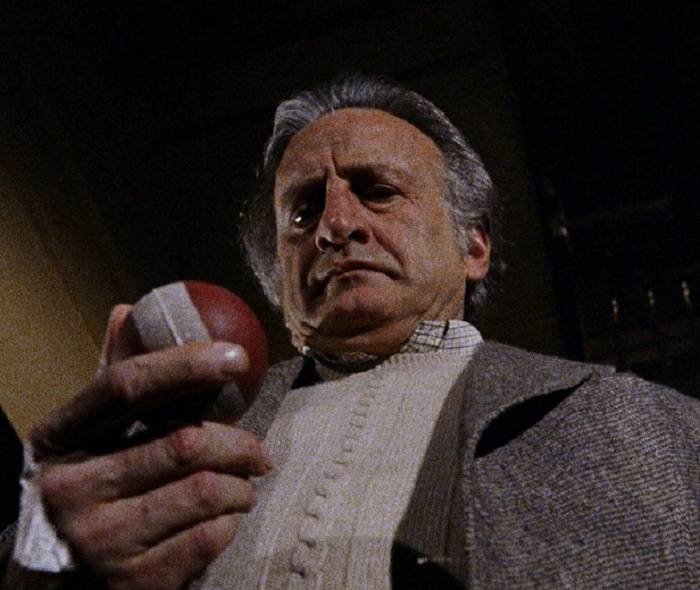
Though a success at the box office and a hit with critics too, Medak didn’t fully embrace the horror genre after crafting something so fresh and original with The Changeling, instead delivering a very silly comedy in 1981’s Zorro, The Gay Blade, starring George Hamilton, desperately trying to restoke the comedic fire he’d sparked with 1979’s smash hit Dracula parody Love At First Sight. Medak then threw himself seemingly body-and-soul into television, working almost non-stop on the small screen, pausing only to make the profane 1986 masculinity-in-crisis black comedy The Men’s Club, which is now completely forgotten, despite its impressive cast of Roy Scheider, Jennifer Jason Leigh, Treat Williams and Harvey Keitel.
After lots more TV, Peter Medak delivered another big screen double-shot to rival his 1970s dual high-water-mark with The Ruling Class and A Day In The Death Of Joe Egg, though this time the films were bonded by crime rather than black comedy. 1990’s The Krays is a wonderfully hard-hitting take on the infamous London gangster twins, played with entertaining swagger by Spandau Ballet pop star actors and real-life brothers Gary and Martin Kemp. Medak lavishes the film with late-1960s London style and attitude, and revels in the outlaw antics of his eponymous East End bad boys, punctuating the film with staccato bursts of brutal violence.
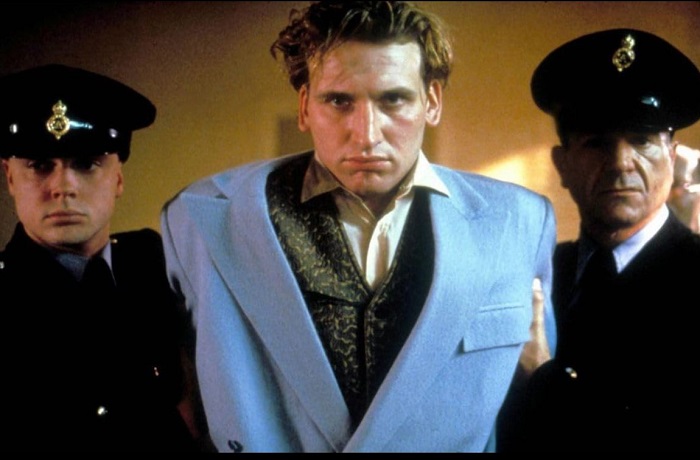
While The Krays is an excellent true crime flick, Medak topped it with 1991’s Let Him Have It, a wholly enraged diatribe against the frequent stupidity and abject cruelty of the criminal justice system. Christopher Eccleston is extraordinary as real-life figure Derek Bentley, an illiterate, epileptic young man with developmental disabilities who was ultimately executed by the state after his involvement in a robbery. Barely able to register the gravity of his situation, Derek Bentley is certainly no saint, but he is almost a pure innocent, and watching him get railroaded by cops and lawyers is truly heartbreaking. Terse, economic, and told with a clear-eyed understanding of the inherent sadness of its story, Let Him Have It is one of Medak’s best.
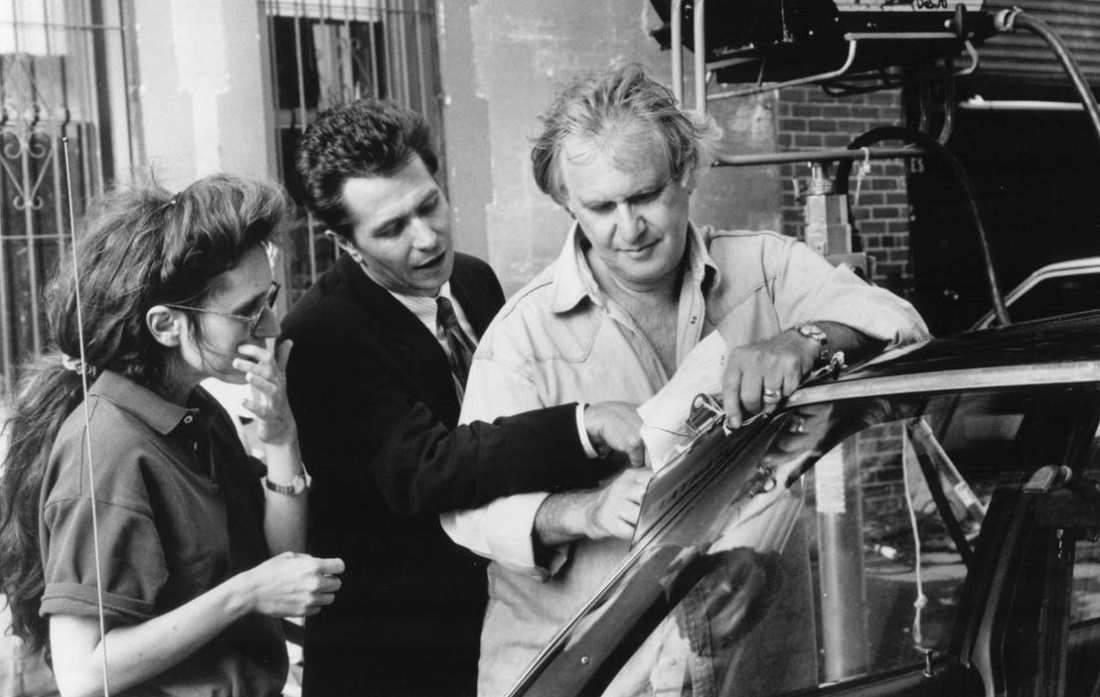
Until the end of his career, Medak focused principally on television, and his big screen output became decidedly less focused, with a move away from black humour and crime with the likes of 1994’s Pontiac Moon (a low-key, only slightly off-kilter family charmer with Ted Danson and Mary Steenburgen) and the tawdry 1998 sci-fi sequel Species II, which certainly has its fans. The best film from this period is unquestionably 1993’s Romeo Is Bleeding, a nutty, Medak-ready crime black comedy that stars a memorable Gary Oldman as a horribly corrupt cop and a truly remarkable Lena Olin as a vicious, unstoppable mob hitwoman. Filled with bizarre humour and hard-slamming violence, Romeo Is Bleeding sees Medak pushing it right to the edge with impressive energy.
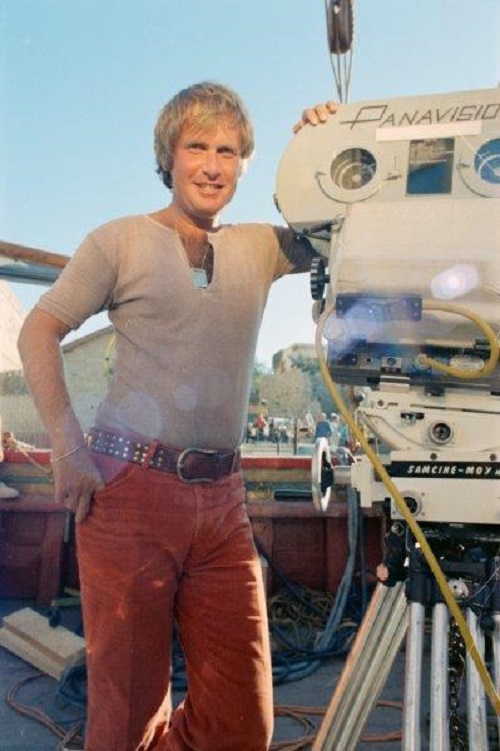
Fittingly, Medak’s final film was 2018’s doco The Ghost Of Peter Sellers (for much, much more on that film, click here) a fascinating redux on the unreleased disaster that was Ghost In The Noon Day Sun. Though Medak is being eulogised for his exceptional and expansive work on episodic television, he deserves far more appreciation for his strange and wholly original body of cinematic work, which ingeniously and bravely melds humour, madness, and crime to oft-near-perfection.
If you liked this story, check out our features on other unsung auteurs Kieth Merrill, Tim Hill, Martin Bell, Joan Freeman, Rod Amateau, Sam Wanamaker, Paul Aaron, Savage Steve Holland, Rudy Wurlitzer, Keith Gordon, Alan Metter, Lynne Littman, Chuck Russell, John Derek, Don Chaffey, Harley Cokeliss, Jeannot Szwarc, Craig Gillespie, David Greene, Ernest Pintoff, Paul Williams, Jo Heims, Lee H. Katzin, Christoper Cain, Ken Wiederhorn, Barbara Loden, David Mackenzie, Alan Rudolph, James Lee Barrett, Edwin “Bud” Shrake, Joan Tewkesbury, Jamaa Fanaka, Jack Starrett, Joseph Sargent, Jeffrey Schwarz, George Sidney, Philip Dunne, Zak Hilditch, Luke Sparke, Cyrus Nowrasteh, Morgan Matthews, Tom Laughlin, Diane Keaton, Ed Hunt, Nancy Savoca, Robert Vincent O’Neil, Marvin J. Chomsky, Sam Firstenberg, Jack Sholder, Richard Gray, Giuseppe Andrews, Gus Trikonis, Greydon Clark, Frances Doel, Gordon Douglas, Billy Fine, Craig R. Baxley, Harvey Bernhard, Bert I. Gordon, James Fargo, Jeremy Kagan, Robby Benson, Robert Hiltzik, John Carl Buechler, Rick Carter, Paul Dehn, Bob Kelljan, Kevin Connor, Ralph Nelson, William A. Graham, Judith Rascoe, Michael Pressman, Peter Carter, Leo V. Gordon, Dalene Young, Gary Nelson, Fred Walton, James Frawley, Pete Docter, Max Baer Jr., James Clavell, Ronald F. Maxwell, Frank D. Gilroy, John Hough, Dick Richards, William Girdler, Rayland Jensen, Richard T. Heffron, Christopher Jones, Earl Owensby, James Bridges, Jeff Kanew, Robert Butler, Leigh Chapman, Joe Camp, John Patrick Shanley, William Peter Blatty, Peter Clifton, Peter R. Hunt, Shaun Grant, James B. Harris, Gerald Wilson, Patricia Birch, Buzz Kulik, Kris Kristofferson, Rick Rosenthal, Kirsten Smith & Karen McCullah, Jerrold Freeman, William Dear, Anthony Harvey, Douglas Hickox, Karen Arthur, Larry Peerce, Tony Goldwyn, Brian G. Hutton, Shelley Duvall, Robert Towne, David Giler, William D. Wittliff, Tom DeSimone, Ulu Grosbard, Denis Sanders, Daryl Duke, Jack McCoy, James William Guercio, James Goldstone, Daniel Nettheim, Goran Stolevski, Jared & Jerusha Hess, William Richert, Michael Jenkins, Robert M. Young, Robert Thom, Graeme Clifford, Frank Howson, Oliver Hermanus, Jennings Lang, Matthew Saville, Sophie Hyde, John Curran, Jesse Peretz, Anthony Hayes, Stuart Blumberg, Stewart Copeland, Harriet Frank Jr & Irving Ravetch, Angelo Pizzo, John & Joyce Corrington, Robert Dillon, Irene Kamp, Albert Maltz, Nancy Dowd, Barry Michael Cooper, Gladys Hill, Walon Green, Eleanor Bergstein, William W. Norton, Helen Childress, Bill Lancaster, Lucinda Coxon, Ernest Tidyman, Shauna Cross, Troy Kennedy Martin, Kelly Marcel, Alan Sharp, Leslie Dixon, Jeremy Podeswa, Ferd & Beverly Sebastian, Anthony Page, Julie Gavras, Ted Post, Sarah Jacobson, Anton Corbijn, Gillian Robespierre, Brandon Cronenberg, Laszlo Nemes, Ayelat Menahemi, Ivan Tors, Amanda King & Fabio Cavadini, Cathy Henkel, Colin Higgins, Paul McGuigan, Rose Bosch, Dan Gilroy, Tanya Wexler, Clio Barnard, Robert Aldrich, Maya Forbes, Steven Kastrissios, Talya Lavie, Michael Rowe, Rebecca Cremona, Stephen Hopkins, Tony Bill, Sarah Gavron, Martin Davidson, Fran Rubel Kuzui, Elliot Silverstein, Liz Garbus, Victor Fleming, Barbara Peeters, Robert Benton, Lynn Shelton, Tom Gries, Randa Haines, Leslie H. Martinson, Nancy Kelly, Paul Newman, Brett Haley, Lynne Ramsay, Vernon Zimmerman, Lisa Cholodenko, Robert Greenwald, Phyllida Lloyd, Milton Katselas, Karyn Kusama, Seijun Suzuki, Albert Pyun, Cherie Nowlan, Steve Binder, Jack Cardiff, Anne Fletcher ,Bobcat Goldthwait, Donna Deitch, Frank Pierson, Ann Turner, Jerry Schatzberg, Antonia Bird, Jack Smight, Marielle Heller, James Glickenhaus, Euzhan Palcy, Bill L. Norton, Larysa Kondracki, Mel Stuart, Nanette Burstein, George Armitage, Mary Lambert, James Foley, Lewis John Carlino, Debra Granik, Taylor Sheridan, Laurie Collyer, Jay Roach, Barbara Kopple, John D. Hancock, Sara Colangelo, Michael Lindsay-Hogg, Joyce Chopra, Mike Newell, Gina Prince-Bythewood, John Lee Hancock, Allison Anders, Daniel Petrie Sr., Katt Shea, Frank Perry, Amy Holden Jones, Stuart Rosenberg, Penelope Spheeris, Charles B. Pierce, Tamra Davis, Norman Taurog, Jennifer Lee, Paul Wendkos, Marisa Silver, John Mackenzie, Ida Lupino, John V. Soto, Martha Coolidge, Peter Hyams, Tim Hunter, Stephanie Rothman, Betty Thomas, John Flynn, Lizzie Borden, Lionel Jeffries, Lexi Alexander, Alkinos Tsilimidos, Stewart Raffill, Lamont Johnson, Maggie Greenwald and Tamara Jenkins.