


By Erin Free
FilmInk salutes the work of creatives who have never truly received the credit that they deserve. In this installment: writer, director and actress Barbara Loden, who helmed the little seen 1970 cult curio Wanda.
Like other creatives featured in the Unsung Auteurs column (Ida Lupino, Tom Laughlin, Kris Kristofferson), the issue with the late Barbara Loden is not that she’s been afforded scant recognition, but rather that she has not received the recognition that she truly deserves. Loden’s principal work – the 1970 feature Wanda – has been revived and played retrospectively at many festivals; books have been written about the actress/writer/director; she is the subject of a documentary (1991’s I Am Wanda, directed by Katja Raganelli); Wanda has been preserved by The US National Film Registry; and famed taste-makers The Criterion Collection have released Loden’s material on physical media. Barbara Loden, however, remains largely unknown to those outside the most intensely cineaste of cineaste circles.
With female filmmakers now being offered more (and creating their own) opportunities, consideration should also be made for those filmmakers who blazed the trail for them. It’s far easier to walk a trail – even a barely discernable one – than it is to hike through a dense forest, and while it’s likely been tough for directors like Chloe Zhao, Greta Gerwig, Ava DuVernay, Emerald Fennell and others to make their mark, it would have been even tougher without early up-takers like the aforementioned Ida Lupino, Maya Deren, Agnes Varda, Dorothy Arzner, Mabel Normand and many more.
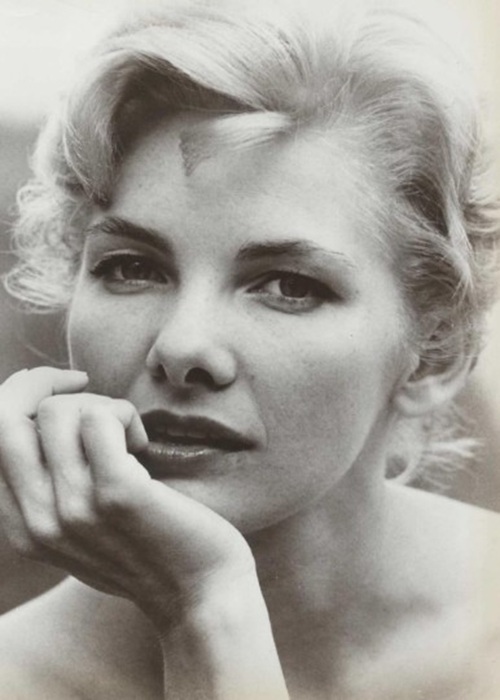
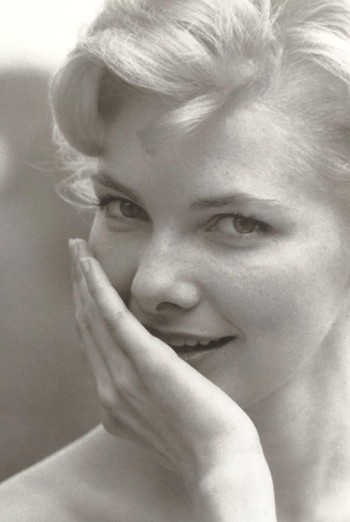
In her own way too, the low-key, softly spoken Barbara Loden was a cinematic pioneer. When she made Wanda, her one and only feature film, in 1970, the notion of a female filmmaker was near non-existent. Though feminism had taken many steps forward in the 1960s, Hollywood was still very much a male-dominated place, and sexism in cinema was rife. Sure, women were common in front of the camera, and in various roles behind the scenes, but directing was very much seen as a man’s job, and very few women attempted to take the cinematic reins. The late Barbara Loden was one of them.
Barbara Loden was born in 1932 in North Carolina, and raised by her grandparents in The Appalachian Mountains after her parents’ divorce. Painfully unhappy, poor, and brought up in near isolation, Loden left for New York City at the age of sixteen, where she scraped together a meagre existence as a nightclub dancer and “cheesecake” model for the lurid romance and detective magazines of the era. Retreating into the world of movies during her childhood, Loden had long dreamed of becoming an actress, and eventually studied at the famed Actors Studio in New York.
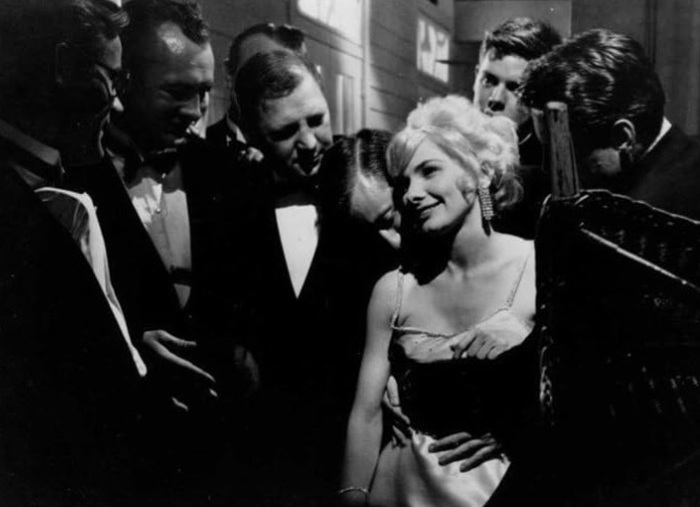
Attractive and talented, Loden scored roles in the theatre, and also appeared as a bikini-clad comic foil on the old-school TV variety show The Ernie Kovacs Show, a high-profile gig her then-husband – television producer and film distributor Larry Joachim – had procured for her. Loden also appeared in feature films with 1960’s Wild River and 1961’s Splendor In The Grass, both helmed by master director Elia Kazan, the maestro behind classics like On The Waterfront (1954), East Of Eden (1955) and A Streetcar Named Desire (1951).
Though they were both married to others at the time, Loden and the much older Kazan had an affair and eventually married. Loden triumphed in Kazan’s Broadway production of Arthur Miller’s After The Fall (in a role based upon the playwright’s wife, Marilyn Monroe, to whom Loden has been often compared), but the actress’s film career never really took off. Loden filmed a key scene for Frank Perry’s 1968 cult classic The Swimmer, but was replaced by actress Janice Rule, which likely soured her on the mainstream movie business.
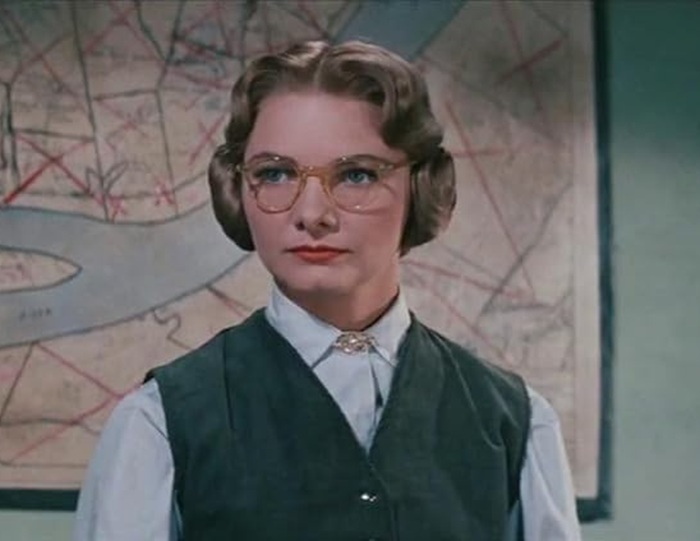
Around this time, Loden began writing screenplays, and the one that gained the most emotional traction with the nascent creator was a story inspired by the real-life case of petty crook Alma Malone, which was covered in The Sunday Daily News. Malone curiously thanked the judge for sentencing her to twenty years’ imprisonment for her involvement in a bank robbery, effectively providing her with a home and keeping her out of future trouble. The story took hold in Loden’s mind, and she eventually reshaped it and embellished it until it became Wanda, the story of a hopelessly adrift woman who stumbles into a brief life of crime.
“That’s what struck me in reading this account: why would this girl feel glad to be put away?” Loden told The Madison Women’s Media Collective in 1974. “I always kept this article, although I didn’t really know why. Then the New Wave came from Europe, and I saw Breathless. Afterward I said, ‘I think this story could make a film like Breathless. It should be made that way.’ Then I wrote it into screenplay form, using a criminal and a bank robbery incident. But I made up the girl’s character based on this statement that she made, and also from myself really, ways that I had felt in my life. It was all from my imagination or my feelings. But the plot is from this item in the newspaper.”
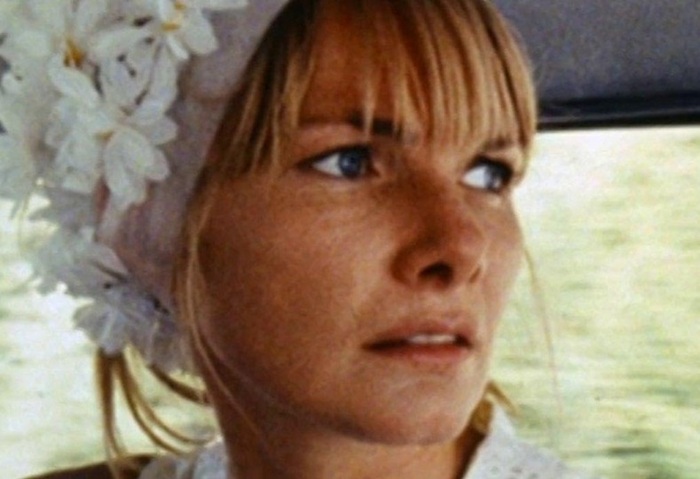
Loden shopped the script around, but met with little success. “They didn’t seem to understand what this woman was about,” Loden said in the documentary I Am Wanda. She suggested the potential film to Kazan, but he couldn’t relate to the material, and encouraged her to direct the film herself. “When I went around and took people my script, I’d never hear from them again,” Loden told Proquest. Loden’s friend Harry Schuster eventually offered the increasingly frustrated aspiring director $115,000 in financing, and she helmed the film with help from cinematographer and editor Nicholas T. Proferes, along with a tiny crew.
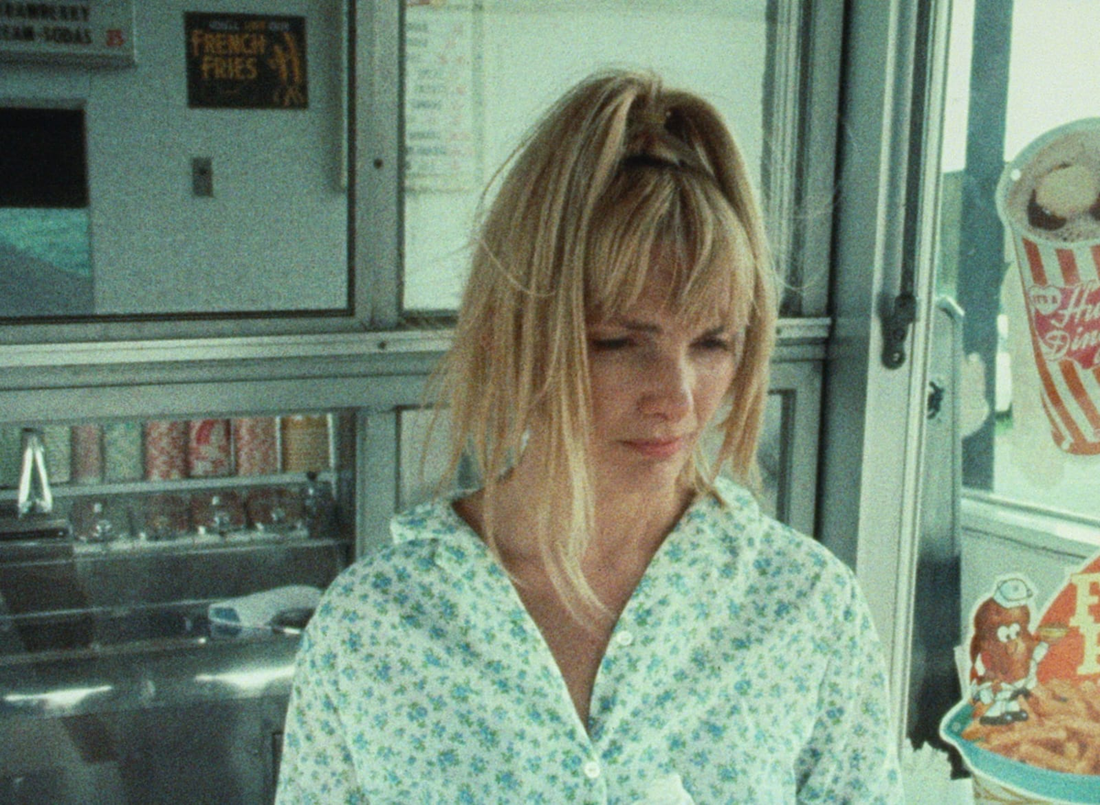
The resultant film stands as a raw, gritty, and profoundly unflinching work, driven by a bristling sense of cinema verite-style realism and a near-aggressive unwillingness to conform to any kind of pre-existing Hollywood framework. Wanda is artful but unfussy (its echoes can be felt in the works of everyone from Gus Van Sant and Andrew Bujalski to Vincent Gallo and Kelly Reichardt), and far different from anything else released at the time. Despite its crime-world underpinnings, there is little plot to speak of, but Loden is stunning in the lead role, and she obviously knows her lead character inside and out.
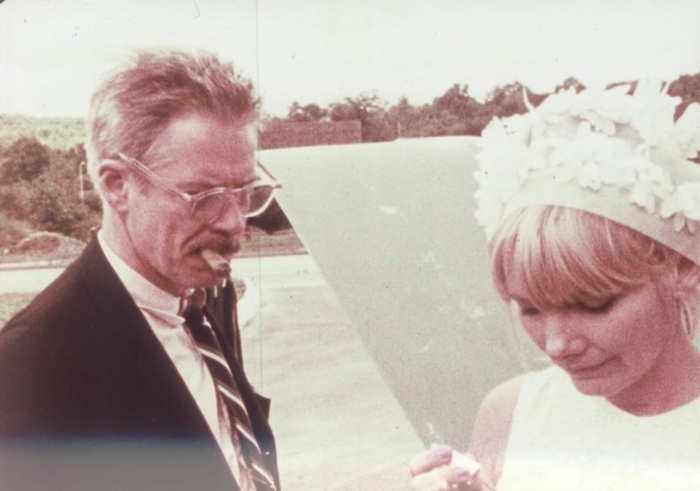
Loden is Wanda Goronski, a diffident, softly spoken coalminer’s wife who in the film’s earliest scenes grants her husband a divorce and hands over full custody of their children. From there, the listless Wanda wanders around aimlessly, drinking and hooking up with various men until she finds a slightly more permanent partner in Norman Dennis (Michael Higgins), quite possibly the grumpiest, most plainly unpleasant petty crook in cinema history. Despite his constant verbal and occasional physical abuse, Wanda sticks with Norman through minor lifts all the way to an ambitious bank robbery.
A wonderfully grungy exercise in “slow cinema” before the term even existed, Wanda is a sublimely unusual cinematic experience. Though never properly released, the film received awards at the Venice and Cannes Film Festivals, and Loden was duly feted in some circles. In the time since its release, however, Wanda has represented something of a dilemma. While Loden’s pioneering efforts in getting the film made certainly inspire feminist praise, the film’s lead character seemingly does not.
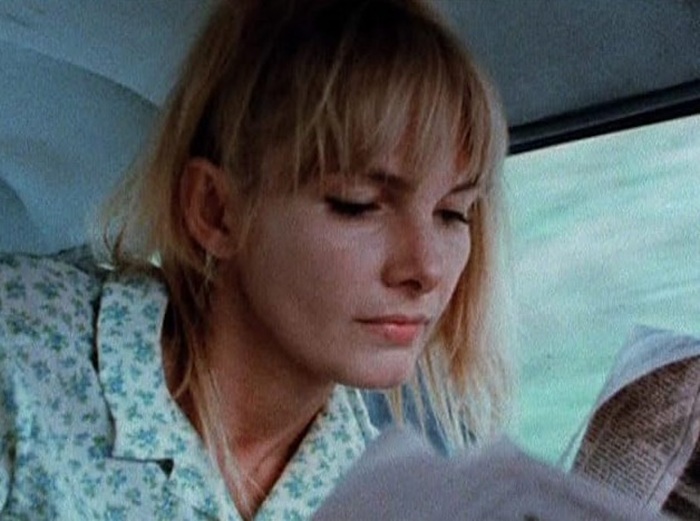
Renowned critic Pauline Kael famously dismissed Loden’s Wanda Goronski as a “sad, ignorant slut” and a “bedraggled dummy”, a sentiment shared by many others in the critical fraternity. That kind of stance, however, has changed somewhat. “Thanks to the feminist energy that has continued to evolve as it has seeped into the culture in the decades since the film’s release, Wanda can now be appreciated as a portrait of a kind of woman who, being no man’s fantasy, had almost never been seen on the screen before,” wrote film critic Amy Taubin in her article “Wanda: A Miracle.”
Devastatingly, Barbara Loden never directed another feature film. There are, however, two other tiny cinematic morsels on the side of the plate next to the delectable main course that is Wanda. Keen to continue working behind the camera, Loden directed two educational short films for The Learning Corporation Of America, which were shown in American schools in the 1970s and 1980s. Both short films are well watching for those fascinated with the director’s work.
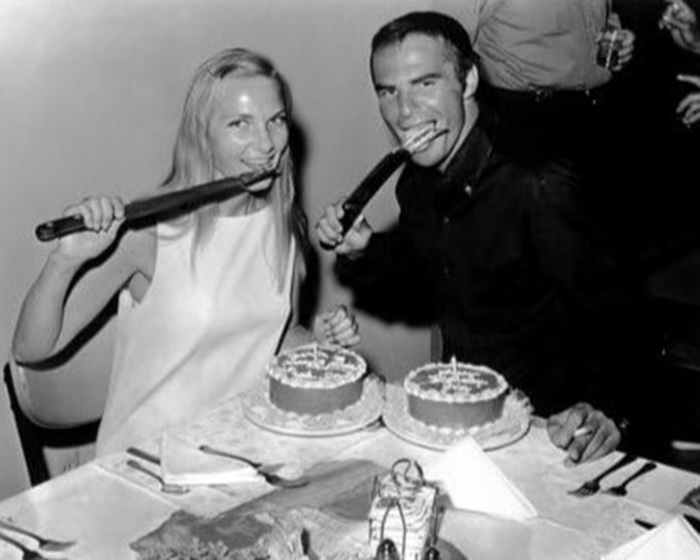
Though the educational motivation behind the films means they lack the grungy, outsider artistry of Wanda, the two shorts do share some of the feature’s gritty earthiness. 1975’s The Frontier Experience follows the experiences of a pioneer woman in 1869 Arkansas, and has a little of Wanda’s quiet desperation, while 1978’s The Boy Who Liked Deer is an anti-graffiti-and-hooliganism finger-waver designed to terrify and guilt youngsters into behaving themselves. Though both stilted, preachy and singularly weird in the way that only educational films of the 1970s can be, The Frontier Experience and The Boy Who Liked Deer are also wrought with emotion, and were clearly made with genuine feeling by their director.
In 1978, Barbara Loden was diagnosed with breast cancer. She had many film and theatre projects in development (including an adaptation of Kate Chopin’s The Awakening), but passed away in 1980, leaving them all sadly unrealised. A vital female voice in American cinema at a time when that voice was distressingly silent, Barbara Loden was also an early proponent of DIY filmmaking. “Everybody who wants to make a film should do it, instead of just being fed the stuff on television and movies,” Loden once said. “Just think, people could say, ‘I made a film the other day. Why don’t you come over and look at it?’”
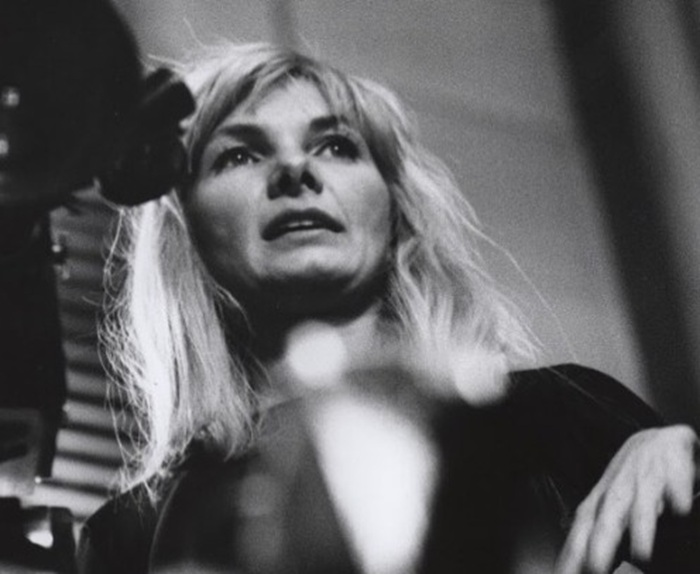
A strikingly original talent of enormous daring, the importance of Barbara Loden simply cannot be underestimated…
If you liked this story, check out our features on other unsung auteurs David Mackenzie, Alan Rudolph, James Lee Barrett, Edwin “Bud” Shrake, Joan Tewkesbury, Jamaa Fanaka, Jack Starrett, Joseph Sargent, Jeffrey Schwarz, George Sidney, Philip Dunne, Zak Hilditch, Luke Sparke, Cyrus Nowrasteh, Morgan Matthews, Tom Laughlin, Diane Keaton, Ed Hunt, Nancy Savoca, Robert Vincent O’Neil, Marvin J. Chomsky, Sam Firstenberg, Jack Sholder, Richard Gray, Giuseppe Andrews, Gus Trikonis, Greydon Clark, Frances Doel, Gordon Douglas, Billy Fine, Craig R. Baxley, Harvey Bernhard, Bert I. Gordon, James Fargo, Jeremy Kagan, Robby Benson, Robert Hiltzik, John Carl Buechler, Rick Carter, Paul Dehn, Bob Kelljan, Kevin Connor, Ralph Nelson, William A. Graham, Judith Rascoe, Michael Pressman, Peter Carter, Leo V. Gordon, Dalene Young, Gary Nelson, Fred Walton, James Frawley, Pete Docter, Max Baer Jr., James Clavell, Ronald F. Maxwell, Frank D. Gilroy, John Hough, Dick Richards, William Girdler, Rayland Jensen, Richard T. Heffron, Christopher Jones, Earl Owensby, James Bridges, Jeff Kanew, Robert Butler, Leigh Chapman, Joe Camp, John Patrick Shanley, William Peter Blatty, Peter Clifton, Peter R. Hunt, Shaun Grant, James B. Harris, Gerald Wilson, Patricia Birch, Buzz Kulik, Kris Kristofferson, Rick Rosenthal, Kirsten Smith & Karen McCullah, Jerrold Freeman, William Dear, Anthony Harvey, Douglas Hickox, Karen Arthur, Larry Peerce, Tony Goldwyn, Brian G. Hutton, Shelley Duvall, Robert Towne, David Giler, William D. Wittliff, Tom DeSimone, Ulu Grosbard, Denis Sanders, Daryl Duke, Jack McCoy, James William Guercio, James Goldstone, Daniel Nettheim, Goran Stolevski, Jared & Jerusha Hess, William Richert, Michael Jenkins, Robert M. Young, Robert Thom, Graeme Clifford, Frank Howson, Oliver Hermanus, Jennings Lang, Matthew Saville, Sophie Hyde, John Curran, Jesse Peretz, Anthony Hayes, Stuart Blumberg, Stewart Copeland, Harriet Frank Jr & Irving Ravetch, Angelo Pizzo, John & Joyce Corrington, Robert Dillon, Irene Kamp, Albert Maltz, Nancy Dowd, Barry Michael Cooper, Gladys Hill, Walon Green, Eleanor Bergstein, William W. Norton, Helen Childress, Bill Lancaster, Lucinda Coxon, Ernest Tidyman, Shauna Cross, Troy Kennedy Martin, Kelly Marcel, Alan Sharp, Leslie Dixon, Jeremy Podeswa, Ferd & Beverly Sebastian, Anthony Page, Julie Gavras, Ted Post, Sarah Jacobson, Anton Corbijn, Gillian Robespierre, Brandon Cronenberg, Laszlo Nemes, Ayelat Menahemi, Ivan Tors, Amanda King & Fabio Cavadini, Cathy Henkel, Colin Higgins, Paul McGuigan, Rose Bosch, Dan Gilroy, Tanya Wexler, Clio Barnard, Robert Aldrich, Maya Forbes, Steven Kastrissios, Talya Lavie, Michael Rowe, Rebecca Cremona, Stephen Hopkins, Tony Bill, Sarah Gavron, Martin Davidson, Fran Rubel Kuzui, Elliot Silverstein, Liz Garbus, Victor Fleming, Barbara Peeters, Robert Benton, Lynn Shelton, Tom Gries, Randa Haines, Leslie H. Martinson, Nancy Kelly, Paul Newman, Brett Haley, Lynne Ramsay, Vernon Zimmerman, Lisa Cholodenko, Robert Greenwald, Phyllida Lloyd, Milton Katselas, Karyn Kusama, Seijun Suzuki, Albert Pyun, Cherie Nowlan, Steve Binder, Jack Cardiff, Anne Fletcher ,Bobcat Goldthwait, Donna Deitch, Frank Pierson, Ann Turner, Jerry Schatzberg, Antonia Bird, Jack Smight, Marielle Heller, James Glickenhaus, Euzhan Palcy, Bill L. Norton, Larysa Kondracki, Mel Stuart, Nanette Burstein, George Armitage, Mary Lambert, James Foley, Lewis John Carlino, Debra Granik, Taylor Sheridan, Laurie Collyer, Jay Roach, Barbara Kopple, John D. Hancock, Sara Colangelo, Michael Lindsay-Hogg, Joyce Chopra, Mike Newell, Gina Prince-Bythewood, John Lee Hancock, Allison Anders, Daniel Petrie Sr., Katt Shea, Frank Perry, Amy Holden Jones, Stuart Rosenberg, Penelope Spheeris, Charles B. Pierce, Tamra Davis, Norman Taurog, Jennifer Lee, Paul Wendkos, Marisa Silver, John Mackenzie, Ida Lupino, John V. Soto, Martha Coolidge, Peter Hyams, Tim Hunter, Stephanie Rothman, Betty Thomas, John Flynn, Lizzie Borden, Lionel Jeffries, Lexi Alexander, Alkinos Tsilimidos, Stewart Raffill, Lamont Johnson, Maggie Greenwald and Tamara Jenkins.