


By Erin Free
FilmInk salutes the work of creatives who have never truly received the credit that they deserve. In this installment: director Paul Williams, who helmed Out Of It, The Revolutionary, Dealing: Or The Berkeley-to-Boston Forty-Brick Lost-Bag Blues, Nunzio and more.
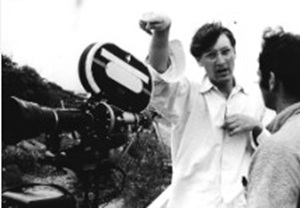
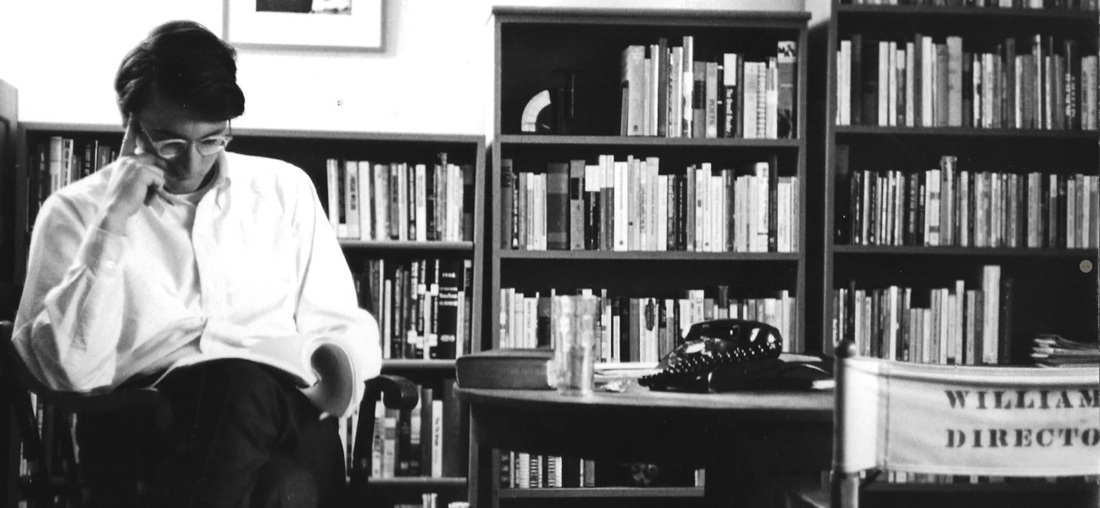
Paul Williams is something of a rarity in the Unsung Auteurs column: his lack of celebration is due in part to his name. This is not Paul Williams, occasional actor and the musical titan who wrote “Rainbow Connection.” Nor is it UK director Paul Andrew Williams, who helmed 2025’s Dragonfly and 2006’s London To Brighton…though he could very well feature in a future Unsung Auteurs column himself. Nor is it even Paul Williams, an actor and writer from New Zealand who featured in New Zealand Spy. No, this is Paul Williams, the actor, writer and director who helmed a collection of countercultural-type movies through the 1970s, and then continued with a few interesting flicks in the 1980s and 1990s. In fact, Paul Williams was so ahead of the curve that he was making countercultural movies before that was even a term, and he’s never really received due credit for it.
Sometimes credited as P.W Williams, this Unsung Auteur was born in 1943 in New York City, and was part of the vanguard of what is now commonly referred to as New Hollywood, though his name is never mentioned in the same breath as major players of that movement like Bob Rafelson, Jack Nicholson, Martin Scorsese, Francis Ford Coppola, and so on. Along with toy company scion Edward Pressman (without Pressman Toy Corporation, major elements of New Hollywood would not have even existed), Paul Williams was a founding partner of production company Pressman Williams Enterprises, which produced such films as Terrence Malick’s debut Badlands (1973) and Brian DePalma’s early works Sisters (1972) and Phantom Of The Paradise (1974), which, incidentally, starred the songwriter/actor Paul Williams.
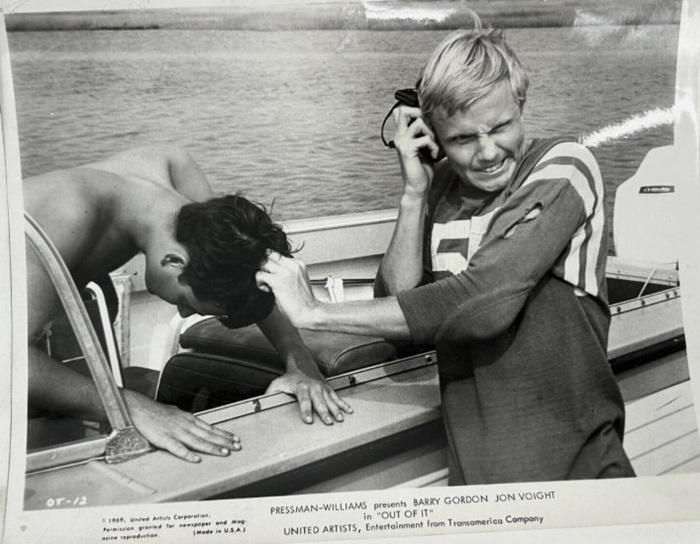
Paul Williams made his directorial debut in 1966 with the youth-driven comedy drama Out Of It, but the film didn’t see release until 1969. This delay has considerably diluted the importance of the film, and of Williams himself. Though films like The Graduate (1967) and Easy Rider (1969) are largely credited with kick-starting New Hollywood on the big studio dime, the young Paul Williams was there first, making a film for major player United Artists while still only 23-years-old, and even shooting it in black-and-white several years before Peter Bogdanovich went monochrome with 1971’s The Last Picture Show.
Though not exactly cutting edge, Out Of It is a coming-of-age flick very much made by young people about young people, and it’s redolent with youthful energy and an enjoyable insouciance. The lead is Barry Gordon’s Paul, a deep-thinking intellectual and wannabe writer who is counterposed with the brutish jock Russ, played by Jon Voight in his first major screen role, though it was, of course, not seen until 1969, the same year he went supernova with Midnight Cowboy. There’s a thoughtfulness here missing from many youth flicks, and Out Of It rates as a very auspicious – though now largely forgotten – debut from Paul Williams.
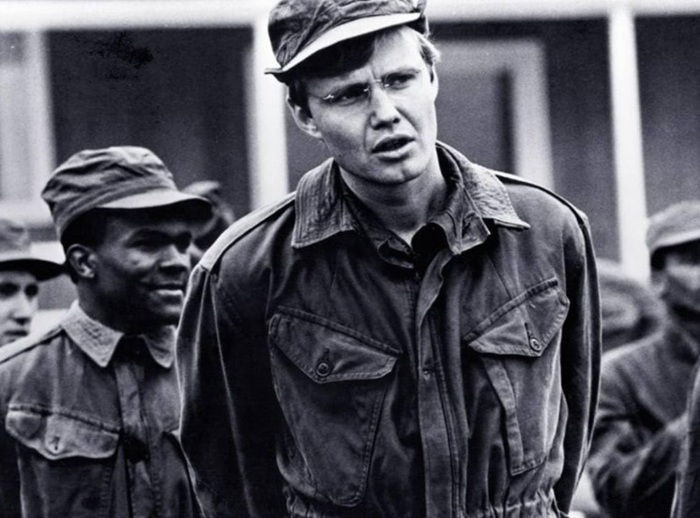
The director stuck with the now considerably more famous Jon Voight for his next film, 1970’s The Revolutionary. Adapted by Hans Koning from his own novel, this is a radical slab of studio filmmaking indeed, with United Artists picking up the tab for this leftist drama. Voight plays “A”, a college student in a country that looks like America but is never named as such. Disillusioned by his campus socialist group’s lack of action, “A” hooks up with Marxist factory worker Despard (Robert Duvall), who then leads him to the even more radical Leonard II (Seymour Cassel), opening up a dark world of domestic terrorism and rebellion. Bold, daring, anti-authoritarian and deeply political, The Revolutionary is a near-shocking work when considered today, and stands alongside other envelope-pushing films of the time like The Strawberry Statement (1970), Getting Straight (1970) and Medium Cool (1969).
Williams delivered an even more hip-and-happening film with 1972’s Dealing: Or The Berkeley-To-Boston Forty-Brick Lost-Bag Blues, boasting a title typical of the decade that tortured whoever’s job it was to change the letters on cinema marquees. This is pure counterculture filmmaking, as confident Harvard law student Paul (Robert F. Lyons) tires of his boring lifestyle and opts to spice things up by beginning a new venture…as a drug dealer! Hooked up by his best friend, theatre director John (John Lithgow in a very early role), Paul is soon caught up with a corrupt cop (the great Charles Durning), a Cuban gangster (Victor Junquera), and dealer hanger-on Susan (Barbra Hershey, whose hipness levels were literally sizzling at the time).
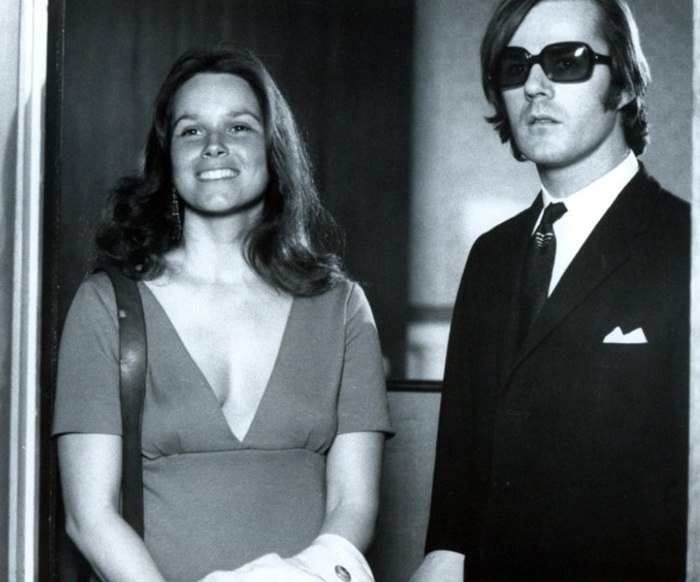
Funny, freewheeling and enjoyably loose in its approach to the morality of crime and drug dealing, Dealing: Or The Berkeley-To-Boston Forty-Brick Lost-Bag Blues has a very small cult following, and is arguably Williams’ most satisfying and career-typical film. It’s funny and hip, and Williams once again displays his facility for getting great work out of unconventional, edgy actors, which he would do again on his next film.
Produced by Unsung Auteur Jennings Lang, and written by Williams’ actor friend James Andronica, 1978’s Nunzio stars David Proval as the title character, a young man with an intellectual disability who works as a delivery boy in a tough New York neighbourhood. Warm and big-hearted, the film follows Nunzio’s often difficult day-to-day as he navigates the slights of a cruel bully (Vincent Russo), and deals with confusing romantic entanglements with Tovah Feldshuh and Theresa Saldana. The film brims over with local atmosphere, and David Proval is excellent in the lead role.
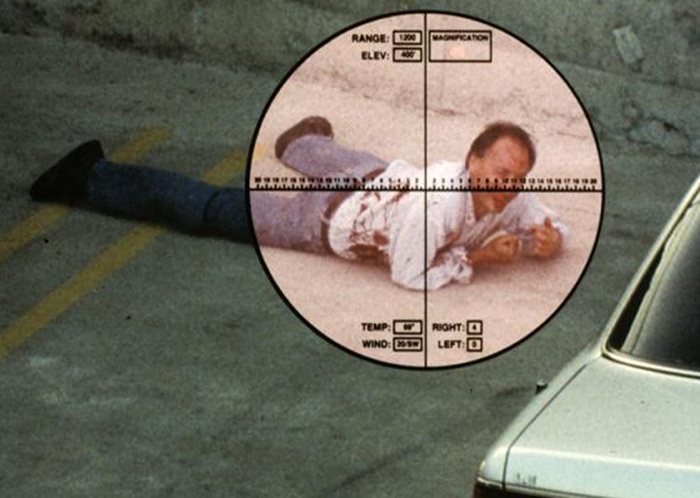
Williams directed the 1982 Rome-shot romantic comedy Miss Right (starring William Tepper, Karen Black and Virna Lisi), and then returned to his leftist roots in 1993 with The November Men (written by and starring Nunzio’s James Andronica), a heady low-budget political thriller dosed with dark, sly humour. Williams plays a disaffected, leftist filmmaker annoyed by the recent lack of leftist political assassins. He strikes back in his own feisty way by making a film about an intended assassination of George Bush in the lead-up to the 1992 elections.
Ingeniously shot and constructed on a very, very low budget, The November Men (which features showstopping footage of Williams himself captured with George Bush) is funny, self-reflexive, culturally knowing (Oliver Stone is a frequent reference), and politically astute. It forms an interesting counterpoint to Williams’ anti-authoritarian films of the 1970s, far more so than the director’s next films: the poorly received 1995 thriller Mirage (penned by James Andronica and starring Sean Young and Edward James Olmos) and 2002’s barely released The Next Best.
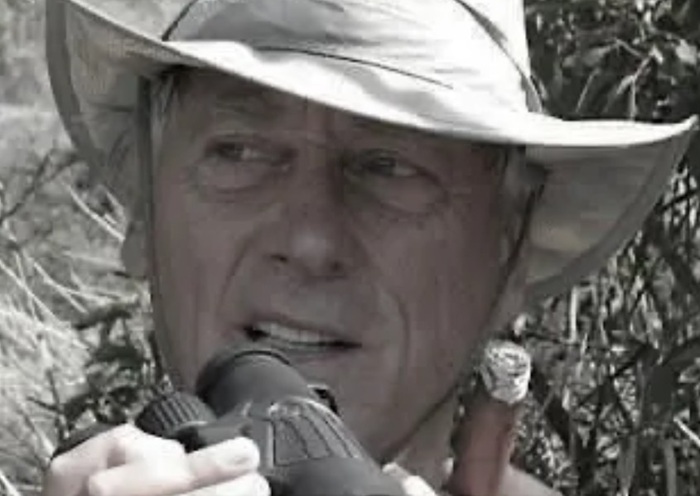
Unconventional and perennially working against the grain, noted expansive thinker and risk-taker Paul Williams has certainly led a fascinating life (all captured, by the way, in his 2023 autobiography Harvard, Hollywood, Hit Men & Holy Men), and he’s also one of the true under-celebrated figures in the oft-documented world of 1970s New Hollywood.
If you liked this story, check out our features on other unsung auteurs Jo Heims, Lee H. Katzin, Christoper Cain, Ken Wiederhorn, Barbara Loden, David Mackenzie, Alan Rudolph, James Lee Barrett, Edwin “Bud” Shrake, Joan Tewkesbury, Jamaa Fanaka, Jack Starrett, Joseph Sargent, Jeffrey Schwarz, George Sidney, Philip Dunne, Zak Hilditch, Luke Sparke, Cyrus Nowrasteh, Morgan Matthews, Tom Laughlin, Diane Keaton, Ed Hunt, Nancy Savoca, Robert Vincent O’Neil, Marvin J. Chomsky, Sam Firstenberg, Jack Sholder, Richard Gray, Giuseppe Andrews, Gus Trikonis, Greydon Clark, Frances Doel, Gordon Douglas, Billy Fine, Craig R. Baxley, Harvey Bernhard, Bert I. Gordon, James Fargo, Jeremy Kagan, Robby Benson, Robert Hiltzik, John Carl Buechler, Rick Carter, Paul Dehn, Bob Kelljan, Kevin Connor, Ralph Nelson, William A. Graham, Judith Rascoe, Michael Pressman, Peter Carter, Leo V. Gordon, Dalene Young, Gary Nelson, Fred Walton, James Frawley, Pete Docter, Max Baer Jr., James Clavell, Ronald F. Maxwell, Frank D. Gilroy, John Hough, Dick Richards, William Girdler, Rayland Jensen, Richard T. Heffron, Christopher Jones, Earl Owensby, James Bridges, Jeff Kanew, Robert Butler, Leigh Chapman, Joe Camp, John Patrick Shanley, William Peter Blatty, Peter Clifton, Peter R. Hunt, Shaun Grant, James B. Harris, Gerald Wilson, Patricia Birch, Buzz Kulik, Kris Kristofferson, Rick Rosenthal, Kirsten Smith & Karen McCullah, Jerrold Freeman, William Dear, Anthony Harvey, Douglas Hickox, Karen Arthur, Larry Peerce, Tony Goldwyn, Brian G. Hutton, Shelley Duvall, Robert Towne, David Giler, William D. Wittliff, Tom DeSimone, Ulu Grosbard, Denis Sanders, Daryl Duke, Jack McCoy, James William Guercio, James Goldstone, Daniel Nettheim, Goran Stolevski, Jared & Jerusha Hess, William Richert, Michael Jenkins, Robert M. Young, Robert Thom, Graeme Clifford, Frank Howson, Oliver Hermanus, Jennings Lang, Matthew Saville, Sophie Hyde, John Curran, Jesse Peretz, Anthony Hayes, Stuart Blumberg, Stewart Copeland, Harriet Frank Jr & Irving Ravetch, Angelo Pizzo, John & Joyce Corrington, Robert Dillon, Irene Kamp, Albert Maltz, Nancy Dowd, Barry Michael Cooper, Gladys Hill, Walon Green, Eleanor Bergstein, William W. Norton, Helen Childress, Bill Lancaster, Lucinda Coxon, Ernest Tidyman, Shauna Cross, Troy Kennedy Martin, Kelly Marcel, Alan Sharp, Leslie Dixon, Jeremy Podeswa, Ferd & Beverly Sebastian, Anthony Page, Julie Gavras, Ted Post, Sarah Jacobson, Anton Corbijn, Gillian Robespierre, Brandon Cronenberg, Laszlo Nemes, Ayelat Menahemi, Ivan Tors, Amanda King & Fabio Cavadini, Cathy Henkel, Colin Higgins, Paul McGuigan, Rose Bosch, Dan Gilroy, Tanya Wexler, Clio Barnard, Robert Aldrich, Maya Forbes, Steven Kastrissios, Talya Lavie, Michael Rowe, Rebecca Cremona, Stephen Hopkins, Tony Bill, Sarah Gavron, Martin Davidson, Fran Rubel Kuzui, Elliot Silverstein, Liz Garbus, Victor Fleming, Barbara Peeters, Robert Benton, Lynn Shelton, Tom Gries, Randa Haines, Leslie H. Martinson, Nancy Kelly, Paul Newman, Brett Haley, Lynne Ramsay, Vernon Zimmerman, Lisa Cholodenko, Robert Greenwald, Phyllida Lloyd, Milton Katselas, Karyn Kusama, Seijun Suzuki, Albert Pyun, Cherie Nowlan, Steve Binder, Jack Cardiff, Anne Fletcher ,Bobcat Goldthwait, Donna Deitch, Frank Pierson, Ann Turner, Jerry Schatzberg, Antonia Bird, Jack Smight, Marielle Heller, James Glickenhaus, Euzhan Palcy, Bill L. Norton, Larysa Kondracki, Mel Stuart, Nanette Burstein, George Armitage, Mary Lambert, James Foley, Lewis John Carlino, Debra Granik, Taylor Sheridan, Laurie Collyer, Jay Roach, Barbara Kopple, John D. Hancock, Sara Colangelo, Michael Lindsay-Hogg, Joyce Chopra, Mike Newell, Gina Prince-Bythewood, John Lee Hancock, Allison Anders, Daniel Petrie Sr., Katt Shea, Frank Perry, Amy Holden Jones, Stuart Rosenberg, Penelope Spheeris, Charles B. Pierce, Tamra Davis, Norman Taurog, Jennifer Lee, Paul Wendkos, Marisa Silver, John Mackenzie, Ida Lupino, John V. Soto, Martha Coolidge, Peter Hyams, Tim Hunter, Stephanie Rothman, Betty Thomas, John Flynn, Lizzie Borden, Lionel Jeffries, Lexi Alexander, Alkinos Tsilimidos, Stewart Raffill, Lamont Johnson, Maggie Greenwald and Tamara Jenkins.