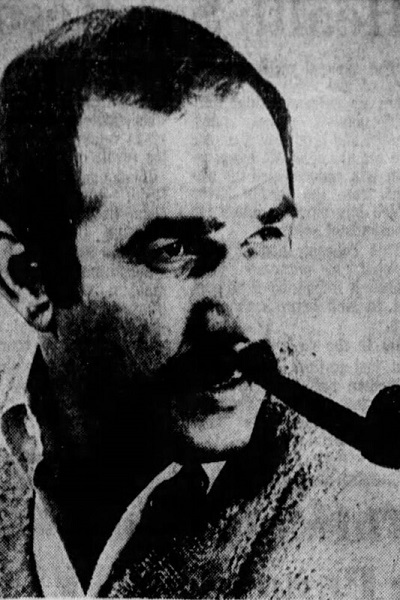




By Erin Free
FilmInk salutes the work of creatives who have never truly received the credit that they deserve. In this installment: director Bob Kelljan, who helmed Count Yorga, Vampire, The Return Of Count Yorga, Scream, Blacula, Scream, Rape Squad and Black Oak Conspiracy.
By dint of the very fact that it exists largely outside of the mainstream, genre and exploitation cinema is largely the fruit of the labour of Unsung Auteurs – filmmakers not afforded the same budgets and apparatus as their major studio brethren, and thus forced to work with more imagination and originality in order to get their films seen. But even within the vigorously toiled fields of genre and exploitation cinema, there are filmmakers who don’t even come close to getting the level of recognition they deserve considering the high level of quality and/or cultural significance of their work. Past featured Unsung Auteurs that fit this bill include the under-celebrated likes of Tom DeSimone, Katt Shea, James Glickenhaus, Amy Holden Jones, Stephanie Rothman, Barbara Peeters, Fred Walton, and William Girdler amongst others. Add to this list Bob Kelljan, who only has a small collection of big screen features to his name, but amongst them are a trio of major cult horror films, along with one pioneering rape-revenge flick, which should make him a lot more familiar to cineastes and fans of horror and genre films.
Robert Kelljan was born in 1930 in Union City, New Jersey, and began his film career with small acting roles on television in the 1960s, appearing on the popular science fiction/fantasy series Alfred Hitchcock Hour, The Twilight Zone and The Outer Limits, the cop show The Detectives, and the 1964 feature film The Glass Cage. In the late 1960s, Kelljan also had small roles in cult director Richard Rush’s counter-culture exploitation flicks Hells Angels On Wheels (1967) and Psych-Out (1968), which were both produced by legendary industry player American International Pictures. Bob Kelljan eventually made his writing and directing debut (along with co-director and producer Michael Macready) in 1969 with the salacious semi-softcore flick Flesh Of My Flesh. Kelljan also starred in the barely feature-length film as Mark, a troubled young man harbouring desires for his sister Deena (Vincene Wallace). When the sexy siblings eventually consummate their incestuous relationship, Mark and Deena are met with tragedy. Seamy and seedy, Flesh Of My Flesh is also one of the first softcore flicks to dabble in the concept of incest as taboo turn-on, which is certainly something of a cinematic achievement for Bob Kelljan.

Kelljan’s next feature film, however, was considerably more mainstream, though it was still very much in the exploitation field. Teaming again with producer Michael Macready, and with the infamously low budget backing of American International Pictures, Kelljan wrote and directed 1970’s Count Yorga, Vampire, not just a stylish, finely tailored bloodsucker flick, but also one of the first to locate the traditional mythical monster in a contemporary setting. “Honestly, initially, it was simply because the budget wouldn’t allow for a period setting,” said the film’s star, Robert Quarry, in a 2015 interview with Dr. Phibes Vibes. A perfect example of a talented director turning a negative into a positive, the setting of 1970 Los Angeles is a huge part of what makes Count Yorga, Vampire such a stand-alone.
The other part of the film’s success was Kelljan’s casting of the charming, sophisticated Robert Quarry in the lead role, with the actor making for a truly indelible bloodsucker. Hailing from the European aristocracy, Count Yorga cuts a dashing figure in modern LA, where he accrues a coven of female followers while making the most of the cosmopolitan city’s freewheeling approach to sex and coupling. Though still the villain, Count Yorga, Vampire also cuts against the grain of most of the vampire films that preceded it by giving its title character many sympathetic qualities. These were pushed even further in Kelljan’s 1971 sequel The Return Of Count Yorga (quickly rushed into production after the financial success of the low budget first film) in which the European sophisticate trawls LA for a mate. “This is perhaps the first humanistic (one almost says humanitarian) vampire movie – the story of the exquisite pain of love which stirs even within the breast of he who men call monster,” wrote Roger Ebert in his review of Kelljan’s sequel.

Bob Kelljan also had the good sense to involve his experienced, theatre-trained leading man in on the creative processes behind the films, especially The Return Of Count Yorga. “Once Bob Kelljan, who wrote and directed the first picture, realised we were constrained to modern Los Angeles, he embraced the concept as did I,” Robert Quarry said in his 2015 interview with Dr. Phibes Vibes. “Bob certainly wrote a place for me to go with Yorga, and I always want to credit him with that, but so many of the choices were mine. I feel that as an actor, you have to go for it. Just go for it. And I did. Running down the halls wildly chasing after my misbehaving vampire brides, that showed the animal side of Yorga. But I also wanted Yorga to have a human side. I wanted to show the human side of a non-human character. I constantly insisted and got more scenes. More dialogue. Once the producer and director saw how I was playing Yorga after the first day of dailies, they let me run with it.”
Following the success of the Count Yorga movies (a third film was planned but sadly never eventuated), Kelljan was drafted in to helm 1973’s Scream Blacula Scream, the sequel to the previous year’s Blacula, a Blaxploitation riff on the vampire genre, in which leading man William Marshall brings great gravitas and style to the title role of an 18th-century African prince turned into a vampire by Dracula himself who ends up in modern-day Los Angeles. Kelljan handles the follow-up with class, proving himself well and truly adept at placing the ancient figure of the vampire within a very contemporary context. Though shaping up as a potentially important figure on the horror scene after his winning trio of modern bloodsucker flicks, Bob Kelljan instead shifted gears and took his career in a wholly different direction.

In 1974, Kelljan helmed the luridly titled (and just plain lurid) Rape Squad (also more politely known as Act Of Vengeance), in which a group of sexual assault victims band together to take the law into their own hands when they are let down by the justice system. Though not quite as sleazy as the title and premise would suggest, Rape Squad was, however, an early entry in the rape-and-revenge sub-genre (typified by films like 1978’s infamous I Spit On Your Grave), easily one of the most hated and oft-debated in the exploitation field. This indeed makes Rape Squad something of a cinematic pioneer, and places Bob Kelljan as a director slightly ahead of his time. After the 1977 hixploitation backwoods actioner Black Oak Conspiracy, however, Kelljan moved away from feature films altogether and concentrated instead on television, directing episodes of popular TV series such as Hill Street Blues, Fame, Police Story, Charlie’s Angels, The Dukes Of Hazzard, Vega$, Starsky And Hutch and Wonder Woman. A quiet and under-recognised cinematic ground-breaker, Bob Kelljan tragically passed away after a battle with cancer in 1982 at the age of just 52.
If you liked this story, check out our features on other unsung auteurs Kevin Connor, Ralph Nelson, William A. Graham, Judith Rascoe, Michael Pressman, Peter Carter, Leo V. Gordon, Dalene Young, Gary Nelson, Fred Walton, James Frawley, Pete Docter, Max Baer Jr., James Clavell, Ronald F. Maxwell, Frank D. Gilroy, John Hough, Dick Richards, William Girdler, Rayland Jensen, Richard T. Heffron, Christopher Jones, Earl Owensby, James Bridges, Jeff Kanew, Robert Butler, Leigh Chapman, Joe Camp, John Patrick Shanley, William Peter Blatty, Peter Clifton, Peter R. Hunt, Shaun Grant, James B. Harris, Gerald Wilson, Patricia Birch, Buzz Kulik, Kris Kristofferson, Rick Rosenthal, Kirsten Smith & Karen McCullah, Jerrold Freeman, William Dear, Anthony Harvey, Douglas Hickox, Karen Arthur, Larry Peerce, Tony Goldwyn, Brian G. Hutton, Shelley Duvall, Robert Towne, David Giler, William D. Wittliff, Tom DeSimone, Ulu Grosbard, Denis Sanders, Daryl Duke, Jack McCoy, James William Guercio, James Goldstone, Daniel Nettheim, Goran Stolevski, Jared & Jerusha Hess, William Richert, Michael Jenkins, Robert M. Young, Robert Thom, Graeme Clifford, Frank Howson, Oliver Hermanus, Jennings Lang, Matthew Saville, Sophie Hyde, John Curran, Jesse Peretz, Anthony Hayes, Stuart Blumberg, Stewart Copeland, Harriet Frank Jr & Irving Ravetch, Angelo Pizzo, John & Joyce Corrington, Robert Dillon, Irene Kamp, Albert Maltz, Nancy Dowd, Barry Michael Cooper, Gladys Hill, Walon Green, Eleanor Bergstein, William W. Norton, Helen Childress, Bill Lancaster, Lucinda Coxon, Ernest Tidyman, Shauna Cross, Troy Kennedy Martin, Kelly Marcel, Alan Sharp, Leslie Dixon, Jeremy Podeswa, Ferd & Beverly Sebastian, Anthony Page, Julie Gavras, Ted Post, Sarah Jacobson, Anton Corbijn, Gillian Robespierre, Brandon Cronenberg, Laszlo Nemes, Ayelat Menahemi, Ivan Tors, Amanda King & Fabio Cavadini, Cathy Henkel, Colin Higgins, Paul McGuigan, Rose Bosch, Dan Gilroy, Tanya Wexler, Clio Barnard, Robert Aldrich, Maya Forbes, Steven Kastrissios, Talya Lavie, Michael Rowe, Rebecca Cremona, Stephen Hopkins, Tony Bill, Sarah Gavron, Martin Davidson, Fran Rubel Kuzui, Elliot Silverstein, Liz Garbus, Victor Fleming, Barbara Peeters, Robert Benton, Lynn Shelton, Tom Gries, Randa Haines, Leslie H. Martinson, Nancy Kelly, Paul Newman, Brett Haley, Lynne Ramsay, Vernon Zimmerman, Lisa Cholodenko, Robert Greenwald, Phyllida Lloyd, Milton Katselas, Karyn Kusama, Seijun Suzuki, Albert Pyun, Cherie Nowlan, Steve Binder, Jack Cardiff, Anne Fletcher ,Bobcat Goldthwait, Donna Deitch, Frank Pierson, Ann Turner, Jerry Schatzberg, Antonia Bird, Jack Smight, Marielle Heller, James Glickenhaus, Euzhan Palcy, Bill L. Norton, Larysa Kondracki, Mel Stuart, Nanette Burstein, George Armitage, Mary Lambert, James Foley, Lewis John Carlino, Debra Granik, Taylor Sheridan, Laurie Collyer, Jay Roach, Barbara Kopple, John D. Hancock, Sara Colangelo, Michael Lindsay-Hogg, Joyce Chopra, Mike Newell, Gina Prince-Bythewood, John Lee Hancock, Allison Anders, Daniel Petrie Sr., Katt Shea, Frank Perry, Amy Holden Jones, Stuart Rosenberg, Penelope Spheeris, Charles B. Pierce, Tamra Davis, Norman Taurog, Jennifer Lee, Paul Wendkos, Marisa Silver, John Mackenzie, Ida Lupino, John V. Soto, Martha Coolidge, Peter Hyams, Tim Hunter, Stephanie Rothman, Betty Thomas, John Flynn, Lizzie Borden, Lionel Jeffries, Lexi Alexander, Alkinos Tsilimidos, Stewart Raffill, Lamont Johnson, Maggie Greenwald and Tamara Jenkins.