


By Erin Free
FilmInk salutes the work of creatives who have never truly received the credit that they deserve. In this installment: writer/director Jamaa Fanaka, who helmed Welcome Home Brother Charles, Emma Rae, Street Wars and the Penitentiary films.
The recognition of African-American creatives in the US film industry has been notably and depressingly long overdue. Obviously, things aren’t perfect (they never are), but the huge success of Ryan Coogler’s Sinners at both the box office and during awards season has been something of a sweet breath-of-fresh-air game-changer.
Coogler started it, of course, with his prior successes Creed and Black Panther, but those film series had the weight of major franchise recognition behind them, so were somewhat qualified in terms of their breakout status. Sinners, however, is its very own big, bad, coolly fanged beast. Hopefully the success of this film (along with the successes of Jordan Peele and others) might prompt more chances to be given to African-American creatives, and more praise to be hurled their way when they do succeed.
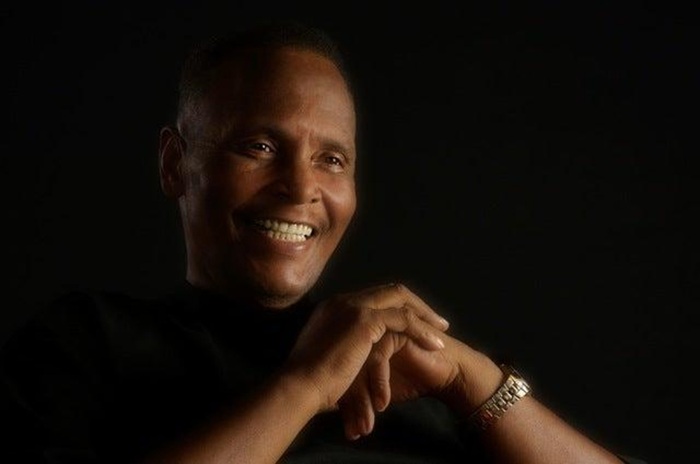
Ryan Coogler would likely be the first to acknowledge (as his Best Actor winner Michael B. Jordan did during his eloquent acceptance speech), however, that a host of gifted African-American filmmakers smoothed the path a little for him, often without great mainstream praise and acceptance. The great Spike Lee, of course, jumps to mind immediately, as does John Singleton, but there are many, many other vital, essential African-American directors that have played their part, from Rudy Ray Moore and Melvin Van Peebles to Gordon Parks, Bill Duke and Charles Burnett. Another major figure in African-American cinema is the late Jamaa Fanaka, whose achievements have been downplayed due to his largely exploitation-ready output.
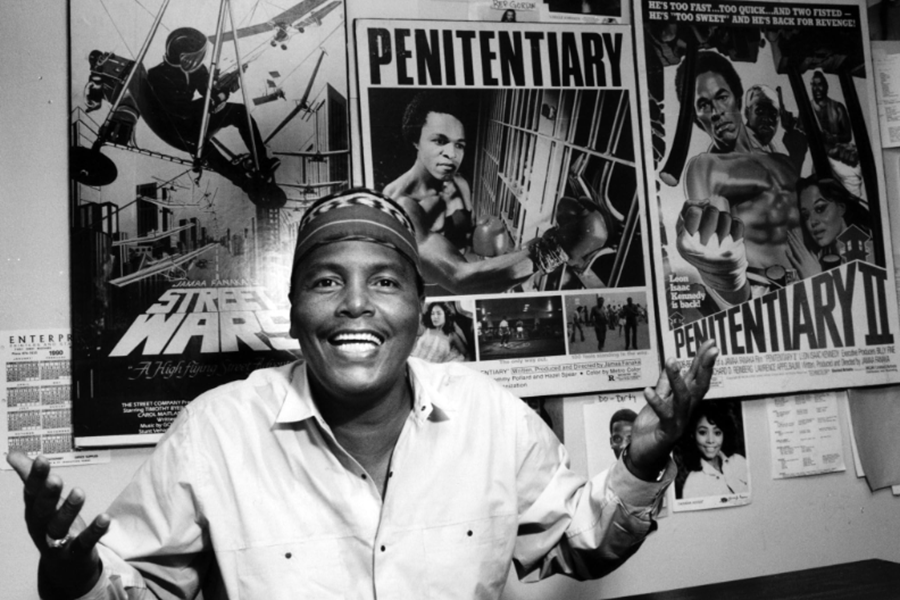
Jamaa Fanaka was born Walter Gordon in 1942 in Jackson, Mississippi. Though his family had no connections to the film industry, they certainly had connections to the moving image itself. Fanaka’s father was a television repairman in Jackson, and the family was one of the first to own a television in the town, which made the young Fanaka a longtime lover of movies and TV. After leaving The US Air Force, Fanaka was accepted into the film school at UCLA in 1971, where he pretty much laid the groundwork for his tough, gritty future oeuvre with his student short film, A Day In the Life Of Willie Faust, Or Death On The Installment Plan.
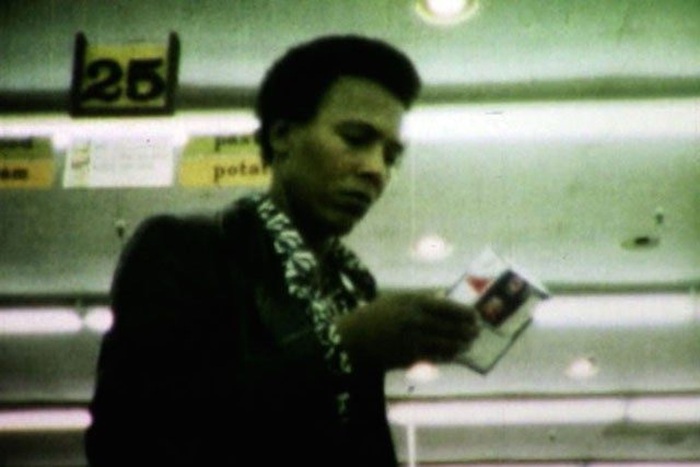
A bold riposte to the Blaxploitation films of the day, this grimy, highly energised urban slice-of-life stars Fanaka himself as a desperate heroin addict. A play on the Faust myth pocked with striking imagery and a tone of staggering immediacy, A Day In the Life Of Willie Faust, Or Death On The Installment Plan marked a bold, brusque bow for the very young Fanaka, who displays a compelling gift for storytelling and emotional truth that far outweighs the film’s technical shortfalls.
It was at UCLA that Walter Gordon eventually became Jamaa Fanaka. While at film school, Fanaka saw Michael Schultz’s seminal (but still considerably unsung) 1975 youth drama Cooley High, and was suitably impressed by the film’s style and depiction of teenage life. Initially confounded by how well what he assumed was a Jewish director could capture the African-American experience, Fanaka eventually learned that Michael Schultz was, indeed, an African-American man, which, in turn, prompted the director’s name change.
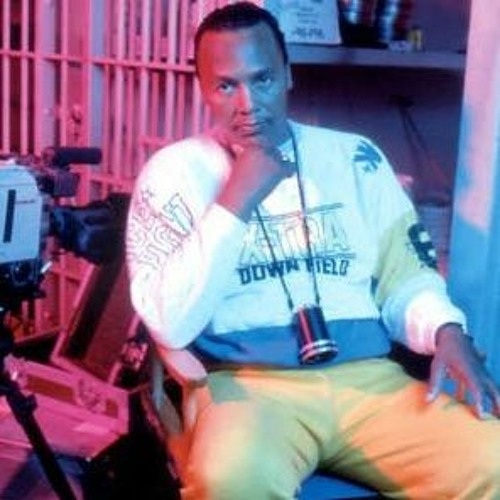
“I wanted to make sure that – when one of my films came out – that everybody knows that it was made by a Black director,” Fanaka told journalist Michael Guillen in 2007. “Most of the Blaxploitation films were made by white directors; they had Black casts, but they had white directors. I wanted to make sure that the public knew that I was Black. I went over to the African Studies Department, and contacted one of the professors. He pulled down a Swahili dictionary, and I looked for words that would mean something, words that could be my name, but that also meant something. That’s how I chose Jamaa Fanaka; it means ‘through brotherhood and togetherness, we will progress and succeed.’”
It was a sound and wholly appropriate choice for a name. While at UCLA, Jamaa Fanaka would become part of what has since been termed The LA Rebellion, or The Los Angeles School Of Black Filmmakers, a title which refers to the new generation of young African and African-American filmmakers who studied at The UCLA Film School in the late 1960s to the late 1990s and eventually created an important new collective cinematic voice. Fanaka’s compatriots here include major talents like Charles Burnett, Larry Clark, Julie Dash, Zeinabu Irene Davis, Haile Gerima, Alile Sharon Larkin, and Billy Woodberry.
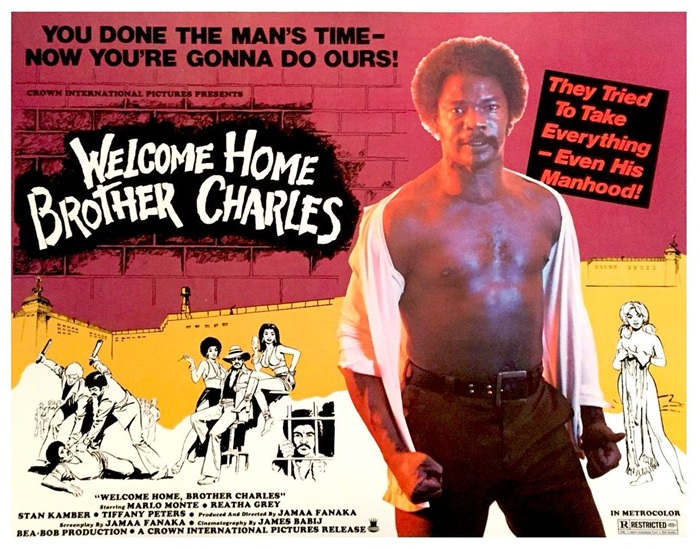
Janaka made his feature film directorial debut while still a student at UCLA with 1975’s Welcome Home Brother Charles, one of the weirdest and most unlikely films to emerge from the often deeply quirky Blaxploitation genre, while also acting as a cutting critique of it. A wild, piercing and utterly frenetic scream directed at the ills of institutional racism and injustice, Welcome Home Brother Charles stars Marlo Monte as Charles Murray, a man thrown into prison after being horribly brutalised by a cruel succession of police officers and corrupt lawyers. When he gets out, Charles Murray hits the vengeance trail, but unbeknownst to his tormentors, this ex-con has a secret weapon…one that bizarrely plays into certain, ahem, stereotypes about African-American men.
Janaka followed up the very strange Welcome Home Brother Charles with 1976’s far more down-to-earth Emma Mae, which was also made while he was at UCLA. A tough, down-and-dirty drama that plays around the edges of the Blaxploitation genre, Emma Rae really stands as a film on its own singularly tough terms. Jerri Hayes stars in the title role as a teen who moves from Mississippi to LA and gets tangled up with various bad men, which leads her into a semi life of crime, and then into a major moral dilemma.
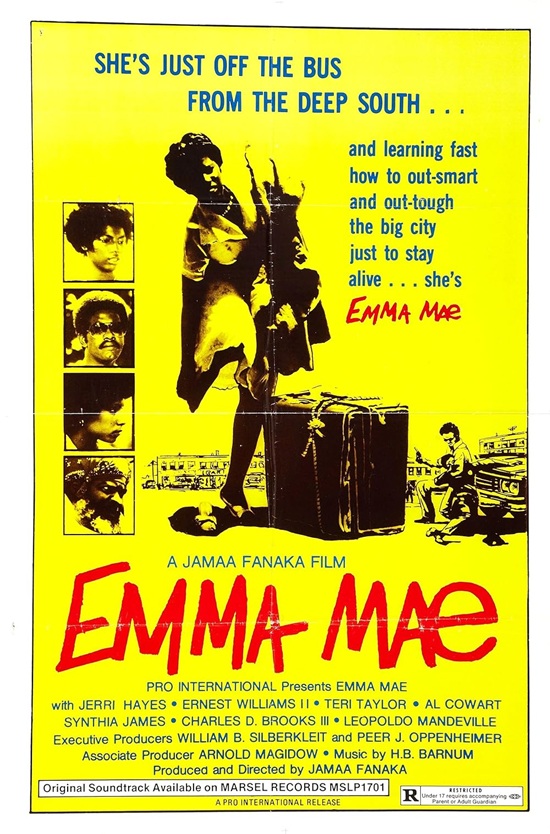
A striking feminist work that also boils over with violence and bad behaviour, Emma Mae is a strong rebuke to the glamourised world of crime as depicted in so many Blaxploitation films, and strongly builds on the themes of Fanaka’s short film A Day In the Life Of Willie Faust, Or Death On The Installment Plan. Like Welcome Home Brother Charles, it would also form the creative bedrock upon which Janaka would build his later, more commercial films in the late 1970s and into the 1980s. That, however, somewhat extraordinarily, also began at UCLA, where Fanaka made his breakout film with 1979’s Penitentiary. “I am the only person in the history of cinema ever to write, produce, direct and get theatrical distribution for three feature films that were made as part of my curriculum,” Fanaka said in 2010.
An exploitation fave (likely very familiar to those who prowled Australian video store aisles in the 1980s and 1990s), Penitentiary stars a leonine, charismatic Leon Isaac Kennedy as Martel “Too Sweet” Gordone, a young African-American man wrongly accused and sent to prison. While inside, Gordone uses his fighting skills to get ahead in an illegal boxing tournament. Redolent with prison atmosphere and driven by mind-blowing action sequences (Gordone’s initial stoush with a would-be jailhouse predator is a striking exercise in brutality and desperation), Penitentiary is a voluble collision of the boxing, prison and Blaxploitation genres.
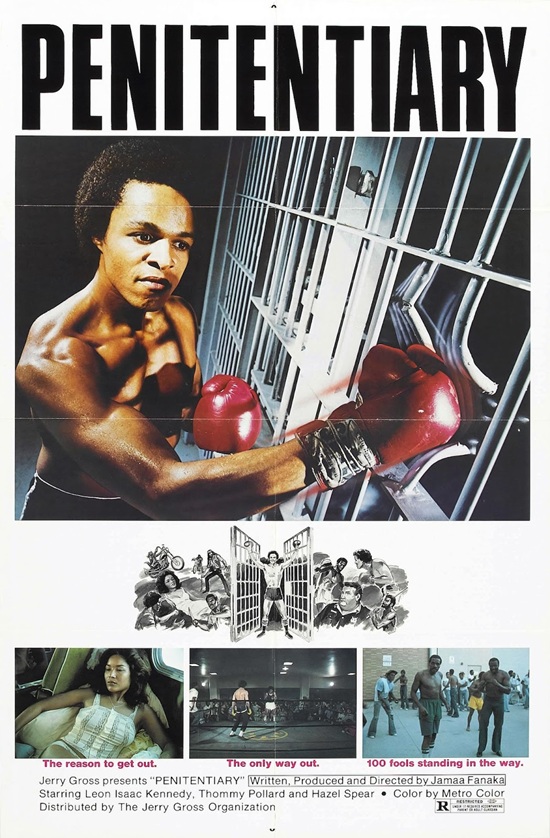
Wildly energetic and exciting, the film was a big indie hit, and prompted two fascinating but not quite equal sequels – 1982’s Penitentiary II (which introduced the world to Mr. T just before Rocky III) and 1987’s Penitentiary III (which was produced by the infamous Cannon Group) – which get considerably weirder and further away from the original as they go along.
After the little seen 1992 gang flick Street Wars, and an unfinished documentary about hip-hop culture, Jamaa Fanaka passed away in 2012 way too early at the age of just 69 from diabetes-related complications. His films are, quite simply, unlike any others ever made.
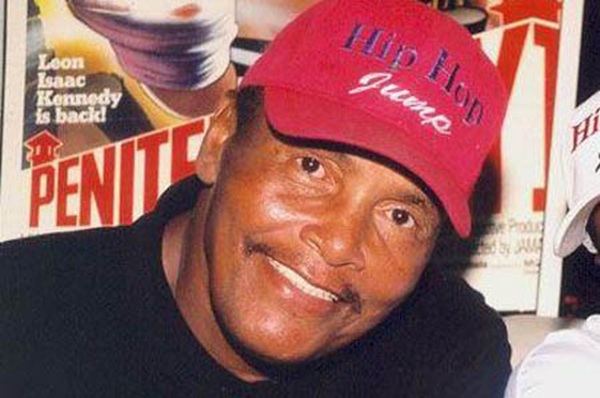
“Yeah, I’m a nut,” Fanaka laughed to journalist Jeff Brummett in 2010. “You didn’t know that? Thomas Edison was a nut, until he invented the light bulb. Anybody coming up doing something different can be categorised as a nut, but I’m a proud nut.”
If you liked this story, check out our features on other unsung auteurs Jack Starrett, Joseph Sargent, Jeffrey Schwarz, George Sidney, Philip Dunne, Zak Hilditch, Luke Sparke, Cyrus Nowrasteh, Morgan Matthews, Tom Laughlin, Diane Keaton, Ed Hunt, Nancy Savoca, Robert Vincent O’Neil, Marvin J. Chomsky, Sam Firstenberg, Jack Sholder, Richard Gray, Giuseppe Andrews, Gus Trikonis, Greydon Clark, Frances Doel, Gordon Douglas, Billy Fine, Craig R. Baxley, Harvey Bernhard, Bert I. Gordon, James Fargo, Jeremy Kagan, Robby Benson, Robert Hiltzik, John Carl Buechler, Rick Carter, Paul Dehn, Bob Kelljan, Kevin Connor, Ralph Nelson, William A. Graham, Judith Rascoe, Michael Pressman, Peter Carter, Leo V. Gordon, Dalene Young, Gary Nelson, Fred Walton, James Frawley, Pete Docter, Max Baer Jr., James Clavell, Ronald F. Maxwell, Frank D. Gilroy, John Hough, Dick Richards, William Girdler, Rayland Jensen, Richard T. Heffron, Christopher Jones, Earl Owensby, James Bridges, Jeff Kanew, Robert Butler, Leigh Chapman, Joe Camp, John Patrick Shanley, William Peter Blatty, Peter Clifton, Peter R. Hunt, Shaun Grant, James B. Harris, Gerald Wilson, Patricia Birch, Buzz Kulik, Kris Kristofferson, Rick Rosenthal, Kirsten Smith & Karen McCullah, Jerrold Freeman, William Dear, Anthony Harvey, Douglas Hickox, Karen Arthur, Larry Peerce, Tony Goldwyn, Brian G. Hutton, Shelley Duvall, Robert Towne, David Giler, William D. Wittliff, Tom DeSimone, Ulu Grosbard, Denis Sanders, Daryl Duke, Jack McCoy, James William Guercio, James Goldstone, Daniel Nettheim, Goran Stolevski, Jared & Jerusha Hess, William Richert, Michael Jenkins, Robert M. Young, Robert Thom, Graeme Clifford, Frank Howson, Oliver Hermanus, Jennings Lang, Matthew Saville, Sophie Hyde, John Curran, Jesse Peretz, Anthony Hayes, Stuart Blumberg, Stewart Copeland, Harriet Frank Jr & Irving Ravetch, Angelo Pizzo, John & Joyce Corrington, Robert Dillon, Irene Kamp, Albert Maltz, Nancy Dowd, Barry Michael Cooper, Gladys Hill, Walon Green, Eleanor Bergstein, William W. Norton, Helen Childress, Bill Lancaster, Lucinda Coxon, Ernest Tidyman, Shauna Cross, Troy Kennedy Martin, Kelly Marcel, Alan Sharp, Leslie Dixon, Jeremy Podeswa, Ferd & Beverly Sebastian, Anthony Page, Julie Gavras, Ted Post, Sarah Jacobson, Anton Corbijn, Gillian Robespierre, Brandon Cronenberg, Laszlo Nemes, Ayelat Menahemi, Ivan Tors, Amanda King & Fabio Cavadini, Cathy Henkel, Colin Higgins, Paul McGuigan, Rose Bosch, Dan Gilroy, Tanya Wexler, Clio Barnard, Robert Aldrich, Maya Forbes, Steven Kastrissios, Talya Lavie, Michael Rowe, Rebecca Cremona, Stephen Hopkins, Tony Bill, Sarah Gavron, Martin Davidson, Fran Rubel Kuzui, Elliot Silverstein, Liz Garbus, Victor Fleming, Barbara Peeters, Robert Benton, Lynn Shelton, Tom Gries, Randa Haines, Leslie H. Martinson, Nancy Kelly, Paul Newman, Brett Haley, Lynne Ramsay, Vernon Zimmerman, Lisa Cholodenko, Robert Greenwald, Phyllida Lloyd, Milton Katselas, Karyn Kusama, Seijun Suzuki, Albert Pyun, Cherie Nowlan, Steve Binder, Jack Cardiff, Anne Fletcher ,Bobcat Goldthwait, Donna Deitch, Frank Pierson, Ann Turner, Jerry Schatzberg, Antonia Bird, Jack Smight, Marielle Heller, James Glickenhaus, Euzhan Palcy, Bill L. Norton, Larysa Kondracki, Mel Stuart, Nanette Burstein, George Armitage, Mary Lambert, James Foley, Lewis John Carlino, Debra Granik, Taylor Sheridan, Laurie Collyer, Jay Roach, Barbara Kopple, John D. Hancock, Sara Colangelo, Michael Lindsay-Hogg, Joyce Chopra, Mike Newell, Gina Prince-Bythewood, John Lee Hancock, Allison Anders, Daniel Petrie Sr., Katt Shea, Frank Perry, Amy Holden Jones, Stuart Rosenberg, Penelope Spheeris, Charles B. Pierce, Tamra Davis, Norman Taurog, Jennifer Lee, Paul Wendkos, Marisa Silver, John Mackenzie, Ida Lupino, John V. Soto, Martha Coolidge, Peter Hyams, Tim Hunter, Stephanie Rothman, Betty Thomas, John Flynn, Lizzie Borden, Lionel Jeffries, Lexi Alexander, Alkinos Tsilimidos, Stewart Raffill, Lamont Johnson, Maggie Greenwald and Tamara Jenkins.