

By Erin Free
FilmInk salutes the work of creatives who have never truly received the credit that they deserve. In this installment: producer and writer James Lee Barrett, who penned Smokey And The Bandit, Shenandoah, The Cheyanne Social Club, The Green Berets and The Undefeated.
We’ve said many times in the virtual pages of the Unsung Auteurs column that pretty much all writers are unsung. Apart from supremely literate types, or those who write vibrantly flashy dialogue, most writers remain unknown to the greater populace at large. And if you don’t write high-brow, big budget, award winning material, then your chances at widespread acclaim and appreciation become even slimmer. Into this unfortunate breach steps the late James Lee Barrett, a gifted author, screenwriter and occasional producer who worked largely in the populist genres of the western, comedy and war film, and crossed between the big and small screens, all added roadblocks to those in pursuit of high recognition.
James Lee Barrett was born in 1929 in Charlotte, North Carolina, and grew up in Anderson, South Carolina. Following the early death of his mother, Barrett was largely raised by his four aunts, all of whom worked as schoolteachers. His family and friends later described Barrett as an independent and mischievous boy with a good-natured distrust of authority figures, a trait that would also surface in his writing work. Barrett worked as a reporter for his high school newspaper, and further studied the craft of writing at various universities.
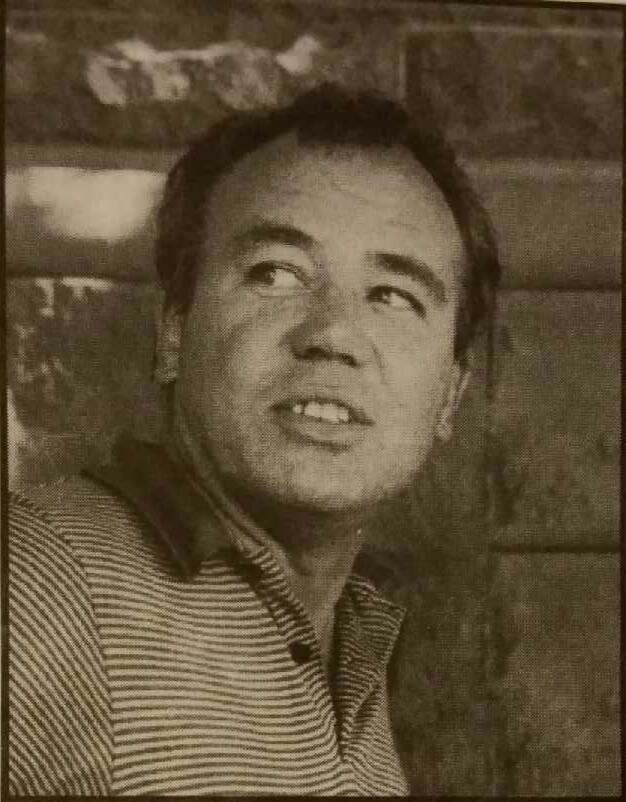
After serving in The US Marine Corps, Barrett moved to New York City, where he pursued a career as a writer in earnest. Barrett failed to find a buyer for the large collection of short stories he had already written, so the aspiring author quickly pivoted, and looked to break into the well and truly on-the-rise world of television. He tried his hand at writing material for television, and got his big break with the production of his teleplay Cold Harbor, which set him on his way in the thriving New York television market, with the barrage of live TV plays being produced a major source of continuing work.
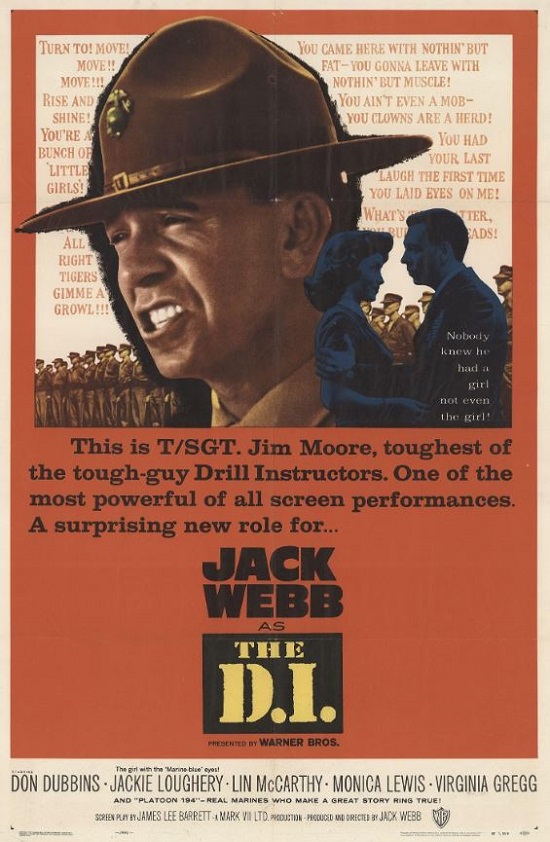
Barrett made his big screen writing debut while still working diligently in TV. One of his teleplays for the popular Kraft Theatre anthology series, Murder Of A Sand Flea (which was based on one of Barrett’s own experiences while serving in The US Marines) caught the eye of actor, producer and director Jack Webb (most famous for playing Joe Friday on the TV cop show Dragnet), who brought Barrett to Hollywood to adapt it into a movie, with himself installed as star. The film was released in 1957 as The D.I., and served as something of a blueprint for later films like Full Metal Jacket and An Officer And A Gentleman in its terse tale of a hardened Marine Drill Instructor who tries to shape a young recruit into a Marine. Tough and authentic, The D.I. marked the perfect big screen debut for James Lee Barrett.
For the next near-decade, Barrett further established his reputation as a small screen scribe with work on TV series like The DA’s Man, Checkmate, Outlaws and The Americans before being summoned by the great George Stevens to collaborate on the screenplay for 1965’s The Greatest Story Ever Told, the epic director’s epic take on the epic life and times of one Jesus Christ. With its expanisve running time and massive cast (the film stars Max Von Sydow as JC and boasts appearances from everyone from Charlton Heston and Shelley Winters to Telly Savalas and John Wayne), this was an enormous undertaking, and Barrett’s script succeeded in making this big story exciting and accessible to a general audience.
From there, Barrett went on a long, continued run of feature film work, writing and co-writing for a wide variety of pictures, including the Disney-style adventure The Truth About Spring (1965), and a raft of titles for hard-working western and action director Andrew V. McLaglen. Barrett’s punchy, direct but thoughtful approach worked perfectly for the director’s 1965 Civil War epic Shenandoah and his tough, rollicking 1968 western Bandolero!, both of which starred screen legend James Stewart, who would become a close friend of Barrett’s. Barrett’s other films for Andrew V. McLaglen were 1969’s The Undefeated (a post-Civil War action drama starring the unlikely duo of John Wayne and Rock Hudson), 1971’s Fool’s Parade (a crime drama with James Stewart and George Kennedy) and 1971’s Something Big (a western comedy with Dean Martin and Brian Keith), a number of which he also co-produced.

In amongst Barrett’s work with Andrew V. McLaglen was a collection of truly fascinating films. Barrett penned John Wayne’s compellingly wrong-headed and wildly out-of-step 1968 Vietnam War movie The Green Berets, which he adapted from Robin Cook’s novel. Though a box office success, the film – which was made and released right in the midst of the divisive war itself, and co-directed by John Wayne himself – is widely derided today, but remains a telling and strangely entertaining piece of movie star vanity and social concern writ very, very large. It also speaks to Barrett’s ability to ride his way through a big, unconventional filmmaking experience.
One of Barrett’s best and boldest scripts came with 1970’s ominously titled Tick, Tick, Tick, directed by Unsung Auteur Ralph Nelson. A daring look at racial issues and a tense thriller to boot, the now largely forgotten film is toplined by African-American superstar footballer-turned-actor Jim Brown, who delivers a characteristically powerful and charismatic performance as a deeply conflicted man riding nothing less than a powder keg when he’s elected sheriff of a small town in America’s racially explosive Deep South.
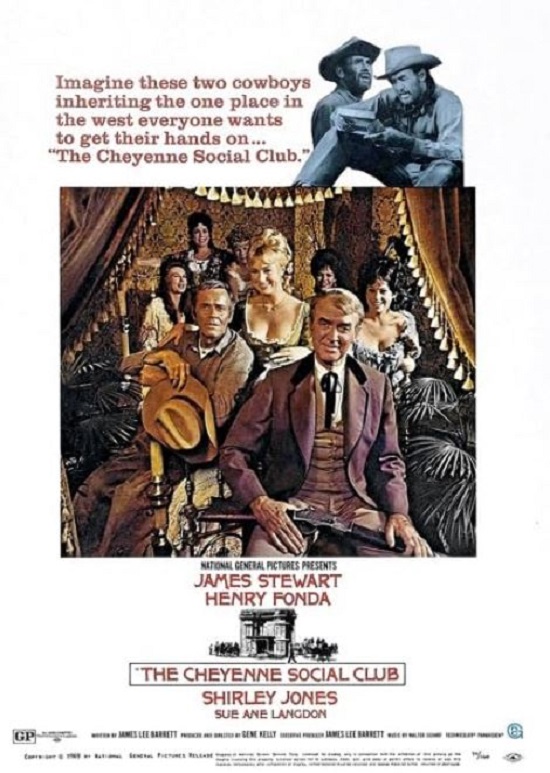
Barrett’s screenplay for the western comedy The Cheyenne Social Club won a Writers Guild Of America Award in 1970, and it certainly rates as one of his best. A surprise directorial pick for screen legend Gene Kelly, this bawdy charmer stars Barrett’s friend James Stewart in a wonderfully wry performance as an aging cowboy (with Henry Fonda as his offsider, no less) who inherits a brothel and decides to turn it into a respectable boarding house, much to the disdain of both the townspeople and the ladies who earn their trade there.
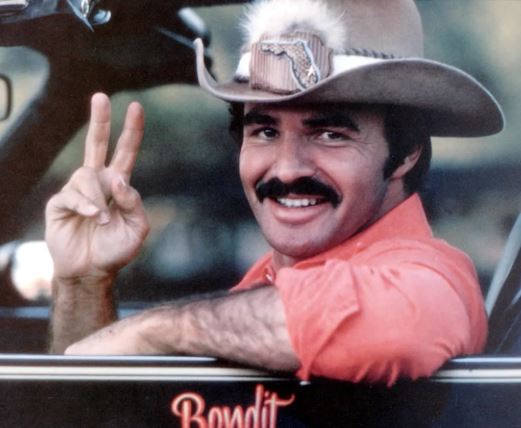
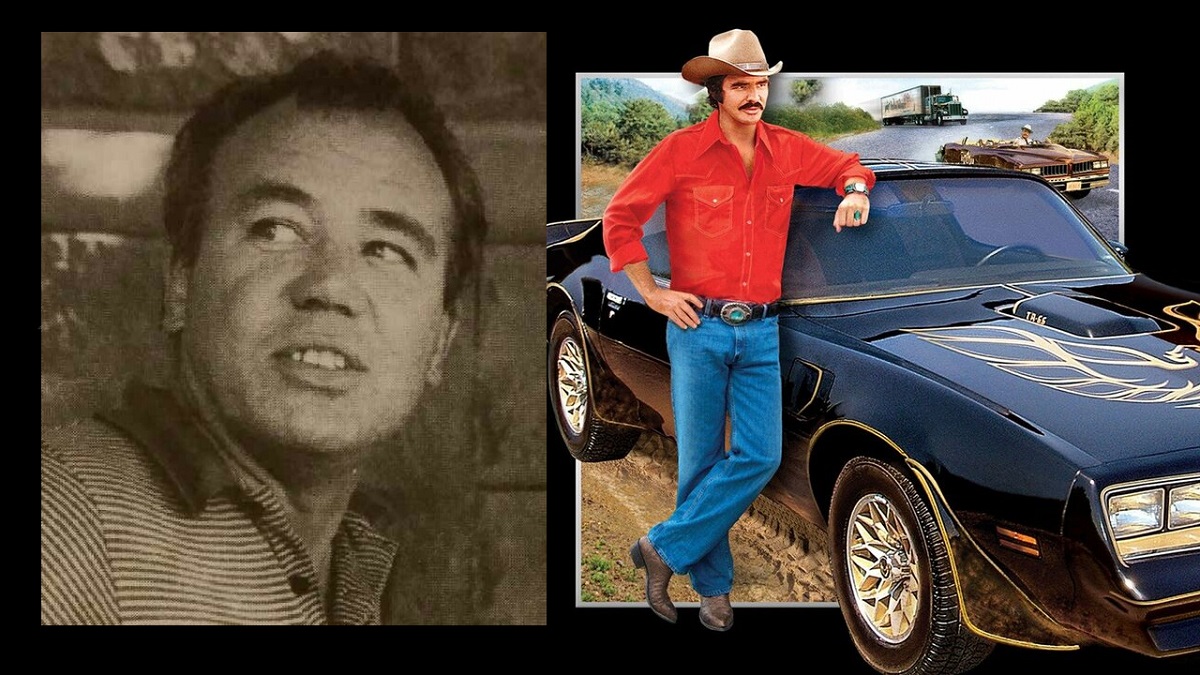
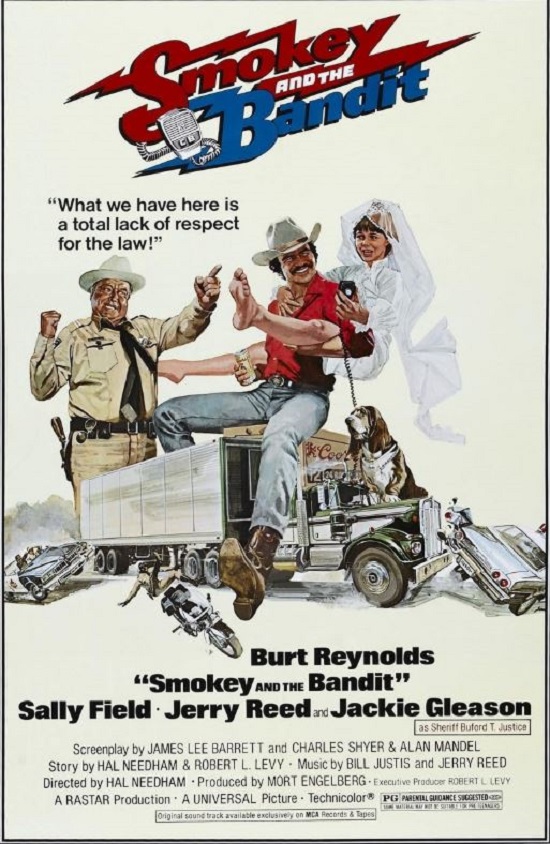
Though brought in late by director and project-starter Hal Needham, Barrett’s raucous approach to comedy and keen understanding of the American male idiom were obviously at play in the 1977 Burt Reynolds smash Smokey And The Bandit. Co-written by Charles Shyer and Alan Mandel (with a story by Needham and Robert L. Levy), this car-driven barnstormer is a blast of pure entertainment from start to finish, and though Barrett might not exactly be behind the wheel, he’s certainly there in the make-up of the fuel that drives the wondrous Smokey And The Bandit.
Surprisingly considering the enormous success of Smokey And The Bandit, Barrett only penned one more feature film (the superior 1979 family drama Wild Horse Hank with Linda Blair) before moving wholeheartedly into the world of television. Barrett boasts major credits here, with fine scripts for excellent telemovies including Belle Starr (1980), The Defiant Ones (1986), Stagecoach (1986), The Quick And The Dead (1987), Poker Alice (1987), Jesse (1988), Ruby Jean And Joe (1996) and Warden Of Red Rock (2001).
James Lee Barrett worked right up until his very sad passing (a few of his scripts were produced posthumously) from cancer on October 15, 1989, at his home in Templeton, California, at the age of just 59. A master in the field of rich Americana, Barrett saw himself principally as a student of the human condition. “I’ve told mostly about people,” Barrett once said. “And that, really, is what makes a good motion picture – the people and how real they are. Always the people.”
If you liked this story, check out our features on other unsung auteurs Edwin “Bud” Shrake, Joan Tewkesbury, Jamaa Fanaka, Jack Starrett, Joseph Sargent, Jeffrey Schwarz, George Sidney, Philip Dunne, Zak Hilditch, Luke Sparke, Cyrus Nowrasteh, Morgan Matthews, Tom Laughlin, Diane Keaton, Ed Hunt, Nancy Savoca, Robert Vincent O’Neil, Marvin J. Chomsky, Sam Firstenberg, Jack Sholder, Richard Gray, Giuseppe Andrews, Gus Trikonis, Greydon Clark, Frances Doel, Gordon Douglas, Billy Fine, Craig R. Baxley, Harvey Bernhard, Bert I. Gordon, James Fargo, Jeremy Kagan, Robby Benson, Robert Hiltzik, John Carl Buechler, Rick Carter, Paul Dehn, Bob Kelljan, Kevin Connor, Ralph Nelson, William A. Graham, Judith Rascoe, Michael Pressman, Peter Carter, Leo V. Gordon, Dalene Young, Gary Nelson, Fred Walton, James Frawley, Pete Docter, Max Baer Jr., James Clavell, Ronald F. Maxwell, Frank D. Gilroy, John Hough, Dick Richards, William Girdler, Rayland Jensen, Richard T. Heffron, Christopher Jones, Earl Owensby, James Bridges, Jeff Kanew, Robert Butler, Leigh Chapman, Joe Camp, John Patrick Shanley, William Peter Blatty, Peter Clifton, Peter R. Hunt, Shaun Grant, James B. Harris, Gerald Wilson, Patricia Birch, Buzz Kulik, Kris Kristofferson, Rick Rosenthal, Kirsten Smith & Karen McCullah, Jerrold Freeman, William Dear, Anthony Harvey, Douglas Hickox, Karen Arthur, Larry Peerce, Tony Goldwyn, Brian G. Hutton, Shelley Duvall, Robert Towne, David Giler, William D. Wittliff, Tom DeSimone, Ulu Grosbard, Denis Sanders, Daryl Duke, Jack McCoy, James William Guercio, James Goldstone, Daniel Nettheim, Goran Stolevski, Jared & Jerusha Hess, William Richert, Michael Jenkins, Robert M. Young, Robert Thom, Graeme Clifford, Frank Howson, Oliver Hermanus, Jennings Lang, Matthew Saville, Sophie Hyde, John Curran, Jesse Peretz, Anthony Hayes, Stuart Blumberg, Stewart Copeland, Harriet Frank Jr & Irving Ravetch, Angelo Pizzo, John & Joyce Corrington, Robert Dillon, Irene Kamp, Albert Maltz, Nancy Dowd, Barry Michael Cooper, Gladys Hill, Walon Green, Eleanor Bergstein, William W. Norton, Helen Childress, Bill Lancaster, Lucinda Coxon, Ernest Tidyman, Shauna Cross, Troy Kennedy Martin, Kelly Marcel, Alan Sharp, Leslie Dixon, Jeremy Podeswa, Ferd & Beverly Sebastian, Anthony Page, Julie Gavras, Ted Post, Sarah Jacobson, Anton Corbijn, Gillian Robespierre, Brandon Cronenberg, Laszlo Nemes, Ayelat Menahemi, Ivan Tors, Amanda King & Fabio Cavadini, Cathy Henkel, Colin Higgins, Paul McGuigan, Rose Bosch, Dan Gilroy, Tanya Wexler, Clio Barnard, Robert Aldrich, Maya Forbes, Steven Kastrissios, Talya Lavie, Michael Rowe, Rebecca Cremona, Stephen Hopkins, Tony Bill, Sarah Gavron, Martin Davidson, Fran Rubel Kuzui, Elliot Silverstein, Liz Garbus, Victor Fleming, Barbara Peeters, Robert Benton, Lynn Shelton, Tom Gries, Randa Haines, Leslie H. Martinson, Nancy Kelly, Paul Newman, Brett Haley, Lynne Ramsay, Vernon Zimmerman, Lisa Cholodenko, Robert Greenwald, Phyllida Lloyd, Milton Katselas, Karyn Kusama, Seijun Suzuki, Albert Pyun, Cherie Nowlan, Steve Binder, Jack Cardiff, Anne Fletcher ,Bobcat Goldthwait, Donna Deitch, Frank Pierson, Ann Turner, Jerry Schatzberg, Antonia Bird, Jack Smight, Marielle Heller, James Glickenhaus, Euzhan Palcy, Bill L. Norton, Larysa Kondracki, Mel Stuart, Nanette Burstein, George Armitage, Mary Lambert, James Foley, Lewis John Carlino, Debra Granik, Taylor Sheridan, Laurie Collyer, Jay Roach, Barbara Kopple, John D. Hancock, Sara Colangelo, Michael Lindsay-Hogg, Joyce Chopra, Mike Newell, Gina Prince-Bythewood, John Lee Hancock, Allison Anders, Daniel Petrie Sr., Katt Shea, Frank Perry, Amy Holden Jones, Stuart Rosenberg, Penelope Spheeris, Charles B. Pierce, Tamra Davis, Norman Taurog, Jennifer Lee, Paul Wendkos, Marisa Silver, John Mackenzie, Ida Lupino, John V. Soto, Martha Coolidge, Peter Hyams, Tim Hunter, Stephanie Rothman, Betty Thomas, John Flynn, Lizzie Borden, Lionel Jeffries, Lexi Alexander, Alkinos Tsilimidos, Stewart Raffill, Lamont Johnson, Maggie Greenwald and Tamara Jenkins.