




By Erin Free
FilmInk salutes the work of creatives who have never truly received the credit that they deserve. In this installment: writer and director Greydon Clark, who helmed Wacko, Joysticks, Final Justice, Without Warning and more.
The world of exploitation cinema is literally packed to busting with Unsung Auteurs, filmmakers who toil and grind hard to get movies made on next to nothing and on their own terms. The graft continues for said filmmakers to actually get their movies into cinemas (or other distribution platforms) and in front of audiences. We’ve talked many times in this column about the late, great Roger Corman – often seen as the master of exploitation cinema – and his tutelage and support of a huge array of filmmakers, many of them Unsung Auteurs. Roger Corman, however, is just one fascinating figure in the heady world of exploitation cinema. There are hard-working, largely under-resourced filmmakers everywhere, often located far outside Hollywood, as seen in the careers of Unsung Auteurs like Charles B. Pierce and Earl Owensby.
Fitting into this often seamy cinematic firmament is Greydon Clark, a busy actor turned director with a small but sturdy enough fan base to have made his rollicking autobiography On The Cheap: My Life In Low Budget Filmmaking a reasonable success. Though now aged 82 and seemingly retired, Greydon Clark worked over several decades, cutting across various exploitation genres (even often ingeniously splicing them together) and crafting a few minor cult classics in the process. Clark even forged a three-film bond with the late, great Joe Don Baker, a big, bold Texan who scored three very unusual lead roles courtesy of the director. “I admired Joe Don Baker’s talent in his action-adventure films and thought that he could do comedy as well,” Clark told Videofugue. “He was great to work with and I think his performance in Wacko is one of the great comedic performances ever put on film.”
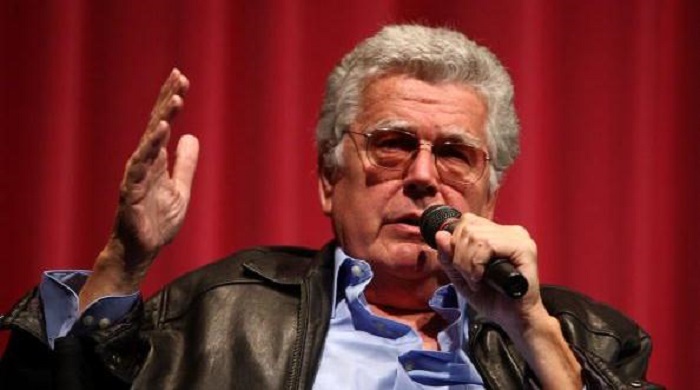
Greydon Clark was born in Michigan in 1943 and began his career as an actor, appearing in a slew of films for notorious exploitation filmmaker Al Adamson, whose ability to grind as much meagre money out of a film as possible (by ruthlessly recutting and repackaging his own work, and doing the same with purchased product) was even more pronounced and relentless than Roger Corman’s. While acting in Adamson’s Satan’s Sadists (1968), Hell’s Bloody Devils (1970) and Dracula Vs. Frankenstein (1971), Clark picked up much about the seat-of-your-pants world of exploitation filmmaking, and treated the work almost as his own film school. “I met Al through an actress I knew from an acting class,” Clark told Videofugue of the director, who was tragically murdered in 1995. “I was very lucky that we became friends. Al’s productions were very low-budget and I was able to learn a great deal about filmmaking. I owe a lot to Al Adamson.”
Working completely outside the system just as Adamson did, Clark made his directorial debut in 1973 with The Bad Bunch (aka Tom aka, um, Nigger Lover, a lurid title imposed on the film by nefarious distributors and not Clark himself), a low-budget play on the Blaxploitation genre about an African-American street gang and the white man (played by Clark himself) – a Vietnam vet whose black best friend died in the war – hurled into their violent orbit. A potent mix of salacious exploitation elements and socially conscious thinking, The Bad Bunch indicated Clark’s eventual career as a filmmaker with more than just sex and violence on his mind. Clark stuck with his unusual take on Blaxploitation with 1976’s Black Shampoo, a riff on the Warren Beatty hit in which an African-American businessman and hairdresser (not the usual pimp or private dick, note) finds himself up to his neck in sex and violence.

From there, Greydon Clark cut hard across exploitation genres, working quick on fun, fast-paced efforts like 1977’s Satan’s Cheerleaders (which mixed demonic horror with the popular trend for cheerleader sex comedies), 1978’s Hi-Riders (which melds elements of the action, gang, biker and revenge action sub-genres), and 1979’s Angels Brigade (an action-comedy Charlie’s Angels rip in which a crew of sexy females take down a drug cartel). Clark moved into science fiction with 1980’s The Return (which represented something of a budget bump for Clark and a relatively big-name cast in Jan-Michael Vincent and Cybill Shepherd) and Without Warning, which was definitely the better of the two. A mix of the sci-fi, action, horror and slasher sub-genres (and even something of a template for the action smash Predator), this inventive minor cult fave tracks an alien that lands on earth and hunts humans as prey. Filled with warped humour, excitement and imaginative kill-scenes, Without Warning (the chilling cover of which stared out ominously from video store shelves in the 1980s) is a highly impressive effort, and one of Clark’s best.
After this sci-fi double-shot, Clark changed course once again, turning to the comedy genre with great success, and delivering perhaps his two best-known films. An absolute bizarro basket case of a film, 1982’s Wacko parodies the horror film genre (working similar terrain to the likes of 1980’s Student Bodies and 1982’s National Lampoon’s Class Reunion) with wild, loopy abandon, mixing on-point genre nods with an almost vaudeville-style love for sight gags and absurdist word play. Another 1980s VHS favourite, Wacko is a frenetic, truly deranged comedy (which admittedly doesn’t always work, which is actually part of the fun), and features big names like the aforementioned Joe Don Baker, along with George Kennedy and a completely off-the-charts Stella Stevens (and a young Andrew “Dice” Clay), going right off the rails with seemingly glorious abandon. Forgotten by most, but remembered and cherished by a select few, Wacko is, well, nuts. “Comedy was my first love, and I decided I wanted to do a spoof of horror films, something really silly like Airplane!,” Clark told Daily Grindhouse.

Clark stuck with comedy (and Joe Don Baker) for the 1983 T&A minor teen fave Joysticks, which hilariously capitalised on the video game and youth film trends of the time. “When a genre is successful, many filmmakers jump on the bandwagon – myself included,” Clark has said. The goofy tale of a young video arcade proprietor (Scott McGinnis) at war with an unscrupulous businessman (Joe Don Baker, totally off the leash) and his two dopey nephews, Joysticks is a winningly raucous mix of the kind of broad humour, youthful exuberance, general silliness (hot-dog-frank-in-cleavage, anyone?), sexy carry-on and questionable gender politics that would never fly today. Happily, Joysticks (which boasts a belter of a theme song to boot) was a big hit for Greydon Clark.
“The picture opened in approximately 600 theatres and did great business,” Clark told Daily Grindhouse. “It was the best weekend opening ever for the distributor, who was ecstatic. Entertainment Tonight announced that Joysticks was the number-one picture in the country. Mary Hart wondered how a little picture that no one had ever heard of could lead the nation. I could have told her: a teen sex comedy set in a video arcade was a natural. We even had some nice reviews from critics. This little three hundred-thousand-dollar film was even reviewed in People Magazine, with a picture of Joe Don surrounded by two semi-clad girls. When the theatrical distribution of Joysticks was complete, the box office was over four million dollars…not bad for a three-week picture.”

Clark teamed with Joe Don Baker once again for 1985’s full-tilt action flick Final Justice, in which the big Texan plays, well, a big Texan, this time the very coolly named Sheriff Thomas Jefferson Geronimo III, who decamps to Malta (!) to find the gangster who killed his partner. It’s big, crazy fun from Clark, who delivered action of a more serious bent with 1989’s Skinheads, in which a group of Neo-Nazi arseholes become prey for a WW2 vet mountain man played by Hollywood legend Chuck Connors! After an unlikely detour into musicals and dancing with 1990’s The Forbidden Dance (a silly jump on the short-lived lambada dance craze), Clark continued to ply his trade across genres through the 1990s, delving into crime action (1992’s Mad Dog Coll), horror (1992’s Dance Macabre with Robert Englund), the romantic thriller (1992’s Russian Holiday with Barry Bostwick and Susan Blakely) and science fiction (1994’s Dark Future, 1997’s Star Games).
A deft genre jumper with an especially keen sense for comedy and an appreciation of vintage Hollywood talent (Jack Palance, Martin Landau, Neville Brand, Mel Ferrer, Peter Lawford, Jim Backus, Yvonne De Carlo, Ralph Meeker, John Ireland, John Carradine, Alan Hale Jr., Clu Gulager and Chuck Connors have all appeared in his films), Greydon Clark is a true original…and a truly Unsung Auteur.
If you liked this story, check out our features on other unsung auteurs Frances Doel, Gordon Douglas, Billy Fine, Craig R. Baxley, Harvey Bernhard, Bert I. Gordon, James Fargo, Jeremy Kagan, Robby Benson, Robert Hiltzik, John Carl Buechler, Rick Carter, Paul Dehn, Bob Kelljan, Kevin Connor, Ralph Nelson, William A. Graham, Judith Rascoe, Michael Pressman, Peter Carter, Leo V. Gordon, Dalene Young, Gary Nelson, Fred Walton, James Frawley, Pete Docter, Max Baer Jr., James Clavell, Ronald F. Maxwell, Frank D. Gilroy, John Hough, Dick Richards, William Girdler, Rayland Jensen, Richard T. Heffron, Christopher Jones, Earl Owensby, James Bridges, Jeff Kanew, Robert Butler, Leigh Chapman, Joe Camp, John Patrick Shanley, William Peter Blatty, Peter Clifton, Peter R. Hunt, Shaun Grant, James B. Harris, Gerald Wilson, Patricia Birch, Buzz Kulik, Kris Kristofferson, Rick Rosenthal, Kirsten Smith & Karen McCullah, Jerrold Freeman, William Dear, Anthony Harvey, Douglas Hickox, Karen Arthur, Larry Peerce, Tony Goldwyn, Brian G. Hutton, Shelley Duvall, Robert Towne, David Giler, William D. Wittliff, Tom DeSimone, Ulu Grosbard, Denis Sanders, Daryl Duke, Jack McCoy, James William Guercio, James Goldstone, Daniel Nettheim, Goran Stolevski, Jared & Jerusha Hess, William Richert, Michael Jenkins, Robert M. Young, Robert Thom, Graeme Clifford, Frank Howson, Oliver Hermanus, Jennings Lang, Matthew Saville, Sophie Hyde, John Curran, Jesse Peretz, Anthony Hayes, Stuart Blumberg, Stewart Copeland, Harriet Frank Jr & Irving Ravetch, Angelo Pizzo, John & Joyce Corrington, Robert Dillon, Irene Kamp, Albert Maltz, Nancy Dowd, Barry Michael Cooper, Gladys Hill, Walon Green, Eleanor Bergstein, William W. Norton, Helen Childress, Bill Lancaster, Lucinda Coxon, Ernest Tidyman, Shauna Cross, Troy Kennedy Martin, Kelly Marcel, Alan Sharp, Leslie Dixon, Jeremy Podeswa, Ferd & Beverly Sebastian, Anthony Page, Julie Gavras, Ted Post, Sarah Jacobson, Anton Corbijn, Gillian Robespierre, Brandon Cronenberg, Laszlo Nemes, Ayelat Menahemi, Ivan Tors, Amanda King & Fabio Cavadini, Cathy Henkel, Colin Higgins, Paul McGuigan, Rose Bosch, Dan Gilroy, Tanya Wexler, Clio Barnard, Robert Aldrich, Maya Forbes, Steven Kastrissios, Talya Lavie, Michael Rowe, Rebecca Cremona, Stephen Hopkins, Tony Bill, Sarah Gavron, Martin Davidson, Fran Rubel Kuzui, Elliot Silverstein, Liz Garbus, Victor Fleming, Barbara Peeters, Robert Benton, Lynn Shelton, Tom Gries, Randa Haines, Leslie H. Martinson, Nancy Kelly, Paul Newman, Brett Haley, Lynne Ramsay, Vernon Zimmerman, Lisa Cholodenko, Robert Greenwald, Phyllida Lloyd, Milton Katselas, Karyn Kusama, Seijun Suzuki, Albert Pyun, Cherie Nowlan, Steve Binder, Jack Cardiff, Anne Fletcher ,Bobcat Goldthwait, Donna Deitch, Frank Pierson, Ann Turner, Jerry Schatzberg, Antonia Bird, Jack Smight, Marielle Heller, James Glickenhaus, Euzhan Palcy, Bill L. Norton, Larysa Kondracki, Mel Stuart, Nanette Burstein, George Armitage, Mary Lambert, James Foley, Lewis John Carlino, Debra Granik, Taylor Sheridan, Laurie Collyer, Jay Roach, Barbara Kopple, John D. Hancock, Sara Colangelo, Michael Lindsay-Hogg, Joyce Chopra, Mike Newell, Gina Prince-Bythewood, John Lee Hancock, Allison Anders, Daniel Petrie Sr., Katt Shea, Frank Perry, Amy Holden Jones, Stuart Rosenberg, Penelope Spheeris, Charles B. Pierce, Tamra Davis, Norman Taurog, Jennifer Lee, Paul Wendkos, Marisa Silver, John Mackenzie, Ida Lupino, John V. Soto, Martha Coolidge, Peter Hyams, Tim Hunter, Stephanie Rothman, Betty Thomas, John Flynn, Lizzie Borden, Lionel Jeffries, Lexi Alexander, Alkinos Tsilimidos, Stewart Raffill, Lamont Johnson, Maggie Greenwald and Tamara Jenkins.
