



By Erin Free
FilmInk salutes the work of creatives who have never truly received the credit that they deserve. In this installment: screenwriter Paul Dehn, who penned Goldfinger, The Spy Who Came In From The Cold, The Deadly Affair, and the original Planet Of The Apes sequels.
Like all things cinematic, it’s certainly up for (heated) debate, but the original Planet Of The Apes series is one of the most compelling and consistently fascinating in movie history. Good, we’ve got that out of the way. Though adapted from French author Pierre Boulle’s 1963 novel Monkey Planet, and spiked with a liberal dose of Twilight Zone-style irony and wit from co-adaptor Rod Serling, the 1968 sci-fi adventure Planet Of The Apes was also a classic example of a film birthed by the zeitgeist of the time. The late sixties were rocked by political assassination, seething racial tension and churning, almost seismic, cultural shifts. So, while Planet Of The Apes may have been sold as a sci-fi adventure romp, its longevity stems more from its very firm roots in the cultural upheaval of the times.
As the film begins, Hollywood legend Charlton Heston’s arrogant astronaut crash lands on a world where talking apes rule and simpleton humans are herded around like cattle. The film was a major hit literally pounding with subtext, and its shocking climax – where Heston is hit with the realisation that this “planet of the apes” is actually Earth, thousands of years in the future – remains one of the most indelible in cinema history. Backing studio 20th Century Fox returned to the simian well for four more films (1970’s Beneath The Planet Of The Apes, 1971’s Escape From The Planet Of The Apes, 1972’s Conquest Of The Planet Of The Apes and 1973’s Battle For The Planet Of The Apes), and the success of the series also inspired a short-lived television series; a Saturday morning children’s cartoon; a massive haul of tie-in merchandise; a bizarro 2001 remake from Tim Burton; and a far more successful reboot/prequel series beginning with 2011’s Rise Of The Planet Of The Apes.

Despite its striking sense of vision, however, the original Planet Of The Apes series has no obvious, driving creative force, unlike, say, Lord Of The Rings (director Peter Jackson), Star Wars (creator George Lucas), Fast & The Furious (star/producer Vin Diesel), or Rocky (creator/star Sylvester Stallone). There are certainly important figures in the Planet Of The Apes lineage – original author Pierre Boulle (though, in a rare instance, the film here is far better than the book), co-adaptor Rod Serling (who penned the first film’s unforgettable ending), original director Franklin J. Schaffner (who set the template), two-time sequel director J. Lee Thompson (who kept things going when the budgets got cut as the series went along), make-up artist John Chambers (who created the series’ indelible ape make-up), and producer Arthur P. Jacobs (who was on-board for every entry, but largely left the creative decisions to others) – but there’s one real Unsung Auteur when it comes to this fantastical, incredibly imaginative series, and that would be screenwriter Paul Dehn.
Outside of his exemplary work on the Planet Of The Apes films, Paul Dehn lived a truly fascinating life. Dehn was born in 1912 in Manchester, England, and educated at Oxford before moving closer to the film industry by first writing film reviews for various student newspapers, and then eventually becoming a film reviewer for several London newspapers, including News Chronicle and The Daily Herald, where he worked until the early 1960s. Prior to that, Dehn also served during WW2, where he was stationed at Camp X in Ontario, Canada, which was operated by the British Special Operations Executive (SOE) to train spies and special forces teams. In an interview on the DVD for The Spy Who Came In From The Cold, famed British writer and former government operative John Le Carré states that Major Paul Dehn actually worked in the SOE as an assassin during the war. Dehn was also the Political Warfare officer from 1942 to 1944 and is documented as taking part in various missions in France and Norway.
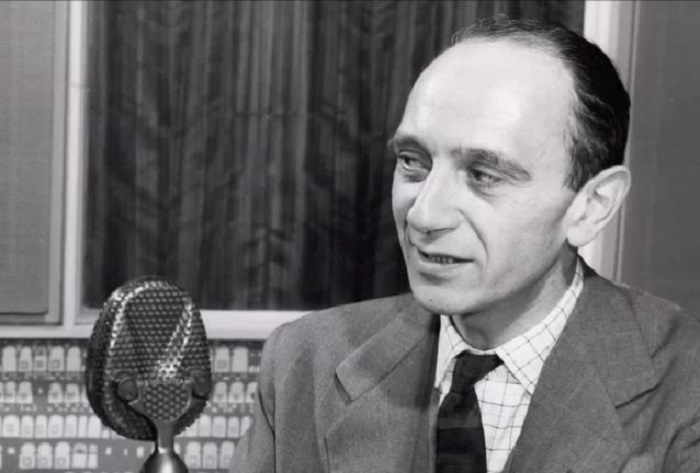
A true renaissance man, Paul Dehn later wrote music and lyrics for stage and screen (1952’s Moulin Rouge, 1961’s The Innocents), and received his first screenwriting credit when he teamed with composer and friend James Bernard for 1950’s political thriller Seven Days To Noon. Dehn’s military and espionage history saw him tapped to work on the 1964 James Bond classic Goldfinger, Martin Ritt’s 1965 big screen take on John Le Carre’s The Spy Who Came In From The Cold, and Sidney Lumet’s 1967 adaptation of the espionage legend’s novel Call For The Dead, which was retitled The Deadly Affair. This represented Dehn’s first solo screen credit, and solidly established the burgeoning screenwriter as an incisive and highly effective hand at elucidating espionage essentials like labyrinthine narratives and complex characters.
After these spy thrillers, however, Paul Dehn’s career took a decidedly unusual turn into science fiction territory. When Rod Serling turned down the job and Pierre Boulle’s treatment for a Planet Of The Apes sequel was rejected, Dehn was drafted to flesh out some ideas for the follow-up provided by associate producer Mort Abrahams. Though the material was far different from what Dehn had been working on prior, the screenwriter attacked the scenario with vigour. Inspired by the atomic bombings of WW2 that had haunted and disturbed him with such alarming profundity while serving in the military, Dehn created a truly stunning sequel with Beneath The Planet Of The Apes. Though initially following the story beats established in the original, Dehn then departed into truly trippy territory (well exploited by director and Unsung Auteur Ted Post) as the talking apes clash with a cult of underground mutants who worship a nuclear bomb. This leads to one of the most extraordinarily nihilistic endings in the history of mainstream cinema, and an ingenious capper to what was designed to be the final chapter in the Planet Of The Apes saga.

Dehn’s literal, solo-penned wipeout of a nuclear finale, however, put the writer in a difficult situation when producer Arthur P. Jacobs later sent him a telegram which read “Apes exist, sequel required.” Beneath The Planet Of The Apes had indeed been a sizeable hit and 20th Century Fox wanted more simian-themed sci-fi. In a piece of plotting ingenuity to rival the inspired nihilism of Beneath The Planet Of The Apes, Dehn seemingly achieved the impossible by continuing the series via reverse time travel for Escape From The Planet Of The Apes, savvily relocating kindly apes Cornelius (Roddy McDowell) and Zira (Kim Hunter) into present day America for a story that begins with light humour but ends in the darkest, most heartbreaking, utterly tragic manner imaginable. This daring, emotionally complex film represented a bold new direction for the Planet Of The Apes series, and Dehn (once again working on his own) actually topped it with Conquest Of The Planet Of The Apes, a dystopian nightmare that pushed the provocative ideas and concepts of the series right to the edge.
The brutal, incendiary Conquest Of The Planet Of The Apes is unquestionably one of the best films in the series, but unfortunately, a bout of ill health meant that Dehn could only provide some story ideas and a final polish for the follow-up Battle For The Planet Of The Apes. While the work done by new screenwriters and Unsung Auteurs John & Joyce Corrington (The Omega Man) is rock-solid, and the film itself is largely impressive, Battle For The Planet Of The Apes is unquestionably the weakest of the series, perhaps as a result of Dehn’s limited involvement, and almost certainly due to a horribly decreased budget. While not the grand send-off this brilliant series deserved, Battle For The Planet Of The Apes represented an acceptable close-out for the fascinating raft of ideas and evolving framework that Dehn had created while under constant budgetary and creative pressure. Though he didn’t actually create the Planet Of The Apes series, Paul Dehn was certainly the talent who kept it alive through his own uncanny skill for reinvention, and with the constantly whirring engine of his imagination always providing the driving force that the films needed.

Paul Dehn only wrote one more screenplay (an adaptation of Agatha Christie’s Murder On The Orient Express for director Sidney Lumet) before his passing in 1976 at the age of just 63. Though never gifted the requisite credit for it, this skilful screenwriter was the true Unsung Auteur of the mighty Planet Of The Apes series.
If you liked this story, check out our features on other unsung auteurs Bob Kelljan, Kevin Connor, Ralph Nelson, William A. Graham, Judith Rascoe, Michael Pressman, Peter Carter, Leo V. Gordon, Dalene Young, Gary Nelson, Fred Walton, James Frawley, Pete Docter, Max Baer Jr., James Clavell, Ronald F. Maxwell, Frank D. Gilroy, John Hough, Dick Richards, William Girdler, Rayland Jensen, Richard T. Heffron, Christopher Jones, Earl Owensby, James Bridges, Jeff Kanew, Robert Butler, Leigh Chapman, Joe Camp, John Patrick Shanley, William Peter Blatty, Peter Clifton, Peter R. Hunt, Shaun Grant, James B. Harris, Gerald Wilson, Patricia Birch, Buzz Kulik, Kris Kristofferson, Rick Rosenthal, Kirsten Smith & Karen McCullah, Jerrold Freeman, William Dear, Anthony Harvey, Douglas Hickox, Karen Arthur, Larry Peerce, Tony Goldwyn, Brian G. Hutton, Shelley Duvall, Robert Towne, David Giler, William D. Wittliff, Tom DeSimone, Ulu Grosbard, Denis Sanders, Daryl Duke, Jack McCoy, James William Guercio, James Goldstone, Daniel Nettheim, Goran Stolevski, Jared & Jerusha Hess, William Richert, Michael Jenkins, Robert M. Young, Robert Thom, Graeme Clifford, Frank Howson, Oliver Hermanus, Jennings Lang, Matthew Saville, Sophie Hyde, John Curran, Jesse Peretz, Anthony Hayes, Stuart Blumberg, Stewart Copeland, Harriet Frank Jr & Irving Ravetch, Angelo Pizzo, John & Joyce Corrington, Robert Dillon, Irene Kamp, Albert Maltz, Nancy Dowd, Barry Michael Cooper, Gladys Hill, Walon Green, Eleanor Bergstein, William W. Norton, Helen Childress, Bill Lancaster, Lucinda Coxon, Ernest Tidyman, Shauna Cross, Troy Kennedy Martin, Kelly Marcel, Alan Sharp, Leslie Dixon, Jeremy Podeswa, Ferd & Beverly Sebastian, Anthony Page, Julie Gavras, Ted Post, Sarah Jacobson, Anton Corbijn, Gillian Robespierre, Brandon Cronenberg, Laszlo Nemes, Ayelat Menahemi, Ivan Tors, Amanda King & Fabio Cavadini, Cathy Henkel, Colin Higgins, Paul McGuigan, Rose Bosch, Dan Gilroy, Tanya Wexler, Clio Barnard, Robert Aldrich, Maya Forbes, Steven Kastrissios, Talya Lavie, Michael Rowe, Rebecca Cremona, Stephen Hopkins, Tony Bill, Sarah Gavron, Martin Davidson, Fran Rubel Kuzui, Elliot Silverstein, Liz Garbus, Victor Fleming, Barbara Peeters, Robert Benton, Lynn Shelton, Tom Gries, Randa Haines, Leslie H. Martinson, Nancy Kelly, Paul Newman, Brett Haley, Lynne Ramsay, Vernon Zimmerman, Lisa Cholodenko, Robert Greenwald, Phyllida Lloyd, Milton Katselas, Karyn Kusama, Seijun Suzuki, Albert Pyun, Cherie Nowlan, Steve Binder, Jack Cardiff, Anne Fletcher ,Bobcat Goldthwait, Donna Deitch, Frank Pierson, Ann Turner, Jerry Schatzberg, Antonia Bird, Jack Smight, Marielle Heller, James Glickenhaus, Euzhan Palcy, Bill L. Norton, Larysa Kondracki, Mel Stuart, Nanette Burstein, George Armitage, Mary Lambert, James Foley, Lewis John Carlino, Debra Granik, Taylor Sheridan, Laurie Collyer, Jay Roach, Barbara Kopple, John D. Hancock, Sara Colangelo, Michael Lindsay-Hogg, Joyce Chopra, Mike Newell, Gina Prince-Bythewood, John Lee Hancock, Allison Anders, Daniel Petrie Sr., Katt Shea, Frank Perry, Amy Holden Jones, Stuart Rosenberg, Penelope Spheeris, Charles B. Pierce, Tamra Davis, Norman Taurog, Jennifer Lee, Paul Wendkos, Marisa Silver, John Mackenzie, Ida Lupino, John V. Soto, Martha Coolidge, Peter Hyams, Tim Hunter, Stephanie Rothman, Betty Thomas, John Flynn, Lizzie Borden, Lionel Jeffries, Lexi Alexander, Alkinos Tsilimidos, Stewart Raffill, Lamont Johnson, Maggie Greenwald and Tamara Jenkins.

