



By Erin Free
FilmInk salutes the work of creatives who have never truly received the credit that they deserve. In this installment: actor and director John Derek, who helmed Tarzan The Ape Man, Bolero, Ghosts Can’t Do It and more.
When it comes to the concept of the auteur, the issue of quality is often part of the discussion. Many commentators are of the opinion that to be an auteur, you have to be a “good” director, and that you have to make films of a deeply personal, artful nature. As we’ve posited many times in this column, our take on the concept of the auteur is considerably different. To us, an auteur is a director (or producer or writer or even actor) with a notable continuing sense of style, or a returning roster of thematic or narrative concerns. Namely, there is something in the work itself that marks it as the creation of the filmmaker.
To this end, we’ve previously discussed the work of directors most would not consider auteurs: Benji creator Joe Camp; women-in-prison impresario Billy Fine; action man Craig R. Baxley; highly commercial writing duo Kirsten Smith and Karen McCullah; and many, many more. These creatives, however, all have very obvious throughlines when it comes to their cinematic output. This, by our definition, qualifies them as auteurs, despite the fact that they don’t pump out critically acclaimed films like Wes Anderson, The Coen Brothers or Christopher Nolan.
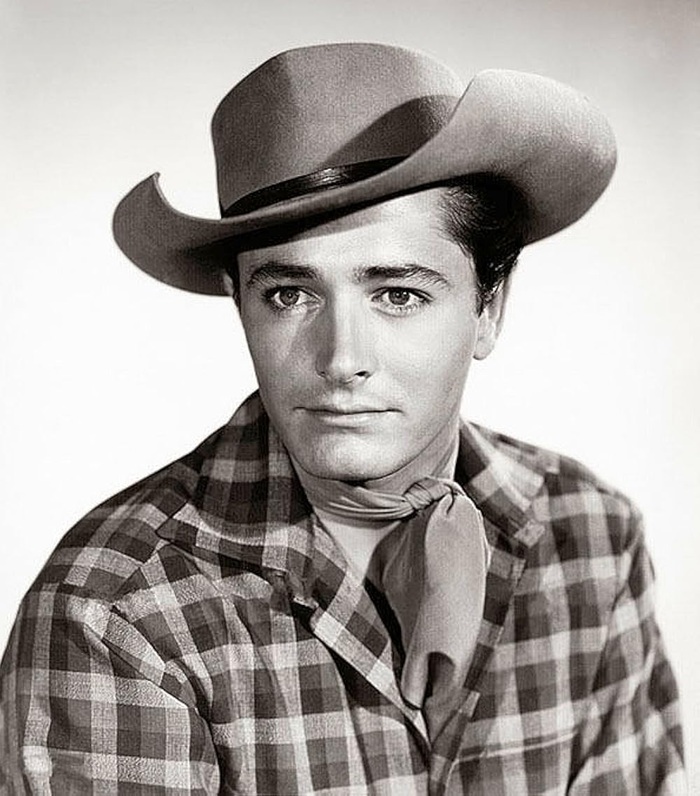
All of which brings us to the late John Derek, one of the most maligned directors of the 1980s. Derek’s films, for the most part, were not box office gold, and the critics treated him largely with disdain and derision, which, to be honest, isn’t completely unfair. Derek’s films are not great, but in terms of having a directorial MO, few filmmakers equal his singularity. In short, Derek was pretty much the ultimate Svengali (he even called his production company Svengali Inc.), and his directing career was built around the creation of film vehicles for his three extraordinarily beautiful actress wives.
Born in Los Angeles in 1926, the handsome and dashing John Derek began his film career as an actor, appearing in the likes of Knock On Any Door (1949), All The King’s Men (1949), The Ten Commandments (1956) and Exodus (1960). [For a fascinating and in-depth deep dive into John Derek’s acting career, click right here] John Derek, however, was never really too interested in an acting career, and was surprisingly aware of his limitations, very rare indeed in Hollywood.
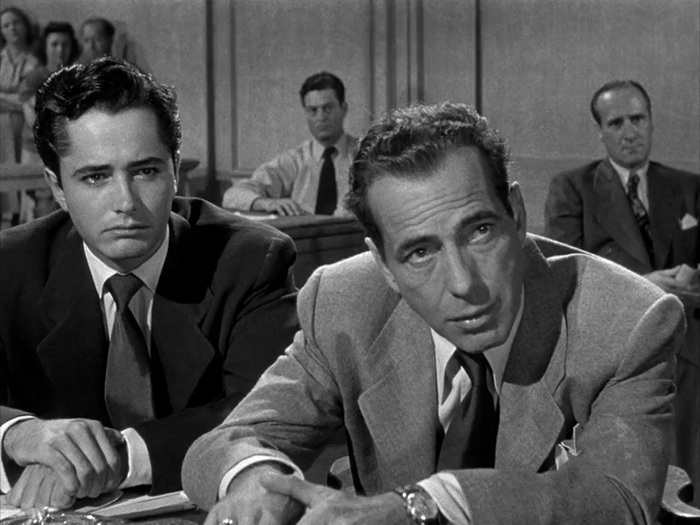
“I was never into acting,” Derek told The Los Angeles Times in 1978. “If they’d given me the greatest role in the world, it wouldn’t have helped. I used to go to the directors of my films and say: ‘I’m not an actor but I’ll turn up on time and know my words.’ In the thirteen films I made, I only ever did one take per scene. Directors never went for a second because they knew it’d be no different from the first. I never liked acting. Or my films. Maybe one, a cheap little western called The Outcast. I liked that because I love horses. One of the troubles was I had a monotone voice which went even flatter when I tried to act. When I saw my first film Knock On Any Door in Italy, I only liked it because my voice was dubbed by an Italian actor who had a lot of fire in his voice.”
John Derek had a far greater interest in photography and filmmaking, and began his move behind the camera while still acting, and then promptly quit his on-screen career when his off-screen one began to develop and pick up speed. “In this town, people think you must be nuts to do something like that,” Derek told The Los Angeles Times in 1978. “They can’t believe you just didn’t enjoy it.” Though never really credited for it, Derek was only one of very few high-profile actors to make the move into directing in the mid-sixties, several years before stars like Robert Redford, Clint Eastwood, Warren Beatty and Paul Newman made it pretty much common practice.
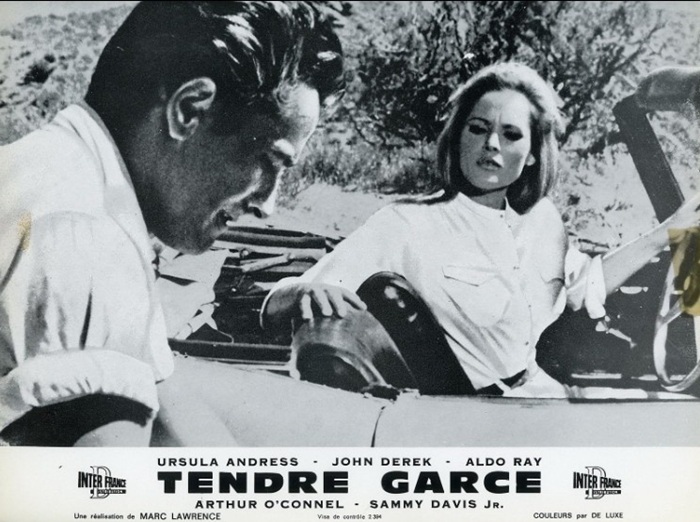
Derek kicked off his behind-the-camera, Svengali-style – some may even say pimpish – career with 1965’s enjoyably pacy and lurid thriller Nightmare In The Sun, which was helmed by actor turned director Marc Lawrence and funded by Ricky du Pont, a scenester and scion of the wealthy du Pont family. Derek was a lead on the film with his beautiful wife and Bond Girl of note, Ursula Andress. In something of a sleazy template-set, Derek had left his first wife, Russian American prima ballerina Pati Behrs Eristoff, for the nineteen-year-old Andress in 1955, even though the Swiss-born beauty spoke hardly any English. The pair were married in 1957.
On Nightmare In The Sun, Derek’s inner Svengali was truly unleashed when director Marc Lawrence offered him a producer role so he would convince Andress to do a nude scene in the film. “Derek promised to allow his wife Ursula to do a nude scene with [co-star] Aldo Ray,” Lawrence later said of the film, “but the day before shooting, he changed his mind. Years later, he did a nude layout of Ursula for Playboy and got $15,000 for his art.” Derek is also rumoured to have done some uncredited directing work on the film.
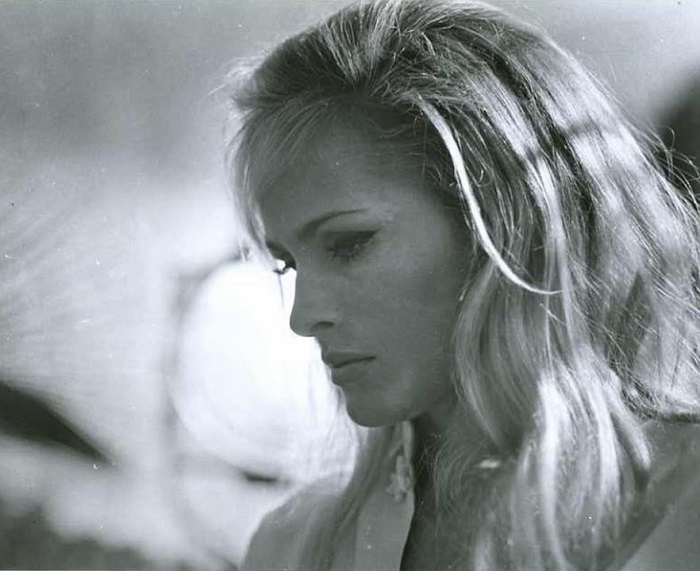
John Derek made his directing debut proper with 1966’s Once Before I Die, an unusual war movie based on the book by war veteran Anthony March, and starring Derek, master character actor Richard Jaeckel, and Ursula Andress. Like most of Derek’s future films, Once Before I Die was a cinematic testament to his lead actress wife’s beauty, though there are certainly many other aspects to recommend it.
“The film is full of interesting visual touches – flashy montages, freeze frames, etc,” wrote Stephen Vagg of Once Before I Die in his FilmInk story on John Derek’s acting career. “It’s interesting to watch the Derek-Andress relationship on screen – he basically treats her like a baby, and she responds in kind, not wanting to be alone, and suggesting he get a haircut: is this how they acted together during their marriage? Andress was never shot more beautifully – Derek really knew how to frame her face.”

Furthering his reputation as filmmaker/Svengali/pimp, still images from an Ursula Andress nude scene in the film were shilled to Playboy Magazine by the opportunistic John Derek, who seemed to enjoy the rest of the world enjoying his wife’s incredible beauty. “If we were ashamed of them, we wouldn’t have published then,” Ursula Andress told The Los Angeles Times. “It’s always a matter of taste, intention and attitude. Striptease can be vulgar or artistic. The same thing applies to nudity.”
Despite having what appeared to be a fruitful relationship, Derek and Andress broke up when the actress had a rumoured affair with her Once Before I Die co-star (and famed small screen Tarzan) Ron Ely, and then eventually moved onto other co-stars John Richardson, Marcello Mastroianni and Jean-Paul Belmondo. Let’s pause for an important point here. The personal lives of filmmakers are rarely, if ever, discussed in any great detail in the Unsung Auteurs column, but John Derek’s professional and creative career is so informed by his romantic relationships that it’s almost impossible not to. Derek’s love life, in fact, wholly informs his output as a filmmaker, seemingly more than anything else.

After his break-up with the beautiful Ursula Andress, John Derek moved onto the beautiful Linda Evans, at the time a star on the long-running western TV series The Big Valley, and decades before her career revival on the popular 1980s TV soap Dynasty. Derek made the little-seen 1969 film A Boy…A Girl without Evans, but its story – a young woman is drawn away from her relationship with a young lover by an older, more experienced man – is certainly once again informed by the director’s personal life.
Derek directed Linda Evans in 1969’s Childish Things (also known as, wait for it, Tale Of The Cock) but this little-seen curio is actually more of a personal project for its leading man and writer Don Murray, whose personal faith led him to pen 1961’s The Hoodlum Priest and co-write and direct the unusual 1970 Pat Boone vehicle The Cross And The Switchblade. Something of a morally sound anomaly on Derek’s resume, Childish Things follows Murray’s alcoholic ex-GI, who does low-level criminal work before finding God and then trying to help other drunks get out of the gutter. Though Linda Evans is indeed strikingly beautiful in the film, the focus is very much on the moral and emotional crises experienced by Don Murray’s character, and not on Mrs. Evans’ incredible face.
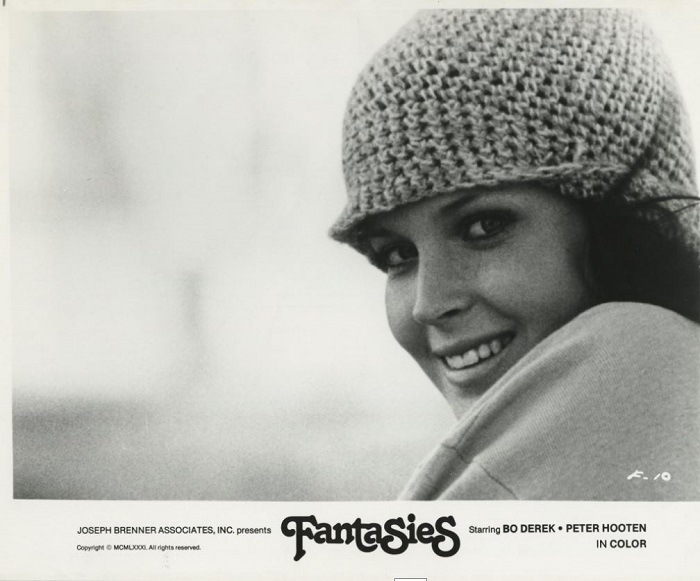
In 1973, Derek’s love life again drove his career when he left the beautiful Linda Evans for the beautiful Mary Cathleen Collins, the sixteen-year-old star of his Mykonos-shot film Once Upon A Time, which would sit on a shelf until 1981 when it was finally released under the new title of Fantasies. The Derek-Collins relationship was highly controversial (Derek was obviously much older than Mary Cathleen Collins, and the couple actually stayed on in Europe until 1974 when she turned eighteen so Derek would avoid statutory rape charges when they returned to the US!), but it ended up being a long-lasting one.
Mary Cathleen Collins would, of course, be rechristened Bo Derek, and after she became a major sex symbol thanks to her alluring performance in Blake Edwards’ 1979 hit comedy 10!, John Derek went into hardcore Svengali mode, driving (and some would say controlling) his beautiful wife’s entire career. Derek only made three more feature films, and they are all pure cinematic testaments to his wife’s lissome, natural beauty. They also come dotted with the, well, perviness that is present in much of Derek’s work, which even included an X-rated porno with 1979’s Love You!, starring sex industry pioneer Annette Haven.

After the belated release of the sexy Fantasies, John and Bo Derek united for their best and most ambitious film, 1981’s Tarzan The Ape Man, a new take on Edgar Rice Burroughs’ famed King Of The Jungle which focuses instead on his love, Jane Parker. Starring Derek as Jane, Richard Harris as her father, and then unknown Miles O’Keeffe as the King Of The Jungle, Tarzan The Ape Man was a box office hit, but was absolutely excoriated by critics. Though certainly no masterpiece, it’s actually a pretty enjoyable adventure flick, and Bo Derek, of course, is appropriately shown off (pimped out?) by her adoring husband.
Though there was a fair bit of sex and nudity in Tarzan The Ape Man, it was essentially a mainstream film, backed by major studio MGM, no less. John Derek’s next two films, however, were considerably racier. Backed by schlock masters Cannon, 1984’s Bolero is pretty much a sex travelogue, as Bo’s virginal character traipses around the world looking for the right guy to, um, make her a woman. It’s a very strange but oddly entertaining flick (George Kennedy is in it!), and was beset by all manner of production problems. Incidentally, Derek also proved on the film that he wasn’t a complete sleaze by not having an affair with beautiful fourteen-year-old co-star Oliva d’Abo…though he did feature her in a nude scene!

Derek’s final film was 1989’s Ghosts Can’t Do It, a silly tale of sex and the afterlife starring the ever-beautiful Bo, along with screen legend Anthony Quinn (!), Derek’s Childish Things star Don Murray, TV Catwoman Julie Newmar, and, yes, even Donald Trump, who appears as himself in a small role. A major box office disaster and object of critical disdain, there’s not much to like about Ghosts Can’t Do It (apart from its inherent wacked out goofiness), but it is certainly pure John Derek, with Bo again the object of his adoring, slightly lascivious camera.
Bo and John Derek remained together until his death in 1998 at the age of 71 from cardiovascular disease. Appropriately enough, not many commentators sing the praises of John Derek these days (he is largely a figure of derision in these far more enlightened times), but he was, at the very least, a director who stuck steadfastly to his own personal vision. He clearly enjoyed beautiful young women, and he knew how to film them and make them look extraordinary on screen. It’s not a great legacy…but it’s a legacy nonetheless. And you might not like it, but the late John Derek was indeed an auteur.
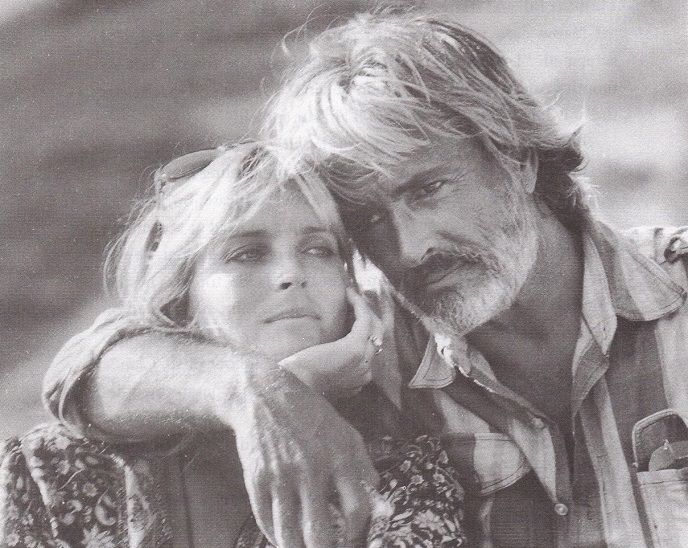
“I think love and beauty are what life is all about,” John Derek once said, and that pretty much sums up his directorial career too.
If you liked this story, check out our features on other unsung auteurs Don Chaffey, Harley Cokeliss, Jeannot Szwarc, Craig Gillespie, David Greene, Ernest Pintoff, Paul Williams, Jo Heims, Lee H. Katzin, Christoper Cain, Ken Wiederhorn, Barbara Loden, David Mackenzie, Alan Rudolph, James Lee Barrett, Edwin “Bud” Shrake, Joan Tewkesbury, Jamaa Fanaka, Jack Starrett, Joseph Sargent, Jeffrey Schwarz, George Sidney, Philip Dunne, Zak Hilditch, Luke Sparke, Cyrus Nowrasteh, Morgan Matthews, Tom Laughlin, Diane Keaton, Ed Hunt, Nancy Savoca, Robert Vincent O’Neil, Marvin J. Chomsky, Sam Firstenberg, Jack Sholder, Richard Gray, Giuseppe Andrews, Gus Trikonis, Greydon Clark, Frances Doel, Gordon Douglas, Billy Fine, Craig R. Baxley, Harvey Bernhard, Bert I. Gordon, James Fargo, Jeremy Kagan, Robby Benson, Robert Hiltzik, John Carl Buechler, Rick Carter, Paul Dehn, Bob Kelljan, Kevin Connor, Ralph Nelson, William A. Graham, Judith Rascoe, Michael Pressman, Peter Carter, Leo V. Gordon, Dalene Young, Gary Nelson, Fred Walton, James Frawley, Pete Docter, Max Baer Jr., James Clavell, Ronald F. Maxwell, Frank D. Gilroy, John Hough, Dick Richards, William Girdler, Rayland Jensen, Richard T. Heffron, Christopher Jones, Earl Owensby, James Bridges, Jeff Kanew, Robert Butler, Leigh Chapman, Joe Camp, John Patrick Shanley, William Peter Blatty, Peter Clifton, Peter R. Hunt, Shaun Grant, James B. Harris, Gerald Wilson, Patricia Birch, Buzz Kulik, Kris Kristofferson, Rick Rosenthal, Kirsten Smith & Karen McCullah, Jerrold Freeman, William Dear, Anthony Harvey, Douglas Hickox, Karen Arthur, Larry Peerce, Tony Goldwyn, Brian G. Hutton, Shelley Duvall, Robert Towne, David Giler, William D. Wittliff, Tom DeSimone, Ulu Grosbard, Denis Sanders, Daryl Duke, Jack McCoy, James William Guercio, James Goldstone, Daniel Nettheim, Goran Stolevski, Jared & Jerusha Hess, William Richert, Michael Jenkins, Robert M. Young, Robert Thom, Graeme Clifford, Frank Howson, Oliver Hermanus, Jennings Lang, Matthew Saville, Sophie Hyde, John Curran, Jesse Peretz, Anthony Hayes, Stuart Blumberg, Stewart Copeland, Harriet Frank Jr & Irving Ravetch, Angelo Pizzo, John & Joyce Corrington, Robert Dillon, Irene Kamp, Albert Maltz, Nancy Dowd, Barry Michael Cooper, Gladys Hill, Walon Green, Eleanor Bergstein, William W. Norton, Helen Childress, Bill Lancaster, Lucinda Coxon, Ernest Tidyman, Shauna Cross, Troy Kennedy Martin, Kelly Marcel, Alan Sharp, Leslie Dixon, Jeremy Podeswa, Ferd & Beverly Sebastian, Anthony Page, Julie Gavras, Ted Post, Sarah Jacobson, Anton Corbijn, Gillian Robespierre, Brandon Cronenberg, Laszlo Nemes, Ayelat Menahemi, Ivan Tors, Amanda King & Fabio Cavadini, Cathy Henkel, Colin Higgins, Paul McGuigan, Rose Bosch, Dan Gilroy, Tanya Wexler, Clio Barnard, Robert Aldrich, Maya Forbes, Steven Kastrissios, Talya Lavie, Michael Rowe, Rebecca Cremona, Stephen Hopkins, Tony Bill, Sarah Gavron, Martin Davidson, Fran Rubel Kuzui, Elliot Silverstein, Liz Garbus, Victor Fleming, Barbara Peeters, Robert Benton, Lynn Shelton, Tom Gries, Randa Haines, Leslie H. Martinson, Nancy Kelly, Paul Newman, Brett Haley, Lynne Ramsay, Vernon Zimmerman, Lisa Cholodenko, Robert Greenwald, Phyllida Lloyd, Milton Katselas, Karyn Kusama, Seijun Suzuki, Albert Pyun, Cherie Nowlan, Steve Binder, Jack Cardiff, Anne Fletcher ,Bobcat Goldthwait, Donna Deitch, Frank Pierson, Ann Turner, Jerry Schatzberg, Antonia Bird, Jack Smight, Marielle Heller, James Glickenhaus, Euzhan Palcy, Bill L. Norton, Larysa Kondracki, Mel Stuart, Nanette Burstein, George Armitage, Mary Lambert, James Foley, Lewis John Carlino, Debra Granik, Taylor Sheridan, Laurie Collyer, Jay Roach, Barbara Kopple, John D. Hancock, Sara Colangelo, Michael Lindsay-Hogg, Joyce Chopra, Mike Newell, Gina Prince-Bythewood, John Lee Hancock, Allison Anders, Daniel Petrie Sr., Katt Shea, Frank Perry, Amy Holden Jones, Stuart Rosenberg, Penelope Spheeris, Charles B. Pierce, Tamra Davis, Norman Taurog, Jennifer Lee, Paul Wendkos, Marisa Silver, John Mackenzie, Ida Lupino, John V. Soto, Martha Coolidge, Peter Hyams, Tim Hunter, Stephanie Rothman, Betty Thomas, John Flynn, Lizzie Borden, Lionel Jeffries, Lexi Alexander, Alkinos Tsilimidos, Stewart Raffill, Lamont Johnson, Maggie Greenwald and Tamara Jenkins.

