By Erin Free
FilmInk salutes the work of creatives who have never truly received the credit that they deserve. In this installment: British director David Greene, who helmed The Shuttered Room, I Start Counting, The Strange Affair, Gray Lady Down, Hard Country and more.
To those few who recognise the name of late director David Greene, it will likely be as one of the most prolific and important helmers of American television through the 1960s, 1970s, 1980s and 1990s. Greene directed episodes of seminal, game-changing TV mini-series like Rich Man, Poor Man (1976), Roots (1977), World War III (1982) and Small Sacrifices (1989), and a long, long list of superior telemovies, including Friendly Fire (1979), Circle Of Violence (1986), The Betty Ford Story (1987) and many, many more. Despite his importance in the strata of American television, however, David Greene was British, and he maintained a decidedly British approach to his field of work. “American television is simply a great hoax,” Greene once said. “It’s just a series of tricks to keep people watching the commercials.”
Before he enjoyed his greatest success on American TV (at one point in the mid-1960s, he was actually the highest-paid director in American television), David Greene had established a career as a very interesting director in England and Canada. Greene was born in Manchester in 1921 and originally worked as a journalist before serving in the merchant navy during WW2. After his military service, Greene became publicity manager for The Everyman Theatre in London, which led to an early career as an actor. Greene trained at the esteemed Royal Academy Of Dramatic Art, and then worked at the renowned repertory theatre, The Oxford Playhouse. Greene eventually booked roles in films like The Wooden Horse (1950) and The Dark Light (1951).
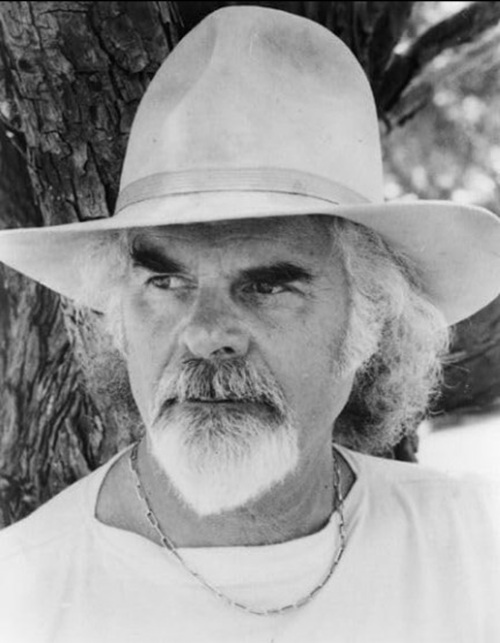
While travelling through Canada with the touring Broadway Company of Anthony And Cleopatra in 1952, Greene accepted an offer from the Canadian Broadcasting Company to join their television department. He emigrated officially in 1953, and moved to New York three years later. By the end of the decade, Greene had become one of the industry’s most prolific and reliable TV directors. Working in both the US and the UK, Greene directed episodes of popular shows like Sir Francis Drake (1961) and The Defenders (1961). In the late 1960s, Greene also moved into feature filmmaking, and directed a small but fascinating collection of films (largely in the UK), most with dark, highly arresting themes.
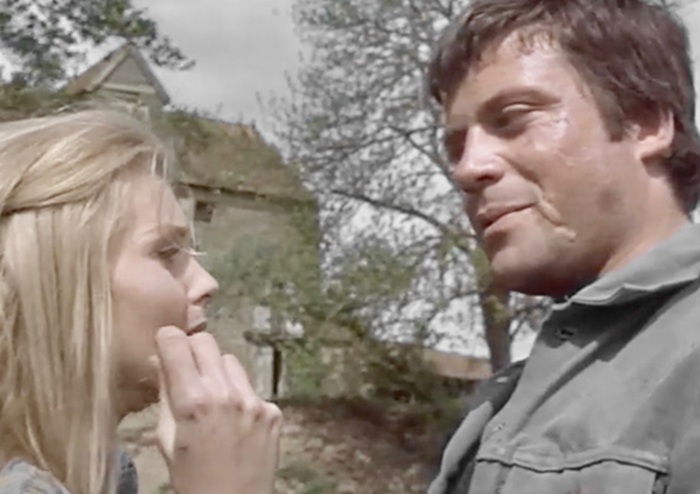
David Greene made his debut in 1967 with the disturbing horror film The Shuttered Room, based on the 1959 short story by August Derleth, which was published as a so-called “posthumous collaboration” with horror master H. P. Lovecraft. Though released before, the film is curiously reminiscent of the cult classic The Wicker Man, as couple Mike (Gig Young) and Susannah (Carol Lynley) travel to a remote New England island to investigate a family property bequeathed by adoptee Susannah’s biological parents. As well as dealing with the odd, cult-like local residents, Mike and Susannah are harassed by a local gang of thugs led by Susannah’s creepy cousin (Oliver Reed) and haunted by an entity that lives in a room of the family property. Creepy and freaky, The Shuttered Room instantly established David Greene as a feature director of great promise and stylistic ingenuity.
After directing the jaunty, comical 1967 Swinging Sixties espionage flick Sebastian (with Dirk Bogarde and Susannah York), Greene turned to far grittier material with 1968’s London-set The Strange Affair, in which Michael York’s compromised young policeman deals with corruption, drug smuggling and murder, all the while engaging in an affair with an underage girl (seventeen-year-old future cult star Susan George) involved in a pornography ring. Seamy, morally conflicted, enjoyably lurid, and uncompromising in its narrative, the film is also highly stylised in a very Swinging Sixties way, and once again showcased Greene’s innate daring and bravura as a director.
After working with one young starlet in Susan George, Greene moved onto another with the sixteen-year-old Jenny Agutter, who gives a stunning performance in the director’s gripping and difficult 1970 thriller I Start Counting, which cogently (and often very provocatively) blends the coming of age and serial killer sub-genres. Experiencing the throes of burgeoning adolescent sexuality, fourteen-year-old Wynne (Agutter) has a crush on her 32-year-old stepbrother George (Bryan Marshall, who would later enjoy a prolific career in Australian film and television), but distressingly starts to believe that he could actually be a serial killer murdering young girls in the local area. Boasting superb performances and a dank, foreboding mood, the film is another stylistic tour de force for David Greene, though its mix of sex, murder and very young girls makes it a decidedly difficult watch.
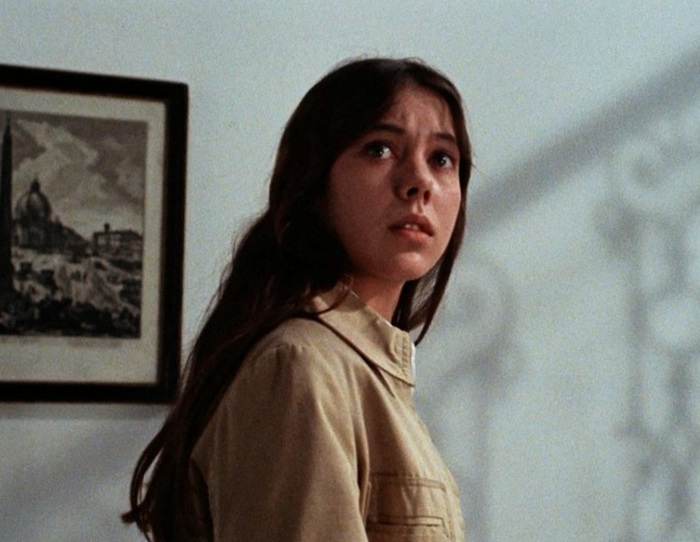
Greene kept the mood dark and unsettling for 1970’s US-shot hothouse family drama The People Next Door, in which Eli Wallach and Julie Harris fret and fray over the drug addiction and mental health issues of their teenage daughter (Deborah Winters). From there, Greene’s resume takes on a decidedly diverse bent, with the wacky 1972 espionage flick Madame Sin (starring Bette Davis and Robert Wagner, this was a US telemovie released into European cinemas) and the religious-themed 1973 musical Godspell adapted from the famous play. By this stage, Greene was far from his grim, unsettling, and provocative thrillers of the late 1960s, taking on bigger and more disparate films, while always doing something interesting with the material.
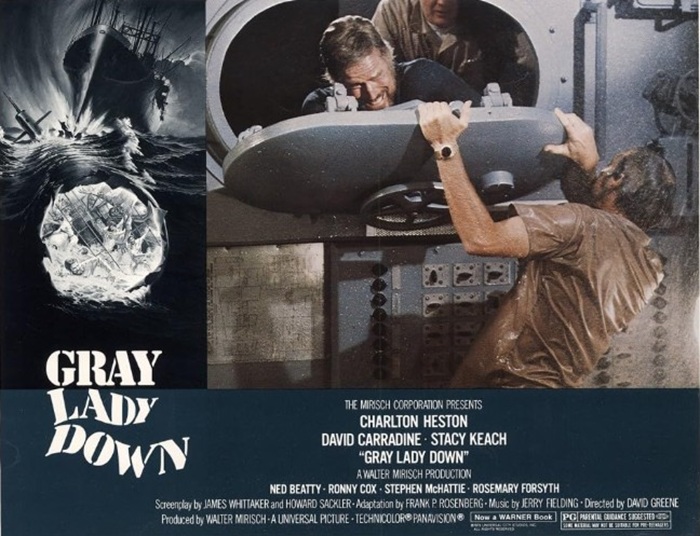
With a big cast (Charlton Heston, David Carradine, Stacy Keach, Ned Beatty) at his disposal and a large budget to play with, Greene crafts a highly enjoyable “disaster movie” with 1978’s Gray Lady Down, in which a US submarine becomes lodged on the ocean floor, leading to a daring rescue mission. Greene expertly exploits the interesting character interactions in the script (Carradine is great as the hippy-ish US Navy oddball who leads the rescue) while stoking up impressive tension at the same time. Though certainly not as fondly remembered as The Poseidon Adventure or The Towering Inferno, Gray Lady Down is a solid entry in the “disaster movie” sub-genre.
Greene’s final feature film was another surprise detour, with the director helming 1981’s downhome American heartland drama Hard Country. Greene brings a keen eye to this low-key effort, which sees Kim Basinger (in her big screen debut) chafing under the traditionalist views of her factory worker boyfriend (Jan-Michael Vincent) as she looks to chase her dreams and move out of their dead-end town and into the big city. It’s a simple, unpretentious but highly perceptive drama, and Greene – as always – gets very good performances out of his cast.
Married seven times (!) and working in television right into the late 1990s, David Greene passed away at the age of 82 on April 7, 2003 of pancreatic cancer in California. He left behind a staggering body of small screen work, but also a collection of admirably unusual and often impressively dark-hued feature films.
If you liked this story, check out our features on other unsung auteurs Ernest Pintoff, Paul Williams, Jo Heims, Lee H. Katzin, Christoper Cain, Ken Wiederhorn, Barbara Loden, David Mackenzie, Alan Rudolph, James Lee Barrett, Edwin “Bud” Shrake, Joan Tewkesbury, Jamaa Fanaka, Jack Starrett, Joseph Sargent, Jeffrey Schwarz, George Sidney, Philip Dunne, Zak Hilditch, Luke Sparke, Cyrus Nowrasteh, Morgan Matthews, Tom Laughlin, Diane Keaton, Ed Hunt, Nancy Savoca, Robert Vincent O’Neil, Marvin J. Chomsky, Sam Firstenberg, Jack Sholder, Richard Gray, Giuseppe Andrews, Gus Trikonis, Greydon Clark, Frances Doel, Gordon Douglas, Billy Fine, Craig R. Baxley, Harvey Bernhard, Bert I. Gordon, James Fargo, Jeremy Kagan, Robby Benson, Robert Hiltzik, John Carl Buechler, Rick Carter, Paul Dehn, Bob Kelljan, Kevin Connor, Ralph Nelson, William A. Graham, Judith Rascoe, Michael Pressman, Peter Carter, Leo V. Gordon, Dalene Young, Gary Nelson, Fred Walton, James Frawley, Pete Docter, Max Baer Jr., James Clavell, Ronald F. Maxwell, Frank D. Gilroy, John Hough, Dick Richards, William Girdler, Rayland Jensen, Richard T. Heffron, Christopher Jones, Earl Owensby, James Bridges, Jeff Kanew, Robert Butler, Leigh Chapman, Joe Camp, John Patrick Shanley, William Peter Blatty, Peter Clifton, Peter R. Hunt, Shaun Grant, James B. Harris, Gerald Wilson, Patricia Birch, Buzz Kulik, Kris Kristofferson, Rick Rosenthal, Kirsten Smith & Karen McCullah, Jerrold Freeman, William Dear, Anthony Harvey, Douglas Hickox, Karen Arthur, Larry Peerce, Tony Goldwyn, Brian G. Hutton, Shelley Duvall, Robert Towne, David Giler, William D. Wittliff, Tom DeSimone, Ulu Grosbard, Denis Sanders, Daryl Duke, Jack McCoy, James William Guercio, James Goldstone, Daniel Nettheim, Goran Stolevski, Jared & Jerusha Hess, William Richert, Michael Jenkins, Robert M. Young, Robert Thom, Graeme Clifford, Frank Howson, Oliver Hermanus, Jennings Lang, Matthew Saville, Sophie Hyde, John Curran, Jesse Peretz, Anthony Hayes, Stuart Blumberg, Stewart Copeland, Harriet Frank Jr & Irving Ravetch, Angelo Pizzo, John & Joyce Corrington, Robert Dillon, Irene Kamp, Albert Maltz, Nancy Dowd, Barry Michael Cooper, Gladys Hill, Walon Green, Eleanor Bergstein, William W. Norton, Helen Childress, Bill Lancaster, Lucinda Coxon, Ernest Tidyman, Shauna Cross, Troy Kennedy Martin, Kelly Marcel, Alan Sharp, Leslie Dixon, Jeremy Podeswa, Ferd & Beverly Sebastian, Anthony Page, Julie Gavras, Ted Post, Sarah Jacobson, Anton Corbijn, Gillian Robespierre, Brandon Cronenberg, Laszlo Nemes, Ayelat Menahemi, Ivan Tors, Amanda King & Fabio Cavadini, Cathy Henkel, Colin Higgins, Paul McGuigan, Rose Bosch, Dan Gilroy, Tanya Wexler, Clio Barnard, Robert Aldrich, Maya Forbes, Steven Kastrissios, Talya Lavie, Michael Rowe, Rebecca Cremona, Stephen Hopkins, Tony Bill, Sarah Gavron, Martin Davidson, Fran Rubel Kuzui, Elliot Silverstein, Liz Garbus, Victor Fleming, Barbara Peeters, Robert Benton, Lynn Shelton, Tom Gries, Randa Haines, Leslie H. Martinson, Nancy Kelly, Paul Newman, Brett Haley, Lynne Ramsay, Vernon Zimmerman, Lisa Cholodenko, Robert Greenwald, Phyllida Lloyd, Milton Katselas, Karyn Kusama, Seijun Suzuki, Albert Pyun, Cherie Nowlan, Steve Binder, Jack Cardiff, Anne Fletcher ,Bobcat Goldthwait, Donna Deitch, Frank Pierson, Ann Turner, Jerry Schatzberg, Antonia Bird, Jack Smight, Marielle Heller, James Glickenhaus, Euzhan Palcy, Bill L. Norton, Larysa Kondracki, Mel Stuart, Nanette Burstein, George Armitage, Mary Lambert, James Foley, Lewis John Carlino, Debra Granik, Taylor Sheridan, Laurie Collyer, Jay Roach, Barbara Kopple, John D. Hancock, Sara Colangelo, Michael Lindsay-Hogg, Joyce Chopra, Mike Newell, Gina Prince-Bythewood, John Lee Hancock, Allison Anders, Daniel Petrie Sr., Katt Shea, Frank Perry, Amy Holden Jones, Stuart Rosenberg, Penelope Spheeris, Charles B. Pierce, Tamra Davis, Norman Taurog, Jennifer Lee, Paul Wendkos, Marisa Silver, John Mackenzie, Ida Lupino, John V. Soto, Martha Coolidge, Peter Hyams, Tim Hunter, Stephanie Rothman, Betty Thomas, John Flynn, Lizzie Borden, Lionel Jeffries, Lexi Alexander, Alkinos Tsilimidos, Stewart Raffill, Lamont Johnson, Maggie Greenwald and Tamara Jenkins.