



By Erin Free
FilmInk salutes the work of creatives who have never truly received the credit that they deserve. In this installment: writer/director Frank D. Gilroy, who helmed Desperate Characters, From Noon Till Three and The Gig.
As the Pulitzer and Tony Award winning playwright behind the 1965 American Broadway triumph The Subject Was Roses, along with a number of other acclaimed stage works, the reasons for Frank D. Gilroy’s lack of recognition for his screen directing work is obvious: like so many fellow Unsung Auteurs – Jack Cardiff, William Peter Blatty, Bobcat Goldthwaite, Anton Corbijn, Anthony Harvey and others – Gilroy’s achievements in one creative pursuit far overshadow his achievements in others. Though Frank D. Gilroy only has a small number of films to his credit, they are so singular in tone and feel that his status as an Unsung Auteur is near-undeniable.
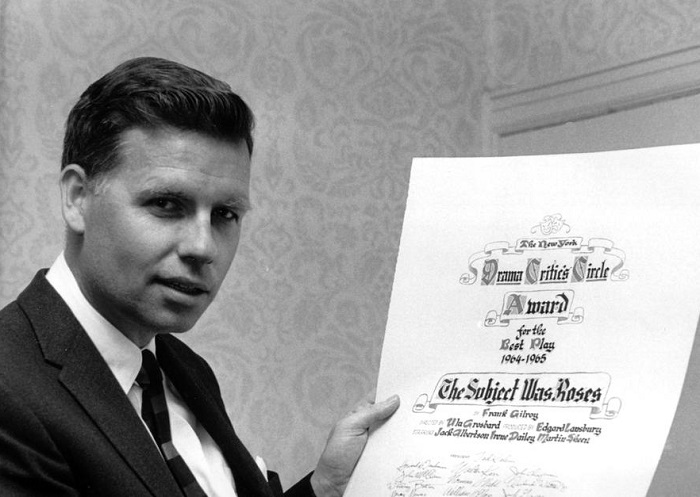
Frank D. Gilroy was born in 1925 in New York City, and served for two years in the US Military during WW2 before eventually embarking on his career as a writer at Darthmouth College where he edited the campus newspaper after returning from the war. Gilroy then wrote frequently for American television during its “golden age” in the 1950s before making his entry into the theatre with his 1962 play Who’ll Save The Plowboy?, which won an Obie Award. Two years later, Gilroy really staked his claim to theatre fame with 1964’s The Subject Was Roses, a powerful work of family dysfunction that has drawn favourable comparisons to Arthur Miller and Eugene O’Neill. After more successful theatre work, Gilroy cogently adapted his breakout play for the big screen in 1968 for director and fellow Unsung Auteur Ulu Grosbard. With a great cast in Martin Sheen, Patricia Neal and Jack Albertson (who won an Oscar), Grosbard effectively teases out the tension and sadness in Gilroy’s tale of a young man who returns from WW2 and finds himself caught in the familial battles of his parents.
Gilroy adapted his play The Only Game In Town for George Stevens’ 1970 film starring Elizabeth Taylor and Warren Beatty as two unlikely lovers in Las Vegas before making his directorial debut in 1971. Though adapted by Gilroy from a novel by Paula Fox, Desperate Characters is very much in the writer’s creative and thematic wheelhouse. Stagy in tone and feel, and featuring just five major characters, the film boasts strong, impressively restrained performances from the often-over-the-top Shirley Maclaine and comic actor Kenneth Mars (The Producers, Young Frankenstein) as an affluent, keenly intelligent New York couple whose relationship frays while the city fragments and deteriorates around them. Barely remembered today, Desperate Characters is a decidedly peculiar little film, but its pleasures are many, with its idiosyncratic characters and unusual take on the gritty nature of New York marking it as something special.
Gilroy followed it up with an equally unusual directorial effort in the form of the 1976 western From Noon Till Three, which he adapted from his own 1973 novel, another creative form in which Gilroy occasionally dabbled. “One of the strangest and most overlooked film westerns,” begins the description of the film on Turner Classic Movies, “From Noon Till Three begins with a nightmare, ends with madness, and in between unreels as both a light romantic comedy, a send-up of heroic period pieces, and a revisionist look at the making of myths of the Old West.” A forgotten oddity somewhat ahead of its time and a daring work even for the 1970s, From Noon Till Three ingeniously turns famously facially immobile tough guy, Charles Bronson, into an unlikely comedy player, a testament to Gilroy’s skills as both a writer and director.

The muscled-up star of The Great Escape, The Magnificent Seven, The Mechanic, The Dirty Dozen, Death Wish, and Once Upon A Time In The West is surprisingly spry as Graham Dorsey, an outlaw whose affair with a lonely widow (Bronson’s real life wife and frequent co-star, Jill Ireland) makes him famous, and then drives him insane. This lazy, cowardly, but charming criminal is like nothing that Bronson had ever played before or since, and the film’s brand of comedy is deliriously perverse and pitch black. Not surprisingly, From Noon Till Three was a box office disaster, but it remains a fascinating film and a gloriously odd wrinkle on Bronson’s resume. “Charles Bronson is usually at the silent centre of action movies,” wrote Roger Ebert in his review of the film. “He says little, but his muscles are coiled and his eyes are alert, and sooner or later, he will unleash violence. That’s why it’s interesting and even a little unsettling to find him in a whimsical Western romance. We don’t expect Bronson to make small talk, to be charming, to sweep a pretty woman off her feet – but that’s what he does in From Noon Till Three. And he does it with a certain rugged grace.” Frank D. Gilroy got him there, and that’s no small feat.
From there, Gilroy teamed with an actor whose low-key style and effortless authenticity clicked perfectly with the director’s themes and concepts. Famed as Trapper John on TV’s M*A*S*H, the underrated Wayne Rogers was a fine lead for Gilroy’s quirky 1978 drama Once In Paris… (about an American script writer in France) and 1985’s The Gig (a charmer about a group of amateur musicians whose opportunity to work with a pro leads to a feel-good film filled with humour and likeable characters), though neither film made the impact they deserved. Gilroy’s final film – 1989’s relationship comedy-drama The Luckiest Man In The World with character actor Phillip Bosco and Doris Belack – barely saw release, though Gilroy would continue to work in television. Tellingly, he would also pen two biting, satirical memoirs – 1993’s I Wake Up Screening: Everything You Need To Know About Making Independent Films Including A Thousand Reasons Not To and 2007’s Writing For Love And/Or Money: Outtakes From A Life Spec, The Early Years – about his efforts to find success in Hollywood, which further point toward Frank D. Gilroy’s uncomfortable relationship with the film industry and his ultimate standing as an Unsung Auteur.
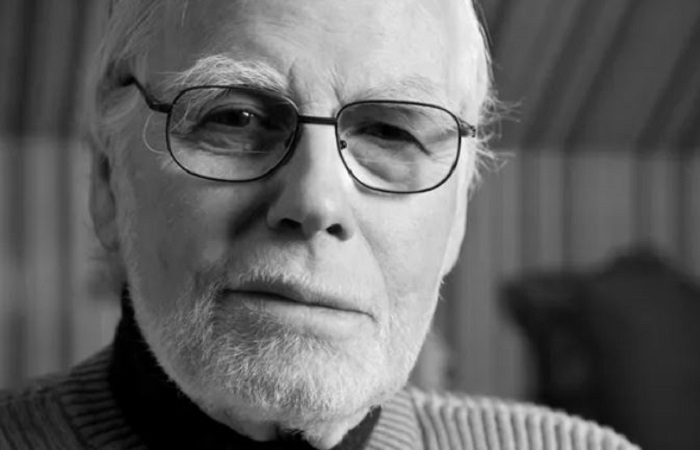
The gifted Frank D. Gilroy passed away in 2015, leaving behind not just a rich theatrical legacy, but also a small selection of fascinating films, and three sons – director and Unsung Auteur Dan Gilroy (Nightcrawler), writer/director Tony Gilroy (Michael Clayton, The Bourne Legacy) and editor John Gilroy (Billy Maddison, Suicide Squad) – who have all made their own mark on the world of cinema.
If you liked this story, check out our features on other unsung auteurs John Hough, Dick Richards, William Girdler, Rayland Jensen, Richard T. Heffron, Christopher Jones, Earl Owensby, James Bridges, Jeff Kanew, Robert Butler, Leigh Chapman, Joe Camp, John Patrick Shanley, William Peter Blatty, Peter Clifton, Peter R. Hunt, Shaun Grant, James B. Harris, Gerald Wilson, Patricia Birch, Buzz Kulik, Kris Kristofferson, Rick Rosenthal, Kirsten Smith & Karen McCullah, Jerrold Freeman, William Dear, Anthony Harvey, Douglas Hickox, Karen Arthur, Larry Peerce, Tony Goldwyn, Brian G. Hutton, Shelley Duvall, Robert Towne, David Giler, William D. Wittliff, Tom DeSimone, Ulu Grosbard, Denis Sanders, Daryl Duke, Jack McCoy, James William Guercio, James Goldstone, Daniel Nettheim, Goran Stolevski, Jared & Jerusha Hess, William Richert, Michael Jenkins, Robert M. Young, Robert Thom, Graeme Clifford, Frank Howson, Oliver Hermanus, Jennings Lang, Matthew Saville, Sophie Hyde, John Curran, Jesse Peretz, Anthony Hayes, Stuart Blumberg, Stewart Copeland, Harriet Frank Jr & Irving Ravetch, Angelo Pizzo, John & Joyce Corrington, Robert Dillon, Irene Kamp, Albert Maltz, Nancy Dowd, Barry Michael Cooper, Gladys Hill, Walon Green, Eleanor Bergstein, William W. Norton, Helen Childress, Bill Lancaster, Lucinda Coxon, Ernest Tidyman, Shauna Cross, Troy Kennedy Martin, Kelly Marcel, Alan Sharp, Leslie Dixon, Jeremy Podeswa, Ferd & Beverly Sebastian, Anthony Page, Julie Gavras, Ted Post, Sarah Jacobson, Anton Corbijn, Gillian Robespierre, Brandon Cronenberg, Laszlo Nemes, Ayelat Menahemi, Ivan Tors, Amanda King & Fabio Cavadini, Cathy Henkel, Colin Higgins, Paul McGuigan, Rose Bosch, Dan Gilroy, Tanya Wexler, Clio Barnard, Robert Aldrich, Maya Forbes, Steven Kastrissios, Talya Lavie, Michael Rowe, Rebecca Cremona, Stephen Hopkins, Tony Bill, Sarah Gavron, Martin Davidson, Fran Rubel Kuzui, Elliot Silverstein, Liz Garbus, Victor Fleming, Barbara Peeters, Robert Benton, Lynn Shelton, Tom Gries, Randa Haines, Leslie H. Martinson, Nancy Kelly, Paul Newman, Brett Haley, Lynne Ramsay, Vernon Zimmerman, Lisa Cholodenko, Robert Greenwald, Phyllida Lloyd, Milton Katselas, Karyn Kusama, Seijun Suzuki, Albert Pyun, Cherie Nowlan, Steve Binder, Jack Cardiff, Anne Fletcher ,Bobcat Goldthwait, Donna Deitch, Frank Pierson, Ann Turner, Jerry Schatzberg, Antonia Bird, Jack Smight, Marielle Heller, James Glickenhaus, Euzhan Palcy, Bill L. Norton, Larysa Kondracki, Mel Stuart, Nanette Burstein, George Armitage, Mary Lambert, James Foley, Lewis John Carlino, Debra Granik, Taylor Sheridan, Laurie Collyer, Jay Roach, Barbara Kopple, John D. Hancock, Sara Colangelo, Michael Lindsay-Hogg, Joyce Chopra, Mike Newell, Gina Prince-Bythewood, John Lee Hancock, Allison Anders, Daniel Petrie Sr., Katt Shea, Frank Perry, Amy Holden Jones, Stuart Rosenberg, Penelope Spheeris, Charles B. Pierce, Tamra Davis, Norman Taurog, Jennifer Lee, Paul Wendkos, Marisa Silver, John Mackenzie, Ida Lupino, John V. Soto, Martha Coolidge, Peter Hyams, Tim Hunter, Stephanie Rothman, Betty Thomas, John Flynn, Lizzie Borden, Lionel Jeffries, Lexi Alexander, Alkinos Tsilimidos, Stewart Raffill, Lamont Johnson, Maggie Greenwald and Tamara Jenkins.