



By Erin Free
FilmInk salutes the work of creatives who have never truly received the credit that they deserve. In this installment: director George Sidney, who helmed Viva Las Vegas, Bye Bye Birdie, Pal Joey, Scaramouche and Zigfield Follies.
Among Elvis Presley fans, there’s considerable conjecture as to which is the best of The King’s feature films. Some fans opt for the strong, focused films helmed by established, big-name directors (Michael Curtiz’s excellent 1958 drama King Creole, Don Siegel’s impressive 1960 western Flaming Star), while others praise the films that capture Elvis at his youthful, agile best (1957’s Jailhouse Rock) or those that just rate as bright, exuberant fun (1960’s GI Blues, 1961’s Blue Hawaii). A select few, meanwhile, plump for the more serious, less musically inclined films like 1961’s Wild In The Country or 1969’s A Change Of Habit.
But for our money, the best Elvis Presley movie is 1964’s Viva Las Vegas. It has the best title (and best title song); Elvis still appears enthused and excited by the whole acting game; The King gets his best female co-star in the utterly bodacious Ann-Margret; the concept and story are goofy without being as blatantly silly as many of Presley’s other films; the songs are great; and the film literally explodes off the screen in a glorious sweep of colour and energy. It’s a bright, entertaining slice of cinematic bliss that typifies everything good about Elvis’s much maligned movie output, and none of the bad.
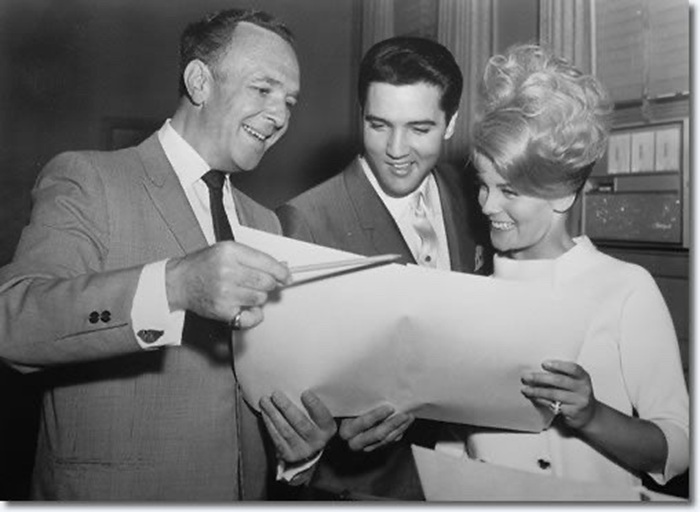
As with most of Elvis’s movies, the director of Viva Las Vegas is a largely under-celebrated talent. We’ve previously included a few of these “Elvis movie” filmmakers in the Unsung Auteurs column (nine-Elvis-movie champ Norman Taurog, Philip Dunne, William A. Graham), to which we’ll now add the late Gene Sidney. Though no stranger to awards and praise, Sidney is far from a recognised director today, and deserves a far greater level of appreciation considering his list of impressive achievements and cinematic innovations.

Born in 1916 in New York City, George Sidney was always headed straight for the entertainment industry. His father, Louis Sidney, was the CEO of the huge Loew’s Incorporated theatre chain. His mother, Hazael Mooney, was a vaudeville star and half of the aquacade team The Mooney Sisters. From an early age, Sidney accompanied his father to work at the famed Radio City Music Hall, where he received a crash course in choreography, set design, and stage direction. At five years old, he played the lead role in The Littlest Cowboy, a 1921 film with western icon Tom Mix.
After an alleged dalliance with a showgirl from The Rockettes, fifteen-year-old Sidney was sent away to Los Angeles to serve an apprenticeship in the movie business courtesy of Metro-Goldwyn-Mayer studio boss Louis B. Mayer. Sidney began as a dog walker and errand boy in the early 1930s, and eventually moved into the editorial department, where he began directing screen tests for the studio. A quick study, Sidney was directing shorts by his early twenties (two of which received Oscars), and was drafted in to helm the hugely popular Our Gang series.

Though still young, Sidney was firmly entrenched as a studio stalwart at MGM, and made his feature debut with Free And Easy (1941), replacing director Edward Buzzell just prior to production. After making a strong fist of it, Sidney was again called in at the last minute, this time on Pacific Rendezvous (1942), while still making shorts for the studio. During WW2, Sidney was assigned to The US Air Force to supervise The Atomic Energy Commission Film Program, for which he received The Certificate Of Merit from The Department Of Defense and The Plaque Of Honor. In a career entry boasted by only a select few, Sidney was also a major player in the filming of nuclear testing projects, and applied his military experience to the war movie Pilot No. 5 (1943).
With his childhood background in the theatre, Sidney was most comfortable with the big screen musical, and soon became MGM’s go-to director for some of its biggest films. With his knack for costuming and choreography on abundant display, Sidney directed the ebullient likes of Thousands Cheer (1943), starring Gene Kelly and Kathryn Grayson; Bathing Beauty (1944), Esther Williams’ first Technicolor musical; Anchors Aweigh (1945) with Gene Kelly, Grayson and Frank Sinatra; The Harvey Girls (1946), starring Judy Garland and Angela Lansbury; Holiday In Mexico (1946); Annie Get Your Gun (1950); Show Boat (1951); Kiss Me Kate (1953) and Jupiter’s Darling (1955).

There are huge musical titles in there, but George Sidney’s name is rarely mentioned in the same breath as the likes of the feted Vincente Minnelli, Stanley Donen or Robert Wise. As well as his bright, colourful musicals, Sidney also proved a dab hand with swashbuckling adventure (1948’s The Three Musketeers, 1952’s Scaramouche), drama (1947’s Cass Timberlane with Spencer Tracy and Lana Turner, 1949’s Red Danube) and romantic comedy (1951’s Key To The City with Clark Gable and Loretta Young), and eventually moved to rival studio Columbia, which caused a minor stir at the time. The busy director also founded his own production company, George Sidney Productions.
Sidney’s flair for colourful entertainment continued through titles like The Eddy Duchin Story (1956); Pal Joey (1957), a musical with Frank Sinatra, Kim Novak and Rita Hayworth; Who Was That Lady? (1960) with Dean Martin and Tony Curtis; and Pepe (1960), a vehicle for Mexican star Cantiflas boasting a huge cast of guest players in glittery support. Though again drafted in to replace another director, Sidney enjoyed one of his biggest hits with 1963’s effervescent Bye Bye Birdie, a big hit and major milestone for the filmmaker. “That was a great deal of fun,” Sidney said of the experience. “It was a young people’s picture, with a lot of bright, gay noisy cast members yelling and screaming.”
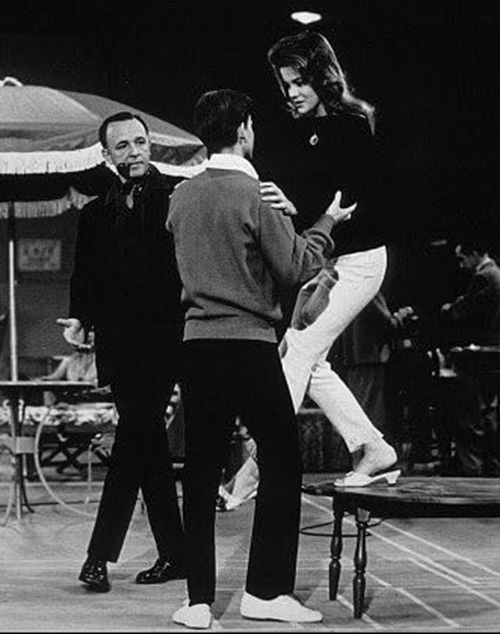
Inspired by Elvis Presley’s induction into The US Army, the film follows rock star Conrad Birdie (Jesse Pearson), who performs in a small town as a means of farewell before he joins the army. Though filled with great songs and big stars (Janet Leigh, Dick Van Dyke on debut, Maureen Stapleton, TV legend Ed Sullivan as himself), Bye Bye Birdie is best remembered as the career launchpad for the dynamic Ann-Margret, who steals the show with her vivacious screen presence and extraordinary dance moves. “I’ve been in this business 30 years and seen no one with her fire,” Sidney enthused over the gorgeous star. “When she goes, it’s electric.” [For much more on Ann-Margret, click here]
Sidney worked again with Ann-Marget in 1964 with Viva Las Vegas, famously teaming the actress with music superstar Elvis Presley for the fast-moving tale of a race car driver and his new love. The chemistry between the stars is voluble, and Sidney brings his trademark energy and style to the film, winningly amping everything up to eleven, and creating what would become a major hit. The director’s attitude to Viva Las Vegas, however, was slightly ambivalent. Though Sidney allegedly remarked to his wife that it was the worst movie he ever made, the director eventually warmed to the film, which stands today as one of his most cherished works.

Sidney helmed two more films (1966’s The Swinger, again with Ann-Margret, and 1967’s Half A Sixpence, with Tommy Steele) before retiring from directing. Though best known for his musicals, Sidney was also a major but largely unheralded figure in the world of animation. He was close friends with MGM animation directors William Hanna and Joseph Barbera, and utilised their character Jerry Mouse alongside Gene Kelly in his film Anchors Aweigh (1945), one of the first instances of combined live action and animation filming techniques. After MGM closed its animation studio in 1957, Sidney helped Hanna and Barbera forge a deal with Screen Gems, which led to the creation of small screen animation powerhouse Hanna-Barbera Productions. Sidney was a shareholder in the company, and thus stands partly responsible for cartoon staples like The Flintstones, Scooby-Doo, Jonny Quest, Super Friends, and The Smurfs.
George Sidney passed away in 2002 at the age of 85, and though certainly celebrated, he’s not celebrated nearly enough.
If you liked this story, check out our features on other unsung auteurs Philip Dunne, Zak Hilditch, Luke Sparke, Cyrus Nowrasteh, Morgan Matthews, Tom Laughlin, Diane Keaton, Ed Hunt, Nancy Savoca, Robert Vincent O’Neil, Marvin J. Chomsky, Sam Firstenberg, Jack Sholder, Richard Gray, Giuseppe Andrews, Gus Trikonis, Greydon Clark, Frances Doel, Gordon Douglas, Billy Fine, Craig R. Baxley, Harvey Bernhard, Bert I. Gordon, James Fargo, Jeremy Kagan, Robby Benson, Robert Hiltzik, John Carl Buechler, Rick Carter, Paul Dehn, Bob Kelljan, Kevin Connor, Ralph Nelson, William A. Graham, Judith Rascoe, Michael Pressman, Peter Carter, Leo V. Gordon, Dalene Young, Gary Nelson, Fred Walton, James Frawley, Pete Docter, Max Baer Jr., James Clavell, Ronald F. Maxwell, Frank D. Gilroy, John Hough, Dick Richards, William Girdler, Rayland Jensen, Richard T. Heffron, Christopher Jones, Earl Owensby, James Bridges, Jeff Kanew, Robert Butler, Leigh Chapman, Joe Camp, John Patrick Shanley, William Peter Blatty, Peter Clifton, Peter R. Hunt, Shaun Grant, James B. Harris, Gerald Wilson, Patricia Birch, Buzz Kulik, Kris Kristofferson, Rick Rosenthal, Kirsten Smith & Karen McCullah, Jerrold Freeman, William Dear, Anthony Harvey, Douglas Hickox, Karen Arthur, Larry Peerce, Tony Goldwyn, Brian G. Hutton, Shelley Duvall, Robert Towne, David Giler, William D. Wittliff, Tom DeSimone, Ulu Grosbard, Denis Sanders, Daryl Duke, Jack McCoy, James William Guercio, James Goldstone, Daniel Nettheim, Goran Stolevski, Jared & Jerusha Hess, William Richert, Michael Jenkins, Robert M. Young, Robert Thom, Graeme Clifford, Frank Howson, Oliver Hermanus, Jennings Lang, Matthew Saville, Sophie Hyde, John Curran, Jesse Peretz, Anthony Hayes, Stuart Blumberg, Stewart Copeland, Harriet Frank Jr & Irving Ravetch, Angelo Pizzo, John & Joyce Corrington, Robert Dillon, Irene Kamp, Albert Maltz, Nancy Dowd, Barry Michael Cooper, Gladys Hill, Walon Green, Eleanor Bergstein, William W. Norton, Helen Childress, Bill Lancaster, Lucinda Coxon, Ernest Tidyman, Shauna Cross, Troy Kennedy Martin, Kelly Marcel, Alan Sharp, Leslie Dixon, Jeremy Podeswa, Ferd & Beverly Sebastian, Anthony Page, Julie Gavras, Ted Post, Sarah Jacobson, Anton Corbijn, Gillian Robespierre, Brandon Cronenberg, Laszlo Nemes, Ayelat Menahemi, Ivan Tors, Amanda King & Fabio Cavadini, Cathy Henkel, Colin Higgins, Paul McGuigan, Rose Bosch, Dan Gilroy, Tanya Wexler, Clio Barnard, Robert Aldrich, Maya Forbes, Steven Kastrissios, Talya Lavie, Michael Rowe, Rebecca Cremona, Stephen Hopkins, Tony Bill, Sarah Gavron, Martin Davidson, Fran Rubel Kuzui, Elliot Silverstein, Liz Garbus, Victor Fleming, Barbara Peeters, Robert Benton, Lynn Shelton, Tom Gries, Randa Haines, Leslie H. Martinson, Nancy Kelly, Paul Newman, Brett Haley, Lynne Ramsay, Vernon Zimmerman, Lisa Cholodenko, Robert Greenwald, Phyllida Lloyd, Milton Katselas, Karyn Kusama, Seijun Suzuki, Albert Pyun, Cherie Nowlan, Steve Binder, Jack Cardiff, Anne Fletcher ,Bobcat Goldthwait, Donna Deitch, Frank Pierson, Ann Turner, Jerry Schatzberg, Antonia Bird, Jack Smight, Marielle Heller, James Glickenhaus, Euzhan Palcy, Bill L. Norton, Larysa Kondracki, Mel Stuart, Nanette Burstein, George Armitage, Mary Lambert, James Foley, Lewis John Carlino, Debra Granik, Taylor Sheridan, Laurie Collyer, Jay Roach, Barbara Kopple, John D. Hancock, Sara Colangelo, Michael Lindsay-Hogg, Joyce Chopra, Mike Newell, Gina Prince-Bythewood, John Lee Hancock, Allison Anders, Daniel Petrie Sr., Katt Shea, Frank Perry, Amy Holden Jones, Stuart Rosenberg, Penelope Spheeris, Charles B. Pierce, Tamra Davis, Norman Taurog, Jennifer Lee, Paul Wendkos, Marisa Silver, John Mackenzie, Ida Lupino, John V. Soto, Martha Coolidge, Peter Hyams, Tim Hunter, Stephanie Rothman, Betty Thomas, John Flynn, Lizzie Borden, Lionel Jeffries, Lexi Alexander, Alkinos Tsilimidos, Stewart Raffill, Lamont Johnson, Maggie Greenwald and Tamara Jenkins.

