



By Erin Free
FilmInk salutes the work of creatives who have never truly received the credit that they deserve. In this installment: writer and director Joan Tewkesbury, who penned Robert Altman’s Nashville and Thieves Like Us, and helmed the feature Old Boyfriends, and a host of telemovies.
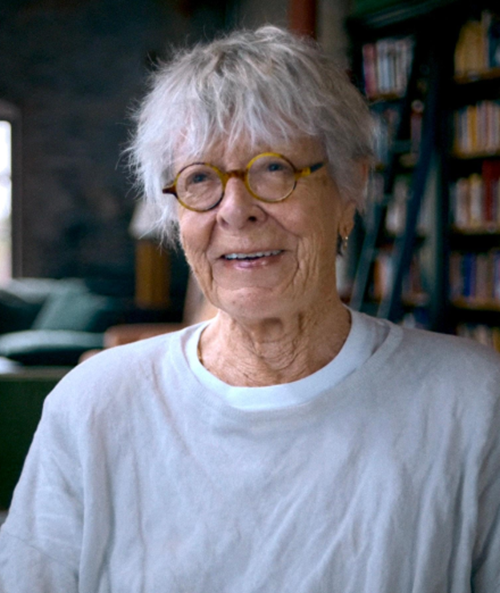
The considerably under-celebrated 89-year-old Joan Tewkesbury has much in common with many previous entries in the Unsung Auteurs column: she is a female creative; her career exists somewhat in the shadow of a feted, hugely iconic cinematic talent; she works across a variety of creative disciplines; and much of her directorial work has been in the fields of episodic TV and telemovies. Just being one of these things can lead to serious under-appreciation, but being all of them makes it downright unavoidable.
Joan Tewkesbury was born in 1936, and began her creative career as an actress and dancer. She made her first appearance at age ten in the 1947 musical The Unfinished Dance with Margaret O’Brien and Cyd Charisse, and eventually moved onto acting work in TV series like My Three Sons, It’s A Man’s World and The Tycoon, as well as acting, directing, teaching and dance choreographing extensively in the theatre. Tewkesbury’s career really began to calibrate properly, however, when she entered the highly creative, wholly singular creative world of film director Robert Altman. At the time their paths first crossed, Altman had been a long-serving director of television before breaking out in a major way with his subversive 1970 anti-war hit M*A*S*H.
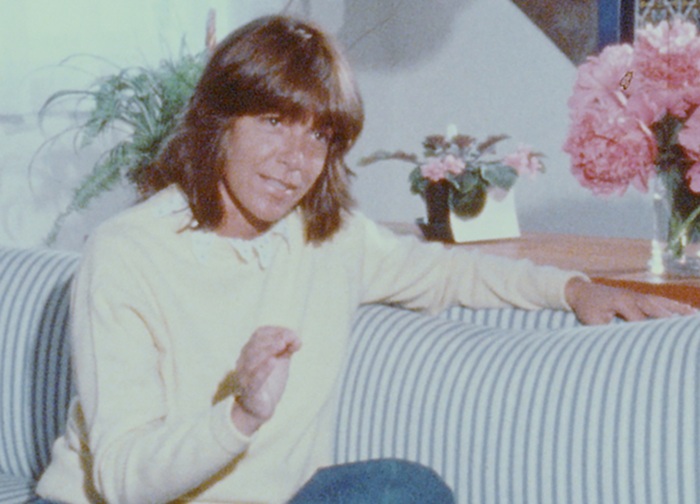
After briefly meeting the director while in the company of friend, fellow actor, and future Altman regular Michael Murphy, Tewkesbury took the bold step of fronting Altman in his office and asking if she could take on a kind of “work experience”, observational role within his production company. Altman allowed Tewkesbury to sit in on the editing of his latest film, 1970’s Brewster McCloud, but then put her to work, installing the aspiring filmmaker as script supervisor on his revisionist 1971 western McCabe & Mrs. Miller. “It was like film school for six months,” Tewkesbury told Interview Magazine in 2015. “It was awful, but it was great. Sometimes awful and great go hand-in-hand.”
Though Tewkesbury was keen to direct for film, Altman suggested that – being a woman of minimal screen experience – nobody would hire her, and that she should first write a screenplay. Tewkesbury penned a script based on the dissolution of her marriage that Altman agreed to produce, but the director was so impressed that he offered her the chance to work on the screenplay for his Depression-era crime drama Thieves Like Us. Adapted from the novel by Edward Anderson with an initial draft by Calder Willingham, and with the cast of Shelley Duvall, Keith Carradine, Bert Remsen, Louise Fletcher, and John Schuck already in place, Tewkesbury excellently tailored the story to the needs of the actors and their director. “We shot in Mississippi, and that was the first time I realised how much a place is a character,” Tewkesbury told Interview.
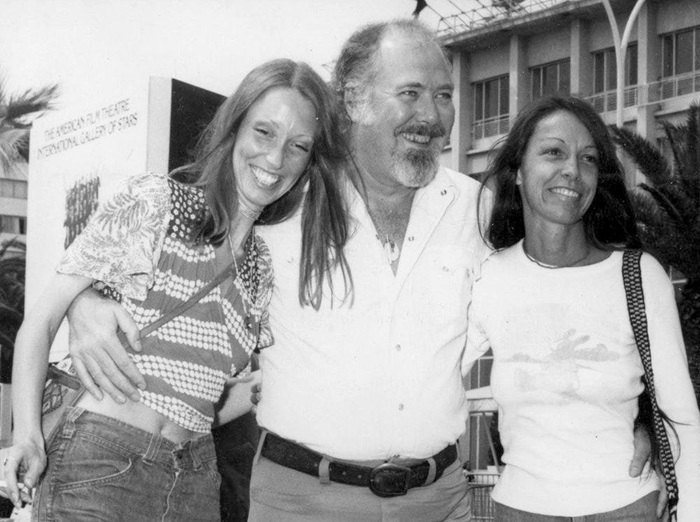
After that fruitful collaboration came what many still view as Tewkesbury’s greatest contribution to American cinema. Working from diaries created during an extended visit to the eponymous city, Tewkesbury’s huge, sprawling, kaleidoscopic script for Nashville provided Altman with the blueprint for his loose, freewheeling 1975 masterpiece. “The city of Nashville was built in a circle,” Tewkesbury told MovieJawn in 2025. “So the movie is also built in a circle. If you came in the front door and went out the back door, what you did in the middle could be added to. The beauty of Altman was that an atmosphere was created so that people felt they were participating in something rather than being given a bunch of lines and told to say them.”
Though Tewkesbury would eventually work again (uncredited) with Altman on his 1994 ensemble flick Prêt-à-Porter, the duo had a major falling out after the mammoth success that was Nashville. “I think he was not happy because I got sole [writing] credit, being very honest,” Tewkesbury told MovieJawn. “We were supposed to do E. L. Doctorow’s Ragtime. I had started to break down the book. He was shooting Buffalo Bill And the Indians, Or Sitting Bull’s History Lesson, and I was going to be a day late to get to Calgary, and it made him angry. So I was fired, and then a week later, he was fired. So that was that. I worked with him again when he was doing Prêt-à-Porter. I went to Paris and did a rough treatment. Then it got waylaid and he had another writer come in.”
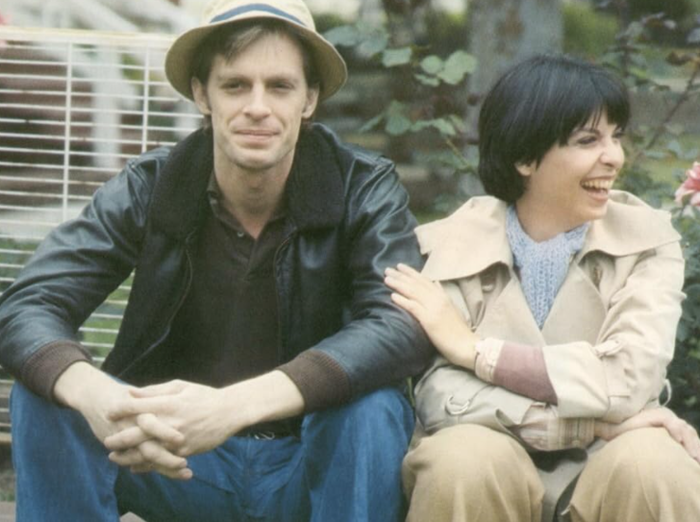
The split with Altman would ironically turn out somewhat favourably for Tewkesbury. With a new cache courtesy of Nashville, Tewkesbury was able to make her first film as a director. A witty, incisive comedy drama about the frailty of the human condition and the complexity of male-female relationships, 1979’s Old Boyfriends was written by Taxi Driver scribe Paul Schrader and his brother Leonard, and starred Talia Shire (Rocky, The Godfather) as a psychiatrist who reevaluates her life when her marriage breaks up. To do this, she attempts to reconnect with the past boyfriends who had the greatest impact upon her. Smart, funny, emotionally truthful and exceedingly well cast (John Belushi, Richard Jordan, Keith Carradine, John Houseman, Buck Henry and Gerrit Graham also star), Old Boyfriends was a very impressive debut for Tewkesbury. The film, however, was not a great success.
“There were challenges,” Tewkesbury told Notebook in 2019 of making Old Boyfriends. “I think the reason we got it made was because of Paul Schrader. He was on the rise and that’s what we went to the bank on. That and Talia, since she had just done Rocky. The rest of the men in the cast were the icing on the cake. It was hard. And there were people who said, ‘Why are you going to let her direct?’ People come out of the woodwork in strange ways to attack your reputation. After that, in terms of trying to get my stuff done, it was impossible. And so I just thought, ‘Okay, fine, I’m moving into TV.’ Carol Burnett asked me if I’d be interested in adapting a book and directing, and I said yes. My agent at the time said, ‘If you get slaughtered in television, you’re never going to be able to go back to movies.’ And I said, ‘So far, that door hasn’t been open quite so wide.’”
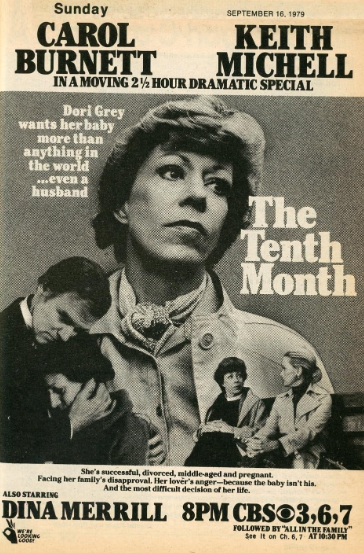
And so it was to television that Joan Tewkesbury went, and pretty much stayed. She would showcase her skills with narrative and gifts for working with actors on a wide range of excellent telemovies: 1979’s The Tenth Month (starring the aforementioned Carol Burnett as a middle-aged woman raising a baby on her own), 1981’s The Acorn People (a deeply moving look at a summer camp for children with disabilities starring Cloris Leachman), 1989’s Cold Sassy Tree (a southern-set drama with Faye Dunaway and Richard Widmark), 1990’s Sudie And Simpson (an excellent racially themed period flick with Louis Gossett Jr. and Sara Gilbert), 1991’s Wild Texas Wind (a domestic violence drama with Dolly Parton and Gary Busey!), and several more. Tewkesbury also directed episodes of TV series like Northern Exposure, Chicago Hope, Picket Fences, Felicity and The Guardian.
Also a novelist, playwright and writing teacher, Joan Tewkesbury is a huge talent deserving of far, far greater praise and recognition. “A lot of this career has not been a straight shot, and one of the reasons I went into television is I couldn’t get any movies made,” Tewkesbury told Interview Magazine in 2015. I didn’t want to sit around and wait for the next 400 years. There were only four or five women who were even trying to do films at that time. I wasn’t married to anyone who was supporting or financing this stuff, so television was my best bet. And I was able to work with some fabulous women, like Carol Burnett, Dolly Parton, Faye Dunaway, Olympia Dukakis, Sara Gilbert…these were great dames. And in television, you could write it, direct it, and get it on the airwaves. And it didn’t cost a fortune. Yes, you only had 18 or 20 or 23 days to shoot this stuff, but that was okay.”
If you liked this story, check out our features on other unsung auteurs Jamaa Fanaka, Jack Starrett, Joseph Sargent, Jeffrey Schwarz, George Sidney, Philip Dunne, Zak Hilditch, Luke Sparke, Cyrus Nowrasteh, Morgan Matthews, Tom Laughlin, Diane Keaton, Ed Hunt, Nancy Savoca, Robert Vincent O’Neil, Marvin J. Chomsky, Sam Firstenberg, Jack Sholder, Richard Gray, Giuseppe Andrews, Gus Trikonis, Greydon Clark, Frances Doel, Gordon Douglas, Billy Fine, Craig R. Baxley, Harvey Bernhard, Bert I. Gordon, James Fargo, Jeremy Kagan, Robby Benson, Robert Hiltzik, John Carl Buechler, Rick Carter, Paul Dehn, Bob Kelljan, Kevin Connor, Ralph Nelson, William A. Graham, Judith Rascoe, Michael Pressman, Peter Carter, Leo V. Gordon, Dalene Young, Gary Nelson, Fred Walton, James Frawley, Pete Docter, Max Baer Jr., James Clavell, Ronald F. Maxwell, Frank D. Gilroy, John Hough, Dick Richards, William Girdler, Rayland Jensen, Richard T. Heffron, Christopher Jones, Earl Owensby, James Bridges, Jeff Kanew, Robert Butler, Leigh Chapman, Joe Camp, John Patrick Shanley, William Peter Blatty, Peter Clifton, Peter R. Hunt, Shaun Grant, James B. Harris, Gerald Wilson, Patricia Birch, Buzz Kulik, Kris Kristofferson, Rick Rosenthal, Kirsten Smith & Karen McCullah, Jerrold Freeman, William Dear, Anthony Harvey, Douglas Hickox, Karen Arthur, Larry Peerce, Tony Goldwyn, Brian G. Hutton, Shelley Duvall, Robert Towne, David Giler, William D. Wittliff, Tom DeSimone, Ulu Grosbard, Denis Sanders, Daryl Duke, Jack McCoy, James William Guercio, James Goldstone, Daniel Nettheim, Goran Stolevski, Jared & Jerusha Hess, William Richert, Michael Jenkins, Robert M. Young, Robert Thom, Graeme Clifford, Frank Howson, Oliver Hermanus, Jennings Lang, Matthew Saville, Sophie Hyde, John Curran, Jesse Peretz, Anthony Hayes, Stuart Blumberg, Stewart Copeland, Harriet Frank Jr & Irving Ravetch, Angelo Pizzo, John & Joyce Corrington, Robert Dillon, Irene Kamp, Albert Maltz, Nancy Dowd, Barry Michael Cooper, Gladys Hill, Walon Green, Eleanor Bergstein, William W. Norton, Helen Childress, Bill Lancaster, Lucinda Coxon, Ernest Tidyman, Shauna Cross, Troy Kennedy Martin, Kelly Marcel, Alan Sharp, Leslie Dixon, Jeremy Podeswa, Ferd & Beverly Sebastian, Anthony Page, Julie Gavras, Ted Post, Sarah Jacobson, Anton Corbijn, Gillian Robespierre, Brandon Cronenberg, Laszlo Nemes, Ayelat Menahemi, Ivan Tors, Amanda King & Fabio Cavadini, Cathy Henkel, Colin Higgins, Paul McGuigan, Rose Bosch, Dan Gilroy, Tanya Wexler, Clio Barnard, Robert Aldrich, Maya Forbes, Steven Kastrissios, Talya Lavie, Michael Rowe, Rebecca Cremona, Stephen Hopkins, Tony Bill, Sarah Gavron, Martin Davidson, Fran Rubel Kuzui, Elliot Silverstein, Liz Garbus, Victor Fleming, Barbara Peeters, Robert Benton, Lynn Shelton, Tom Gries, Randa Haines, Leslie H. Martinson, Nancy Kelly, Paul Newman, Brett Haley, Lynne Ramsay, Vernon Zimmerman, Lisa Cholodenko, Robert Greenwald, Phyllida Lloyd, Milton Katselas, Karyn Kusama, Seijun Suzuki, Albert Pyun, Cherie Nowlan, Steve Binder, Jack Cardiff, Anne Fletcher ,Bobcat Goldthwait, Donna Deitch, Frank Pierson, Ann Turner, Jerry Schatzberg, Antonia Bird, Jack Smight, Marielle Heller, James Glickenhaus, Euzhan Palcy, Bill L. Norton, Larysa Kondracki, Mel Stuart, Nanette Burstein, George Armitage, Mary Lambert, James Foley, Lewis John Carlino, Debra Granik, Taylor Sheridan, Laurie Collyer, Jay Roach, Barbara Kopple, John D. Hancock, Sara Colangelo, Michael Lindsay-Hogg, Joyce Chopra, Mike Newell, Gina Prince-Bythewood, John Lee Hancock, Allison Anders, Daniel Petrie Sr., Katt Shea, Frank Perry, Amy Holden Jones, Stuart Rosenberg, Penelope Spheeris, Charles B. Pierce, Tamra Davis, Norman Taurog, Jennifer Lee, Paul Wendkos, Marisa Silver, John Mackenzie, Ida Lupino, John V. Soto, Martha Coolidge, Peter Hyams, Tim Hunter, Stephanie Rothman, Betty Thomas, John Flynn, Lizzie Borden, Lionel Jeffries, Lexi Alexander, Alkinos Tsilimidos, Stewart Raffill, Lamont Johnson, Maggie Greenwald and Tamara Jenkins.