


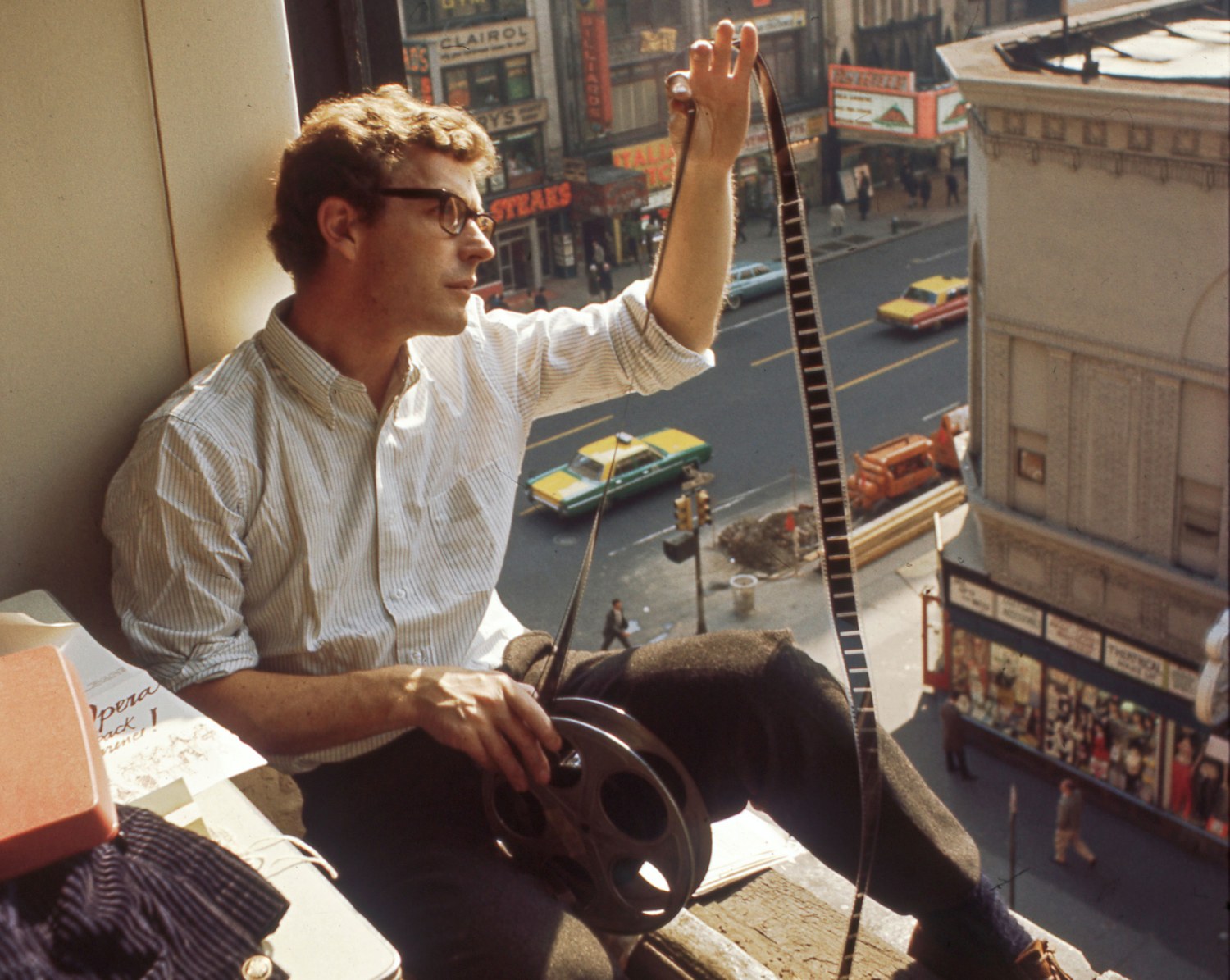
by Dov Kornits
The Swedish director of Elvira Madigan and All Things Fair, among many others, and famous critic of the universally revered Ingmar Bergman, is the subject of Matthias Nohrborg’s fascinating documentary Being Bo Widerberg.
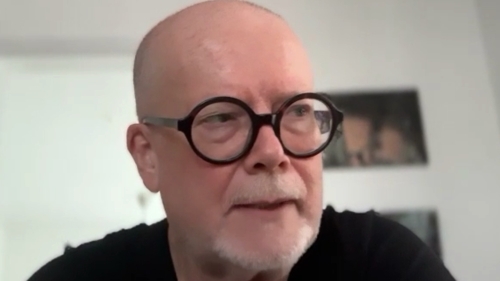 “I was a big fan of Widerberg when I was a teenager, then when I studied film theory at university. And then I forgot him,” says long-time film distributor (TriArt Film) and producer Mattias Nohrborg, who turns co-director with Being Bo Widerberg, a documentary about pioneering Swedish filmmaker Bo Widerberg.
“Like the rest of the film world, we forgot him,” Nohrborg continues about Widerberg and his filmography. “I watched his films again five years ago and I couldn’t understand why he was forgotten. Then I talked with my good director friend, who’s also in the film, Olivier Assayas, who used to be a critic and an editor at Cahiers du Cinema. He was a very close friend of Ingmar Bergman, but he was also very, very obsessed by Widerberg. We had talks and both of us said, ‘How could it be that Widerberg is forgotten?’”
Mattias Nohrborg had actually produced a documentary about Ingmar Bergman, the 2018 4-hour Bergman – A Year in the Life, which premiered at Cannes Classics, the same section as Being Bo Widerberg almost a decade later.
“For me, making Being Bo Widerberg was a journey where I tried to understand him and his films. I also tried to understand if it had something to do with his personal life. He was very ill for many, many years.”

When we ask why it took Nohrborg so long to turn director, with a film about a director no less, the industry veteran has a very practical reason. “It was very much a personal journey for me as well, so it was quite natural for me to do the film together with a friend, Jon Asp, who was in a similar situation.
“Directing came quite naturally because I’ve produced about 40 films, feature films and documentaries. And as a creative producer, so to say, you’re very close to the director. Even if I haven’t been the director, I’ve been very close to the directors I produce.”
Nohrborg was also very close to Ingmar Bergman, who he would talk to regularly. “Especially the last 10 years of Bergman’s life because he lived on an island where he had his own cinema and he rented films from me all the time. He’d call me every week, and we had long film discussions; about Australian films! Jane Campion was one of his favourites. Peter Weir, and also Peter Jackson, who is of course from New Zealand, but he loved Heavenly Creatures.
“When we had talks, we always talked about Widerberg as well. He was very sad over this conflict because he didn’t want to have the conflict, but Widerberg couldn’t accept him.
“Widerberg’s films were much more modern than the Bergman films, which are a little bit old-fashioned.
“Widerberg used to be a novelist and a critic. And he wrote this book, a little thin book, but it was a kind of statement about the old Swedish cinema. And Bergman was a central part of the old Swedish cinema. He thought that Bergman was conservative. Widerberg wanted to show the modern Sweden, the present Sweden. How is it to be a person who lives in Sweden right now? And Bergman, he thought was old-fashioned talking about God and demons and things like that.”
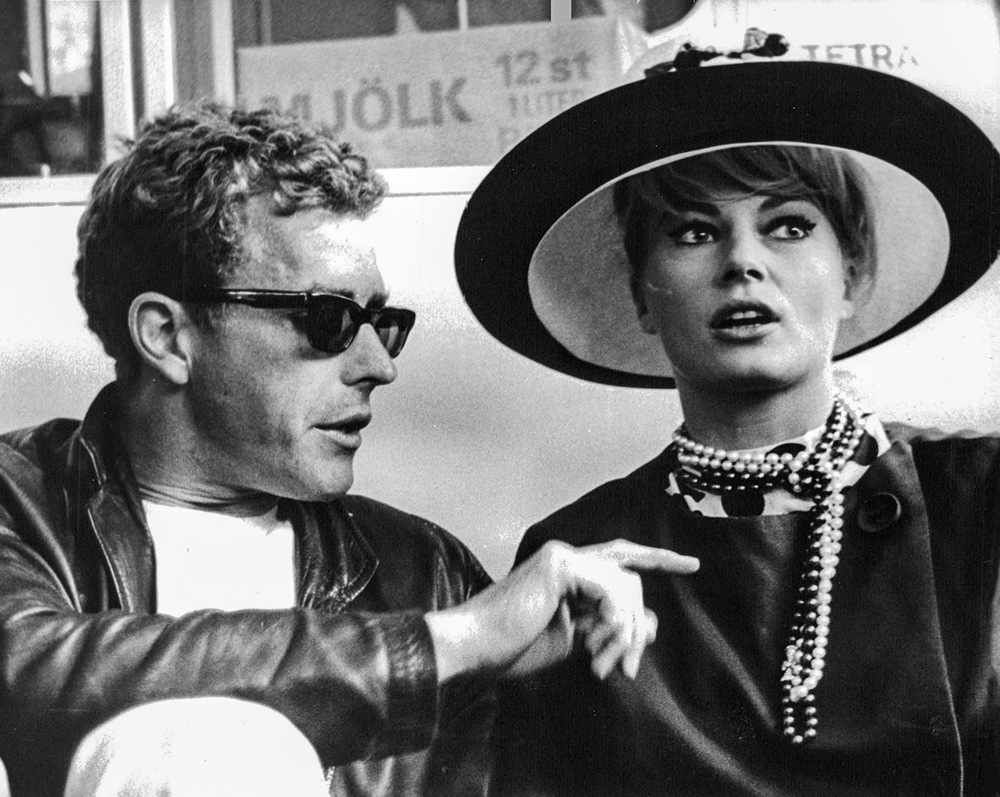
As influential as Bergman is, Widerberg is also revered, and you can see his influence across cinema, particularly in Scandinavia. “Ruben Östlund, who is in the film, for him, Widerberg is an icon. Roy Andersson worked with Widerberg a lot. You also have Lars Von Trier, who is also in the film, but he didn’t want to be seen, but for him, Joe Hill is in the top five films ever made. And not only Scandinavian filmmakers, he also influenced Olivier Assayas, Robert Guédiguian, Michael Haneke.”
Speaking of Joe Hill (1971), why is that film so hard to see? “Most of his films are owned by Svenska [Swedish Film Institute], who also have a majority of Bergman films, but he made Joe Hill through his own company. It’s actually owned by the family, the four kids, and the problem is that the kids don’t talk to each other, and if you want to screen Joe Hill, you have to have all of them to agree to allow it…. But it’s a masterpiece,” Nohrborg assures us.
Pulling triple duty when it came to releasing Being Bo Widerberg, Nohrborg also distributed the film to great success. “It worked well in Sweden, Denmark, Finland, Holland and France.
“Swedish documentaries work very well. I produce more or less an average one documentary a year, which I also distribute and they work in general. Of course, not all of them, but in general they work very well theatrically. And then of course you have the television, and you have the streaming services, including our own,” he says.
Being Bo Widerberg screens at the Nordic Film Festival. Widerberg’s Raven’s End (1963), Elvira Madigan (1967) and Ådalen 31 (1969) [and Bergman’s Persona] are also screening at the Nordic Film Festival.

