


By Erin Free
FilmInk salutes the work of creatives who have never truly received the credit that they deserve. In this installment: screenwriter Rudy Wurlitzer, who penned Two-Lane Blacktop, Pat Garrett & Billy The Kid, Walker, Little Buddha and more.
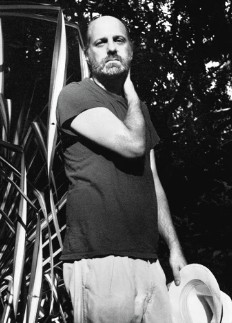
For someone connected to so many beautifully burnished, bona fide cult movies, the now 89-year-old Rudy Wurlitzer doesn’t get anywhere near the kind of recognition he deserves. The fact that he’s a writer better known for his novels than he is for his screenplays doesn’t help, nor does the fact that the sole film he directed has pretty much dropped off the radar. Also not helping Wurlitzer’s metaphorical claim to fame is the fact that he has largely stood in the long, dark, identity-obscuring shadows cast by legendary and iconoclastic filmmakers. But for someone whose work is so diffuse and enigmatic, this sparsity of fair and proper celebration is strangely fitting.
Rudolph Wurlitzer was born in 1939 in Cincinnati, Ohio, but moved with his family at an early age to New York City. His grandfather was Franz Rudolph Wurlitzer, the musical importer and famed founder of the iconic jukebox company of the same name, but Rudy saw little to none of the money generated by the company. In his late teens, Wurlitzer worked on an oil tanker before briefly serving in The US Army and studying at Columbia University. He travelled the world and worked for a time as the secretary to British author and poet Robert Graves, which proved a formative experience. Wurlitzer returned to New York City in the mid-1960s, where he quickly embedded himself within the burgeoning artistic community.
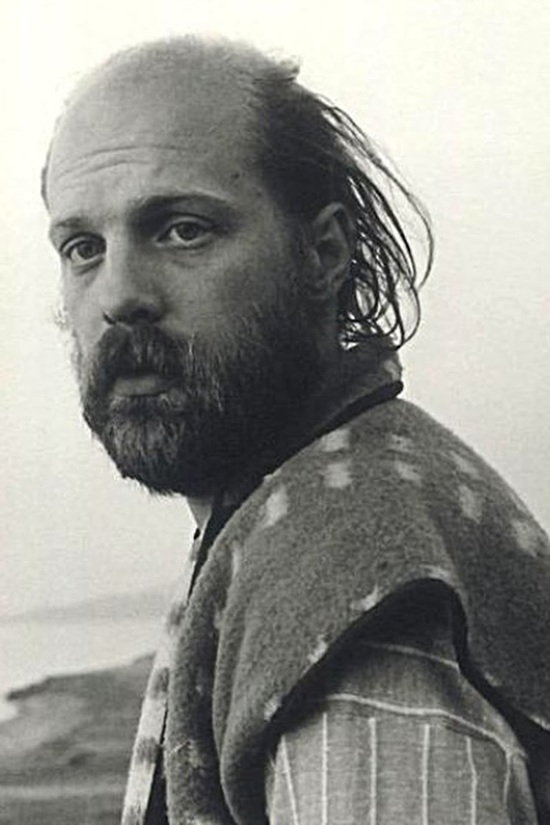
In the late 1960s, Wurlitzer focused tight on writing, publishing his first novel Nog in 1968, which he followed in 1970 with Flats. Both were minimalist in tone, psychedelic in flavour, and experimental in form and content. Their counterculture stance got Wurlitzer noticed by all the right people, including the more forward-thinking members of the filmmaking community. Though never seemingly his intention to work in the film industry, Wurlitzer was beckoned by like-minded creatives at exactly the right time. The antiquated studio system was crumbling, and for a brief time, the lunatics seemingly took over the asylum, the top offices of which had been well and truly raided by Dennis Hopper and Peter Fonda after the game-changing success of Easy Rider.
“The frontier that I’m involved with is an interior frontier,” Wurlitzer has said of his creative impulses. This would hardly be seen as catnip for movie studios today, but in the late 1960s, this was the kind of headspace they were tapping into. Wurlitzer first teamed with director Jim McBride, whose 1967 film David Holzman’s Diary had played delectably with the cinematic form through its daring mix of documentary and metafiction. Though McBride would eventually make more commercially minded movies (1986’s The Big Easy, 1989’s Great Balls Of Fire!), he was indeed a very heavy experimentalist in the late 1960s.
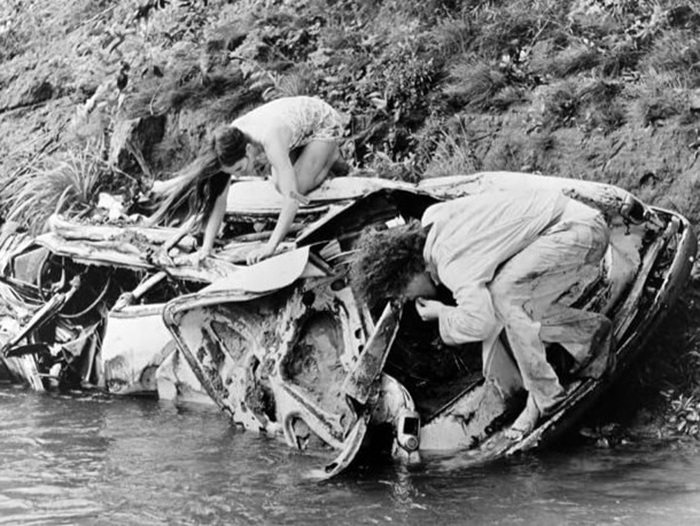
McBride and Wurlitzer collaborated on the trippy, low-budget 1971 film Glen And Randa, a post-apocalyptic freak-fest in which a young couple travel from the safety of their rural community to a big city. Cast with unknowns and filled with nudity and sex, the film is pretty much forgotten today, but it remains an appropriately curious entrée into the world of filmmaking for a profoundly outside-the-mainstream figure like Rudy Wurlitzer.
Rudy Wurlitzer was next beckoned by director Monte Hellman, who had made a name for himself with the 1966 “acid westerns” Ride In The Whirlwind and The Shooting, which were shot back-to-back in the desert and starred a young Jack Nicholson. Scratchy, hallucinogenic, minimalist and dreamily weird, these are wide-open-spaces westerns like no other, and Monte Hellman was looking to kick it up a notch for his next project.
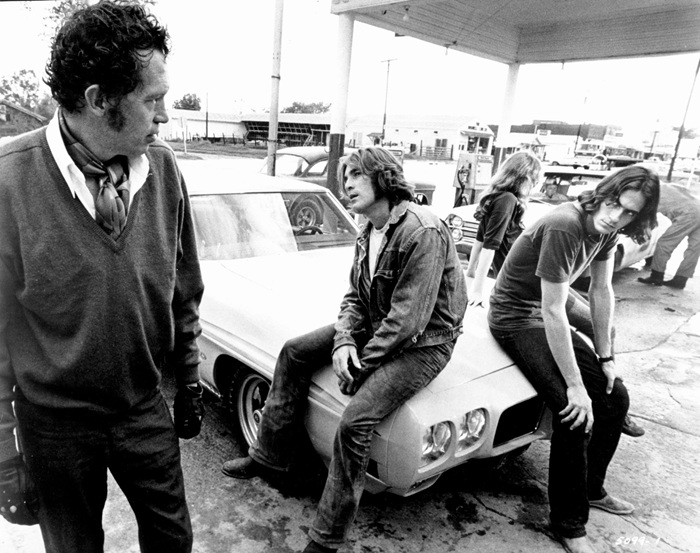
A huge fan of Wurlitzer’s novels Nog and Flats – and something of a creative kindred spirit in terms of their deeply opaque leanings – Hellman invited the screenwriter to completely rewrite an existing script by veteran western scribe Will Corry that would eventually become the 1971 cult classic Two-Lane Blacktop. In an unprecedented move, Wurlitzer’s script was printed in full in the April 1971 issue of Esquire, with the esteemed mag heralding Hellman’s work as the picture of the year.
Backed by major studio Universal (!), Two-Lane Blacktop was a financial failure, but today stands tall – though with casually stooped shoulders and a gloriously I-don’t-give-a-fuck gait – as a bona fide cult essential of the era, celebrated by many as a real one-of-a-kind. When it comes to that celebration, however, it’s usually reserved for Monte Hellman’s grainy visionary flair, and the wonderfully slack, somnambulistic performances of musos James Taylor and Dennis Wilson, and the flipside fabulism of the great Warren Oates.
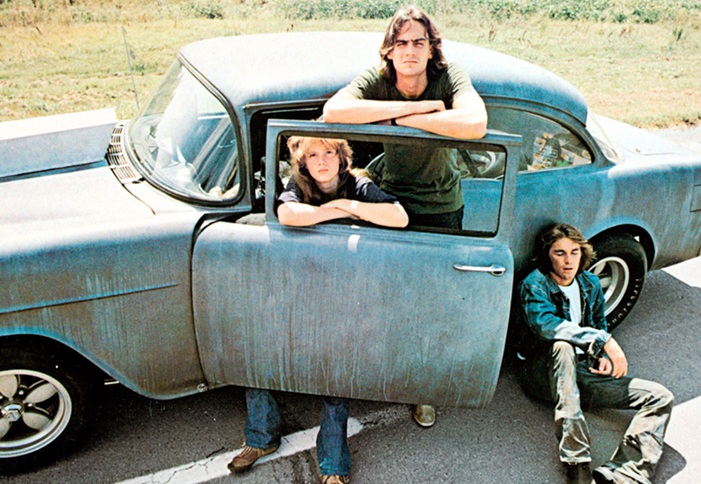
So much of the metaphysical road movie that is Two-Lane Blacktop, however, is informed by Rudy Wurlitzer’s minimalist screenplay, which is dotted with terse, poetic dialogue, and filled with archetypal, unnamed characters that explode myths of both the western genre and America’s car culture.
“You can never go fast enough,” mutters James Taylor’s Driver, and the line literally resounds and reverberates with meaning, principally because there is so little framing it. Built on miniscule moments, everything in Two-Lane Blacktop matters. Much has been said and written about Two-Lane Blacktop, but much more of it needs to be about Rudy Wurlitzer’s extraordinary contributions to this extraordinary film.
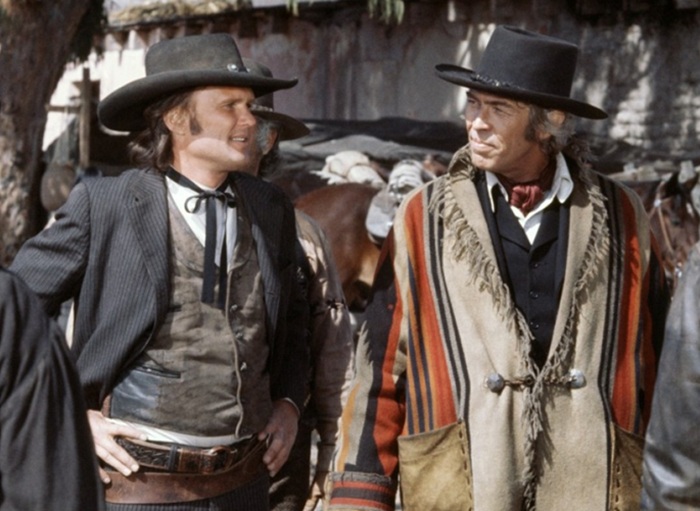
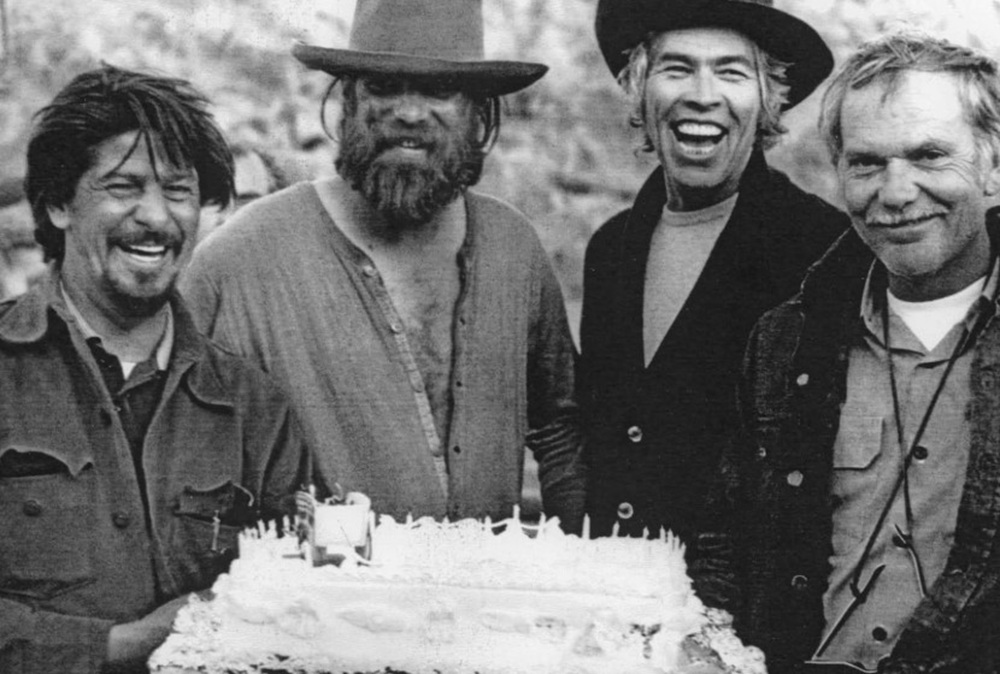
Though it failed to make bank, Two-Lane Blacktop certainly turned heads, and Wurlitzer next penned Pat Garret & Billy The Kid, a western intended for Monte Hellman. Wildman director Sam Peckinpah (The Wild Bunch) instead commandeered the script and crafted a stunning, elegiac, and wholly hypnotic western out of the material. Though Wurlitzer and Peckinpah did not get along (Wurlitzer’s vicious 1984 novel Slow Fade is widely believed to be a literary take-down of Peckinpah), you can feel the screenwriter in every frame of the film.
Wurlitzer has claimed that Peckinpah “gutted” his original screenplay, but it fits perfectly into the writer’s heady, dirt-encrusted, deeply philosophical oeuvre. Wurlitzer might not see them through the cruel lense of his experiences with Peckinpah, but there aren’t just kernels of the writer’s work here…there are diamonds.
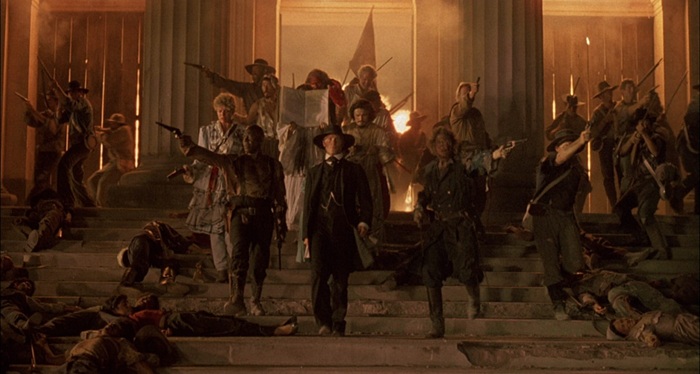
Through the 1970s, Wurlitzer wrote more novels and did uncredited screenwriting work for Hal Ashby on 1971’s Coming Home, but his next credit proper didn’t come until 1987 with Walker, directed by British cult hero Alex Cox, who had triumphed previously with Repo Man (1984) and Sid & Nancy (1986). A financial disaster but now a cult darling seen as being years ahead of its time, the love for the gonzo historical epic Walker is largely concentrated around Alex Cox, but again, Rudy Wurlitzer is instrumental in what makes this bizarre film tick.
A trippy and anachronistic critique of the US’s 1980s foreign policy in Central America, Walker is a wholly unconventional telling of the story of William Walker, the little-known American journalist, mercenary and filibuster who invaded and made himself president of Nicaragua in 1856. Though this quite extraordinary film (which features a towering performance by Ed Harris as Walker, and what-the-hell intrusions from modern accoutrements like helicopters, computers, Coke bottles and high-powered weaponry) is pure politically-minded westernism from project originator Alex Cox, the iconoclastic director went straight to Rudy Wurlitzer to write it. “He understands American guys and the mad impulse that drives certain Americans to be great men,” Cox said tellingly of the screenwriter.
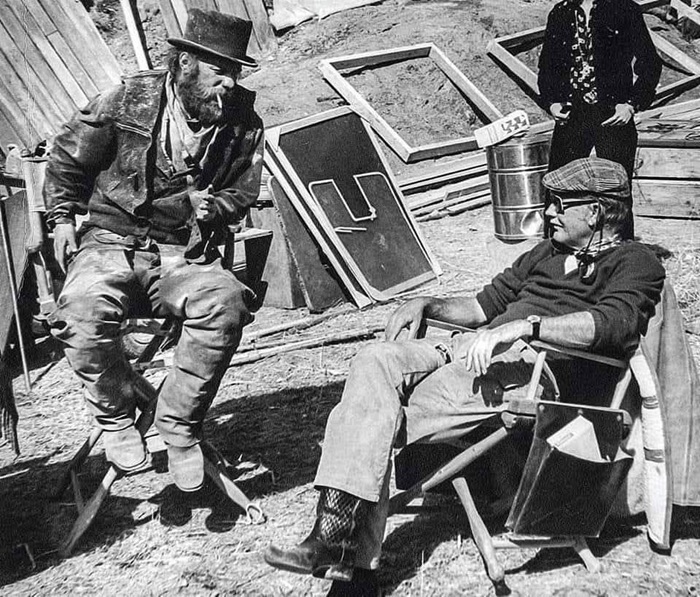
Throughout the 1980s and 1990s, Wurlitzer contributed to screenplays by visionaries like Volker Schlondorff (1991’s Voyager starring Sam Shepard), Carroll Ballard (1992’s Wind) and Bernardo Bertolucci (1993’s Little Buddha), as well as helping to adapt Yves Thériault’s novel Agaguk for the 1992 French-Canadian adventure film Shadow Of The Wolf. Though disparate, all of the films feature flashes of Wurlitzer’s brand of existentialism, and represent a definite throughline when it comes to his cinematic output.
Nestled in amongst that work is Wurlitzer’s sole directing credit. A now largely forgotten film due rediscovery, 1987’s Candy Mountain was co-directed by famed photographer Robert Frank, a longtime friend of Wurlitzer’s who had directed the notoriously unreleased Rolling Stones 1972 tour doco Cocksucker Blues. The duo had prior worked on the improvised 1975 film Keep Busy, and Candy Mountain is a fascinating collision of their styles and ideas.
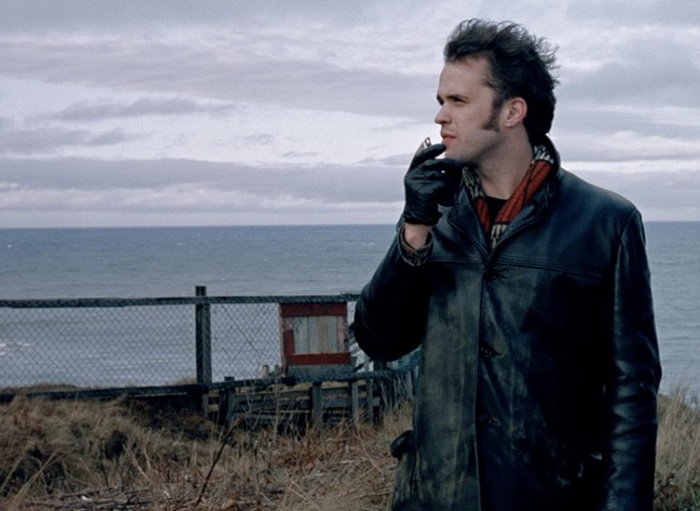
Populated by a mix of musos (Tom Waits, David Johansen, Leon Redbone, Joe Strummer, Dr. John), legendary character actors (Harris Yulin, Roberts Blossom), cult figures (Rockets Redglare, Eric Mitchell, Emile De Antonio) and others of interest (Robert Joy, Laurie Metcalf, Bulle Ogier), Candy Mountain stars Kevin J. O’Connor as a struggling musician on a long, strangely picaresque journey to find a reclusive and elusive legendary guitar maker. So hip it hurts and a box office bomb to boot, Candy Mountain has everything required for cultist reappraisal.
After a batch of unproduced screenplays (including a few acid westerns that would be absolutely amazing if ever produced) and some minor television work, Rudy Wurlitzer – a countercultural literary titan with an uncanny understanding of the weirdness that beats in the heart of America – retreated from the film world by the 2000s. “I kept busy,” Wurlitzer told Vice in 2015. “I was lucky in that I got to pick and choose what I wanted to work on. I needed to put coin on the table. It was getting more and more impossible. But eventually, I found it necessary to get rid of my movie agent in LA. Not because he wasn’t doing enough…but because I was afraid I’d be offered something terrible and I wouldn’t have the courage not to do it.”
If you liked this story, check out our features on other unsung auteurs Keith Gordon, Alan Metter, Lynne Littman, Chuck Russell, John Derek, Don Chaffey, Harley Cokeliss, Jeannot Szwarc, Craig Gillespie, David Greene, Ernest Pintoff, Paul Williams, Jo Heims, Lee H. Katzin, Christoper Cain, Ken Wiederhorn, Barbara Loden, David Mackenzie, Alan Rudolph, James Lee Barrett, Edwin “Bud” Shrake, Joan Tewkesbury, Jamaa Fanaka, Jack Starrett, Joseph Sargent, Jeffrey Schwarz, George Sidney, Philip Dunne, Zak Hilditch, Luke Sparke, Cyrus Nowrasteh, Morgan Matthews, Tom Laughlin, Diane Keaton, Ed Hunt, Nancy Savoca, Robert Vincent O’Neil, Marvin J. Chomsky, Sam Firstenberg, Jack Sholder, Richard Gray, Giuseppe Andrews, Gus Trikonis, Greydon Clark, Frances Doel, Gordon Douglas, Billy Fine, Craig R. Baxley, Harvey Bernhard, Bert I. Gordon, James Fargo, Jeremy Kagan, Robby Benson, Robert Hiltzik, John Carl Buechler, Rick Carter, Paul Dehn, Bob Kelljan, Kevin Connor, Ralph Nelson, William A. Graham, Judith Rascoe, Michael Pressman, Peter Carter, Leo V. Gordon, Dalene Young, Gary Nelson, Fred Walton, James Frawley, Pete Docter, Max Baer Jr., James Clavell, Ronald F. Maxwell, Frank D. Gilroy, John Hough, Dick Richards, William Girdler, Rayland Jensen, Richard T. Heffron, Christopher Jones, Earl Owensby, James Bridges, Jeff Kanew, Robert Butler, Leigh Chapman, Joe Camp, John Patrick Shanley, William Peter Blatty, Peter Clifton, Peter R. Hunt, Shaun Grant, James B. Harris, Gerald Wilson, Patricia Birch, Buzz Kulik, Kris Kristofferson, Rick Rosenthal, Kirsten Smith & Karen McCullah, Jerrold Freeman, William Dear, Anthony Harvey, Douglas Hickox, Karen Arthur, Larry Peerce, Tony Goldwyn, Brian G. Hutton, Shelley Duvall, Robert Towne, David Giler, William D. Wittliff, Tom DeSimone, Ulu Grosbard, Denis Sanders, Daryl Duke, Jack McCoy, James William Guercio, James Goldstone, Daniel Nettheim, Goran Stolevski, Jared & Jerusha Hess, William Richert, Michael Jenkins, Robert M. Young, Robert Thom, Graeme Clifford, Frank Howson, Oliver Hermanus, Jennings Lang, Matthew Saville, Sophie Hyde, John Curran, Jesse Peretz, Anthony Hayes, Stuart Blumberg, Stewart Copeland, Harriet Frank Jr & Irving Ravetch, Angelo Pizzo, John & Joyce Corrington, Robert Dillon, Irene Kamp, Albert Maltz, Nancy Dowd, Barry Michael Cooper, Gladys Hill, Walon Green, Eleanor Bergstein, William W. Norton, Helen Childress, Bill Lancaster, Lucinda Coxon, Ernest Tidyman, Shauna Cross, Troy Kennedy Martin, Kelly Marcel, Alan Sharp, Leslie Dixon, Jeremy Podeswa, Ferd & Beverly Sebastian, Anthony Page, Julie Gavras, Ted Post, Sarah Jacobson, Anton Corbijn, Gillian Robespierre, Brandon Cronenberg, Laszlo Nemes, Ayelat Menahemi, Ivan Tors, Amanda King & Fabio Cavadini, Cathy Henkel, Colin Higgins, Paul McGuigan, Rose Bosch, Dan Gilroy, Tanya Wexler, Clio Barnard, Robert Aldrich, Maya Forbes, Steven Kastrissios, Talya Lavie, Michael Rowe, Rebecca Cremona, Stephen Hopkins, Tony Bill, Sarah Gavron, Martin Davidson, Fran Rubel Kuzui, Elliot Silverstein, Liz Garbus, Victor Fleming, Barbara Peeters, Robert Benton, Lynn Shelton, Tom Gries, Randa Haines, Leslie H. Martinson, Nancy Kelly, Paul Newman, Brett Haley, Lynne Ramsay, Vernon Zimmerman, Lisa Cholodenko, Robert Greenwald, Phyllida Lloyd, Milton Katselas, Karyn Kusama, Seijun Suzuki, Albert Pyun, Cherie Nowlan, Steve Binder, Jack Cardiff, Anne Fletcher ,Bobcat Goldthwait, Donna Deitch, Frank Pierson, Ann Turner, Jerry Schatzberg, Antonia Bird, Jack Smight, Marielle Heller, James Glickenhaus, Euzhan Palcy, Bill L. Norton, Larysa Kondracki, Mel Stuart, Nanette Burstein, George Armitage, Mary Lambert, James Foley, Lewis John Carlino, Debra Granik, Taylor Sheridan, Laurie Collyer, Jay Roach, Barbara Kopple, John D. Hancock, Sara Colangelo, Michael Lindsay-Hogg, Joyce Chopra, Mike Newell, Gina Prince-Bythewood, John Lee Hancock, Allison Anders, Daniel Petrie Sr., Katt Shea, Frank Perry, Amy Holden Jones, Stuart Rosenberg, Penelope Spheeris, Charles B. Pierce, Tamra Davis, Norman Taurog, Jennifer Lee, Paul Wendkos, Marisa Silver, John Mackenzie, Ida Lupino, John V. Soto, Martha Coolidge, Peter Hyams, Tim Hunter, Stephanie Rothman, Betty Thomas, John Flynn, Lizzie Borden, Lionel Jeffries, Lexi Alexander, Alkinos Tsilimidos, Stewart Raffill, Lamont Johnson, Maggie Greenwald and Tamara Jenkins.