


By Erin Free
In this regular column, we drag forgotten made-for-TV movies out of the vault and into the light. This week: the 1975 horror portmanteau Trilogy Of Terror, starring Karen Black, directed by Dan Curtis, and based on stories by Richard Matheson.
If you’re a fan of late 1970s cult actress Karen Black (and if you’re not…what the hell is wrong with you?), you’ll very likely be very familiar with 1975’s notable telemovie Trilogy Of Terror. Though made for the small screen, this imaginative horror flick features work from this most original of actresses to rival her essential big screen appearances in stone cold classics like Easy Rider (1969), Five Easy Pieces (1970), Born To Win (1971), Nashville (1975), The Day Of The Locust (1975) and Come Back To The Five And Dime, Jimmy Dean, Jimmy Dean (1982).
Though nowhere near as grand and ambitious as the aforementioned generational tone-setters, Trilogy Of Terror features a series of images and sequences so striking and ingeniously rendered that they were likely burned onto the retinas of those who watched the telemovie when it was first broadcast on major US network ABC on March 4, 1975, and then later on those who revelled in its repeats and home entertainment releases many years later.
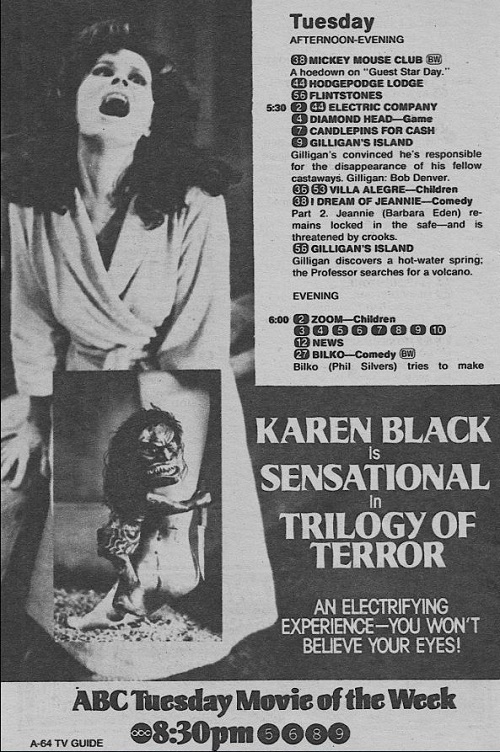
Adept at playing a wide variety of on-screen characters – sweet, angelic innocents; sunny, loose-limbed freewheelers; brittle women on the edge; sturdily capable heroines; and the literally certifiably insane (witness the deleterious wonders of her performance as Mother Firefly in Rob Zombie’s House Of 1,000 Corpses) – the curiously beautiful and always dynamic Karen Black had charisma and talent to burn, and the three-story portmanteau Trilogy Of Terror (in which she plays the very disparate leads in each unconnected story) really allows this gifted performer to spread her actorly wings in the most fascinating and compelling of ways.
Karen Black, however, isn’t the whole show here, with Trilogy Of Terror boasting a real blast of small screen horror cache. All three stories are based on the works of literary sci-fi and horror master Richard Matheson (who scripted the TV movie classics Duel and The Night Stalker, and penned famed stories including I Am Legend), and are directed by Dan Curtis, who created the gothic soap opera Dark Shadows (remade, of course, by uber-fan Tim Burton), produced the aforementioned The Night Stalker, and directed the cult 1976 horror feature Burnt Offerings, also with Karen Black. With such a powerhouse line-up of talent, it’s no surprise that Trilogy Of Terror still stands as a classic of telemovie horror.
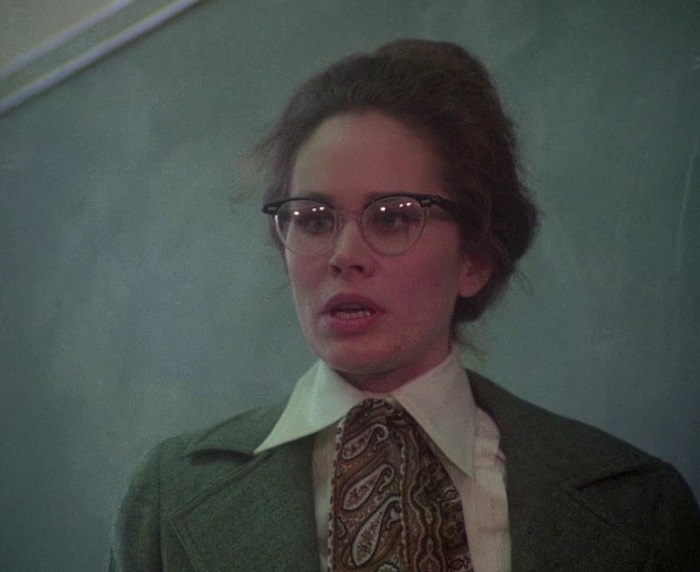
In the first story, “Julie”, Karen Black is the meek, straitlaced titular college professor, who reluctantly goes out on a date with much younger student Chad (Robert Burton), and soon pays a very major price. As the audience knows from the get-go, Chad is a misogynistic, predatory arsehole who harbours the worst kinds of intentions for the seemingly innocent Julie. He creepily spikes her drink during their date at the drive-in, drags her into a motel room, and then photographs her in compromising positions, giving him plentiful blackmail material. Chad then basically sexually enslaves Julie, involving her in all manner of (off-screen) debauchery and debasement. With this being a Richard Matheson horror tale, however, you can be rest assured that there is more to Julie than meets the eye.
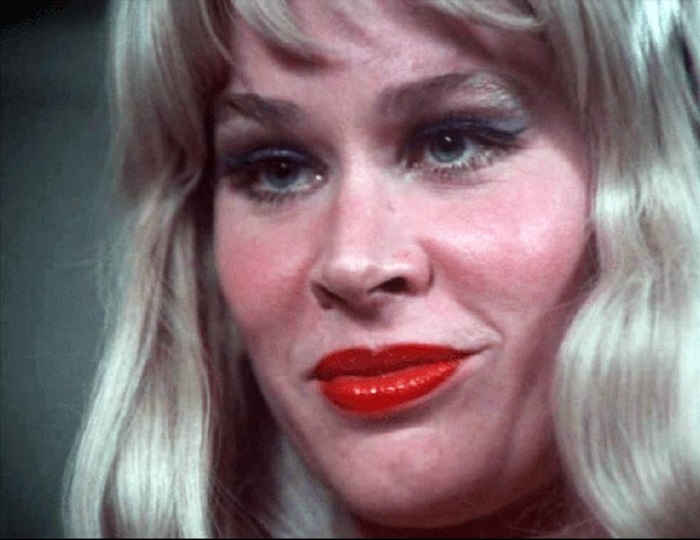
In the second story, “Millicent & Therese”, Black plays the titular warring identical twin sisters. Buttoned-down Millicent is a prudish brunette while Therese is her physical mirror but emotional polar opposite: a wild, reckless, sexually audacious blonde with a bad attitude and confidence to burn. Caught up in this biting, vicious case of sibling rivalry are Therese’s lover John Anmar (John Karlen) and family therapist Dr. Chester Ramsey (George Gaynes). Once again, per its Matheson pedigree, you know this nasty little zap of family dysfunction will have a twist in its beguiling tail.
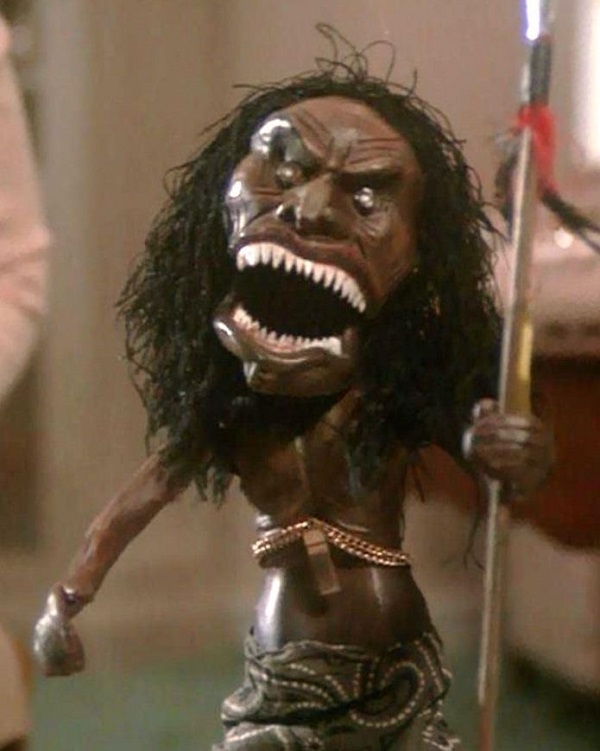
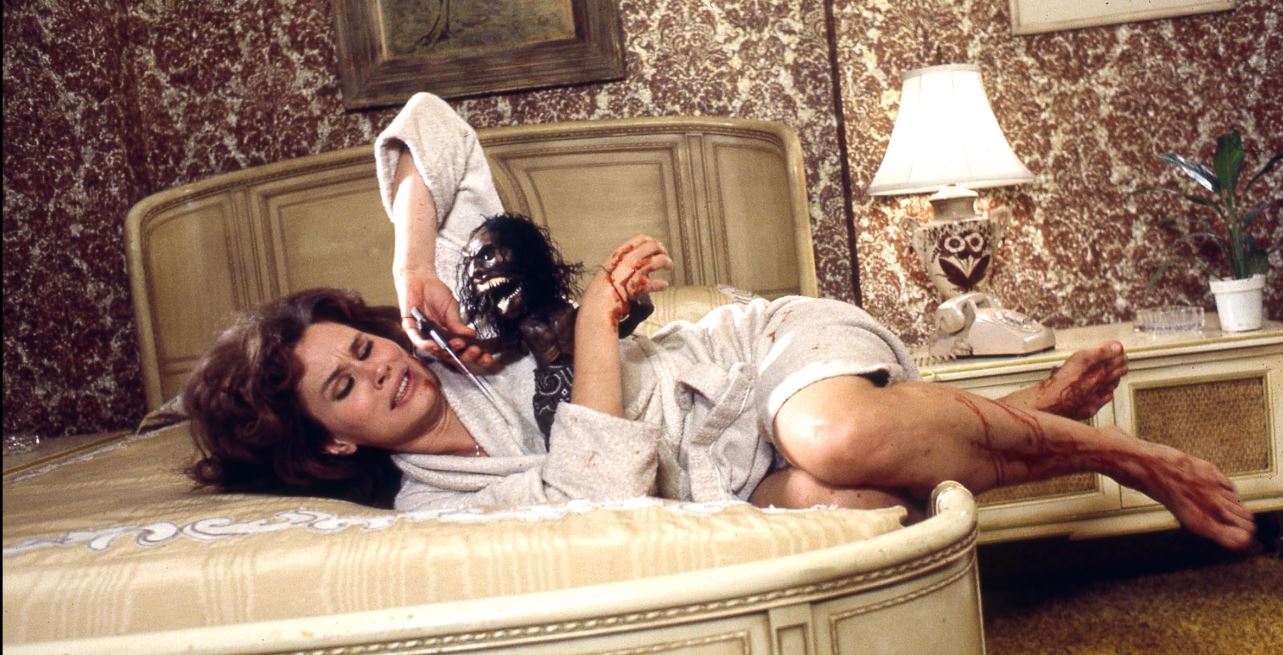
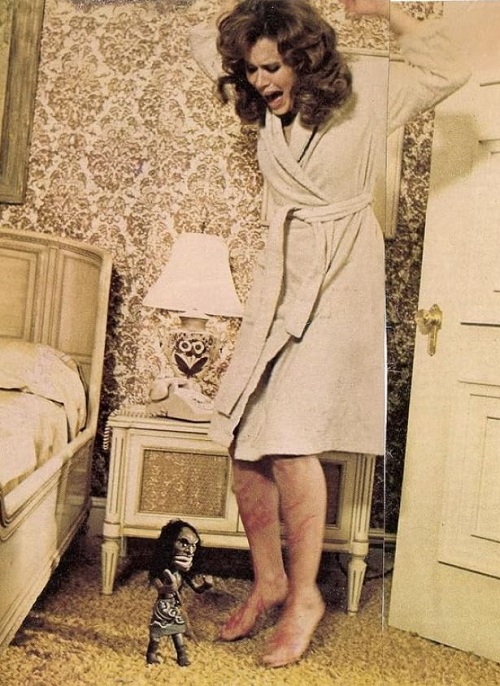
In the third story, “Amelia”, Black is literally put through the physical and emotional wringer. Home alone in her apartment, Black’s Amelia bounces back after an ugly phone argument with her domineering mother by gazing happily at the gift she has bought for her anthropologist boyfriend: a small, wooden fetish doll of a native warrior baring sharp teeth and clutching a spear. According to a scroll included with the doll, this wooden artefact houses the soul of a fallen Zuni hunter…who will very soon spring to vicious, aggressive, relentless life.
Without question, the most arresting and unforgettable of the three stories that make up Trilogy Of Terror is the closer “Amelia”, but most online reviews and commentary are almost wholly and inappropriately dismissive of the first two entries, unfairly brushing them aside to single out the most indelible of the trio. “Julie” is especially perverse and twisted, with the divine Ms. Black utterly superb in meek, mousey form. The film’s themes of sexual repression, misogynist exploitation and casual sadism are truly shocking for a 1970s telemovie, but the canny Dan Curtis directs in such a restrained manner that the real force of the story takes a little while to creep up on the audience. The sweet Julie is a sad victim, and the film is positively heartbreaking until its twist ending, which is admittedly a little confusing, but still shocks and satisfies in its exquisite and surprising levels of darkness.
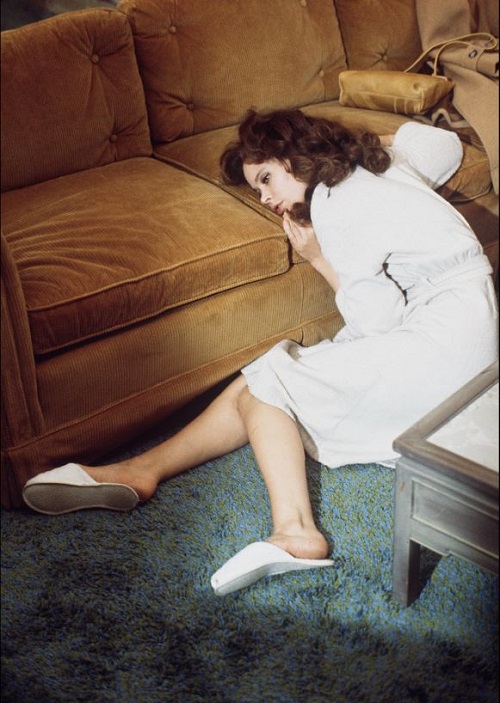
With a twist ending that might have been shocking in the mid-1970s, but which you can now literally see coming from about 3,000 miles away, the main joys to be found in “Millicent & Therese” come from getting to see Karen Black play identical twins. Unsurprisingly, she excels as both wholehearted square and off-the-leash wild child, proving equally adept at both reserved shyness and come-hither sexiness. It’s a terrific dual performance, and this segment also boasts a kinky, unsettling hothouse atmosphere that draws you into its curious rhythms and never lets you go.
While considerably less of a Karen Black performance piece than the first two Trilogy Of Terror segments, “Amelia” is a literal killer of a horror story, predating murderous-doll cult classics like Child’s Play (1988) and Dolls (1987) by several years. With only a limited budget at his disposal and a long time before CGI, Dan Curtis works gory wonders with “Amelia”, as Karen Black’s title character is chased and terrorised in her apartment by a tiny, shrieking fetish doll that attacks her with various sharp instruments with the relentless ferocity of a Terminator. There is certainly more than a little humour in this freaky premise, but Curtis for the most part controls the terror with extraordinary skill, making the doll feel real and making every cut and slash count. “Amelia” is exciting, terrifying, bizarre and perverse, and comes complete with a plot twist and unsettling final image that will stay with you long after the film has ended.
A stunning showcase for the singular talents of the always compelling Karen Black, and representing strong work from Dan Curtis and Richard Matheson, Trilogy Of Terror is a grim, nasty, kinky and ultimately unforgettable slice of telemovie horror.
Availability: Released in special edition DVD form (complete with a Karen Black commentary!) some time ago, Trilogy Of Terror is readily available for purchase online, but it appears to be currently out of print, so even a second-hand copy might cost a little more than you’d like.
If you enjoyed this review, check out our other vintage telemovies Policewoman Centerfold, Smash-Up On Interstate 5, Something Evil, Savage, A Step Out Of Line, The Boy In The Plastic Bubble, The Dirty Dozen: Next Mission, A Very Brady Christmas, The Gladiator, Elvis, The Rat Pack, Silent Victory: The Kitty O’Neil Story, Terror Among Us, The Hanged Man, Hardcase, Charlie’s Angels: Angels In Vegas, Vanishing Point, To Heal A Nation, Fugitive Among Us, To Kill A Cop, Dallas Cowboys Cheerleaders, Police Story: A Chance To Live, Murder On Flight 502, Moon Of The Wolf, The Secret Night Caller, Cotton Candy, And The Band Played On, Gargoyles, Death Car On The Freeway, Short Walk To Daylight, Trapped, Hotline, Killdozer, The Jericho Mile, Mongo’s Back In Town and Tribes.