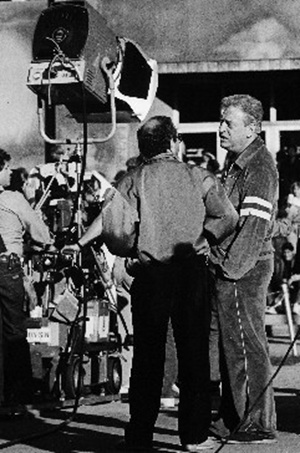


By Erin Free
FilmInk salutes the work of creatives who have never truly received the credit that they deserve. In this installment: director Alan Metter, who helmed Back To School, Girls Just Want To Have Fun, Moving, Police Academy 7: Mission To Moscow and more.
When you’re working with the biggest names in screen comedy, it’s easy to wind up in the shadows. For the most part (unless you’re Peter Weir, John Landis or some such), the directors behind the films of performers like Jim Carrey, Adam Sandler, Eddie Murphy and so on are often not seen as the driving forces behind their films. The stars get the credit when those films hit, and the blame when they bomb, and the directors don’t really enter the picture.
It takes a lot of skill, however, to get the best out of a comedic talent, and to make them feel comfortable and look good on screen. And often when you look at said films, there’s a fair bit of under-appreciated artistry at work too. The comedy star at the centre of the cinematic storm can’t control the elements swirling around them, but their directors are too often lazily tagged as journeymen or merely logistical filmmakers. In short, the best films by comedic superstars are invariably the well-directed ones that provide them with the best cinematic playground in which to showcase their gifts.
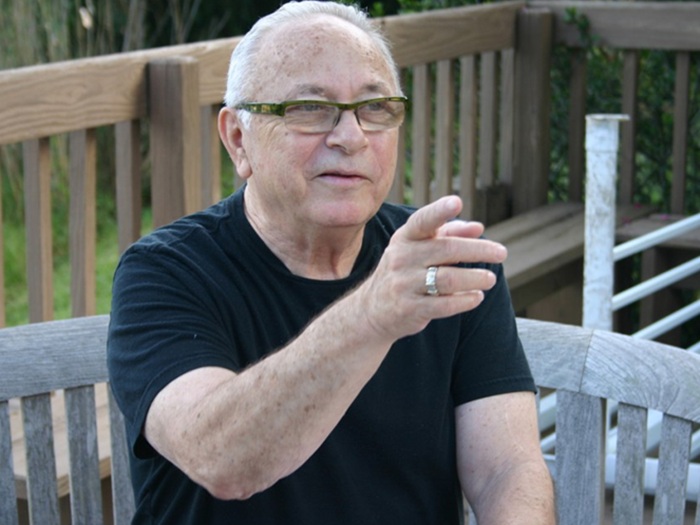
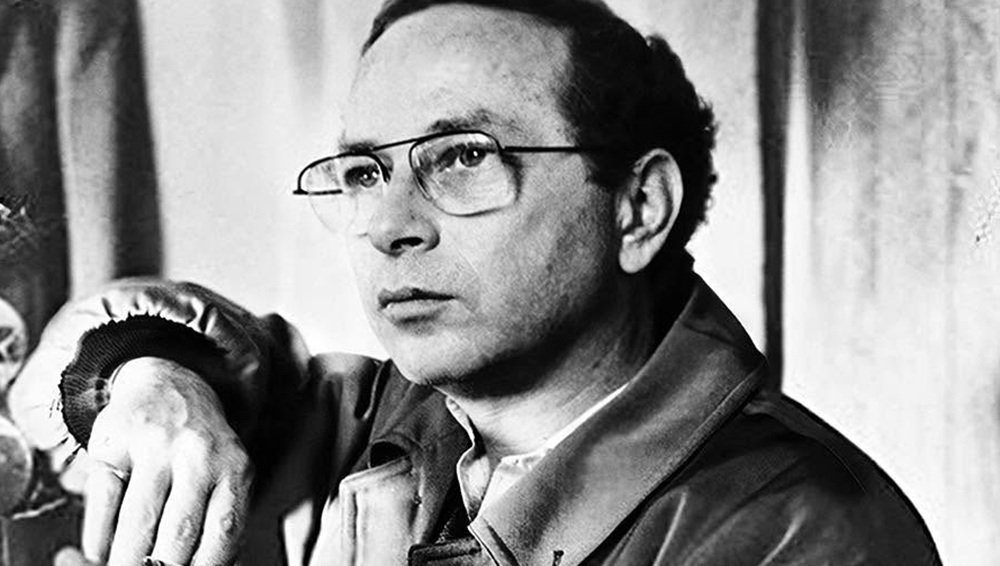
There are many Unsung Auteurs in the comedy field, and one such figure is the late Alan Metter, whose name remains far from recognisable despite the fact that he’s worked with comedy heroes like Steve Martin, Rodney Dangerfield, Richard Pryor, George Carlin, Ben Stiller and more. Alan Metter certainly doesn’t have a huge resume, but it’s dotted with some genuine comedy gems, and his skills in the field are enjoyably plain to see.
Alan Metter was born in 1942 in Massachusetts, and began his career in the advertising industry. Metter then shifted sideways into the music industry, devising print and radio advertising campaigns for major artists, including thirty-second TV spots for acts like ELO, Olivia Newton-John and comedian Steve Martin, with whom he’d also begun writing some comedy material. Metter’s TV ad work saw him nabbed for the then-nascent world of music videos. Metter directed a vast array of video clips (for artists like George Harrison, Glenn Frey, Joe Walsh, Chicago, Olivia Newton-John, and Donna Summer), and one of his biggest hits was “Rappin’ Rodney”, the novelty rap song for bug-eyed, famously old-school comedian Rodney Dangerfield.
Metter’s first more substantial work came in 1980 with Making Xanadu: The Musical Fantasy Movie, a short behind-the-scenes doco about the underrated rollerskating musical extravaganza starring Olivia Newton-John and directed by Unsung Auteur Robert Greenwald. Xanadu power producer Lawrence Gordon liked Metter’s work on the doco (Metter had also helmed a TV special for Steve Martin), and pitched him as a talent-to-watch to Roger Corman’s low-budget production house New World Pictures. Suitably impressed, Alan Metter was handed the reins on his first feature film.
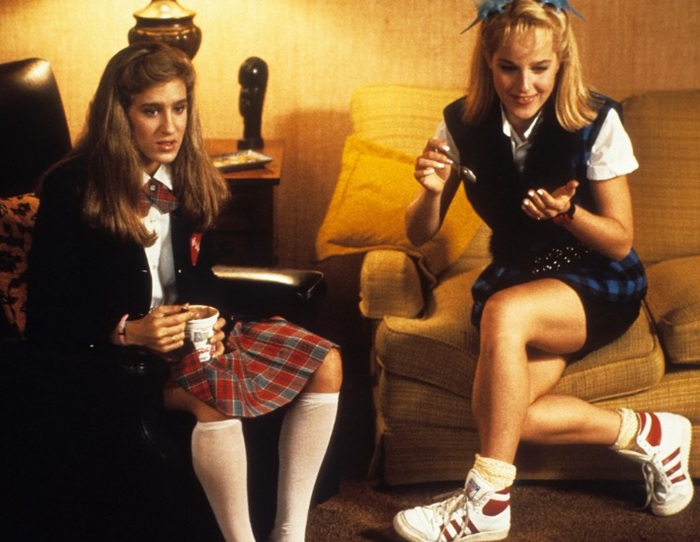
Starring then talents on the rise Sarah-Jessica Parker and Helen Hunt, 1985’s Girls Just Want To Have Fun was designed to capitalise on Cyndi Lauper’s smash hit song; due to costs and licensing, however, Lauper’s song doesn’t actually appear in the film, with a cheaper cover version used instead. Following two dance-obsessed teens trying to get onto their favourite dance TV show, this is nothing short of a 1980s bliss bomb. Metter directs with a great sense of energy, colour and comic timing, and plays right into the upbeat feel of Amy Spies’ funny, well-characterised script. Needless to say, the fresh-faced Sarah-Jessica Parker and Helen Hunt are both delightful, and the effervescent Girls Just Want To Have Fun should probably feature a little more heavily when Gen-Xers are waxing lyrical about 1980s movies.
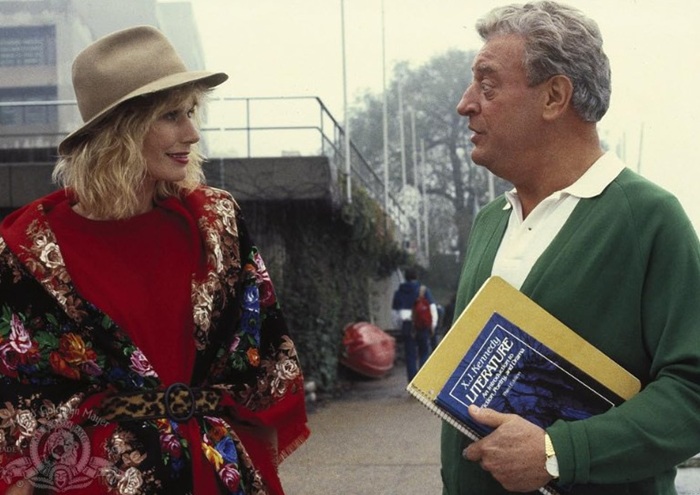
Though the critics were unsurprisingly largely unimpressed, Girls Just Want To Have Fun did respectable box office, and Alan Metter’s career was on the up. With his previous success working with Rodney Dangerfield on the “Rappin’ Rodney” video clip, the now established Metter was the perfect choice to take the comedian onto the big screen. The vehicle was 1986’s Back To School, a genuine gut-buster in which Dangerfield’s stinking rich but uneducated businessman goes back to college to perk up his listless son (Keith Gordon).
Metter knows exactly how to get the best out of Rodney Dangerfield, reining in his comic excesses and amping up his bizarre likeability, while surrounding him with top-notch talents like Keith Gordon, Robert Downey Jr., Ned Beatty, Sally Kellerman, Burt Young and Adrienne Barbeau. There’s a real sweetness and positivity to the amusingly puerile Back To School that other directors might have failed to capture, and though the film was a big hit, Alan Metter got very little credit for that success. Though Dangerfield is a comic icon, he’s certainly not an obvious leading man, and Metter really made that happen.
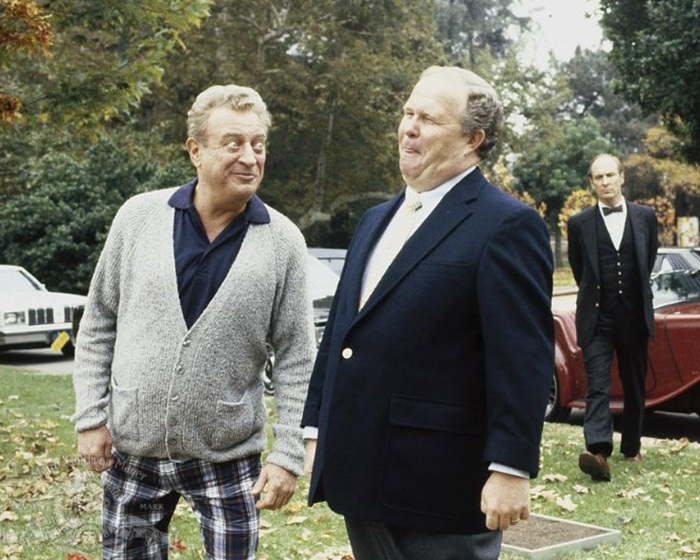
“I was given complete creative control,” Metter told the Kickin’ It Old School blog in 2011. “I chose the cast, reading the key players with Rodney. The movie required that we deal out ‘the act’ and ‘the actor’ in carefully considered situations and I worked very closely with him on this. Of course he had the act down, ‘Can I pop my eyes on this line?’ Actually, Rodney’s acting instincts were very good, he just needed encouragement. His line readings could be a bit erratic. So sometimes we went line-by-line in the close-ups, which took the cut out of the editors’ hands, because the only usable performance of a line of dialogue happened in a specific shot. My biggest hurdle was getting Rodney to trust me. When I was done in the editing room, he made me send a cassette of the movie to his cousin Leonard in Florida for final approval. I believe Leonard is the first dentist in history to have final cut on a major motion picture!”
With the success of Back To School, Metter was next slated to direct past collaborator Steve Martin in a comedy project called Moving. When Martin dropped out to do Planes, Trains And Automobiles instead, however, comic powerhouse Richard Pryor was parachuted into the lead role. Penned by comedy writer Andy Breckman, 1988’s Moving follows Pryor’s suburban dad, who has to move his family from New Jersey to Idaho after losing his job. As he had with Dangerfield, Metter gets the best out of Richard Pryor, finding the core of vulnerability beneath the comic’s noted foul-mouthed swagger, which works well for his harried character. As he had on Back To School (which featured famed comedy screamer Sam Kinison), Metter also backgrounds Moving with interesting and colourful comic talent, with Dana Carvey, Randy Quaid, Morris Day and wrestler King Kong Bundy all appearing to great effect.
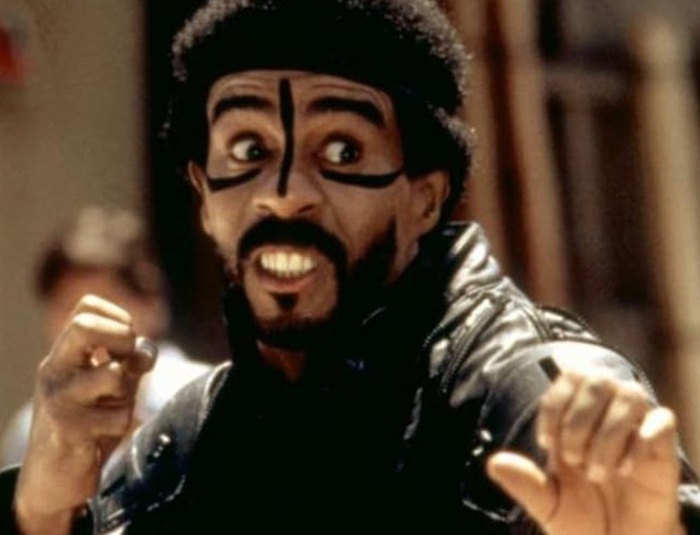
Moving was funny and original, but it disappointed at the box office, as did Metter’s next film, 1990’s Cold Dog Soup. But despite its failure, this bizarre black comedy is a curiously impressive work. Metter pushes character actor Randy Quaid to a performance of deranged lunacy as a taxi driver who helps a young couple (Frank Whaley, Christine Harnos) dispose of their dead dog. Truly unconventional, Cold Dog Soup was originally set up as a vehicle for Sam Kinison. “It’s really off the wall,” said the diminutive, loud-mouthed comic. “It’s one of the most bizarre comedies I’ve ever read.” An almost After Hours-like black comedy, the inspired tastelessness of Cold Dog Soup is ripe for rediscovery. “Randy Quaid is a monumentally talented actor, very deep,” Metter said of his leading man. “A couple of times I was so mesmerised watching him, I’d forget to say ‘cut’ after the take was over.”
After two box office failures, Metter’s career started to cool a little, but he managed another interesting comic vehicle with Working Tra$h, a TV movie for the then burgeoning Fox Network which teamed comic pioneer George Carlin with up and comer Ben Stiller to amusing effect. After that, Metter got as much laughter as he could out of a once lively but fairly moribund franchise with 1994’s Police Academy: Mission To Moscow, the seventh and final entry in the comic series. Two movies with The Olsen Twins (1998’s Billboard Dad, 1999’s Passport To Paris) and a 2000 Growing Pains reunion telemovie later, Alan Metter retired from filmmaking, and sadly passed away in 2020 at the age of 77.

Though rarely celebrated for it, Alan Metter left behind an impressive body of work. He pioneered in the music video field, and directed one 1980s hit comedy classic and a handful of fun, wholly underrated works. Metter knew how to get the most out of his stars, and who to surround them with. Adept at comic timing, Alan Metter had an uncanny knack when it came to mining on-screen laughs.
“The movies I love the most pick you up in the fade in and drop you off at the fade out, and in between these two events you cross into the story and are totally absorbed by it,” the late director once said. “No bumps. That’s the game. No bumps. Smooth editing with nothing to jar you from the story, giving the audience nothing to think about but the story.”
If you liked this story, check out our features on other unsung auteurs Lynne Littman, Chuck Russell, John Derek, Don Chaffey, Harley Cokeliss, Jeannot Szwarc, Craig Gillespie, David Greene, Ernest Pintoff, Paul Williams, Jo Heims, Lee H. Katzin, Christoper Cain, Ken Wiederhorn, Barbara Loden, David Mackenzie, Alan Rudolph, James Lee Barrett, Edwin “Bud” Shrake, Joan Tewkesbury, Jamaa Fanaka, Jack Starrett, Joseph Sargent, Jeffrey Schwarz, George Sidney, Philip Dunne, Zak Hilditch, Luke Sparke, Cyrus Nowrasteh, Morgan Matthews, Tom Laughlin, Diane Keaton, Ed Hunt, Nancy Savoca, Robert Vincent O’Neil, Marvin J. Chomsky, Sam Firstenberg, Jack Sholder, Richard Gray, Giuseppe Andrews, Gus Trikonis, Greydon Clark, Frances Doel, Gordon Douglas, Billy Fine, Craig R. Baxley, Harvey Bernhard, Bert I. Gordon, James Fargo, Jeremy Kagan, Robby Benson, Robert Hiltzik, John Carl Buechler, Rick Carter, Paul Dehn, Bob Kelljan, Kevin Connor, Ralph Nelson, William A. Graham, Judith Rascoe, Michael Pressman, Peter Carter, Leo V. Gordon, Dalene Young, Gary Nelson, Fred Walton, James Frawley, Pete Docter, Max Baer Jr., James Clavell, Ronald F. Maxwell, Frank D. Gilroy, John Hough, Dick Richards, William Girdler, Rayland Jensen, Richard T. Heffron, Christopher Jones, Earl Owensby, James Bridges, Jeff Kanew, Robert Butler, Leigh Chapman, Joe Camp, John Patrick Shanley, William Peter Blatty, Peter Clifton, Peter R. Hunt, Shaun Grant, James B. Harris, Gerald Wilson, Patricia Birch, Buzz Kulik, Kris Kristofferson, Rick Rosenthal, Kirsten Smith & Karen McCullah, Jerrold Freeman, William Dear, Anthony Harvey, Douglas Hickox, Karen Arthur, Larry Peerce, Tony Goldwyn, Brian G. Hutton, Shelley Duvall, Robert Towne, David Giler, William D. Wittliff, Tom DeSimone, Ulu Grosbard, Denis Sanders, Daryl Duke, Jack McCoy, James William Guercio, James Goldstone, Daniel Nettheim, Goran Stolevski, Jared & Jerusha Hess, William Richert, Michael Jenkins, Robert M. Young, Robert Thom, Graeme Clifford, Frank Howson, Oliver Hermanus, Jennings Lang, Matthew Saville, Sophie Hyde, John Curran, Jesse Peretz, Anthony Hayes, Stuart Blumberg, Stewart Copeland, Harriet Frank Jr & Irving Ravetch, Angelo Pizzo, John & Joyce Corrington, Robert Dillon, Irene Kamp, Albert Maltz, Nancy Dowd, Barry Michael Cooper, Gladys Hill, Walon Green, Eleanor Bergstein, William W. Norton, Helen Childress, Bill Lancaster, Lucinda Coxon, Ernest Tidyman, Shauna Cross, Troy Kennedy Martin, Kelly Marcel, Alan Sharp, Leslie Dixon, Jeremy Podeswa, Ferd & Beverly Sebastian, Anthony Page, Julie Gavras, Ted Post, Sarah Jacobson, Anton Corbijn, Gillian Robespierre, Brandon Cronenberg, Laszlo Nemes, Ayelat Menahemi, Ivan Tors, Amanda King & Fabio Cavadini, Cathy Henkel, Colin Higgins, Paul McGuigan, Rose Bosch, Dan Gilroy, Tanya Wexler, Clio Barnard, Robert Aldrich, Maya Forbes, Steven Kastrissios, Talya Lavie, Michael Rowe, Rebecca Cremona, Stephen Hopkins, Tony Bill, Sarah Gavron, Martin Davidson, Fran Rubel Kuzui, Elliot Silverstein, Liz Garbus, Victor Fleming, Barbara Peeters, Robert Benton, Lynn Shelton, Tom Gries, Randa Haines, Leslie H. Martinson, Nancy Kelly, Paul Newman, Brett Haley, Lynne Ramsay, Vernon Zimmerman, Lisa Cholodenko, Robert Greenwald, Phyllida Lloyd, Milton Katselas, Karyn Kusama, Seijun Suzuki, Albert Pyun, Cherie Nowlan, Steve Binder, Jack Cardiff, Anne Fletcher ,Bobcat Goldthwait, Donna Deitch, Frank Pierson, Ann Turner, Jerry Schatzberg, Antonia Bird, Jack Smight, Marielle Heller, James Glickenhaus, Euzhan Palcy, Bill L. Norton, Larysa Kondracki, Mel Stuart, Nanette Burstein, George Armitage, Mary Lambert, James Foley, Lewis John Carlino, Debra Granik, Taylor Sheridan, Laurie Collyer, Jay Roach, Barbara Kopple, John D. Hancock, Sara Colangelo, Michael Lindsay-Hogg, Joyce Chopra, Mike Newell, Gina Prince-Bythewood, John Lee Hancock, Allison Anders, Daniel Petrie Sr., Katt Shea, Frank Perry, Amy Holden Jones, Stuart Rosenberg, Penelope Spheeris, Charles B. Pierce, Tamra Davis, Norman Taurog, Jennifer Lee, Paul Wendkos, Marisa Silver, John Mackenzie, Ida Lupino, John V. Soto, Martha Coolidge, Peter Hyams, Tim Hunter, Stephanie Rothman, Betty Thomas, John Flynn, Lizzie Borden, Lionel Jeffries, Lexi Alexander, Alkinos Tsilimidos, Stewart Raffill, Lamont Johnson, Maggie Greenwald and Tamara Jenkins.