



by Erin Free
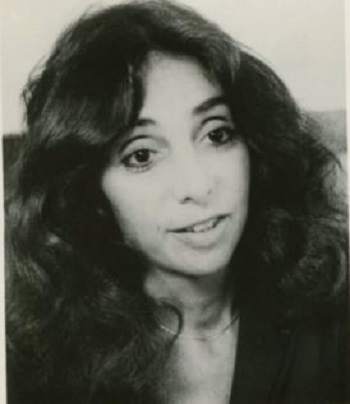
FilmInk salutes the work of creatives who have never truly received the credit that they deserve. In this installment: director Lynne Littman, who helmed Testament, Freak City, Having Our Say and more.
The Unsung Auteurs column is sadly and disappointingly peppered with the stories of talented, original, refreshing female film creatives with far too few credits on their resumes, their promising careers cruelled by unforgiving studios, or sidelined by other, more pressing life interests. Often too, whereas male filmmakers are given multiple chances when it comes to making box office bank, there is a disturbing tendency for female directors to get cut loose after one financial disappointment.
Another name to add to the unfortunate list of talented female directors who should have been afforded the opportunity to do much, much more work behind the camera is that of now-85-year-old Lynne Littman, who only has one cinematic feature film on her resume, but who boasts rare humanist gifts that mark her as something truly special, a fact also evidenced in her fistful of impressive shorts, docos and TV movies. Littman has also worked hard off-camera to promote female directors in the American film industry, alongside a rich history of academic work.

Lynne Littman was born in 1941 in New York City, and attended The Music & Art High School and Sarah Lawrence College, and also studied at the Sorbonne from 1960 to 1961. Littman made her first move into the entertainment industry with a job as a secretary for the New York public broadcaster WNET, after which she worked at a number of jobs in the industry, including on National Education Television in the 1970s, where she began to embrace documentary filmmaking.
An original member of The American Film Institute’s Women’s Directing Program, Littman also worked at KCET (a subsidiary of America’s Public Broadcasting Service) as a producer and reporter through the 1970s. Utilising her journalistic skills, Littman made her first doco short in 1973 with In The Matter Of Kenneth, and then won an Oscar for her follow-up Number Our Days, a moving 28-minute portrait of a community of elderly Jewish people in Venice, California.

It was after reading Carol Amen’s story “The Last Testament” in Ms. Magazine that Littman would set in motion the defining moment of her filmmaking career. Duly impressed by this haunting tale of nuclear devastation in the American heartland, Littman bought the rights to the story herself, got a tiny budget from public broadcaster PBS, and engaged John Sacret Young (who would go on to create the acclaimed TV drama series China Beach) to pen a script. Littman then cast the brilliant Jane Alexander in the role of Carol Wetherly, a suburban wife and mother who desperately tries to keep her family and small community together after a nuclear attack on America.
Though the film’s nuclear catastrophe contemporary The Day After (1983) got more attention, Lynne Littman’s Testament is a truly extraordinary take on the end of America and the death of its central bedrock: the family. It’s a far more insular and quietly devastating work than The Day After, eschewing the bigger picture in favour of minute character detail. The performances are staggering in their power and immediacy (William Devane, Kevin Costner, Lukas Haas and Rebecca De Mornay also feature), and Littman pulls no punches whatsoever, delivering a film of crushing sadness and utter hopelessness. “People really remember it vividly,” Littman told Conelrad. “It feels like it traumatised people and that’s just fine. That’s called catharsis to some extent.”

Originally produced for the PBS series American Playhouse, Testament was given a US theatrical release instead by Paramount Pictures in 1983, but the film was somewhat lost in the fallout of the era-defining The Day After. The intensity and sheer brilliance of Testament, however, cannot be overstated. It is one of the most real and profoundly heartfelt responses to the threat of nuclear war ever made, and though it was appropriately lauded and Jane Alexander received a well-deserved Oscar nomination, this amazing film is still in dire need of more credit…even its Criterion DVD release isn’t enough! Lynne Littman’s cool visual style, enviable sense of restraint, and stunning facility for working with actors marked her as a major talent to watch.
Instead of being handed the reins on major Hollywood productions as she should have been, Littman followed up Testament with 1985’s hour-long In Her Own Time, a deeply personal documentary based (as was her Oscar winning Number Our Days) on the field work of anthropologist Dr. Barbara Myerhoff which explores the diverse Fairfax district Jewish Community in Los Angeles. After the passing of close friend Myerhoff (“It was a lot of shock,” Littman told The LA Times), the gifted filmmaker pretty much dropped out of the film industry for many years to raise her two sons with then-husband, director Taylor Hackford (An Officer And A Gentleman, Proof Of Life, Ray).

With her children older, Littman helmed a memorable piece on female filmmakers for the 1993 Oscars; directed the 1996 reunion TV movie Cagney & Lacey: True Convictions (1996); and handled one half of the portmanteau telemovie Rescuers: Stories Of Courage: Two Couples (1998) before making a more determined comeback in 1999 with not one but two small screen projects. In a truly bizarre twist, the projects were made for different networks, and ended up screening in the same timeslot on the same night in direct competition to each other.
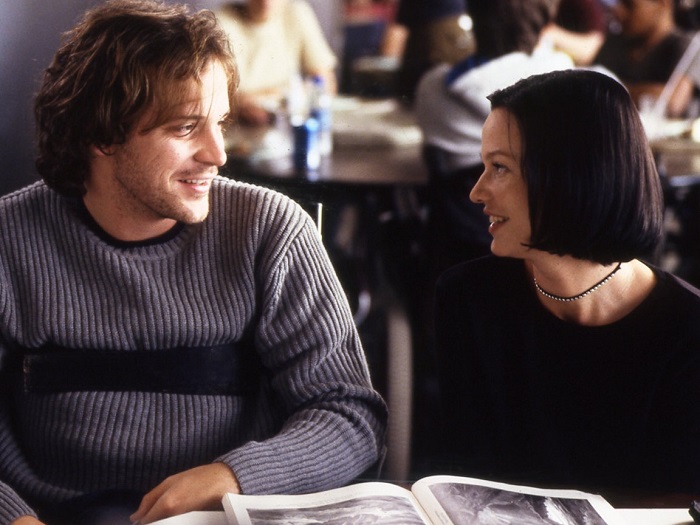
Once again displaying the deep thread of humanism that runs through her work, Littman’s 1999 Showtime telemovie Freak City is the deeply affecting story of Ruth (Samantha Mathis), a young woman with Multiple Sclerosis who develops surprising relationships with the people she meets while in care. With a strong support cast (Marlee Matlin, Peter Sarsgard and singer Natalie Cole) and a simple but far-reaching narrative, Littman again mines genuine emotion out of her material. “It was exactly the right kind of movie for me to begin with because it takes place in one location,” Littman told The LA Times of her return to directing. “It was only about people. It was contained, so it was manageable. It wasn’t a thousand pieces flying into the air.”
A day after she wrapped on Freak City, Littman began work on the telemovie Having Our Say: The Delany Sisters’ First 100 Years, starring Ruby Dee and Diahann Carroll as two real-life African-American sisters who both lived past the age of 100. Though this would more appropriately be directed by an African-American filmmaker today, Littman crafts something warm and telling out of the rich material. “I wept the other day in the editing room,” Littman told The LA Times while she was putting the finishing touches on the telemovie. “I was weeping because I was going to lose those two women. Everybody who worked on this movie wanted to do it for a reason which had nothing to do with their career. It had to do with their souls.”
Since the impressive 1999 one-two of Freak City and Having Our Say: The Delany Sisters’ First 100 Years, Lynne Littman has been disappointingly inactive as a filmmaker. As it stands, however, her resume is slim but extraordinarily impressive, with the devastating Testament a centrepiece any filmmaker would envy.
If you liked this story, check out our features on other unsung auteurs Chuck Russell, John Derek, Don Chaffey, Harley Cokeliss, Jeannot Szwarc, Craig Gillespie, David Greene, Ernest Pintoff, Paul Williams, Jo Heims, Lee H. Katzin, Christoper Cain, Ken Wiederhorn, Barbara Loden, David Mackenzie, Alan Rudolph, James Lee Barrett, Edwin “Bud” Shrake, Joan Tewkesbury, Jamaa Fanaka, Jack Starrett, Joseph Sargent, Jeffrey Schwarz, George Sidney, Philip Dunne, Zak Hilditch, Luke Sparke, Cyrus Nowrasteh, Morgan Matthews, Tom Laughlin, Diane Keaton, Ed Hunt, Nancy Savoca, Robert Vincent O’Neil, Marvin J. Chomsky, Sam Firstenberg, Jack Sholder, Richard Gray, Giuseppe Andrews, Gus Trikonis, Greydon Clark, Frances Doel, Gordon Douglas, Billy Fine, Craig R. Baxley, Harvey Bernhard, Bert I. Gordon, James Fargo, Jeremy Kagan, Robby Benson, Robert Hiltzik, John Carl Buechler, Rick Carter, Paul Dehn, Bob Kelljan, Kevin Connor, Ralph Nelson, William A. Graham, Judith Rascoe, Michael Pressman, Peter Carter, Leo V. Gordon, Dalene Young, Gary Nelson, Fred Walton, James Frawley, Pete Docter, Max Baer Jr., James Clavell, Ronald F. Maxwell, Frank D. Gilroy, John Hough, Dick Richards, William Girdler, Rayland Jensen, Richard T. Heffron, Christopher Jones, Earl Owensby, James Bridges, Jeff Kanew, Robert Butler, Leigh Chapman, Joe Camp, John Patrick Shanley, William Peter Blatty, Peter Clifton, Peter R. Hunt, Shaun Grant, James B. Harris, Gerald Wilson, Patricia Birch, Buzz Kulik, Kris Kristofferson, Rick Rosenthal, Kirsten Smith & Karen McCullah, Jerrold Freeman, William Dear, Anthony Harvey, Douglas Hickox, Karen Arthur, Larry Peerce, Tony Goldwyn, Brian G. Hutton, Shelley Duvall, Robert Towne, David Giler, William D. Wittliff, Tom DeSimone, Ulu Grosbard, Denis Sanders, Daryl Duke, Jack McCoy, James William Guercio, James Goldstone, Daniel Nettheim, Goran Stolevski, Jared & Jerusha Hess, William Richert, Michael Jenkins, Robert M. Young, Robert Thom, Graeme Clifford, Frank Howson, Oliver Hermanus, Jennings Lang, Matthew Saville, Sophie Hyde, John Curran, Jesse Peretz, Anthony Hayes, Stuart Blumberg, Stewart Copeland, Harriet Frank Jr & Irving Ravetch, Angelo Pizzo, John & Joyce Corrington, Robert Dillon, Irene Kamp, Albert Maltz, Nancy Dowd, Barry Michael Cooper, Gladys Hill, Walon Green, Eleanor Bergstein, William W. Norton, Helen Childress, Bill Lancaster, Lucinda Coxon, Ernest Tidyman, Shauna Cross, Troy Kennedy Martin, Kelly Marcel, Alan Sharp, Leslie Dixon, Jeremy Podeswa, Ferd & Beverly Sebastian, Anthony Page, Julie Gavras, Ted Post, Sarah Jacobson, Anton Corbijn, Gillian Robespierre, Brandon Cronenberg, Laszlo Nemes, Ayelat Menahemi, Ivan Tors, Amanda King & Fabio Cavadini, Cathy Henkel, Colin Higgins, Paul McGuigan, Rose Bosch, Dan Gilroy, Tanya Wexler, Clio Barnard, Robert Aldrich, Maya Forbes, Steven Kastrissios, Talya Lavie, Michael Rowe, Rebecca Cremona, Stephen Hopkins, Tony Bill, Sarah Gavron, Martin Davidson, Fran Rubel Kuzui, Elliot Silverstein, Liz Garbus, Victor Fleming, Barbara Peeters, Robert Benton, Lynn Shelton, Tom Gries, Randa Haines, Leslie H. Martinson, Nancy Kelly, Paul Newman, Brett Haley, Lynne Ramsay, Vernon Zimmerman, Lisa Cholodenko, Robert Greenwald, Phyllida Lloyd, Milton Katselas, Karyn Kusama, Seijun Suzuki, Albert Pyun, Cherie Nowlan, Steve Binder, Jack Cardiff, Anne Fletcher ,Bobcat Goldthwait, Donna Deitch, Frank Pierson, Ann Turner, Jerry Schatzberg, Antonia Bird, Jack Smight, Marielle Heller, James Glickenhaus, Euzhan Palcy, Bill L. Norton, Larysa Kondracki, Mel Stuart, Nanette Burstein, George Armitage, Mary Lambert, James Foley, Lewis John Carlino, Debra Granik, Taylor Sheridan, Laurie Collyer, Jay Roach, Barbara Kopple, John D. Hancock, Sara Colangelo, Michael Lindsay-Hogg, Joyce Chopra, Mike Newell, Gina Prince-Bythewood, John Lee Hancock, Allison Anders, Daniel Petrie Sr., Katt Shea, Frank Perry, Amy Holden Jones, Stuart Rosenberg, Penelope Spheeris, Charles B. Pierce, Tamra Davis, Norman Taurog, Jennifer Lee, Paul Wendkos, Marisa Silver, John Mackenzie, Ida Lupino, John V. Soto, Martha Coolidge, Peter Hyams, Tim Hunter, Stephanie Rothman, Betty Thomas, John Flynn, Lizzie Borden, Lionel Jeffries, Lexi Alexander, Alkinos Tsilimidos, Stewart Raffill, Lamont Johnson, Maggie Greenwald and Tamara Jenkins.