


By Erin Free
FilmInk salutes the work of creatives who have never truly received the credit that they deserve. In this installment: director Jeannot Szwarc, who helmed Bug, Jaws 2, Supergirl, Somewhere In Time and more.
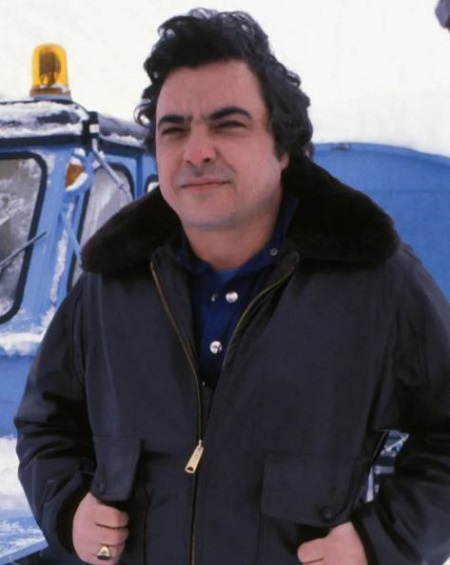
With the 2026 version of Supergirl currently flying high (though apparently not that high, according to the latest box office figures), there’s no better time to look at the interesting career of French-born director Jeannot Szwarc, who was given the decidedly difficult task of making the 1985 take on Supergirl work, without any involvement from Christopher Reeve’s Superman, from whose own hugely popular series the character was spun off. Though slammed upon release, Szwarc’s Supergirl has enjoyed something of a minor reappraisal in the decades since. In fact, that seems to be a trend when it comes the late Jeannot Szwarc’s film resume.
Jeannot Szwarc was born in Paris in 1939, and initially pursued interests in science, mathematics and engineering. While studying at the HEC Paris business school, Szwarc enjoyed a placement in the US, and also established a film society and directed student plays while at the school. Always interested in cinema and photography, upon graduation Szwarc started to produce short commercial films for an advertising company in Paris, and found near immediate success. Szwarc left the advertising world, however, when he scored a job as a production assistant on Stanley Donen’s 1963 Paris-shot movie Charade. From there, he worked for a time as a second unit director in French television, but found it difficult to gain career traction.
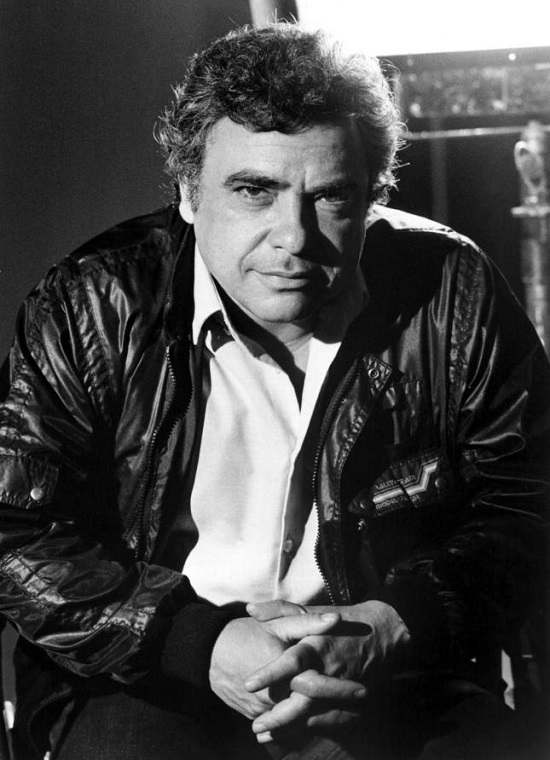
In 1964, Szwarc left Paris for Los Angeles to find more meaningful work. “It was hell,” Szwarc has said. “I worked odd jobs like writing scripts for a potato chip commercial. I was the guy who puts the laugh on the laugh tracks of a sitcom. After two-and-a-half years of this, I realised that nobody was going to come along and say, ‘Hey, kid! Here’s a film to direct.’” Szwarc, however, made his own work, and as he had in Paris, eventually found success.
While working in a low-level job at Universal, Szwarc submitted a number of pitches for TV shows, and one got picked up. Starring Raymond Burr as a paralysed ex-cop working as a crime-solving consultant to The San Francisco Police Department, Ironside became a big hit, and Szwarc made his directorial debut on the show. Impressing the execs, Szwarc was handed the reins on episodes of many hit shows from the 1970s through to the 2000s, including The Rockford Files, Kojak, Columbo, The Six Million Dollar Man, Baretta, Ally McBeal, Heroes, The Practice, JAG, Grey’s Anatomy, Bones, Scandal and many more. Szwarc was especially recognised for the large collection of stellar episodes he directed of the much-loved horror-fantasy portmanteau series Night Gallery.
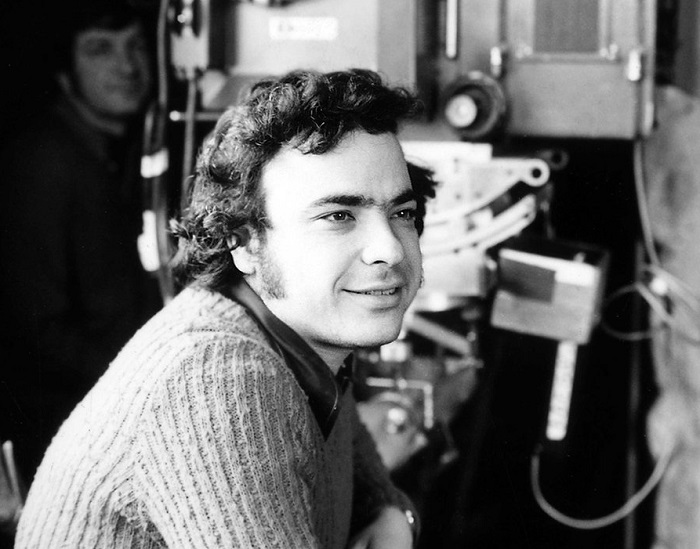
In amongst his considerable small screen work, Jeannot Szwarc also made a handful of big screen features. He made his debut in 1973 with Extreme Close Up, a low budget, little-seen sci-fi take on the subject of voyeurism penned by Michael Crichton. Szwarc followed that with 1975’s Bug, a nutty but highly effective eco-horror flick co-written and produced by famed shock-master and promotional showman William Castle. Starring Bradford Dillman as a scientist who breeds a new, deadly form of fire-starting cockroaches, Bug is gripping and strange, and functions just as chillingly as a “mad scientist” movie as it does an “animals run amok” flick. Though at the serious exploitation end of the industry, Bug demonstrated Szwarc’s ability to blend compelling characterisation with imaginative set-pieces.
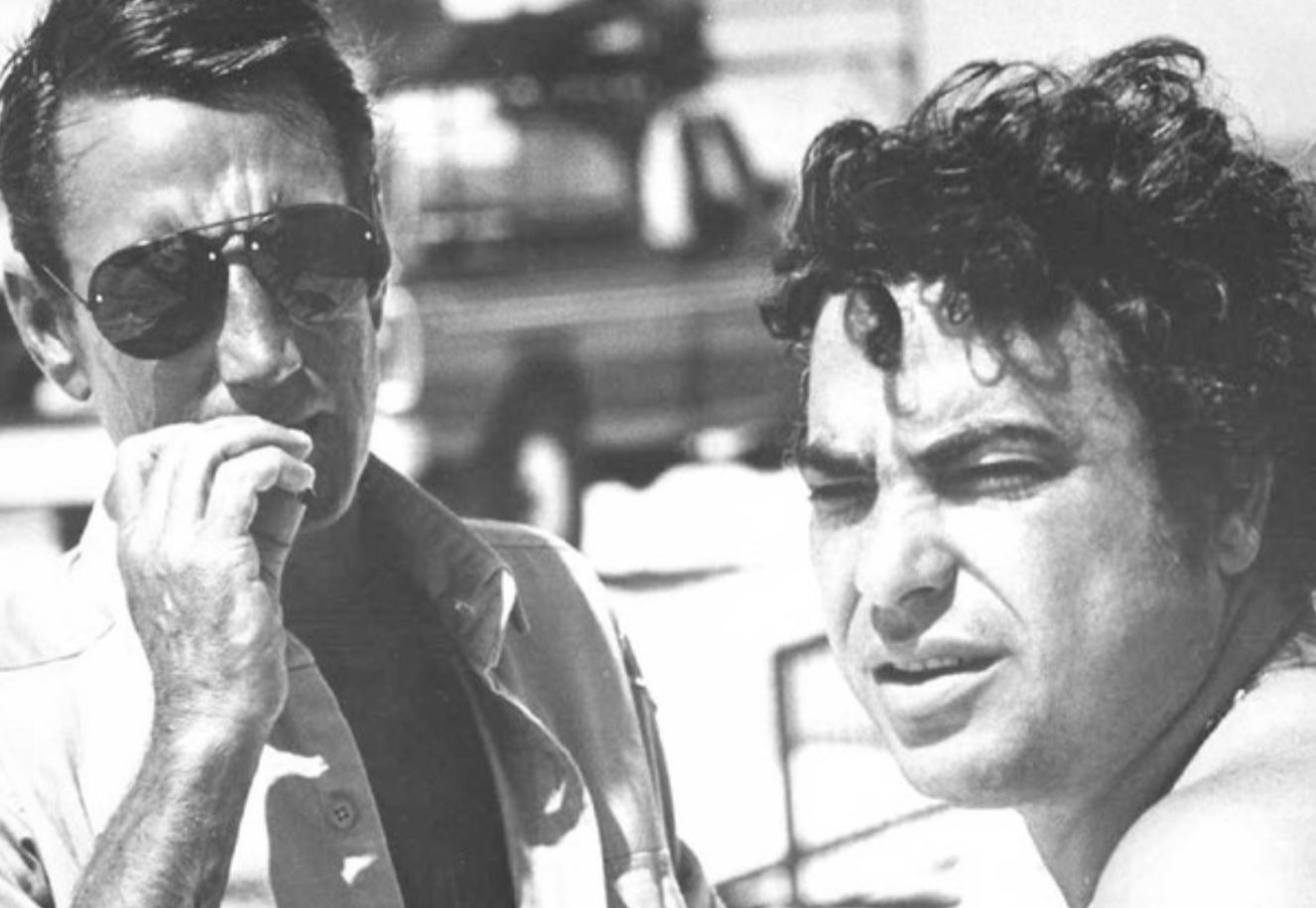
It was perhaps partially Szwarc’s “animals run amok” skills that saw him offered the opportunity to direct the sequel to one of the biggest hits of all time. When Steven Spielberg said no, and original director and Unsung Auteur John D. Hancock was fired, Jeannot Szwarc said yes to Jaws 2. “They had started the film with another director and had been shooting for about six weeks,” Szwarc told Film Talk. “They shut it down because it was such a mess. They hadn’t even started shooting on water yet; it was still on land. The studio didn’t want to shut it down completely because they already had huge advances. They went through a number of names, and production designer Joe Alves – we’d worked together on Night Gallery – mentioned my name. He had said, ‘I know someone who is fast and can do this very quickly.’”
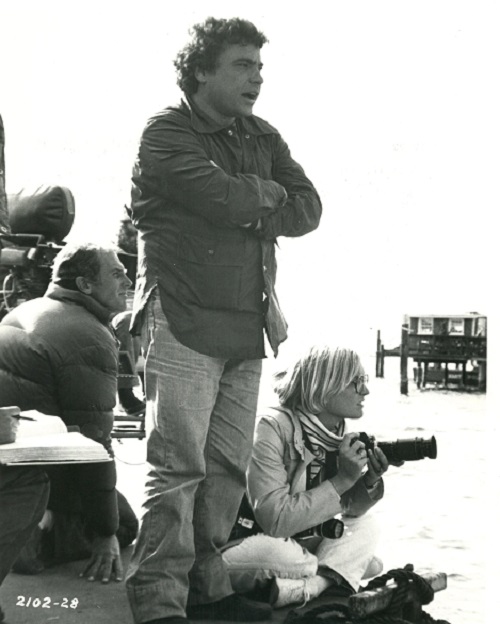
Though totally up against it – a late-stage director of a sequel to a massive hit – Szwarc truly delivered with 1978’s Jaws 2. He experienced major technical difficulties, along with continual differences of opinion with leading man Roy Scheider, but Szwarc crafted a truly exciting and compelling film. It doesn’t hit the heights of the original (seriously, how could it?), but Jaws 2 is a rock-solid, suspenseful adventure-thriller, and sits alongside Magnum Force (1973) and Beneath The Planet Of The Apes (1970) as a truly effective and inventive sequel deserving of far greater praise.
“I did a lot of homework on sequels,” Szwarc said in 1978. “When you do a sequel, everybody always measures it against the first one. Another way is to repeat the same elements, but with enough difference and originality so that it doesn’t look like a rip-off. Let’s face it: Jaws 2 is not going to be studied in film schools for years to come, and that applies to the first one as well. It’s broad entertainment, and there’s nothing wrong with that. There’s much more physical excitement in Jaws 2, especially in the last thirty-five minutes.”
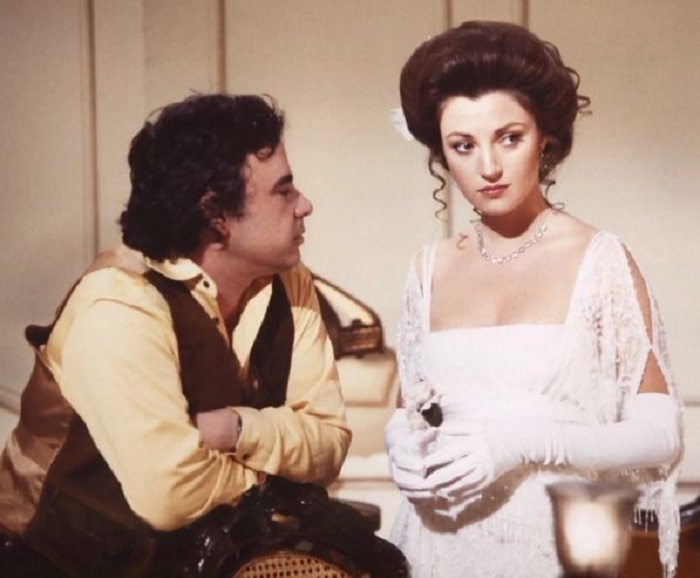
The difficult situation into which Szwarc walked on Jaws 2 saw the director receive a handshake deal from studio Universal to back his next project. Though with caveats in place (namely a reduced budget), Szwarc was backed to make 1980’s Somewhere In Time, which was based on a book by sci-fi legend Richard Matheson (I Am Legend), with whom the director had worked on Night Gallery. A deeply, profoundly romantic fantasy-drama, the film stars Christopher Reeve as a playwright who travels back in time to 1912 to meet the woman (Jane Seymour) with whose portrait he’s fallen in love. Both a moving romance and a detailed take on time travel, Somewhere In Time is a true joy. Though it disappointed upon release, Somewhere In Time now has a dedicated, near-obsessive cult following, with fan groups uniting regularly at the film’s various locations to celebrate it.
After the tense, expertly handled 1982 espionage thriller Enigma starring Martin Sheen and Sam Neill, Szwarc returned to blockbuster sequel territory with 1984’s Supergirl, a spin-off from the popular film series starring the director’s Somewhere In Time leading man Christopher Reeve. The film experienced many changes once Szwarc had signed on, with massive alterations made to the script that had initially enticed him on board. “Chris Reeve backed out too,” Szwarc told Digital Cinema. “He didn’t think it was right for him to be in Supergirl. That hurt the script enormously because the meeting of the two of them made it original. In fact, some of the stronger stuff in the script involved the two of them even though his presence wasn’t a focal point. It just gave a real style to the piece.”
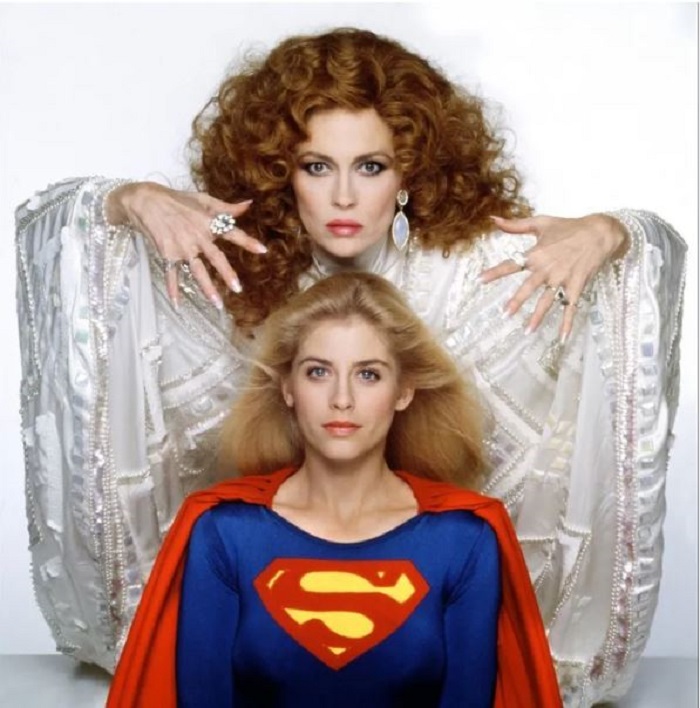
The absence of Christopher Reeve instantly cheapened Supergirl, and the film was a major disappointment upon release, failing to connect with both audiences and critics. Like Somewhere In Time, however, Supergirl has enjoyed something of a reappraisal in the decades since its release. Then-unknown Helen Slater makes for an engaging Supergirl, and Faye Dunaway is a high-camp delight as her wicked witch nemesis, with equally inspiring weirdness coming courtesy of surprise casting picks Peter Cook and Peter O’Toole.
When taken for what it is, Supergirl is a fun fantasy film, but Szwarc was pretty much hobbled right from the start with the film, and especially with the studio’s expectations for it. “They wanted Superman!” Szwarc told Digital Cinema. “I kept telling them that was a problem from day one, not only from the studio but I think from the audience as well. Someone missed the boat in terms of marketing and selling the picture. I kept saying to everyone, ‘What do you what? Superman in drag!’ But that’s not what we’re doing! They wanted Superman in a skirt.”
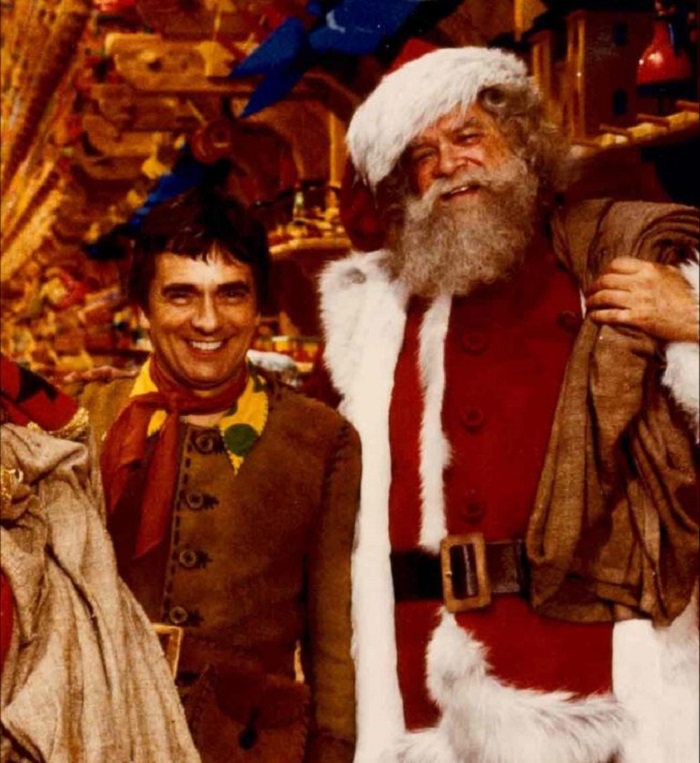
After the failure of Supergirl, Szwarc doubled down by taking on an equally fraught and high-profile project. Penned by David Newman (Bonnie & Clyde, Bad Company, Superman) and produced by Superman and Supergirl power player Ilya Salkind, 1985’s Santa Claus: The Movie was staged as a blockbuster Christmas flick, with David Huddleston in the famed red suit, Dudley Moore as his lead elf, and John Lithgow in villain mode. Again, like Supergirl, the production was somewhat troubled (John Carpenter was initially considering directing, with Brian Dennehy his choice for the title role!), but Szwarc again created something entertaining out of the chaos. Though a box office failure in the US, Santa Claus: The Movie was a hit in the UK, and eventually went on to become the most repeated Christmas film ever shown on British television.
Szwarc’s next film, the 1988 actioner Honor Bound, didn’t do much business, and with a run of unsuccessful films, the director returned to France for a time, where he directed the popular comedies La Vengeance D’une Blonde (1994), Hercule et Sherlock (1996) and The Sun Sisters (1997). Szwarc then eventually returned with great success to US television, where he directed episodes of major TV series until his passing in January 2025 at the age of 85. “Jeannot Szwarc was not just a brilliant director but a kind and generous soul,” actress Jane Seymour said in tribute. “He gifted us many timeless stories, including Somewhere In Time, a film that changed my life forever.”
Though some would tag him with the label “journeyman”, there is a definite throughline in the director’s work. Jeannot Szwarc excelled with fantasy, suspense and adventure, and was a true professional, able to assemble solid films out of difficult situations. He also directed a number of fine telemovies (including The Weekend Nun), and was very fondly remembered by many that he worked with.
“I like the atmosphere to be relaxed, and it should be fun,” Szwarc said of his approach to filmmaking. “We’re shooting something that’s fun…it’s entertainment, for heaven’s sake! So, when I show up, I know exactly what I want. It’s not like, ‘Let’s see how it evolves.’ I keep it light; I use a lot of humour, so everybody has a good time and they all love to do their job. Making a film is like building a cathedral: all those different people with different gifts, techniques, and know-how…they all get together and create one thing.”
If you liked this story, check out our features on other unsung auteurs Craig Gillespie, David Greene, Ernest Pintoff, Paul Williams, Jo Heims, Lee H. Katzin, Christoper Cain, Ken Wiederhorn, Barbara Loden, David Mackenzie, Alan Rudolph, James Lee Barrett, Edwin “Bud” Shrake, Joan Tewkesbury, Jamaa Fanaka, Jack Starrett, Joseph Sargent, Jeffrey Schwarz, George Sidney, Philip Dunne, Zak Hilditch, Luke Sparke, Cyrus Nowrasteh, Morgan Matthews, Tom Laughlin, Diane Keaton, Ed Hunt, Nancy Savoca, Robert Vincent O’Neil, Marvin J. Chomsky, Sam Firstenberg, Jack Sholder, Richard Gray, Giuseppe Andrews, Gus Trikonis, Greydon Clark, Frances Doel, Gordon Douglas, Billy Fine, Craig R. Baxley, Harvey Bernhard, Bert I. Gordon, James Fargo, Jeremy Kagan, Robby Benson, Robert Hiltzik, John Carl Buechler, Rick Carter, Paul Dehn, Bob Kelljan, Kevin Connor, Ralph Nelson, William A. Graham, Judith Rascoe, Michael Pressman, Peter Carter, Leo V. Gordon, Dalene Young, Gary Nelson, Fred Walton, James Frawley, Pete Docter, Max Baer Jr., James Clavell, Ronald F. Maxwell, Frank D. Gilroy, John Hough, Dick Richards, William Girdler, Rayland Jensen, Richard T. Heffron, Christopher Jones, Earl Owensby, James Bridges, Jeff Kanew, Robert Butler, Leigh Chapman, Joe Camp, John Patrick Shanley, William Peter Blatty, Peter Clifton, Peter R. Hunt, Shaun Grant, James B. Harris, Gerald Wilson, Patricia Birch, Buzz Kulik, Kris Kristofferson, Rick Rosenthal, Kirsten Smith & Karen McCullah, Jerrold Freeman, William Dear, Anthony Harvey, Douglas Hickox, Karen Arthur, Larry Peerce, Tony Goldwyn, Brian G. Hutton, Shelley Duvall, Robert Towne, David Giler, William D. Wittliff, Tom DeSimone, Ulu Grosbard, Denis Sanders, Daryl Duke, Jack McCoy, James William Guercio, James Goldstone, Daniel Nettheim, Goran Stolevski, Jared & Jerusha Hess, William Richert, Michael Jenkins, Robert M. Young, Robert Thom, Graeme Clifford, Frank Howson, Oliver Hermanus, Jennings Lang, Matthew Saville, Sophie Hyde, John Curran, Jesse Peretz, Anthony Hayes, Stuart Blumberg, Stewart Copeland, Harriet Frank Jr & Irving Ravetch, Angelo Pizzo, John & Joyce Corrington, Robert Dillon, Irene Kamp, Albert Maltz, Nancy Dowd, Barry Michael Cooper, Gladys Hill, Walon Green, Eleanor Bergstein, William W. Norton, Helen Childress, Bill Lancaster, Lucinda Coxon, Ernest Tidyman, Shauna Cross, Troy Kennedy Martin, Kelly Marcel, Alan Sharp, Leslie Dixon, Jeremy Podeswa, Ferd & Beverly Sebastian, Anthony Page, Julie Gavras, Ted Post, Sarah Jacobson, Anton Corbijn, Gillian Robespierre, Brandon Cronenberg, Laszlo Nemes, Ayelat Menahemi, Ivan Tors, Amanda King & Fabio Cavadini, Cathy Henkel, Colin Higgins, Paul McGuigan, Rose Bosch, Dan Gilroy, Tanya Wexler, Clio Barnard, Robert Aldrich, Maya Forbes, Steven Kastrissios, Talya Lavie, Michael Rowe, Rebecca Cremona, Stephen Hopkins, Tony Bill, Sarah Gavron, Martin Davidson, Fran Rubel Kuzui, Elliot Silverstein, Liz Garbus, Victor Fleming, Barbara Peeters, Robert Benton, Lynn Shelton, Tom Gries, Randa Haines, Leslie H. Martinson, Nancy Kelly, Paul Newman, Brett Haley, Lynne Ramsay, Vernon Zimmerman, Lisa Cholodenko, Robert Greenwald, Phyllida Lloyd, Milton Katselas, Karyn Kusama, Seijun Suzuki, Albert Pyun, Cherie Nowlan, Steve Binder, Jack Cardiff, Anne Fletcher ,Bobcat Goldthwait, Donna Deitch, Frank Pierson, Ann Turner, Jerry Schatzberg, Antonia Bird, Jack Smight, Marielle Heller, James Glickenhaus, Euzhan Palcy, Bill L. Norton, Larysa Kondracki, Mel Stuart, Nanette Burstein, George Armitage, Mary Lambert, James Foley, Lewis John Carlino, Debra Granik, Taylor Sheridan, Laurie Collyer, Jay Roach, Barbara Kopple, John D. Hancock, Sara Colangelo, Michael Lindsay-Hogg, Joyce Chopra, Mike Newell, Gina Prince-Bythewood, John Lee Hancock, Allison Anders, Daniel Petrie Sr., Katt Shea, Frank Perry, Amy Holden Jones, Stuart Rosenberg, Penelope Spheeris, Charles B. Pierce, Tamra Davis, Norman Taurog, Jennifer Lee, Paul Wendkos, Marisa Silver, John Mackenzie, Ida Lupino, John V. Soto, Martha Coolidge, Peter Hyams, Tim Hunter, Stephanie Rothman, Betty Thomas, John Flynn, Lizzie Borden, Lionel Jeffries, Lexi Alexander, Alkinos Tsilimidos, Stewart Raffill, Lamont Johnson, Maggie Greenwald and Tamara Jenkins.