


By Erin Free
FilmInk salutes the work of creatives who have never truly received the credit that they deserve. In this installment: Australian director Gillespie, who has helmed Lars And The Real Girl, I, Tonya, The Finest Hours, Dumb Money, Cruella, Supergirl and more.
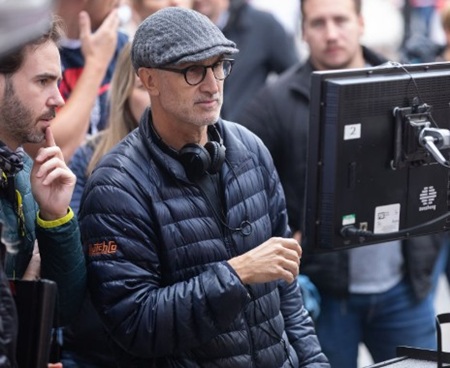
The Australian media loves nothing more than trumpeting the international success of its creatives, with the tag “Australia’s own” instantly placed before the name of anyone nominated for an overseas award or riding the wave of a box office windfall. All of which makes the basic silence around director Craig Gillespie utterly confounding. Perhaps it’s the fact that Gillespie began his career in America, and has never actually made a film here, but still, this incredibly talented director – whose blockbuster Supergirl has just hit cinemas – really needs to be claimed…and duly celebrated.
Craig Gillespie was born in Sydney in 1967 and moved to New York City at the age of nineteen to study illustration, graphic design and advertising at Manhattan’s School Of Visual Arts. From there, Gillespie started out as an intern at ad agency J. Walter Thompson in New York, and eventually worked his way through the industry until he began directing TV commercials. Gillespie became a major force in this arena, helming major campaigns for massive brands, and winning a long list of awards for his work. An obvious and gifted talent, Gillespie made his feature film debut in 2007, but it wasn’t a happy experience.
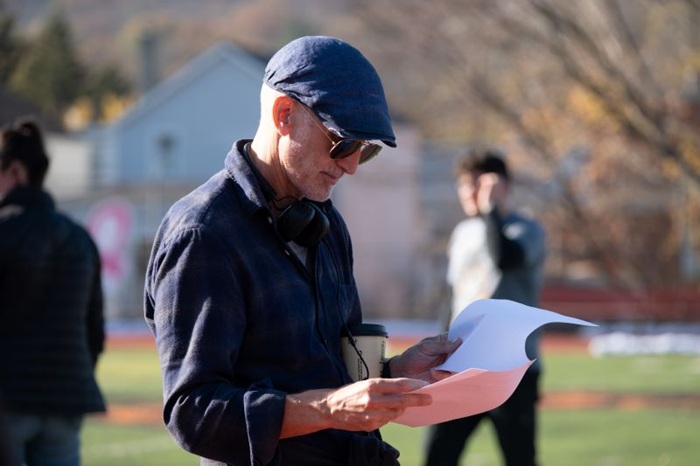
Gillespie envisioned Mr. Woodcock – which starred Seann William Scott, Billy Bob Thornton and Susan Sarandon – as a dark comedy in a similar vein to many of the edgy commercials he’d made. Though the premise is great (a young man tries to stop his mother from marrying his old high school gym teacher, who made life hell for his students) and the final film is very funny, Gillespie has distanced himself from the project. He left the project after several negative test screenings, and many scenes were later re-written and re-shot, with David Dobkin replacing Gillespie as director. “It was obvious the audience wanted a broader comedy, and not the one I’d made,” Gillespie told The Los Angeles Times. “I appreciated the predicament [backing studio] New Line was in, so I stepped aside.”
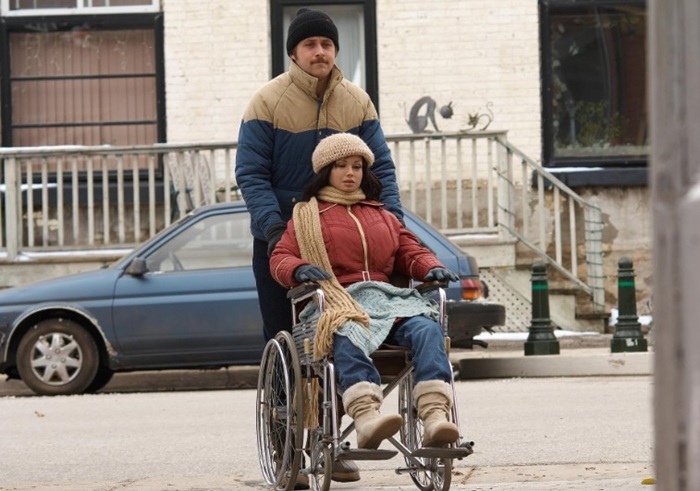
After that unfortunate false start, Gillespie earned much credibility later that same year with 2007’s mesmerising and heartbreaking Lars And The Real Girl. In perhaps the best case ever of a film being so much more than its byline, this touching drama stars Ryan Gosling as Lars, a sweet-natured but socially awkward young man who engages in an authentic, deeply felt, and profoundly romantic (yet not necessarily sexual) relationship with a full-deal sex doll named Bianca. Gillespie himself was uncertain about the material, and sat on Nancy Oliver’s beautiful (eventually Oscar nominated) script for several years, finally taking the plunge and crafting something truly indelible. With the haunting, funny and moving Lars And The Real Girl, Gillespie instantly established himself as a filmmaker able to mix sweetness and absurdity with a true sense of seamless invention.
After boldly and triumphantly bucking the system with Lars And The Real Girl, Gillespie took a major detour with the big studio remake of the eighties vampire cult favourite, Fright Night. “I was seriously not looking to do this movie,” Gillespie told FilmInk in 2011. “I was going into DreamWorks for a general meeting. This script got sent over the night before. They were looking for a director, and the script was just so good. What most resonated with me was the balance of horror and comedy. I love to walk that line, which was why I wanted to do it. The tone of Lars And The Real Girl is completely different from this. Fright Night is a tricky tone, and DreamWorks knew that. In trying to get that mix of comedy and horror, they needed somebody to handle the tone, and I had a very specific take on that.”
Gillespie worked a tricky tone again with 2014’s sports comedy-drama Million Dollar Arm (in which Jon Hamm’s sports agent recruits talented Indian cricket players into the world of baseball), but went seriously dramatic with 2016’s The Finest Hours, a brilliantly tailored, emotionally affecting and wholly involving ocean rescue tale starring Chris Pine, Casey Affleck and Ben Foster. If these projects seemed a little outside Gillespie’s darkly comic wheelhouse, his next film got him well and truly back into his creative lane.
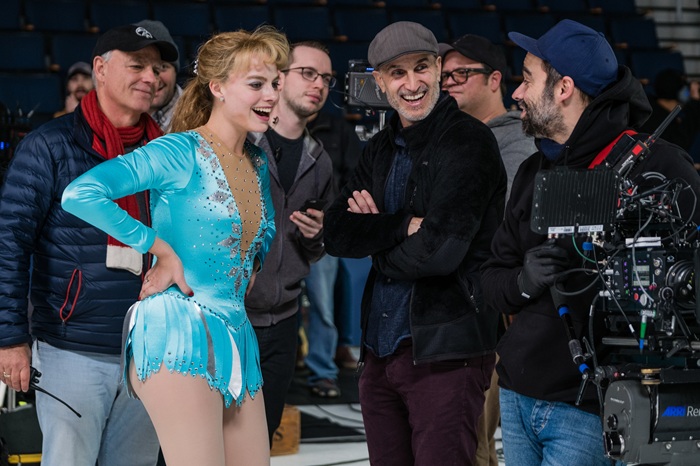
A crackling true-life story unlike any other, 2017’s I, Tonya is an absurd, tragic and hilarious look at the divisive Tonya Harding, the woman at the centre of the biggest scandal in sports history. Margot Robbie delivers a bravura turn as disgraced figure skater Harding, who infamously helped to cover up the brutal knee-capping of her rival skater, Nancy Kerrigan. Also starring a brilliant Sebastian Stan as Harding’s scuzzy boyfriend Jeff Gillooly, the near ridiculously entertaining I, Tonya is the perfect distillation of Gillespie’s concerns and skills as a director. It’s funny and scandalous, but also emotionally on-point at every turn. Though the film got its fair share of acclaim, most of it was directed at the exceptional Margot Robbie, but it’s the film’s tonal tightrope-walk that is its major strength, and that is all Craig Gillespie.
Gillespie was a great pick for Disney’s 2021 crime comedy Cruella, bringing his wicked sense of humour to this fresh take on The House Of Mouse’s classic villainess, played with engaging sass and sting by Emma Stone. If Cruella was another slight detour for Gillespie, 2023’s Dumb Money’s winning mix of drama, absurdity and real-life weirdness was the director’s stock in trade. One of the most bizarre stories during the pandemic was the rise of GameStop. A video game store retailer in the United States, the Wall Street bigwigs had already bet that this ailing company was on the slide. Until, that is, YouTube finance guru Keith Gill urged his followers to invest. The resulting call-to-arms saw the GameStop stock escalate and Wall Street traders look on open-mouthed, as those known as “dumb money” – pejorative slang for day-traders – began to stick it to the man.
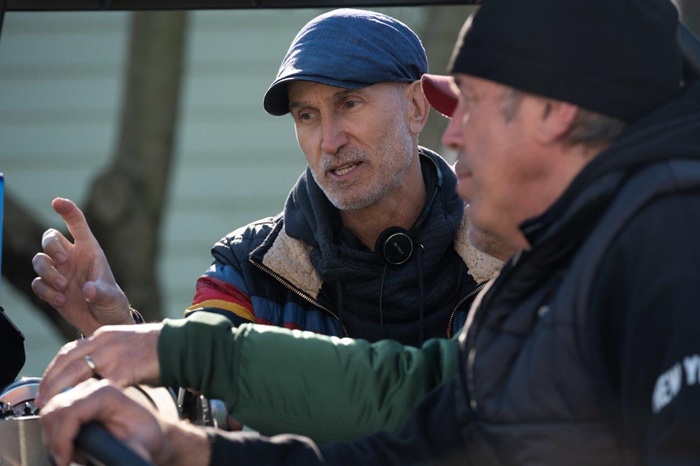
Very funny and often quietly shocking, Gillespie’s Dumb Money was influenced by films like David Fincher’s Facebook tale The Social Network and Bennett Miller’s baseball drama Moneyball. “Those kinds of films [were more influential] than the actual Wall Street films like The Big Short and The Wolf of Wall Street, which are more films inside of that banking community,” Gillespie told FilmInk. “This was a real outsider’s point of view. We were approaching it more as that kind of narrative than necessarily being about the banking system. It was more about the frustration of the individuals living through this COVID moment that we had, which was so profound, and how it got channeled into this movement.”
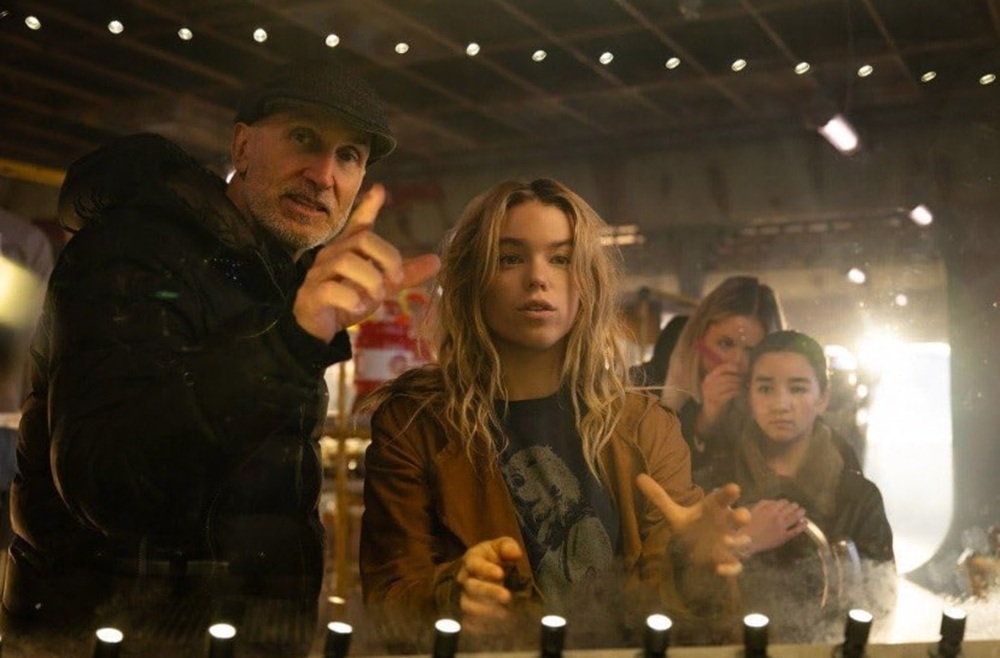
Craig Gillespie finds just the right material once again with the sassy, punk-spirited DC Studios sci-fi blockbuster Supergirl, which stars charismatic Aussie actress Milly Alcock as Superman’s cousin Kara Zor-El, who is more interested in rocking the house than saving the world. Bright and vivid, Supergirl has plenty of laughs and feels, and is far from the left turn it might appear to be. “I got sent the script kind of out of the blue,” Gillespie told The Playlist. “I wasn’t necessarily looking to do a large tentpole superhero film, but I’ve always loved [producer and DC Studios boss] James Gunn’s work. If there’s any sensibility that I relate to, it’s James’. I got this script, still with reservations, but then I read it. Literally, second scene in, I’m like, ‘Alright, I’m in. I know this movie. I know how to do this.’”
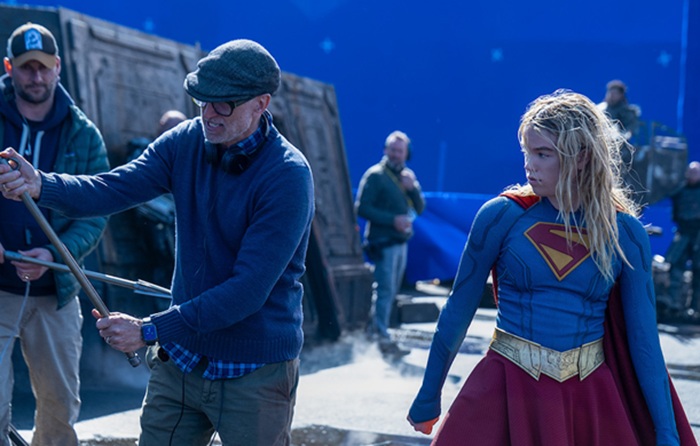
Again, with Supergirl, Craig Gillespie is in amongst a big mix, and not quite getting the credit he’s due for pulling off such a complex mix of humour, heart and superhero action. But that’s pretty much par for the course with this supremely gifted Australian director, who has also done extraordinary work on TV with projects like The United States Of Tara, Pam & Tommy, Your Friends & Neighbors and Physical. Isn’t it about time we started referring to this big-time talent as “Australia’s own” Craig Gillespie?
Additional reporting by Gill Pringle & James Mottram
If you liked this story, check out our features on other unsung auteurs David Greene, Ernest Pintoff, Paul Williams, Jo Heims, Lee H. Katzin, Christoper Cain, Ken Wiederhorn, Barbara Loden, David Mackenzie, Alan Rudolph, James Lee Barrett, Edwin “Bud” Shrake, Joan Tewkesbury, Jamaa Fanaka, Jack Starrett, Joseph Sargent, Jeffrey Schwarz, George Sidney, Philip Dunne, Zak Hilditch, Luke Sparke, Cyrus Nowrasteh, Morgan Matthews, Tom Laughlin, Diane Keaton, Ed Hunt, Nancy Savoca, Robert Vincent O’Neil, Marvin J. Chomsky, Sam Firstenberg, Jack Sholder, Richard Gray, Giuseppe Andrews, Gus Trikonis, Greydon Clark, Frances Doel, Gordon Douglas, Billy Fine, Craig R. Baxley, Harvey Bernhard, Bert I. Gordon, James Fargo, Jeremy Kagan, Robby Benson, Robert Hiltzik, John Carl Buechler, Rick Carter, Paul Dehn, Bob Kelljan, Kevin Connor, Ralph Nelson, William A. Graham, Judith Rascoe, Michael Pressman, Peter Carter, Leo V. Gordon, Dalene Young, Gary Nelson, Fred Walton, James Frawley, Pete Docter, Max Baer Jr., James Clavell, Ronald F. Maxwell, Frank D. Gilroy, John Hough, Dick Richards, William Girdler, Rayland Jensen, Richard T. Heffron, Christopher Jones, Earl Owensby, James Bridges, Jeff Kanew, Robert Butler, Leigh Chapman, Joe Camp, John Patrick Shanley, William Peter Blatty, Peter Clifton, Peter R. Hunt, Shaun Grant, James B. Harris, Gerald Wilson, Patricia Birch, Buzz Kulik, Kris Kristofferson, Rick Rosenthal, Kirsten Smith & Karen McCullah, Jerrold Freeman, William Dear, Anthony Harvey, Douglas Hickox, Karen Arthur, Larry Peerce, Tony Goldwyn, Brian G. Hutton, Shelley Duvall, Robert Towne, David Giler, William D. Wittliff, Tom DeSimone, Ulu Grosbard, Denis Sanders, Daryl Duke, Jack McCoy, James William Guercio, James Goldstone, Daniel Nettheim, Goran Stolevski, Jared & Jerusha Hess, William Richert, Michael Jenkins, Robert M. Young, Robert Thom, Graeme Clifford, Frank Howson, Oliver Hermanus, Jennings Lang, Matthew Saville, Sophie Hyde, John Curran, Jesse Peretz, Anthony Hayes, Stuart Blumberg, Stewart Copeland, Harriet Frank Jr & Irving Ravetch, Angelo Pizzo, John & Joyce Corrington, Robert Dillon, Irene Kamp, Albert Maltz, Nancy Dowd, Barry Michael Cooper, Gladys Hill, Walon Green, Eleanor Bergstein, William W. Norton, Helen Childress, Bill Lancaster, Lucinda Coxon, Ernest Tidyman, Shauna Cross, Troy Kennedy Martin, Kelly Marcel, Alan Sharp, Leslie Dixon, Jeremy Podeswa, Ferd & Beverly Sebastian, Anthony Page, Julie Gavras, Ted Post, Sarah Jacobson, Anton Corbijn, Gillian Robespierre, Brandon Cronenberg, Laszlo Nemes, Ayelat Menahemi, Ivan Tors, Amanda King & Fabio Cavadini, Cathy Henkel, Colin Higgins, Paul McGuigan, Rose Bosch, Dan Gilroy, Tanya Wexler, Clio Barnard, Robert Aldrich, Maya Forbes, Steven Kastrissios, Talya Lavie, Michael Rowe, Rebecca Cremona, Stephen Hopkins, Tony Bill, Sarah Gavron, Martin Davidson, Fran Rubel Kuzui, Elliot Silverstein, Liz Garbus, Victor Fleming, Barbara Peeters, Robert Benton, Lynn Shelton, Tom Gries, Randa Haines, Leslie H. Martinson, Nancy Kelly, Paul Newman, Brett Haley, Lynne Ramsay, Vernon Zimmerman, Lisa Cholodenko, Robert Greenwald, Phyllida Lloyd, Milton Katselas, Karyn Kusama, Seijun Suzuki, Albert Pyun, Cherie Nowlan, Steve Binder, Jack Cardiff, Anne Fletcher ,Bobcat Goldthwait, Donna Deitch, Frank Pierson, Ann Turner, Jerry Schatzberg, Antonia Bird, Jack Smight, Marielle Heller, James Glickenhaus, Euzhan Palcy, Bill L. Norton, Larysa Kondracki, Mel Stuart, Nanette Burstein, George Armitage, Mary Lambert, James Foley, Lewis John Carlino, Debra Granik, Taylor Sheridan, Laurie Collyer, Jay Roach, Barbara Kopple, John D. Hancock, Sara Colangelo, Michael Lindsay-Hogg, Joyce Chopra, Mike Newell, Gina Prince-Bythewood, John Lee Hancock, Allison Anders, Daniel Petrie Sr., Katt Shea, Frank Perry, Amy Holden Jones, Stuart Rosenberg, Penelope Spheeris, Charles B. Pierce, Tamra Davis, Norman Taurog, Jennifer Lee, Paul Wendkos, Marisa Silver, John Mackenzie, Ida Lupino, John V. Soto, Martha Coolidge, Peter Hyams, Tim Hunter, Stephanie Rothman, Betty Thomas, John Flynn, Lizzie Borden, Lionel Jeffries, Lexi Alexander, Alkinos Tsilimidos, Stewart Raffill, Lamont Johnson, Maggie Greenwald and Tamara Jenkins.