

By Erin Free
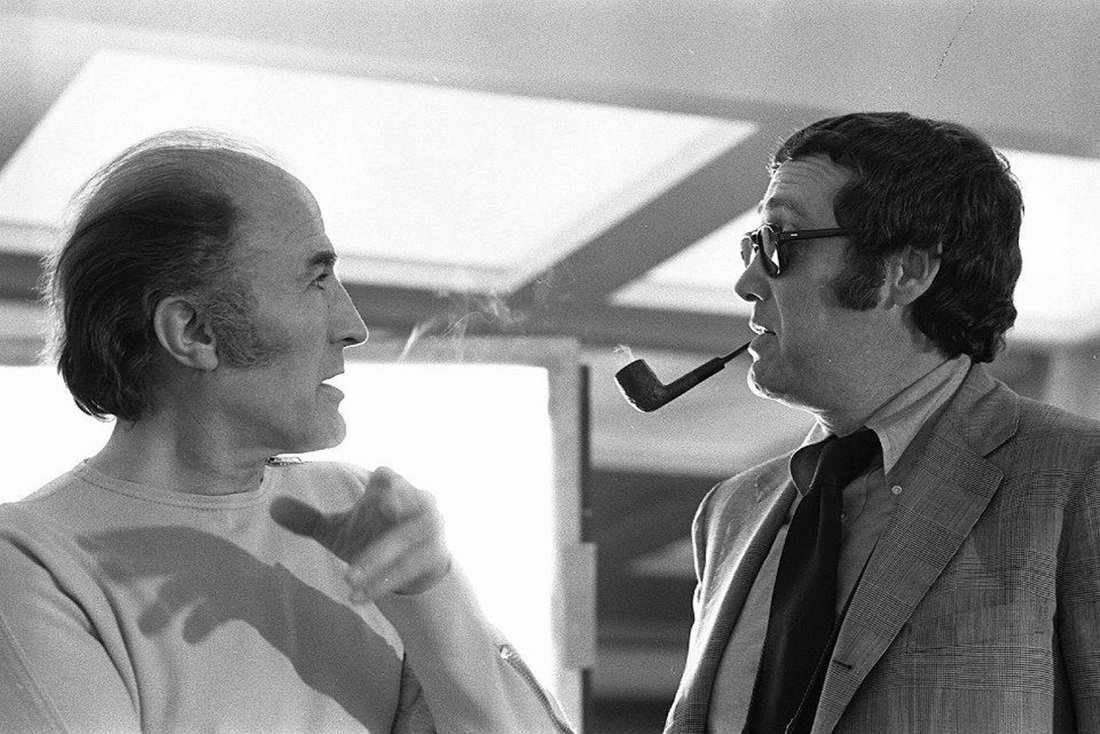
FilmInk salutes the work of creatives who have never truly received the credit that they deserve. In this installment: director Lee H. Katzin (pictured right with actor Barry Morse), who helmed Le Mans, The Salzburg Connection, What Ever Happened To Aunt Alice?, World Gone Wild and more.
Like so many directors included in the Unsung Auteurs column, the late Lee H. Katzin could easily be slapped with the “journeyman” label. His work has predominantly been done for the small screen, where he’s helmed many hours of episodic television, and a long list of telemovies, three of which – Strange Homecoming, Zuma Beach and Relentless – have been reviewed for the Vintage Telemovie Of The Week column. Katzin is a talented filmmaker with a knack for getting it done, and getting it done on time, and with a modicum of flair. A noted fix-it man, the director has also been brought onto projects during production to clean up cinematic messes left by others.
None of this, of course, screams “Auteur”! Katzin was very much a workman director, dealing with tight budgets and slim timeframes to get telemovies made to fit busy, demanding network schedules. There’s not even a great deal of connective tissue between the handful of feature films that Katzin made in between his small screen assignments. He’s good with pacing, constructs clean visuals, and prompts good performances, but that’s not really enough to individualise Katzin as a filmmaker. What Lee H. Katzin does have, however, is – though certainly limited – one of the weirdest and most inexplicable big screen resumes of any Unsung Auteur.
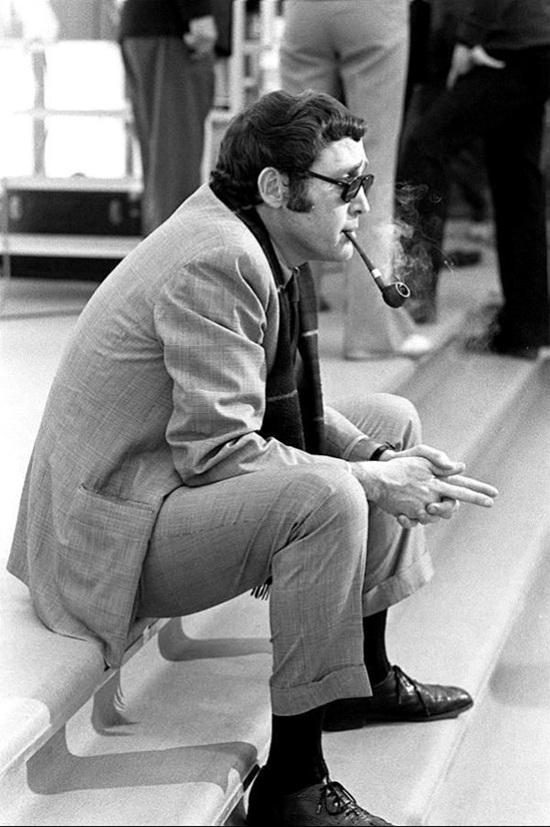
Lee H. Katzin was born in 1935 in Detroit, and first established himself in the entertainment industry in the late 1960s when he directed episodes of popular series like Mannix, The Mod Squad, The Wild, Wild West, Mission: Impossible, The Rat Patrol and Hondo. After working as a big screen assistant director through the 1960s, Katzin made his feature film debut in 1969 with the interesting western Heaven With A Gun, in which Glenn Ford stars as a notorious gunfighter turned preacher who comes between warring ranchers and sheep herders. A curious mix of the vintage and forward-thinking (David Carradine and Barbara Hershey co-star), the film is now largely forgotten, but marked a creatively auspicious debut for Katzin.
After this, Katzin was tapped by power producer and Unsung Auteur Robert Aldrich to replace director Bernard Girard on his 1969 “psycho-biddy”/“hagsploitation” horror flick What Ever Happened To Aunt Alice?, something of a companion piece to Aldrich’s previous films What Ever Happened to Baby Jane? (1962) and Hush…Hush, Sweet Charlotte (1964). Per the template of this garish horror sub-genre, all of the aforementioned films feature ageing Hollywood female stars going off the deep end and engaging in various forms of derangement and murderous behaviour.
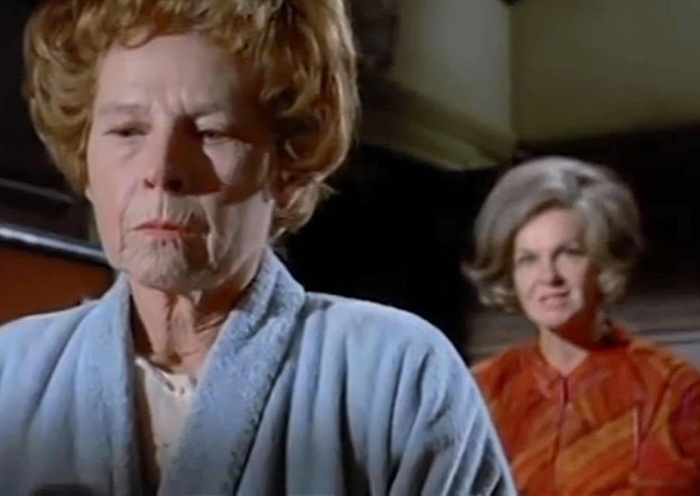
With Bernard Girard completing much of the picture prior to getting dumped by Aldrich, Lee H. Katzin is credited with doing about half the work on What Ever Happened To Aunt Alice? Gothic in tone and gloriously unrestrained, the film is an enjoyably hothouse example of the “hagsploitation” sub-genre, with bravura actresses Geraldine Page and Ruth Gordon both giving fantastically full-bodied performances in this gruesome tale of a murderous widow who kills her housekeepers, largely for profit, though there are certainly other motivations at play too.
After his crazed turn through psycho-biddy territory, Katzin delivered one of the oddest films of the 1970s…and that’s saying something. A deranged, semi-epic shambles to rival the infamous likes of Sextette (1978) and Candy (1968), 1970’s The Phynx is a misguided riff on pre-fab rock bands like The Monkees. This highly energised genre defier sees the US government create the eponymous pop group in order to rescue a gaggle of celebrities being held in communist Albania. First receiving training and tutelage from Clint Walker, James Brown and Richard Pryor (yes, you read that correctly), the boys from The Phynx go through a circuitous process to get behind The Iron Curtain, where the power of rock music not only quashes communism, but also sets free the weirdest cameo performers – everyone from The Lone Ranger & Tonto and Gone With The Wind’s Butterfly McQueen through to Johnny Weismuller and Maureen O’Sullivan (the most famous Tarzan & Jane) and Colonel fucking Sanders of Kentucky Fried Chicken fame – ever assembled for one film.
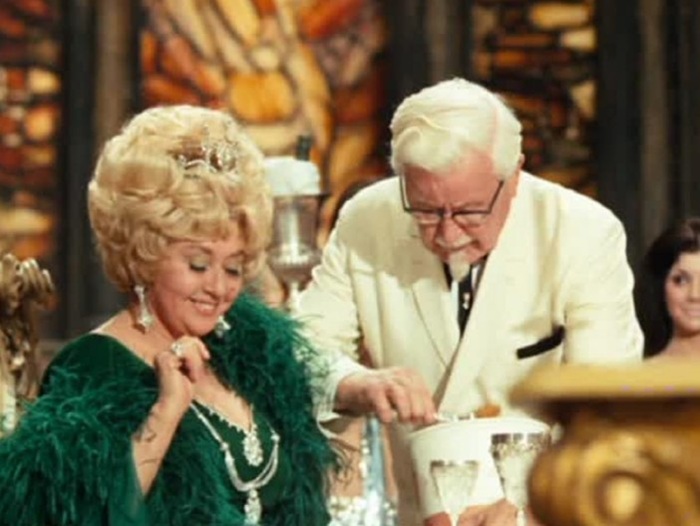
The Phynx is a curious, long-lost artefact (the film was barely released by backing studio Warner, and was then locked in a vault for decades) that carries little to no public production history or information. Bootlegged for years before finally being released on DVD, The Phynx developed a small but fevered cult formed around its very weirdness and innate sense of mystery.
It’s difficult to know just how much Katzin was involved with the project, and what his intentions indeed were with the film, but that’s all part of the mysterious fun. A wacked-out rock flick that struts a similarly unhinged stage to Robert Thom’s Wild In The Streets (1969) and Angel, Angel Down We Go (1969), the delirious The Phynx is a true oddball curio, and whatever his role in its creation, Lee H. Katzin must be given all due credit for orchestrating something so truly singular and unrivalled.
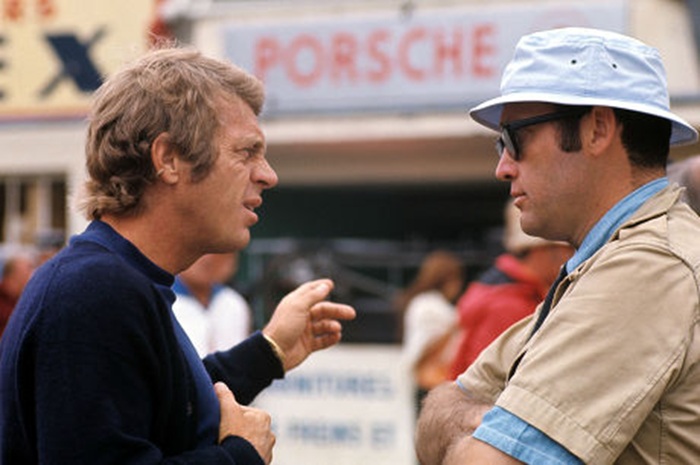
After hagsploitation and rock music, Katzin shifted gears with the infamous 1971 Steve McQueen race car movie Le Mans. In development for over five years, superstar McQueen’s now revered pet project initially had big-name director, John Sturges – who had guided the iconic actor to big screen success with The Magnificent Seven (1960) and The Great Escape (1963) – at the helm. During production, however, McQueen and Sturges were at odds over the film’s focus. McQueen wanted to make a fly-on-the-wall, documentary-style flick about the eponymous 24-hour race, whereas Sturges felt that ignoring story and characterisation could alienate audiences and limit the film’s appeal.
During shooting, noted minimalist McQueen pared the script right down until it was little more than a series of brief exchanges between characters wedged in between extended race sequences. Finally pushed to the edge, Sturges eventually left the project, and McQueen brought in now recognised fix-it man Lee H. Katzin to finish the job. Though the film was a major box office failure, Le Mans is now an essential element of the mystique that surrounds the late Steve McQueen. The film is very much McQueen’s vision, but again, Katzin deserves praise for putting together something so ambitious and technically and narratively adventurous.
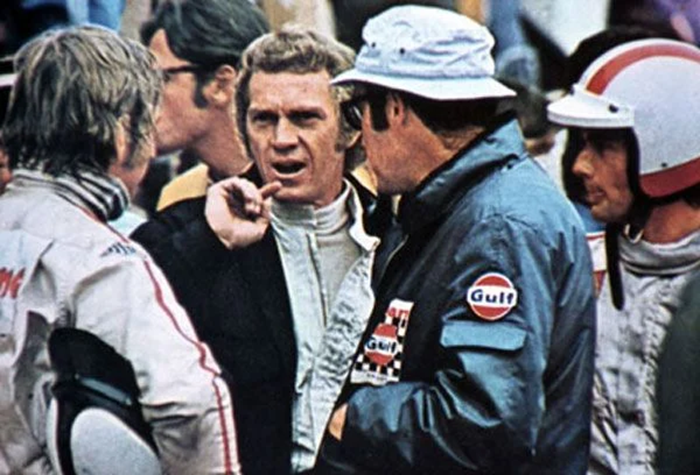
“My dad made the movie not for the general public, but for racers,” Steve McQueen’s son – late actor and producer Chad McQueen – told FilmInk in 2016. “That’s who he wanted to appease: the racers…the real guys out there. He accomplished that. It’s a vindication for me. When Le Mans came out – and I remember it from when I was a kid – they crucified my dad because they knew he was at the helm. I talked to Lee Katzin about two months before he died, and he told me that Le Mans came out on the same weekend as Dirty Harry. It did the same business, but it fell off. Le Mans had a huge budget for the time, but ultimately, Steve McQueen’s vision was right.”
After the sluggish, labyrinthine 1972 espionage thriller The Salzburg Connection with Barry Newman and Anna Karina, Katzin worked prolifically in television (on the likes of Space: 1999 and Man From Atlantis), and didn’t return to the big screen until 1987. On a hiding to nothing, Katzin waded into the wholly dog-eared and well-travelled dystopian Mad Max/Escape From New York exploitation rip-off subgenre with his sci-fi actioner World Gone Wild.
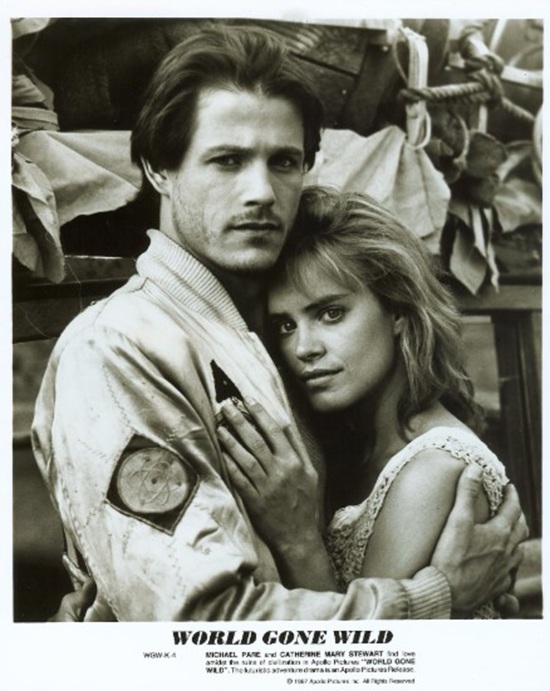
Seemingly against all odds, Katzin actually ended up delivering something pretty damn good. You know the drill: in the nuclear-ravaged, barren wasteland of Earth in the year 2087, water is as precious as life itself, and a small, peaceful community struggles to survive. Despite the obvious set-up, there’s also a lot of cool shit going on here, and this very cool surprise package rates higher than other (still fun) Mad Max rip jobs like Wheels Of Fire and Steel Dawn.
Firstly, the peaceful community is led by the legendary Bruce Dern and the perennially underrated Catherine Mary Stewart (Night Of The Comet, The Last Starfighter), and it’s being menaced by a vicious, creepy, quasi-religious gang led by 1980s pop superstar Adam Ant, whose approach to post-apocalyptic life and death has been exhumed from an old book about Charles Manson! Unable to defend themselves, the peaceful community hires a crew of hardened mercenaries led by, yes, the one and only Michael Pare (Eddie And The Cruisers, Streets Of Fire) to protect them.
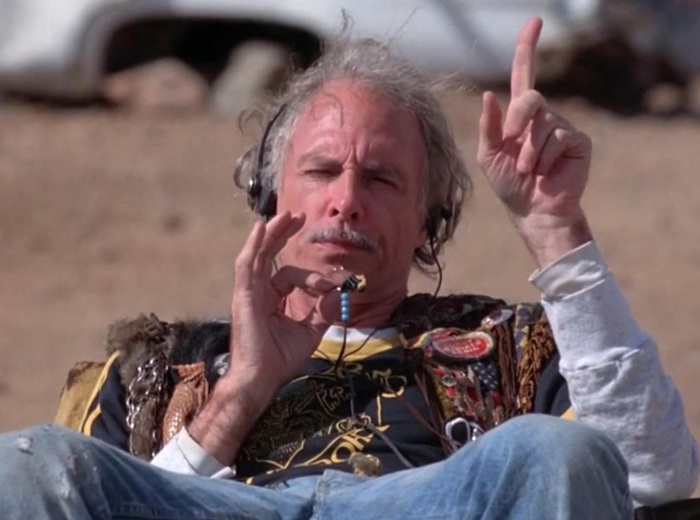
Echoing The Magnificent Seven as much as Mad Max, World Gone Wild is funny, exciting, imaginative, and enjoyably quirky, and is about as good as the Mad Max rip-off sub-genre can get. “With a plot borrowed from Seven Samurai, the witty and surprisingly reflective World Gone Wild has lots of fun with the post-nuclear holocaust saga,” wrote Kevin Thomas in his review for The Los Angeles Times. “The result is a good little action picture with plenty of smarts and a nonchalant air that deflects its obligatory violence. It represents a happy teaming of debuting screenwriter Jorge Zamacona and genre veteran Lee H. Katzin, who directs a dynamite cast with assured dispatch.”
Disappointingly, Lee H. Katzin only directed two more feature films – the 1995 sports drama The Break and the 1999 thriller Restraining Order with Eric Roberts – before his passing from cancer at the age of 67 in 2002 in Beverly Hills. Lee H. Katzin might have been a journeyman, but he made a ton of great telemovies, and two (very different) seminal cinematic stand-alones in Le Mans and The Phynx…and for that, he deserves all due celebration.
If you liked this story, check out our features on other unsung auteurs Christoper Cain, Ken Wiederhorn, Barbara Loden, David Mackenzie, Alan Rudolph, James Lee Barrett, Edwin “Bud” Shrake, Joan Tewkesbury, Jamaa Fanaka, Jack Starrett, Joseph Sargent, Jeffrey Schwarz, George Sidney, Philip Dunne, Zak Hilditch, Luke Sparke, Cyrus Nowrasteh, Morgan Matthews, Tom Laughlin, Diane Keaton, Ed Hunt, Nancy Savoca, Robert Vincent O’Neil, Marvin J. Chomsky, Sam Firstenberg, Jack Sholder, Richard Gray, Giuseppe Andrews, Gus Trikonis, Greydon Clark, Frances Doel, Gordon Douglas, Billy Fine, Craig R. Baxley, Harvey Bernhard, Bert I. Gordon, James Fargo, Jeremy Kagan, Robby Benson, Robert Hiltzik, John Carl Buechler, Rick Carter, Paul Dehn, Bob Kelljan, Kevin Connor, Ralph Nelson, William A. Graham, Judith Rascoe, Michael Pressman, Peter Carter, Leo V. Gordon, Dalene Young, Gary Nelson, Fred Walton, James Frawley, Pete Docter, Max Baer Jr., James Clavell, Ronald F. Maxwell, Frank D. Gilroy, John Hough, Dick Richards, William Girdler, Rayland Jensen, Richard T. Heffron, Christopher Jones, Earl Owensby, James Bridges, Jeff Kanew, Robert Butler, Leigh Chapman, Joe Camp, John Patrick Shanley, William Peter Blatty, Peter Clifton, Peter R. Hunt, Shaun Grant, James B. Harris, Gerald Wilson, Patricia Birch, Buzz Kulik, Kris Kristofferson, Rick Rosenthal, Kirsten Smith & Karen McCullah, Jerrold Freeman, William Dear, Anthony Harvey, Douglas Hickox, Karen Arthur, Larry Peerce, Tony Goldwyn, Brian G. Hutton, Shelley Duvall, Robert Towne, David Giler, William D. Wittliff, Tom DeSimone, Ulu Grosbard, Denis Sanders, Daryl Duke, Jack McCoy, James William Guercio, James Goldstone, Daniel Nettheim, Goran Stolevski, Jared & Jerusha Hess, William Richert, Michael Jenkins, Robert M. Young, Robert Thom, Graeme Clifford, Frank Howson, Oliver Hermanus, Jennings Lang, Matthew Saville, Sophie Hyde, John Curran, Jesse Peretz, Anthony Hayes, Stuart Blumberg, Stewart Copeland, Harriet Frank Jr & Irving Ravetch, Angelo Pizzo, John & Joyce Corrington, Robert Dillon, Irene Kamp, Albert Maltz, Nancy Dowd, Barry Michael Cooper, Gladys Hill, Walon Green, Eleanor Bergstein, William W. Norton, Helen Childress, Bill Lancaster, Lucinda Coxon, Ernest Tidyman, Shauna Cross, Troy Kennedy Martin, Kelly Marcel, Alan Sharp, Leslie Dixon, Jeremy Podeswa, Ferd & Beverly Sebastian, Anthony Page, Julie Gavras, Ted Post, Sarah Jacobson, Anton Corbijn, Gillian Robespierre, Brandon Cronenberg, Laszlo Nemes, Ayelat Menahemi, Ivan Tors, Amanda King & Fabio Cavadini, Cathy Henkel, Colin Higgins, Paul McGuigan, Rose Bosch, Dan Gilroy, Tanya Wexler, Clio Barnard, Robert Aldrich, Maya Forbes, Steven Kastrissios, Talya Lavie, Michael Rowe, Rebecca Cremona, Stephen Hopkins, Tony Bill, Sarah Gavron, Martin Davidson, Fran Rubel Kuzui, Elliot Silverstein, Liz Garbus, Victor Fleming, Barbara Peeters, Robert Benton, Lynn Shelton, Tom Gries, Randa Haines, Leslie H. Martinson, Nancy Kelly, Paul Newman, Brett Haley, Lynne Ramsay, Vernon Zimmerman, Lisa Cholodenko, Robert Greenwald, Phyllida Lloyd, Milton Katselas, Karyn Kusama, Seijun Suzuki, Albert Pyun, Cherie Nowlan, Steve Binder, Jack Cardiff, Anne Fletcher ,Bobcat Goldthwait, Donna Deitch, Frank Pierson, Ann Turner, Jerry Schatzberg, Antonia Bird, Jack Smight, Marielle Heller, James Glickenhaus, Euzhan Palcy, Bill L. Norton, Larysa Kondracki, Mel Stuart, Nanette Burstein, George Armitage, Mary Lambert, James Foley, Lewis John Carlino, Debra Granik, Taylor Sheridan, Laurie Collyer, Jay Roach, Barbara Kopple, John D. Hancock, Sara Colangelo, Michael Lindsay-Hogg, Joyce Chopra, Mike Newell, Gina Prince-Bythewood, John Lee Hancock, Allison Anders, Daniel Petrie Sr., Katt Shea, Frank Perry, Amy Holden Jones, Stuart Rosenberg, Penelope Spheeris, Charles B. Pierce, Tamra Davis, Norman Taurog, Jennifer Lee, Paul Wendkos, Marisa Silver, John Mackenzie, Ida Lupino, John V. Soto, Martha Coolidge, Peter Hyams, Tim Hunter, Stephanie Rothman, Betty Thomas, John Flynn, Lizzie Borden, Lionel Jeffries, Lexi Alexander, Alkinos Tsilimidos, Stewart Raffill, Lamont Johnson, Maggie Greenwald and Tamara Jenkins.