


by Gill Pringle in LA
Who better to explore the tangled, oftentimes toxic, hierarchy between pubescent schoolboys than award-winning Adolescence co-writer Jack Thorne, who today brings William Golding’s classic Lord of the Flies to the small screen.
Thorne has spent his entire career examining the complexities of childhood within TV series His Dark Materials and his highly acclaimed stage play Harry Potter and The Cursed Child.
In fact, Thorne has been waiting 36 years to adapt Golding’s iconic 1954 novel, full of admiration for Harry Hook’s 1990 big screen version. “I was 11 when I first read this book, and I loved it from the moment I read it, and I loved it because I felt seen by it. I was the lonely kid at the back of classes that didn’t really understand anyone else that wasn’t very good at making eye contact – still not very good at making eye contact,” quips Thorne, 47.
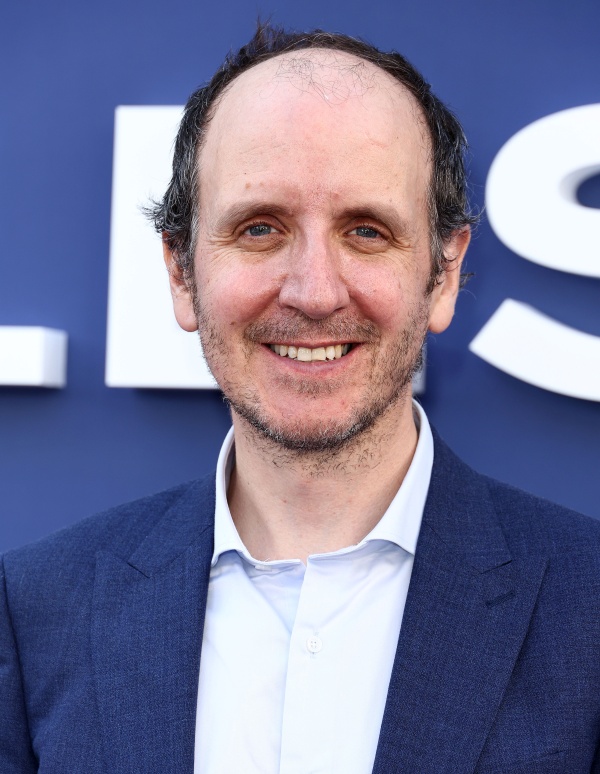
“I felt like Simon was me. And then Simon goes on a bit of an adventure in this story, and I felt very, very raw from that adventure, and I’ve never been able to forget it,” he says, referring to the character of Simon, today portrayed by newcomer Ike Talbut, 14.
“I’ve tried a number of times over the years to adapt it, and then finally we managed to persuade the estate to give us the rights to do it on TV for the first time, which was amazing.”
Ask how he managed to snag the rights to adapt the book into this four-part series – the first time Golding’s novel has been brought to TV – he says, “I pitched to them extensively, particularly William Golding’s daughter, Judy, who’s in control of the estate, who’s an amazing woman.
“The thing that we pitched was this relay race idea, this idea that what we’re going to do with this is structure it using the vocabulary of television to really bring out the juice of the book, and that thing of giving each boy their own episode – and particularly giving Jack his own episode – I think allowed us to expose the truth of Jack, the tenderness of Jack. And if you can understand Jack, then you can understand the tragedy of the island,” he says.
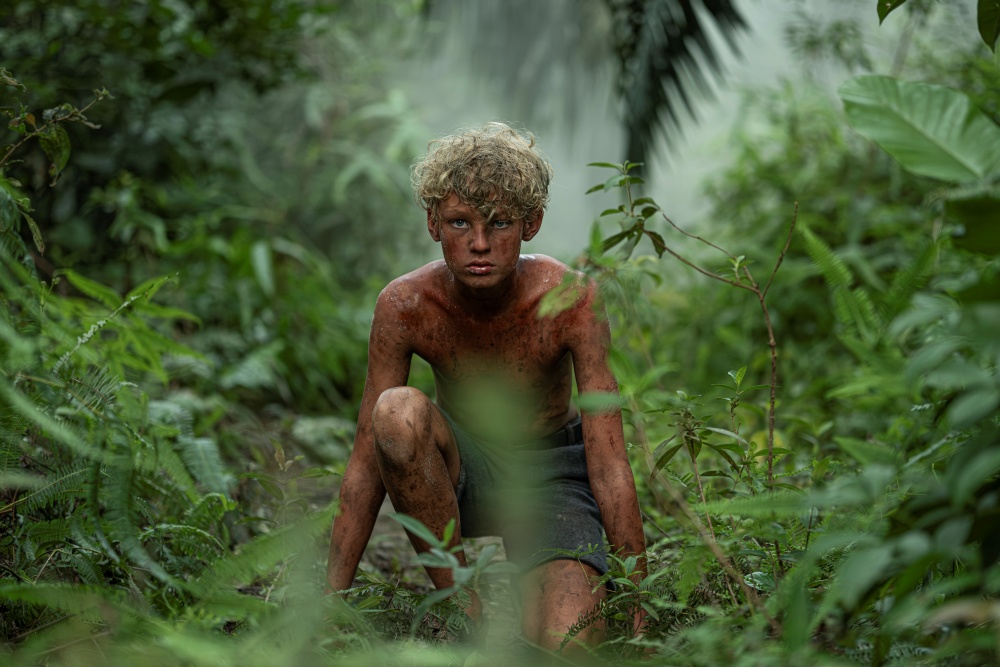
Jack – today portrayed by Lox Pratt [below] – is, of course, the baddie in the story, although he’s often been misunderstood and, under Thorne’s deft interpretation, we discover that he’s not so black and white.
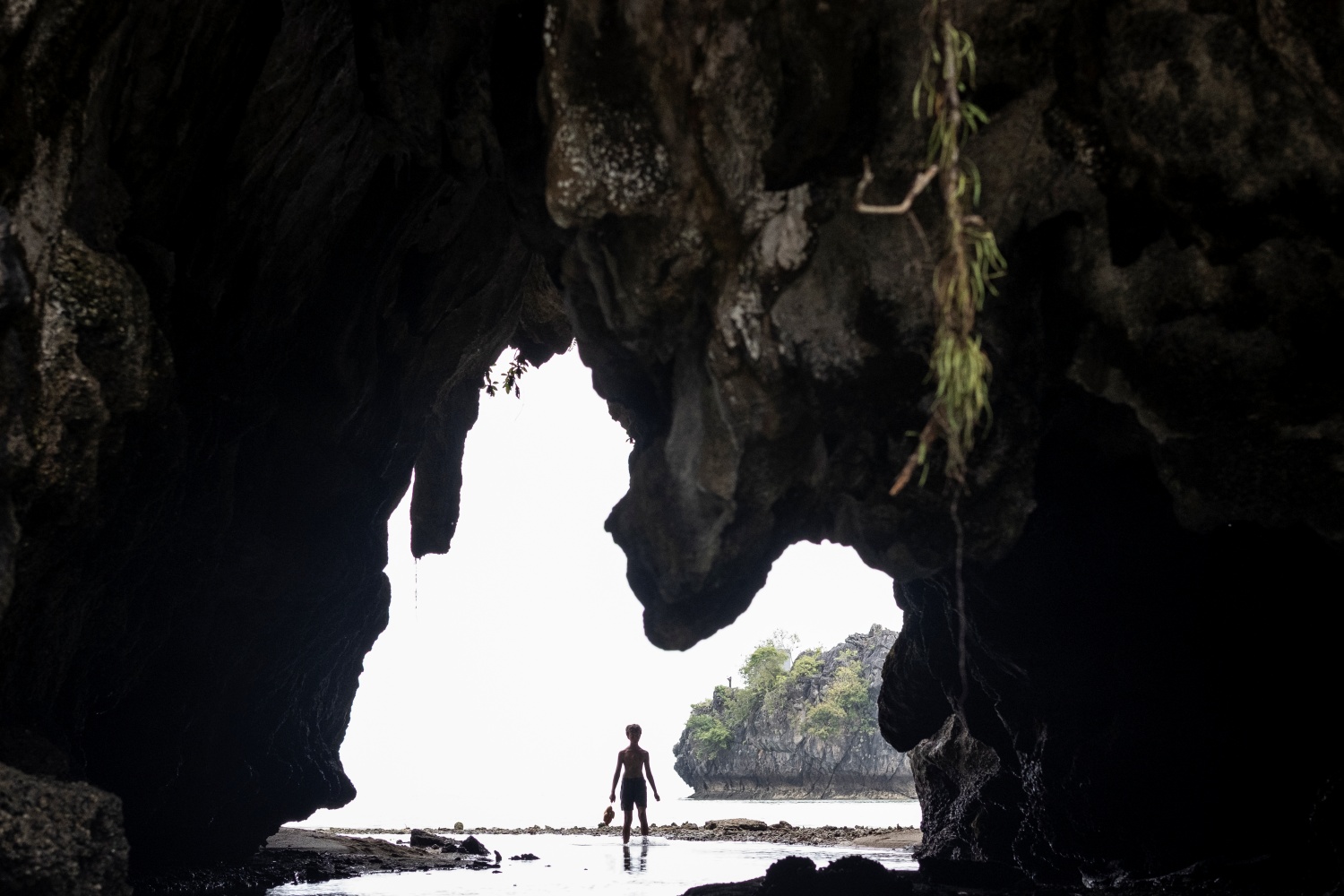
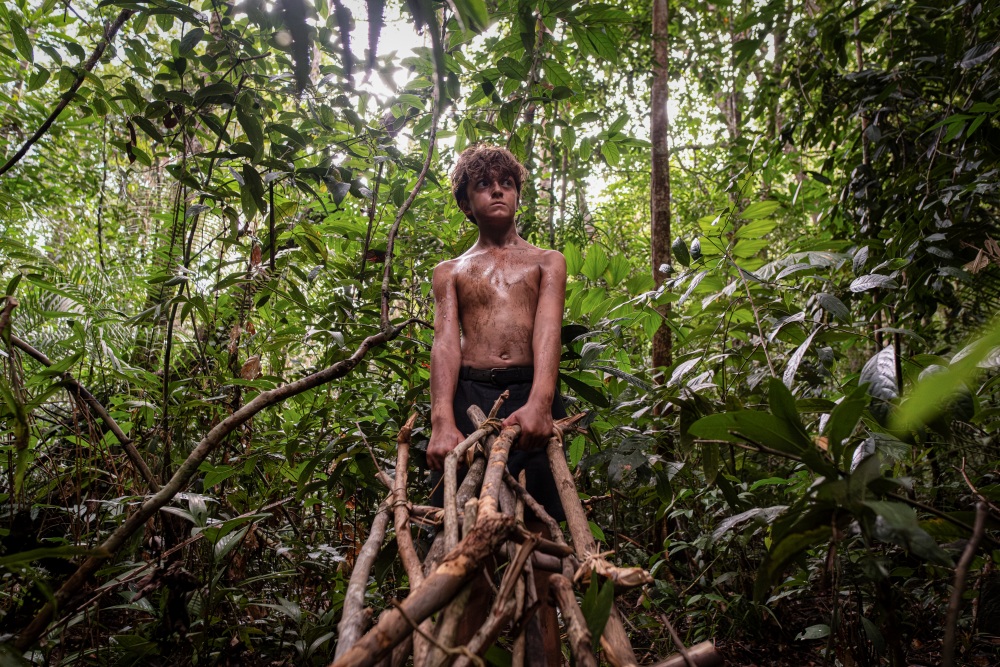
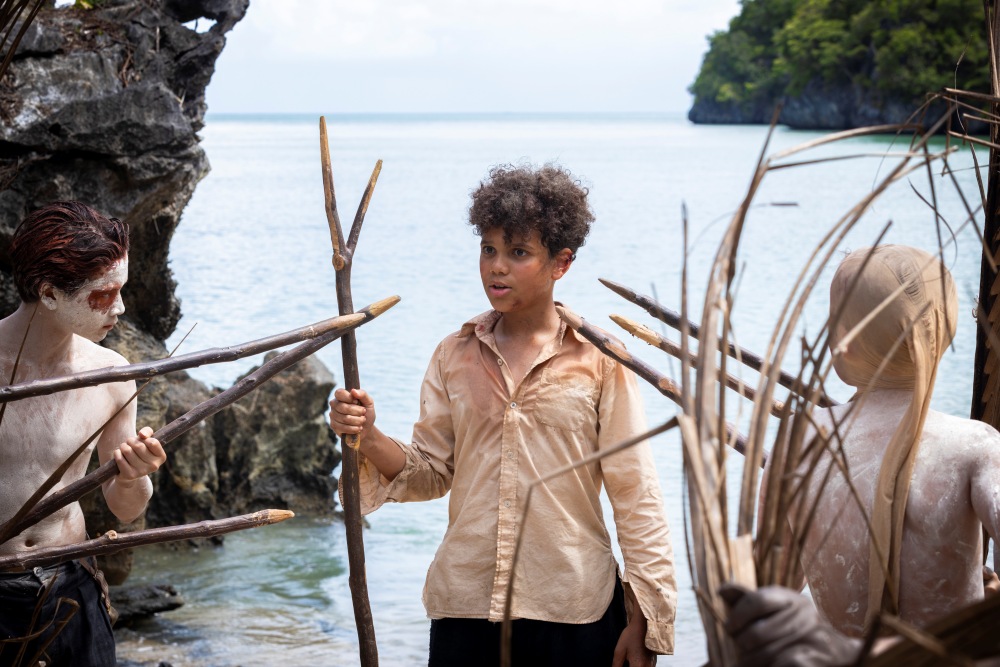
Filmed in Malaysia, the film stays true to its 1950s setting, where a deadly plane crash strands a group of British boys on an uninhabited tropical island with no adult supervision.
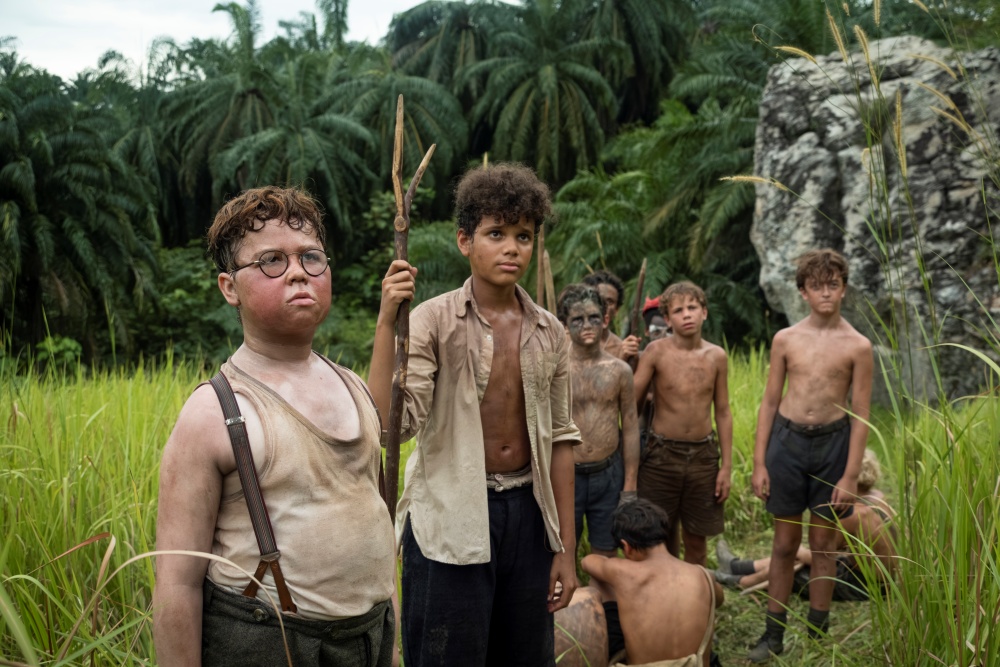
In an attempt to remain civil, they organise themselves, led by Winston Sawyers’ Ralph [below, second from left] and supported by the group’s intellectual, Piggy played by David McKenna [below, far left]. But when Lox Pratt’s Jack becomes more interested in hunting and vying for leadership, he soon begins to draw other boys away from the group, the group sliding into anarchy as social conventions disappear.
What makes this version stand out is how unsettling it feels. Rather than treating the boys like symbols in a school essay, the series spends real time exploring their emotions, insecurities, and loneliness – Thorne saying how his adaptation is partly about modern masculinity and the isolation that young boys experience.
With that theme running throughout the show, the casting is also one of the series’ biggest strengths. Many of the actors are newcomers, which gives everything an unusually raw feeling.
McKenna’s Piggy has become an early standout with critics and viewers alike, while Pratt’s Jack is magnetic in that terrifying way where you can see exactly why the others might follow him.
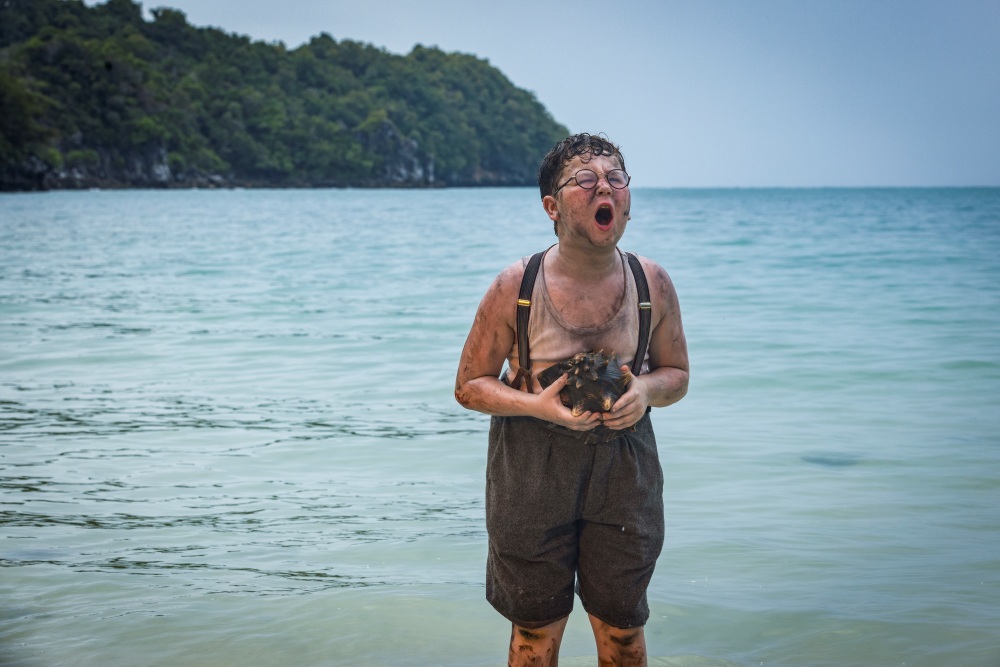
Cast by Nina Gold and Martin Ware, they would see thousands of boys before arriving at the final thirty-something boys.
“When Nina and I started casting, we had a small panic attack about how we were ever going to find not just one or two boys who were incredible actors, but more than thirty of them, to send out there, and to tell this story, and to deal with Jack’s amazing scripts,” recalls Ware.
“So, we just thought we had to see as many boys as possible. I think we saw about 8000 tapes and we visited hundreds of schools. We put out social media calls, anyone that wanted to send us a tape, we would look at that.
“In the first instance, we asked people to send us tapes, just introducing themselves and say what they would most like to take to a desert island, or who they would like to be stuck on a desert island with, so we could kind of get to know their personalities straight away, before we got into the acting, and just get a sense of them as people, and see whether or not they might be more of a Jack or more of a Simon,” he says.
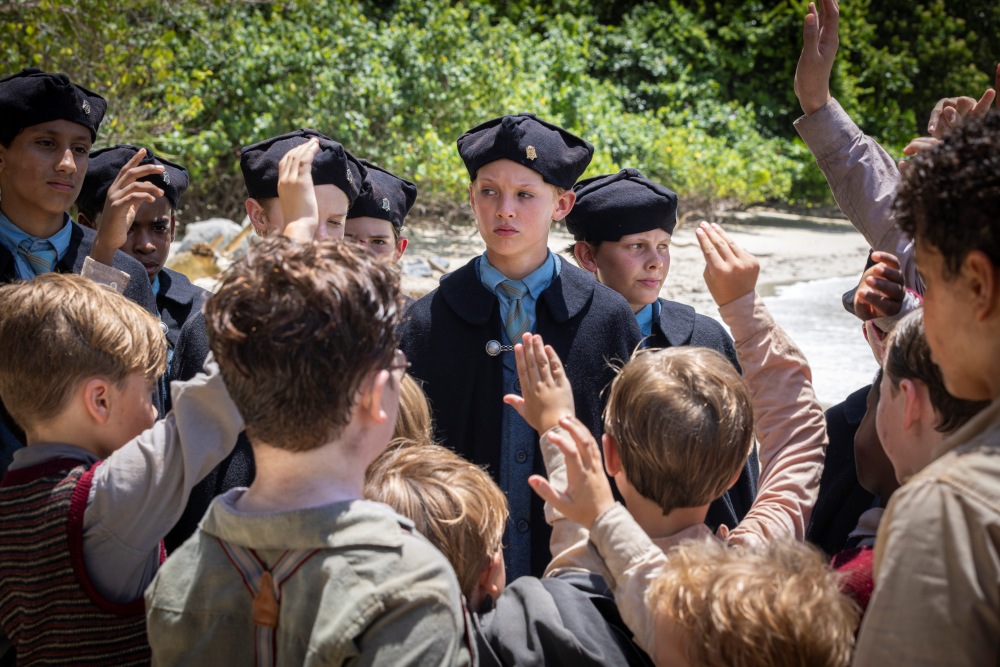
With the key four principals cast, the film began to take shape. “We had about eight or nine months to cast this. We slowly started to bring people in, read, do some scenes with them in person, get people together in lots of workshops where we were putting different people together and seeing if they were team players and seeing what their personality types were, because it was going to be a difficult shoot out in Malaysia, in the jungle, and people who had never done it before,” says Ware.
Ask the boys how they responded to the question of who they’d most like to be stuck on a desert island with, McKenna reveals, “I said the West End cast of Les Mis.”
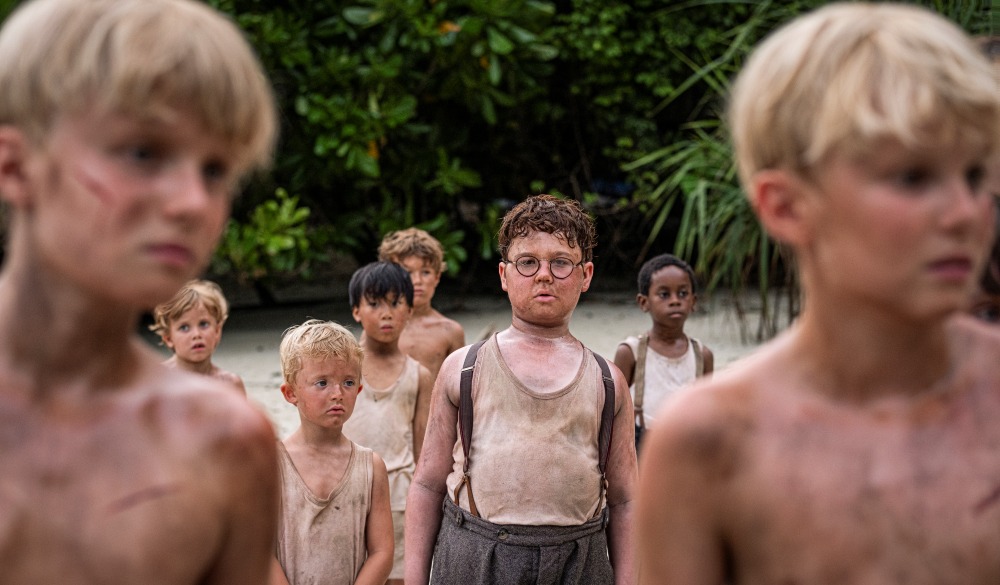
Quite the personality, he feels certain similarities between himself and Piggy. “I mean, I’m the bossy one. He’s a lot more organised than I am, and he’s a bit more pessimistic than I am. He expects things to go wrong before things happen, but I feel like in a lot of ways that we’re pretty similar. We’re both a bit of a diva,” he says.
Considering his young age, Pratt had some interesting inspirations for Jack: “There’s a little bit of Tommy Shelby in there,” he says referencing Cillian Murphy’s ruthless Peaky Blinders character. “And there’s also bit of Malcolm McDowell.”
Visually, the series doesn’t play it safe, director Marc Munden [below, centre] shooting the island almost like a fever dream. The jungle feels claustrophobic instead of beautiful, and the camera often gets painfully close to the boys’ faces, emphasising how young and frightened they really are.
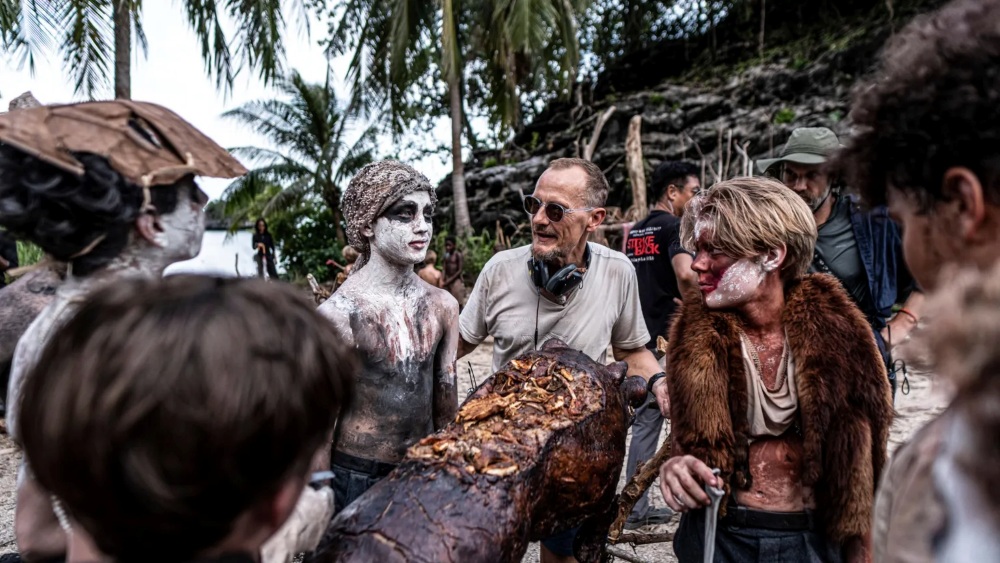
“I wanted to sort of disrupt the narrative with a lot of elements, which were about nature, but which were also about the boys themselves. For instance, the portraits, which started off with the intention of trying to show the difference between when they arrived and when they left, but then as we went through, they had very different functions,” says Munden.
“So, when you see the pig being killed at the pig hunt, the look on those boys’ faces when they first see this tragedy of what they’ve done, and then at the end with the young boys in episode four, like lost souls in the jungle, calling out for Jack to rescue them, or for people to rescue them from Jack…” adds the director.
While Golding wrote the book more than 70 years ago in the wake of WWII, Thorne sees a powerful message for today. “I think it is all about harnessing the power of TV, and your first question always is: ‘How can I be faithful to this book?’ But as you’re expanding out, and finding different corners and spaces to live, you do see possibilities of things.
“And all the scenes come from the book. The character of Jack is exactly as he’s written in the book. We’ve just pulled on a few more threads in order to make him as alive as possible. And it’s important in our world, currently, to be looking at characters like Jack.
“We had in our country recently a huge march through the centre of London,” says Thorne referencing how tens of thousands of people gathered in the British capital for two major rival demonstrations: the far-right “Unite the Kingdom” rally and a pro-Palestinian “Nakba Day”.
“That was people who are very angry about immigration, angry about what they see as their country being taken away from them, and they have some dangerous ideas, these people – and I’m a bit scared of them, but I also want to understand them.
“I want to lean in, I want to work out what’s going on, and the more that we can understand people like Jack, the more we can understand those people, and the more that we can try and create some sort of semblance of society again, because it’s really horrible right now,” he says.
Lord of the Flies is streaming now
