


By Erin Free
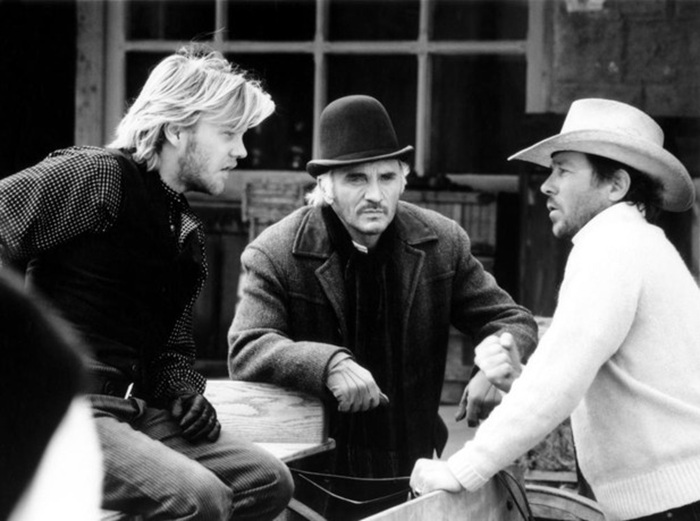
FilmInk salutes the work of creatives who have never truly received the credit that they deserve. In this installment: writer/director Christopher Cain (pictured above left), who helmed Young Guns, The Stone Boy, That Was Then…This Is Now, Pure Country, The Next Karate Kid and more.
Many times in this column, we have discussed the various issues that swirl around the concept of the cinematic auteur. Many see the auteur position as one of quality, and also even in political terms. Can an auteur be a largely commercially driven creative with a world view that skews toward the conservative? Many commentators would likely take pause at this, instead believing that all auteurs have to be deeply personal filmmakers whose work is driven by a more anti-establishment stance. Taken to the extreme, many commentators would hate to think of Mel Gibson as an auteur, but his work is certainly strongly connected via consistent themes, and stylistic, authorial choices.
Though certainly not as volatile and divisive an auteur as Mel Gibson, Christopher Cain is similarly no darling in cineaste circles. Not only has he made a few faith-based films (an instant ticket out of the good graces of most film critics), Cain also largely makes movies about the American heartland, and the people that live there. He’s a principally “non-urban” director who works with country singers and makes westerns…not exactly the kind of guy whose work gets invited to film festivals and discussed in high-tone film journals. But, you know, fuck those guys – Christopher Cain made Young Guns, and a handful of other excellent films too.
82-year-old, Dakota-born Christopher Cain also happens to be the adoptive father and sometime collaborator of actor, writer and director Dean Cain, once renowned for playing Superman opposite Teri Hatcher on TV’s Lois & Clark: The New Adventures Of Superman, but now better known as a conservative, Trump-supporting, National Rifle Association member not backwards in coming forward with his right-wing views, which very much run counter to most lines of thought in Hollywood. Maybe there’s a cancelled-style, guilt-by-association thing going on with Christopher Cain, whose work is literally never discussed anymore in cinema circles.
Christopher Cain began his career in 1973 with the barely released drama Brother, My Song, which was inspired by the real-life story of Dr. William Kugel, former head of the music department of Dakota Wesleyan University, and his fight against cancer. Due to distribution woes, the film was only shown in Dakota cinemas, and remains virtually forgotten today. In this early period of his career, Cain also turned out two family films (1976’s Elmer, 1979’s Charlie And The Talking Buzzard), and made two very interesting low-budget films with eventual Naked Gun comedy superstar Leslie Nielsen, who was then still very much in serious dramatic mode.
Nielsen first featured in 1976’s Cain written-and-directed Grand Jury, about a young couple caught up in the legal system after turning state’s witness, and then in 1977’s Sixth And Main, a topical drama in which a journalist (Beverly Garland) attempts to help a homeless man (Nielsen) get back on his feet. Thoughtful and socially conscious, these two forgotten indies very much show Christopher Cain’s directorial vision beginning to take shape. While undeniably rough around the edges, Grand Jury and Sixth And Main showcase Cain’s humanist impulses, and also his ingenuity in getting his own movies made.
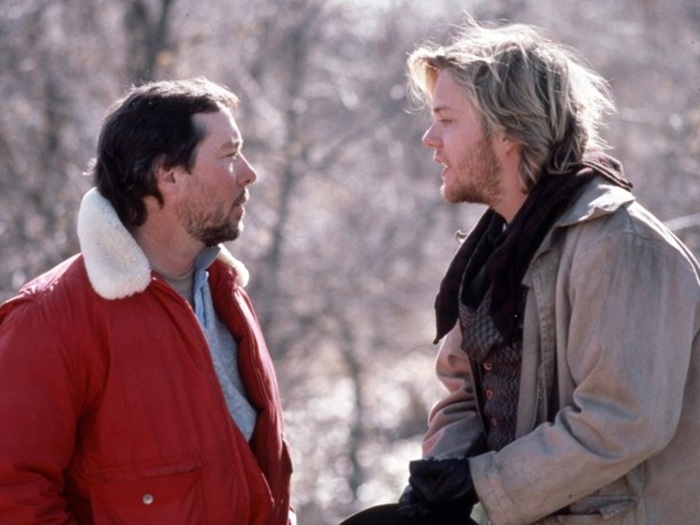
Cain’s first major (but again, now largely forgotten) work came with 1984’s The Stone Boy, a film of quiet, simmering power based on a short story by Gina Berriault. A rural heartland drama redolent with emotion, the film wades deep into the grief experienced by a farming family (led by Robert Duvall and Glenn Close in typically full-bodied and soulful performances) when one of their children dies in a hunting accident. Cain’s connection with his characters is staggering, and the film’s evocative visual qualities show off the considerable talents of the emerging director, working here with his biggest budget and most impressive cast yet.
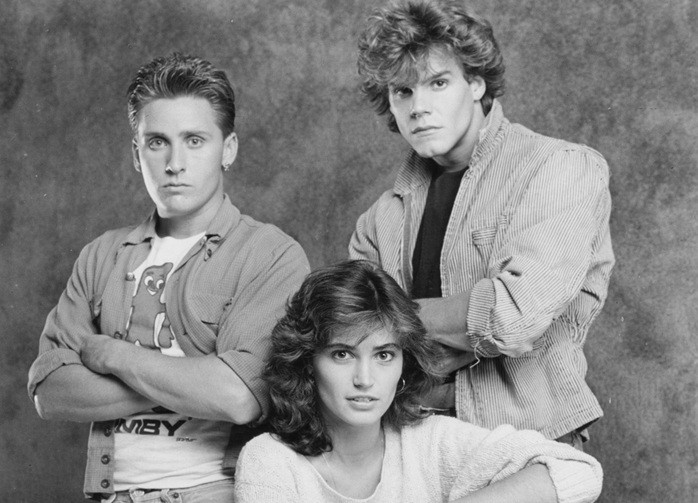
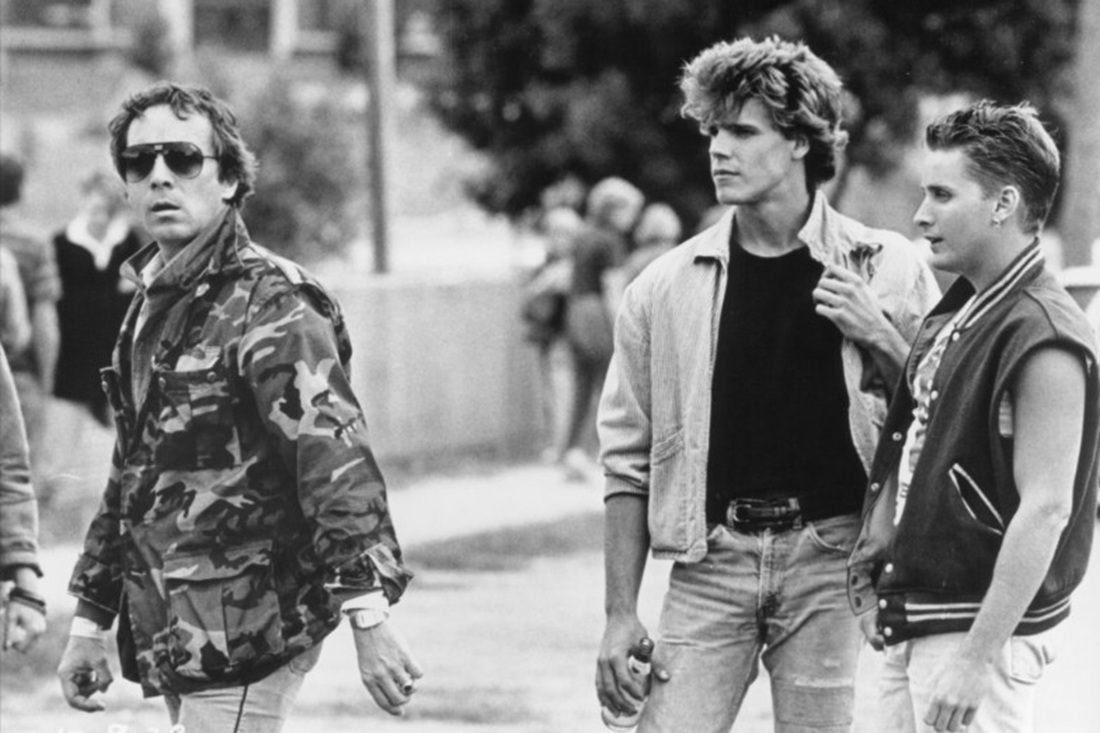
Initiated by actor Emilio Estevez (who also penned the script), Cain’s next film, 1985’s That Was Then…This Is Now, was the fourth to be adapted from the works of celebrated YA author S.E Hinton. Definitely the lesser of her written works, That Was Then…This Is Now was also the lesser of the film adaptations (falling considerably behind Tim Hunter’s Tex, and Francis Coppola’s extraordinary one-two of The Outsiders and Rumble Fish), but still remains a highly enjoyable watch. Cain elicits strong performances from Estevez and Craig Sheffer as two friends headed down very different paths, and keeps things tight and fast-moving. “The emotional content is so rich, so full, it’s absolutely draining,” said Estevez upon the film’s release. “It’s a terrific movie.”
Cain followed up his youth drama with the 1986 family fable Where The River Runs Black (about a boy raised amongst dolphins in the rivers of Brazil) and the muscular 1987 “urban panic” drama The Principal, in which Jim Belushi’s boozy, disgraced school principal is banished to a ghetto high school, which he proceeds to whip into shape with bullish intensity and aggression. Though forgotten like so much of Christopher Cain’s work, and very much of its time (remember when Jim Belushi was a legit leading man?), The Principal is both very solidly made and highly entertaining in a decidedly manipulative manner.
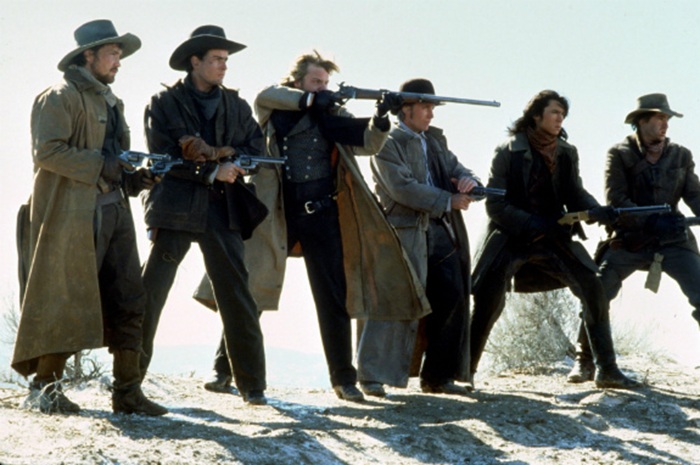
By far his most well-remembered and still mentioned film, 1988’s Young Guns came next. Packed with then-hip young actors (Emilio Estevez, Kiefer Sutherland, Lou Diamond Phillips, Charlie Sheen and Dermot Mulroney) and acting legends (Jack Palance, Terence Stamp, Brian Keith, Patrick Wayne), and powered by a guitar-heavy soundtrack, this wild retelling of the Billy The Kid legend performed well at the box office at a time when the western was pretty much dead and buried in Hollywood, affirming Cain’s faith in the genre. Despite its somewhat sub-par rep, Young Guns is energetically tailored and rollicking in the extreme.
Cain didn’t stick around for the sequel (Kiwi Geoff Murphy took the reins on the solid Young Guns II), but he kept it downhome for 1992’s box office hit Pure Country, a very entertaining vehicle for country music superstar George Strait. Cain failed to revive a beloved franchise by teaming a young Hilary Swank with Pat Morita in 1994’s still-charming Ralph Macchio-less The Next Karate Kid, and then dabbled in family films (1995’s The Amazing Panda Adventure, 2001’s PC And The Web), lame studio comedy (1997’s ill-advised Gone Fishin’ with Danny Glover and Joe Pesci), rock-solid telemovies (1990’s Wheels Of Terror, 1997’s Rose Hill, 2000’s A Father’s Choice), and TV series (the short-lived The Magnificent Seven).
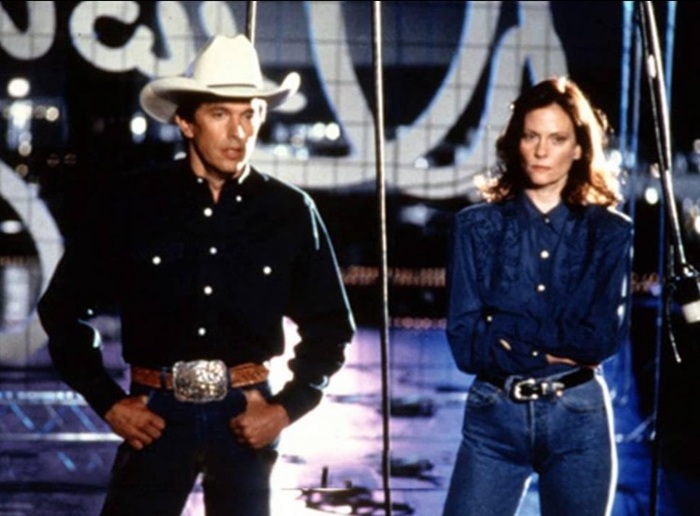
In 2010, Cain (along with co-writer Dean Cain) returned to one of his biggest hits with Pure Country 2: The Gift, which not only put a decidedly spiritual spin on the original, but also pretty much moved away from it completely, with superstar George Strait appearing only in a cameo, as himself and not even as his character from the first film. Headlined by then rising star Katrina Elam, Pure Country 2: The Gift is a little cheesy and opportunistic, and is far inferior to Cain’s currently most recent film credit.
2012’s Deep In The Heart boasts a rare lead turn from charismatic character actor (and son of Unsung Auteur Tom Gries) John Gries (Uncle Rico from Napoleon Dynamite and Greg Hunt from The White Lotus). This is a strong drama based on the true story of Richard Wallrath, a recovering alcoholic turned successful Texas businessman who makes it his life’s work to help under-privileged kids get into college.
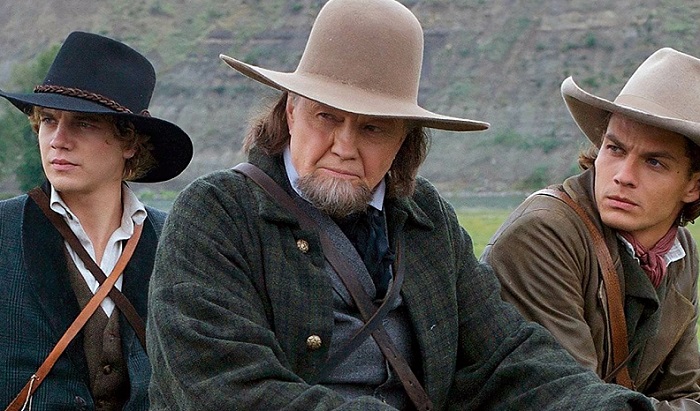
Prior to these two films, Christopher Cain directed the true anomaly on his resume. Though western-flavoured, 2008’s September Dawn is the filmmaker’s only true controversial work, and it stands out like a sore, but very interesting, thumb. The film is based on The Mountain Meadows Massacre of 1857, where 120 California-bound Christian settlers – men, women, and children – were killed by fifty members of The Mormon Church, led by the fanatical zealot, Bishop John Samuelson (Jon Voight). Kicking against greater historical thought, Cain’s film even posits Mormon leader Brigham Young (Terence Stamp) as the instigator for the massacre, which saw the film land in fairly substantial hot water.
Now presumably retired, Christopher Cain and his films might not be hip or critically acclaimed, but both the director and his films boast the kind of rugged individuality that so often marks the Unsung Auteur…and for that, he deserves celebration.
If you liked this story, check out our features on other unsung auteurs Ken Wiederhorn, Barbara Loden, David Mackenzie, Alan Rudolph, James Lee Barrett, Edwin “Bud” Shrake, Joan Tewkesbury, Jamaa Fanaka, Jack Starrett, Joseph Sargent, Jeffrey Schwarz, George Sidney, Philip Dunne, Zak Hilditch, Luke Sparke, Cyrus Nowrasteh, Morgan Matthews, Tom Laughlin, Diane Keaton, Ed Hunt, Nancy Savoca, Robert Vincent O’Neil, Marvin J. Chomsky, Sam Firstenberg, Jack Sholder, Richard Gray, Giuseppe Andrews, Gus Trikonis, Greydon Clark, Frances Doel, Gordon Douglas, Billy Fine, Craig R. Baxley, Harvey Bernhard, Bert I. Gordon, James Fargo, Jeremy Kagan, Robby Benson, Robert Hiltzik, John Carl Buechler, Rick Carter, Paul Dehn, Bob Kelljan, Kevin Connor, Ralph Nelson, William A. Graham, Judith Rascoe, Michael Pressman, Peter Carter, Leo V. Gordon, Dalene Young, Gary Nelson, Fred Walton, James Frawley, Pete Docter, Max Baer Jr., James Clavell, Ronald F. Maxwell, Frank D. Gilroy, John Hough, Dick Richards, William Girdler, Rayland Jensen, Richard T. Heffron, Christopher Jones, Earl Owensby, James Bridges, Jeff Kanew, Robert Butler, Leigh Chapman, Joe Camp, John Patrick Shanley, William Peter Blatty, Peter Clifton, Peter R. Hunt, Shaun Grant, James B. Harris, Gerald Wilson, Patricia Birch, Buzz Kulik, Kris Kristofferson, Rick Rosenthal, Kirsten Smith & Karen McCullah, Jerrold Freeman, William Dear, Anthony Harvey, Douglas Hickox, Karen Arthur, Larry Peerce, Tony Goldwyn, Brian G. Hutton, Shelley Duvall, Robert Towne, David Giler, William D. Wittliff, Tom DeSimone, Ulu Grosbard, Denis Sanders, Daryl Duke, Jack McCoy, James William Guercio, James Goldstone, Daniel Nettheim, Goran Stolevski, Jared & Jerusha Hess, William Richert, Michael Jenkins, Robert M. Young, Robert Thom, Graeme Clifford, Frank Howson, Oliver Hermanus, Jennings Lang, Matthew Saville, Sophie Hyde, John Curran, Jesse Peretz, Anthony Hayes, Stuart Blumberg, Stewart Copeland, Harriet Frank Jr & Irving Ravetch, Angelo Pizzo, John & Joyce Corrington, Robert Dillon, Irene Kamp, Albert Maltz, Nancy Dowd, Barry Michael Cooper, Gladys Hill, Walon Green, Eleanor Bergstein, William W. Norton, Helen Childress, Bill Lancaster, Lucinda Coxon, Ernest Tidyman, Shauna Cross, Troy Kennedy Martin, Kelly Marcel, Alan Sharp, Leslie Dixon, Jeremy Podeswa, Ferd & Beverly Sebastian, Anthony Page, Julie Gavras, Ted Post, Sarah Jacobson, Anton Corbijn, Gillian Robespierre, Brandon Cronenberg, Laszlo Nemes, Ayelat Menahemi, Ivan Tors, Amanda King & Fabio Cavadini, Cathy Henkel, Colin Higgins, Paul McGuigan, Rose Bosch, Dan Gilroy, Tanya Wexler, Clio Barnard, Robert Aldrich, Maya Forbes, Steven Kastrissios, Talya Lavie, Michael Rowe, Rebecca Cremona, Stephen Hopkins, Tony Bill, Sarah Gavron, Martin Davidson, Fran Rubel Kuzui, Elliot Silverstein, Liz Garbus, Victor Fleming, Barbara Peeters, Robert Benton, Lynn Shelton, Tom Gries, Randa Haines, Leslie H. Martinson, Nancy Kelly, Paul Newman, Brett Haley, Lynne Ramsay, Vernon Zimmerman, Lisa Cholodenko, Robert Greenwald, Phyllida Lloyd, Milton Katselas, Karyn Kusama, Seijun Suzuki, Albert Pyun, Cherie Nowlan, Steve Binder, Jack Cardiff, Anne Fletcher ,Bobcat Goldthwait, Donna Deitch, Frank Pierson, Ann Turner, Jerry Schatzberg, Antonia Bird, Jack Smight, Marielle Heller, James Glickenhaus, Euzhan Palcy, Bill L. Norton, Larysa Kondracki, Mel Stuart, Nanette Burstein, George Armitage, Mary Lambert, James Foley, Lewis John Carlino, Debra Granik, Taylor Sheridan, Laurie Collyer, Jay Roach, Barbara Kopple, John D. Hancock, Sara Colangelo, Michael Lindsay-Hogg, Joyce Chopra, Mike Newell, Gina Prince-Bythewood, John Lee Hancock, Allison Anders, Daniel Petrie Sr., Katt Shea, Frank Perry, Amy Holden Jones, Stuart Rosenberg, Penelope Spheeris, Charles B. Pierce, Tamra Davis, Norman Taurog, Jennifer Lee, Paul Wendkos, Marisa Silver, John Mackenzie, Ida Lupino, John V. Soto, Martha Coolidge, Peter Hyams, Tim Hunter, Stephanie Rothman, Betty Thomas, John Flynn, Lizzie Borden, Lionel Jeffries, Lexi Alexander, Alkinos Tsilimidos, Stewart Raffill, Lamont Johnson, Maggie Greenwald and Tamara Jenkins.