


By Erin Free
FilmInk salutes the work of creatives who have never truly received the credit that they deserve. In this installment: actor turned director Keith Gordon, who helmed The Chocolate War, A Midnight Clear, The Singing Detective and more.
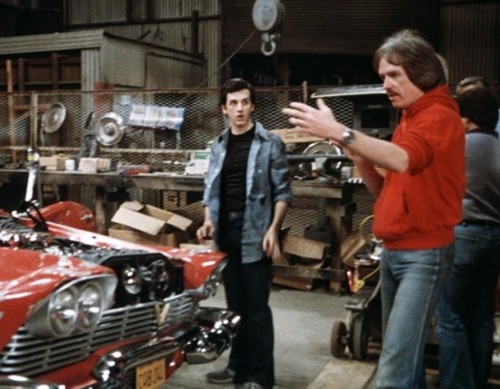
The supremely talented Keith Gordon has the rare distinction of being unsung as both an actor and a director. Born in 1961 in New York City to an entertainment industry family (his father was a stage actor and director), Gordon was inspired to become an actor at the age of twelve, after seeing James Earl Jones in a Broadway production of John Steinbeck’s Of Mice And Men. Gordon eventually made his acting debut in 1978’s Jaws 2 (directed by Unsung Auteur Jeannot Szwarc), and then subsequently delivered a series of fascinating performances, often as twitchy, anxious outsiders, in the storied likes of Bob Fosse’s All That Jazz (1979), Brian De Palma’s Home Movies (1979) and Dressed To Kill (1980), John Carpenter’s Christine (1983) and Alan Metter’s Back To School (1986).
While Gordon received acclaim for his fresh, eye-catching performances, he never became a star, and instead drifted largely into minor and supporting roles. Gordon was far more enthused by the crafts of writing and directing, and after working with some of the most talented filmmakers in the industry, he made his behind-the-camera debut with the screenplay for the 1985 black comedy Static, in which he also starred as a deluded young man who thinks he can see Heaven. The directorial debut of Mark Romanek (One Hour Photo, Never Let Me Go), the film vanished quickly, but established Keith Gordon as a creative with interesting ideas and obvious career ambitions.
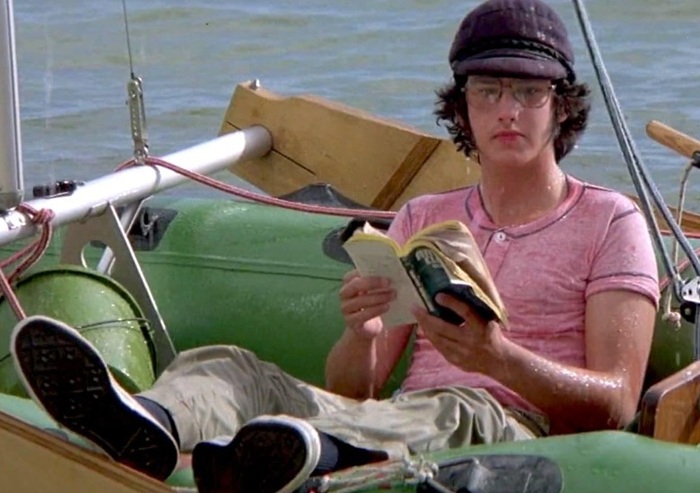
Gordon delivered on that promise with his 1988 writing and directorial debut The Chocolate War. Based on Robert Cormier’s extraordinary, deeply symbolic, and richly textured YA novel, Gordon expertly handles the dark elements of the story, which takes in the big issues of bullying, personal freedom, corruption, and the dangers of group-think. Ilan Mitchell-Smith (Weird Science) is excellent as an unassuming student at a Catholic school who becomes a hero-turned-pariah when he refuses to take part in a fund-raising chocolate sale. Displaying a fine eye for performance (Wallace Langham is unforgettable as the creepy kingpin of the school’s secret society of powerful students), a keen visual style, and an impressive handle on the story’s allegorical qualities, Keith Gordon established himself as a filmmaker of rare ability with The Chocolate War.
“I had loved Robert Cormier’s book since I was eighteen,” Gordon told Senses Of Cinema in 2004. “I had first read it when I was doing Jaws 2 and the make-up guy, Bob Jiras, had the rights to I Am The Cheese, another book by Robert Cormier. He was interested in making that into a movie, which he finally did get done actually a couple years later. He gave me the book thinking I might be right for the young lead in it as an actor. And I read the book and I loved it. It was really cool, which led me to being interested in other books by the same author. And I read The Chocolate War and I remember at the time thinking, ‘God, this would be a great movie. How come nobody’s done it?’ And so I kind of kept it in the back of my mind for forever.”
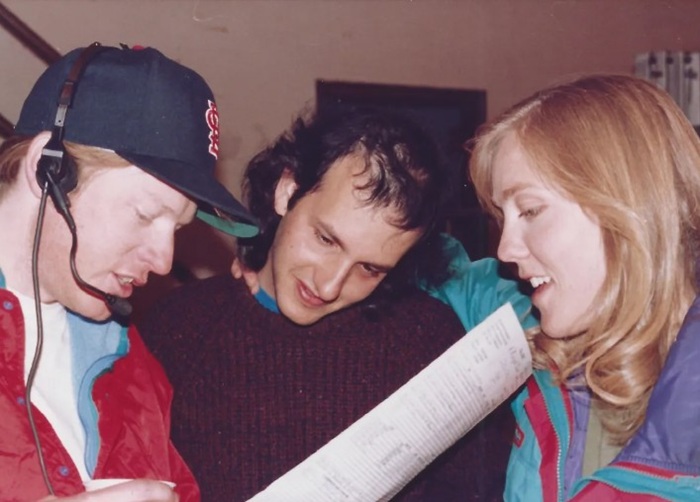
Though far from a hit, Gordon brought The Chocolate War in on a very low budget, and it got good reviews, which set him up for a slightly more expansive sophomore effort. Gordon turned to another cult novelist for inspiration for his second film, this time looking to William Wharton, who had penned the transcendent anti-war tome Birdy, which Alan Parker had brought to the screen with breathtaking imagination in 1984. Gordon penned the screenplay and assembled a fantastic young cast (Ethan Hawke, Gary Sinise, Peter Berg, Kevin Dillon, Frank Whaley, Arye Gross) for A Midnight Clear, a compelling and occasionally surreal anti-war drama. Following a squad of young US Army intelligence officers isolated near German lines in the early stages of The Battle Of The Bulge, Gordon again flexes his allegorical muscles, and delivers a gripping and highly unusual cinematic tone poem that plays out like a quiet cry against the stupidity and futility of war.
With two dark, critically acclaimed films adapted from complex novels to his credit, Gordon stayed his unconventional course, and next directed 1996’s Mother Night, an adaptation of the novel by iconoclastic author Kurt Vonnegut, who, ironically and somewhat bizarrely, had previously appeared with Gordon in the film Back To School. Vonnegut’s books aren’t exactly easy to film, but Gordon made an impressive fist of it, casting an on-form Nick Nolte as a WW2 spy in this labyrinthine, pessimistic trip down the bleak rabbit hole of Nazism, conspiracy, personal identity, geopolitics and wartime machinations. Mother Night is a brave film from an increasingly daring filmmaker, and though now largely forgotten, it stands as a truly singular work.
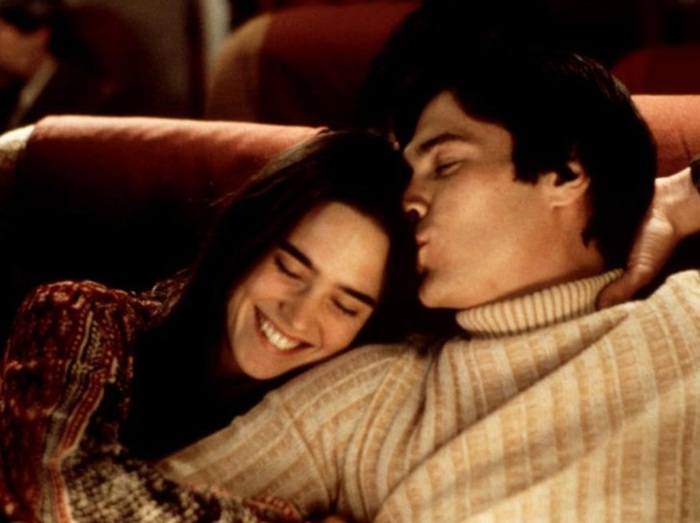
Gordon shifted gears slightly with 2000’s Waking The Dead, a romantic drama adapted from the novel by Scott Spencer, whose previous book Endless Love had been filmed by Franco Zeffirelli with Brooke Shields in 1981. But while the deeply affecting, years-spanning romance that plays out between Billy Crudup’s politician and Jennifer Connelly’s radical activist is certainly different for Gordon, the dark-hued, surrealist elements of this highly unusual film are very much in line with the director’s previous work. Again, it’s bold, big-thinking, against-the-grain filmmaking from a true auteur in every sense of the word.
While his previous four films had been relatively low-key affairs, Gordon went far bigger with 2003’s The Singing Detective, an American adaptation of Dennis Potter’s highly acclaimed and popular BBC miniseries The Singing Detective. It was a cherished property, and Gordon (who came onto the film after the original director departed) assembled a big cast in Robert Downey Jr. (with whom Gordon had starred in Back To School), Mel Gibson, Robin Wright, Adrien Brody, Carla Gugino, Jon Polito, Jeremy Northam and Alfre Woodard, which raised the profile of the project considerably, even though it fit snugly amongst Gordon’s trademark unusual fare. Dennis Potter wrote the screenplay himself, shifting and altering the tone of his material to suit the cinematic medium.
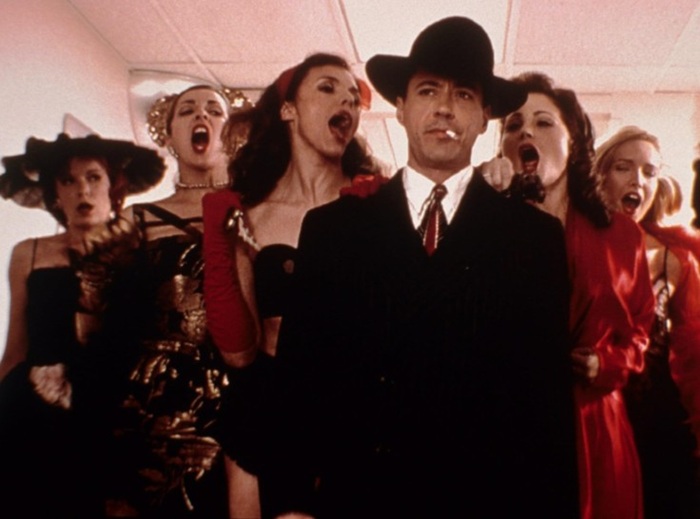
“I was getting hate mail before I even started shooting,” Gordon told Filmmaker in 2015. “People criticised me for changing the time period and compressing the story and softening the end…all things that were in Potter’s script. It was one of the last things he wrote before he died, and it was his idea to reset the story in 1950s America rather than 1940s England, and to shorten it and make it more a choppy, hallucinatory movie. Some critics said, ‘How dare Keith Gordon make these changes to Dennis Potter?!’ but I didn’t do anything that wasn’t in Potter’s script! He had very strong reasons for all the changes he made to his own material, including giving it a slightly more positive resolution – something we were criticised for doing because people thought we were trying to sell more tickets or something. Believe me, we never thought this movie was going to sell a lot of tickets, which is why it ended up getting made the way it did.”
Though gloriously, willfully weird and characteristically daring and stylish, there is also something vaguely unsatisfying about Gordon’s The Singing Detective, and the film failed to connect with audiences or critics. Disappointingly, this 2003 effort remains Gordon’s last feature film, with the director subsequently finding a very comfortable home on television. With the world perhaps finally catching up with Gordon’s dark, unusual creative viewpoint, he has become one of the biggest names in episodic TV, helming instalments of top-tier shows like The Killing, Dexter, The Bridge, The Strain, Masters Of Sex, Nurse Jackie, The Leftovers, Better Call Saul, Fargo, Legion and Homeland.
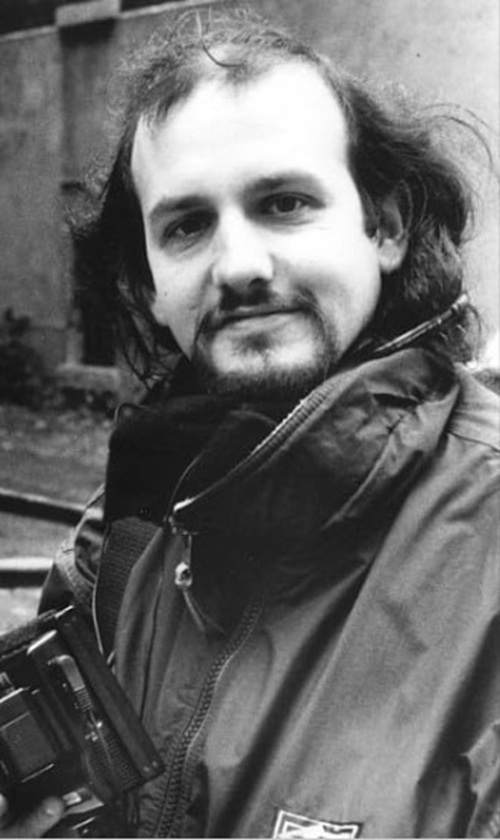
“I made five indie films, and the films I would make now would be indie films, but getting these films financed is much harder than it used to be, and it wasn’t easy then,” Keith Gordon told The Hollywood Reporter in 2017. “But it’s harder still, now. So what happened with me was that TV kept getting better and better. The writing, the actors, the subject matter was more and more fascinating, and so it became a great way, at first, just to pay the rent while I try and get my own movies made. Then it became its own career, because I was having an amazing time working with all these incredible people. I will admit to missing doing something that is my own.”
We miss it too, Keith Gordon…
If you liked this story, check out our features on other unsung auteurs Alan Metter, Lynne Littman, Chuck Russell, John Derek, Don Chaffey, Harley Cokeliss, Jeannot Szwarc, Craig Gillespie, David Greene, Ernest Pintoff, Paul Williams, Jo Heims, Lee H. Katzin, Christoper Cain, Ken Wiederhorn, Barbara Loden, David Mackenzie, Alan Rudolph, James Lee Barrett, Edwin “Bud” Shrake, Joan Tewkesbury, Jamaa Fanaka, Jack Starrett, Joseph Sargent, Jeffrey Schwarz, George Sidney, Philip Dunne, Zak Hilditch, Luke Sparke, Cyrus Nowrasteh, Morgan Matthews, Tom Laughlin, Diane Keaton, Ed Hunt, Nancy Savoca, Robert Vincent O’Neil, Marvin J. Chomsky, Sam Firstenberg, Jack Sholder, Richard Gray, Giuseppe Andrews, Gus Trikonis, Greydon Clark, Frances Doel, Gordon Douglas, Billy Fine, Craig R. Baxley, Harvey Bernhard, Bert I. Gordon, James Fargo, Jeremy Kagan, Robby Benson, Robert Hiltzik, John Carl Buechler, Rick Carter, Paul Dehn, Bob Kelljan, Kevin Connor, Ralph Nelson, William A. Graham, Judith Rascoe, Michael Pressman, Peter Carter, Leo V. Gordon, Dalene Young, Gary Nelson, Fred Walton, James Frawley, Pete Docter, Max Baer Jr., James Clavell, Ronald F. Maxwell, Frank D. Gilroy, John Hough, Dick Richards, William Girdler, Rayland Jensen, Richard T. Heffron, Christopher Jones, Earl Owensby, James Bridges, Jeff Kanew, Robert Butler, Leigh Chapman, Joe Camp, John Patrick Shanley, William Peter Blatty, Peter Clifton, Peter R. Hunt, Shaun Grant, James B. Harris, Gerald Wilson, Patricia Birch, Buzz Kulik, Kris Kristofferson, Rick Rosenthal, Kirsten Smith & Karen McCullah, Jerrold Freeman, William Dear, Anthony Harvey, Douglas Hickox, Karen Arthur, Larry Peerce, Tony Goldwyn, Brian G. Hutton, Shelley Duvall, Robert Towne, David Giler, William D. Wittliff, Tom DeSimone, Ulu Grosbard, Denis Sanders, Daryl Duke, Jack McCoy, James William Guercio, James Goldstone, Daniel Nettheim, Goran Stolevski, Jared & Jerusha Hess, William Richert, Michael Jenkins, Robert M. Young, Robert Thom, Graeme Clifford, Frank Howson, Oliver Hermanus, Jennings Lang, Matthew Saville, Sophie Hyde, John Curran, Jesse Peretz, Anthony Hayes, Stuart Blumberg, Stewart Copeland, Harriet Frank Jr & Irving Ravetch, Angelo Pizzo, John & Joyce Corrington, Robert Dillon, Irene Kamp, Albert Maltz, Nancy Dowd, Barry Michael Cooper, Gladys Hill, Walon Green, Eleanor Bergstein, William W. Norton, Helen Childress, Bill Lancaster, Lucinda Coxon, Ernest Tidyman, Shauna Cross, Troy Kennedy Martin, Kelly Marcel, Alan Sharp, Leslie Dixon, Jeremy Podeswa, Ferd & Beverly Sebastian, Anthony Page, Julie Gavras, Ted Post, Sarah Jacobson, Anton Corbijn, Gillian Robespierre, Brandon Cronenberg, Laszlo Nemes, Ayelat Menahemi, Ivan Tors, Amanda King & Fabio Cavadini, Cathy Henkel, Colin Higgins, Paul McGuigan, Rose Bosch, Dan Gilroy, Tanya Wexler, Clio Barnard, Robert Aldrich, Maya Forbes, Steven Kastrissios, Talya Lavie, Michael Rowe, Rebecca Cremona, Stephen Hopkins, Tony Bill, Sarah Gavron, Martin Davidson, Fran Rubel Kuzui, Elliot Silverstein, Liz Garbus, Victor Fleming, Barbara Peeters, Robert Benton, Lynn Shelton, Tom Gries, Randa Haines, Leslie H. Martinson, Nancy Kelly, Paul Newman, Brett Haley, Lynne Ramsay, Vernon Zimmerman, Lisa Cholodenko, Robert Greenwald, Phyllida Lloyd, Milton Katselas, Karyn Kusama, Seijun Suzuki, Albert Pyun, Cherie Nowlan, Steve Binder, Jack Cardiff, Anne Fletcher ,Bobcat Goldthwait, Donna Deitch, Frank Pierson, Ann Turner, Jerry Schatzberg, Antonia Bird, Jack Smight, Marielle Heller, James Glickenhaus, Euzhan Palcy, Bill L. Norton, Larysa Kondracki, Mel Stuart, Nanette Burstein, George Armitage, Mary Lambert, James Foley, Lewis John Carlino, Debra Granik, Taylor Sheridan, Laurie Collyer, Jay Roach, Barbara Kopple, John D. Hancock, Sara Colangelo, Michael Lindsay-Hogg, Joyce Chopra, Mike Newell, Gina Prince-Bythewood, John Lee Hancock, Allison Anders, Daniel Petrie Sr., Katt Shea, Frank Perry, Amy Holden Jones, Stuart Rosenberg, Penelope Spheeris, Charles B. Pierce, Tamra Davis, Norman Taurog, Jennifer Lee, Paul Wendkos, Marisa Silver, John Mackenzie, Ida Lupino, John V. Soto, Martha Coolidge, Peter Hyams, Tim Hunter, Stephanie Rothman, Betty Thomas, John Flynn, Lizzie Borden, Lionel Jeffries, Lexi Alexander, Alkinos Tsilimidos, Stewart Raffill, Lamont Johnson, Maggie Greenwald and Tamara Jenkins.