


By Erin Free
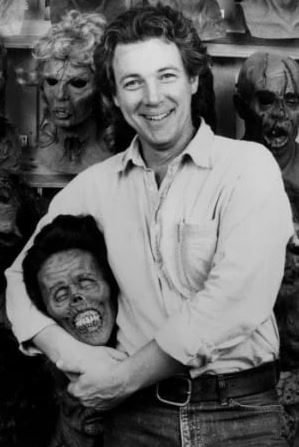
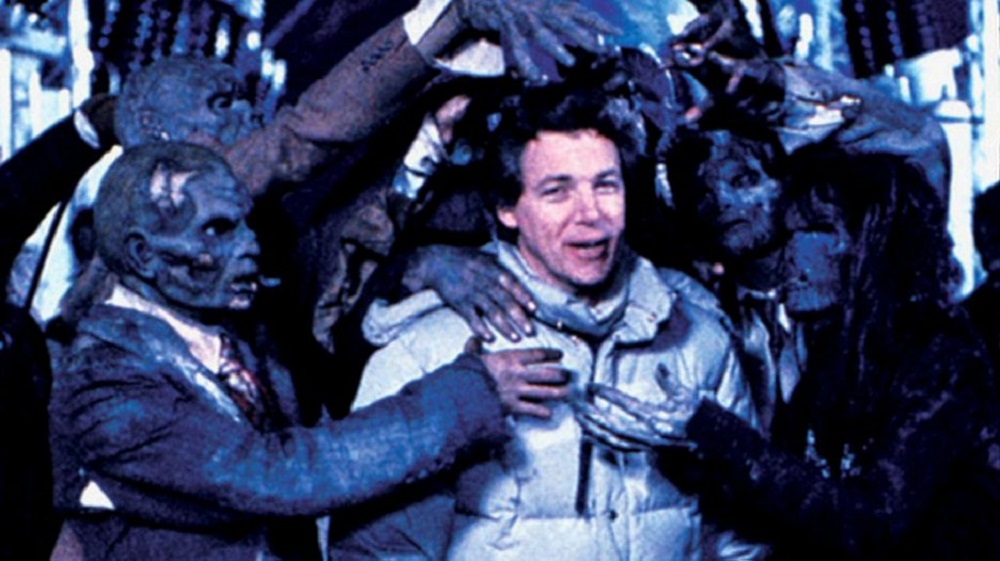
FilmInk salutes the work of creatives who have never truly received the credit that they deserve. In this installment: writer/director Ken Wiederhorn, who helmed Shock Waves, Eyes Of A Stranger, Return Of The Living Dead II and A House In The Hills.
The cinematic auteur is usually a figure driven by a desperate, pulsating need not just to create, but to communicate their own particular worldview via fictional storytelling or documentary filmmaking. In most cases, these auteurs – even if they are branded “journeyman” directors or “hacks” – need to make the films they do, and often continue to do so, even if at great personal and financial cost. Qualitative issues aside, even after the very public financial disaster of his epic western Heaven’s Gate, that film’s divisive writer and director, Michael Cimino, didn’t stop making movies. Similarly, The Wachowskis were not felled by Speed Racer, and even Roger Christian forged on after Battlefield Earth.
All of which brings us to Ken Wiederhorn, a director who almost fell into filmmaking, and ended up creating an interesting body of work almost in spite of himself. “My career ambition was to become a documentary producer,” Wiederhorn once said, alongside which he also happened to make some pretty compelling and often highly memorable horror flicks, broad comedies and thrillers. Though often merely taking what was offered to him, and often ending up unsatisfied with the results, Ken Wiederhorn nevertheless infused many of these projects with a distinct personal style…regardless of what he might say.
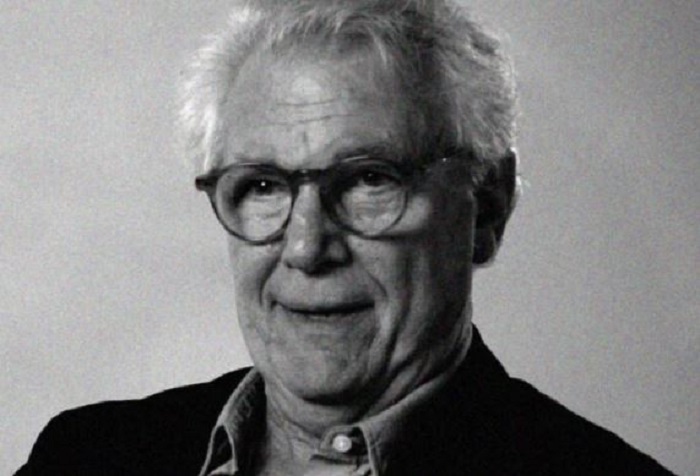
Ken Wiederhorn was born in 1945 in Queens, New York. He attended Kenyon College in Ohio for two years, but dropped out during his sophomore year, and returned to New York. Pursuing his ambition to become a documentary producer, Wiederhorn got a job as a mail boy at major US TV network CBS. Diligent and enterprising, he worked his way up from gofer to editor and eventually became a news producer. Within this, Wiederhorn also studied film at Columbia University, where he teamed with fellow student Reuben Trane on a dual thesis film called Manhattan Melody, which ended up winning the first Student Academy Award in the Drama category in 1973. After graduating, Wiederhorn returned to CBS.
Then he was drawn into the heady world of independent filmmaking. Wiederhorn’s thesis partner Reuben Trane had secured funding to produce a movie, with the proviso from his investors that it had to be a horror movie because that was the genre most likely to turn a significant profit. Trane asked Wiederhorn to work on concepts and direct, and he took a break from CBS’s doco department, jumped on a plane to Florida, nutted out some ideas, and got behind the camera for what would eventually become the 1977 cult favourite Shock Waves.
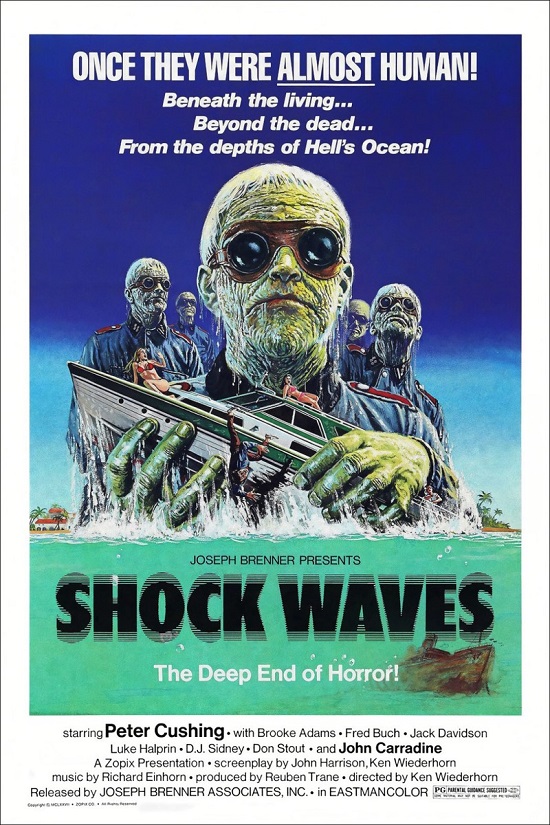
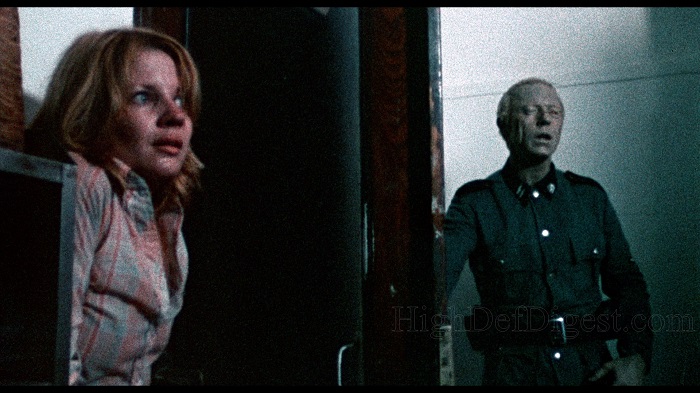
Anyone who hung around video stores in the 1980s and 1990s will remember the cover of this inventive little shocker staring back at them from the crowded shelves, likely peering out threateningly from between titles like Chopping Mall and Trick Or Treat. With a plot to literally die for, the excellently titled Shock Waves is the grim, darkly humorous tale of a Nazi scientific bigwig (played by Peter Cushing, no less!) who has created a horde of underwater Third Reich zombies. There’s enough there for about, well, three late-1970s exploitation shockers, and Wiederhorn jammed his lurid little flick tight, as his Nazi zombies wreak havoc on a young Brooke Adams, among others.
Shock Waves is a terrific genre-splice piece which has garnered a small cult over the years, especially since its DVD release. Wiederhorn announced himself as a highly imaginative filmmaker with this schlocky little gem, but he has always been decidedly disparaging about the film, and his own work on it. “We didn’t even know what we were doing on that film,” Wiederhorn told The Flashback Files in 2013. “Peter Cushing used to watch me trying to work out where to put the camera. And he would walk up to me and whisper: ‘Dear boy, might I make a suggestion?’ And he was always right!”
Curiously, the modest success of Shock Waves didn’t endear Wiederhorn to the serious folk at CBS’s doco department. Concerned about his career prospects, Wiederhorn accepted an offer to direct 1979’s King Frat, a very, very broad comedy about a group of frat boys who engage in a farting contest…yes, a farting contest. Wiederhorn wasn’t proud of his work on that one, but there’s something strikingly bold about the complete and utter prurience of its premise and the director’s wholesale embracing of it.
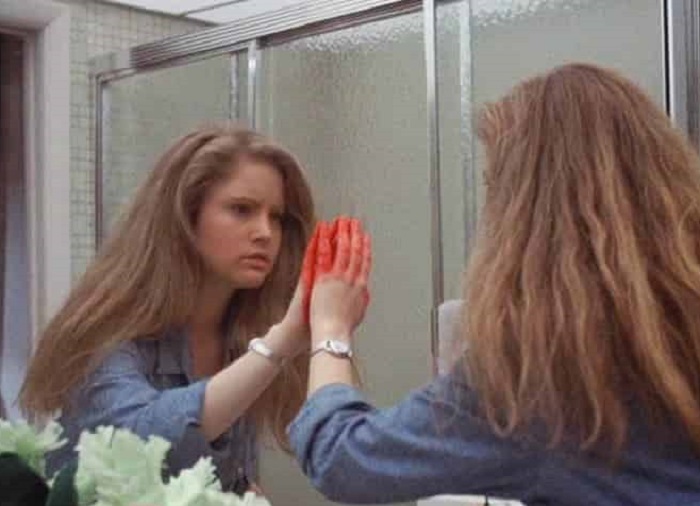
Wiederhorn brushed himself off and then got close to the lurid genius of Shock Waves with the 1981 horror-thriller Eyes Of A Stranger, a Hitchcock-style stalk-and-slash effort juiced by effects legend Tom Savini’s garishly unrestrained brand of bloodletting. While the film’s decidedly mercenary producers pushed Wiederhorn for more gore, the director concentrated on the suspense, and crafted something truly compelling with this story of a news anchor-woman (The Love Boat’s Lauren Tewes) stalked by a serial rapist. The film also notably features the debut big screen performance of the great Jennifer Jason Leigh, who is excellent as Tewes’ traumatised mute sister.
In one of the most amusing bait-and-switch moves ever pulled in cinematic history, Wiederhorn was next offered the script Call Me Meathead, an ET: The Extra-Terrestrial rip-job about a group of kids at a summer camp who encounter an alien. Thanks to a canny and highly mercenary rights-holding producer and eager studio, Wiederhorn’s goofy, silly comedy was slapped with the wholly inappropriate title Meatballs II to near-criminally and misleadingly cash in on the Bill Murray-starring 1979 comedy classic Meatballs. “Columbia Tristar saw that they could draw an audience with this, and they decided to go with it,” Wiederhorn told The Flashback Files in 2013. “But people had no idea they were being bamboozled! From my point of view, it was a fucking calamity!”
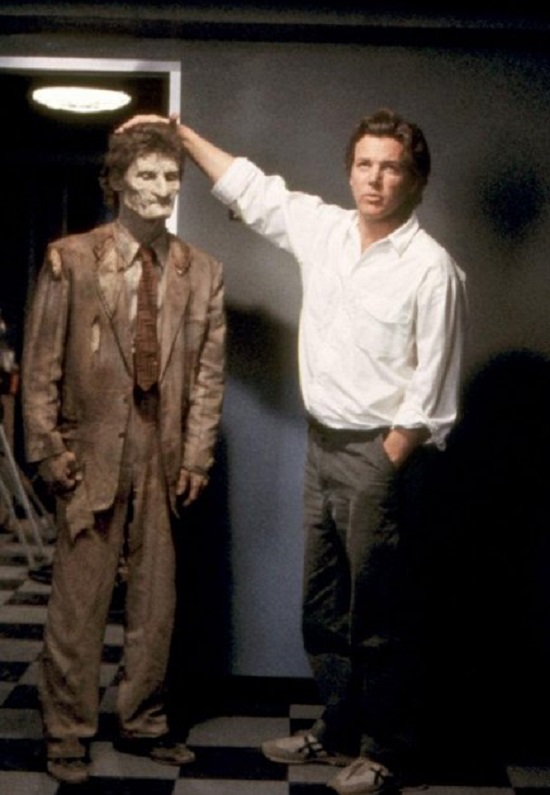
Wiederhorn had a happier sequel switcheroo with his next film. The writer/director had a bunch of scripts in his drawer, and when a cash-driven producer read one about a teen who has a run-in with a bunch of zombies, he asked Wiederhorn to reshape it into Return Of The Living Dead II, a sequel to cult hero Dan O’Bannon’s fantastic punk-inflected 1985 comedy horror zombie flick. Though only very tenuously connected to the original (itself unconnected to George A. Romero’s similarly titled zombie series), Wiederhorn’s Return Of The Living Dead II is a fun, freaky, youth-driven splatter-fest that sees the director fusing his horror and comedy interests with a real sense of cartoonish flair.
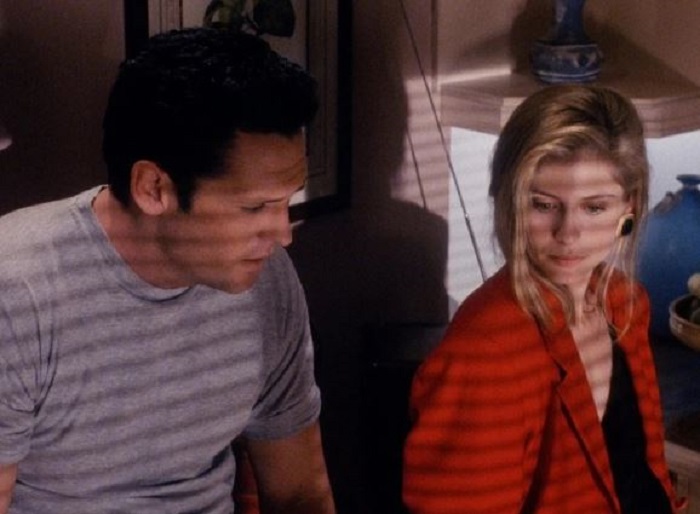
After Return Of The Living Dead II, Wiederhorn moved into episodic TV, helming instalments of Freddy’s Nightmares, 21 Jump Street and Dark Justice before returning to features with 1993’s A House In The Hills. “I like it a lot,” Wiederhorn has said. “In my opinion, it’s the only really good movie I’ve made.” Though Wiederhorn is certainly selling himself short here, A House In The Hills is a nifty low budget thriller that effectively mixes in dark comedy and quirky romance as Helen Slater’s aspiring actress and house-sitter tangles with Michael Madsen’s strangely alluring thief. The film is very well-performed and Wiederhorn cleverly manages its shifts and tones, again displaying his gifts for unusual material. But for Ken Wiederhorn, that was it.
“After A House In The Hills, I had had enough of feature films,” Wiederhorn told The Flashback Files in 2013. “There’s so much work involved on the business end of it, I’m practically exhausted before the first day of shooting. I went back to New York, worked on television documentaries for a couple of years, and then retired.”
And even though he might not believe it himself, Ken Wiederhorn directed some pretty interesting movies…and a few truly excellent ones.
If you liked this story, check out our features on other unsung auteurs Barbara Loden, David Mackenzie, Alan Rudolph, James Lee Barrett, Edwin “Bud” Shrake, Joan Tewkesbury, Jamaa Fanaka, Jack Starrett, Joseph Sargent, Jeffrey Schwarz, George Sidney, Philip Dunne, Zak Hilditch, Luke Sparke, Cyrus Nowrasteh, Morgan Matthews, Tom Laughlin, Diane Keaton, Ed Hunt, Nancy Savoca, Robert Vincent O’Neil, Marvin J. Chomsky, Sam Firstenberg, Jack Sholder, Richard Gray, Giuseppe Andrews, Gus Trikonis, Greydon Clark, Frances Doel, Gordon Douglas, Billy Fine, Craig R. Baxley, Harvey Bernhard, Bert I. Gordon, James Fargo, Jeremy Kagan, Robby Benson, Robert Hiltzik, John Carl Buechler, Rick Carter, Paul Dehn, Bob Kelljan, Kevin Connor, Ralph Nelson, William A. Graham, Judith Rascoe, Michael Pressman, Peter Carter, Leo V. Gordon, Dalene Young, Gary Nelson, Fred Walton, James Frawley, Pete Docter, Max Baer Jr., James Clavell, Ronald F. Maxwell, Frank D. Gilroy, John Hough, Dick Richards, William Girdler, Rayland Jensen, Richard T. Heffron, Christopher Jones, Earl Owensby, James Bridges, Jeff Kanew, Robert Butler, Leigh Chapman, Joe Camp, John Patrick Shanley, William Peter Blatty, Peter Clifton, Peter R. Hunt, Shaun Grant, James B. Harris, Gerald Wilson, Patricia Birch, Buzz Kulik, Kris Kristofferson, Rick Rosenthal, Kirsten Smith & Karen McCullah, Jerrold Freeman, William Dear, Anthony Harvey, Douglas Hickox, Karen Arthur, Larry Peerce, Tony Goldwyn, Brian G. Hutton, Shelley Duvall, Robert Towne, David Giler, William D. Wittliff, Tom DeSimone, Ulu Grosbard, Denis Sanders, Daryl Duke, Jack McCoy, James William Guercio, James Goldstone, Daniel Nettheim, Goran Stolevski, Jared & Jerusha Hess, William Richert, Michael Jenkins, Robert M. Young, Robert Thom, Graeme Clifford, Frank Howson, Oliver Hermanus, Jennings Lang, Matthew Saville, Sophie Hyde, John Curran, Jesse Peretz, Anthony Hayes, Stuart Blumberg, Stewart Copeland, Harriet Frank Jr & Irving Ravetch, Angelo Pizzo, John & Joyce Corrington, Robert Dillon, Irene Kamp, Albert Maltz, Nancy Dowd, Barry Michael Cooper, Gladys Hill, Walon Green, Eleanor Bergstein, William W. Norton, Helen Childress, Bill Lancaster, Lucinda Coxon, Ernest Tidyman, Shauna Cross, Troy Kennedy Martin, Kelly Marcel, Alan Sharp, Leslie Dixon, Jeremy Podeswa, Ferd & Beverly Sebastian, Anthony Page, Julie Gavras, Ted Post, Sarah Jacobson, Anton Corbijn, Gillian Robespierre, Brandon Cronenberg, Laszlo Nemes, Ayelat Menahemi, Ivan Tors, Amanda King & Fabio Cavadini, Cathy Henkel, Colin Higgins, Paul McGuigan, Rose Bosch, Dan Gilroy, Tanya Wexler, Clio Barnard, Robert Aldrich, Maya Forbes, Steven Kastrissios, Talya Lavie, Michael Rowe, Rebecca Cremona, Stephen Hopkins, Tony Bill, Sarah Gavron, Martin Davidson, Fran Rubel Kuzui, Elliot Silverstein, Liz Garbus, Victor Fleming, Barbara Peeters, Robert Benton, Lynn Shelton, Tom Gries, Randa Haines, Leslie H. Martinson, Nancy Kelly, Paul Newman, Brett Haley, Lynne Ramsay, Vernon Zimmerman, Lisa Cholodenko, Robert Greenwald, Phyllida Lloyd, Milton Katselas, Karyn Kusama, Seijun Suzuki, Albert Pyun, Cherie Nowlan, Steve Binder, Jack Cardiff, Anne Fletcher ,Bobcat Goldthwait, Donna Deitch, Frank Pierson, Ann Turner, Jerry Schatzberg, Antonia Bird, Jack Smight, Marielle Heller, James Glickenhaus, Euzhan Palcy, Bill L. Norton, Larysa Kondracki, Mel Stuart, Nanette Burstein, George Armitage, Mary Lambert, James Foley, Lewis John Carlino, Debra Granik, Taylor Sheridan, Laurie Collyer, Jay Roach, Barbara Kopple, John D. Hancock, Sara Colangelo, Michael Lindsay-Hogg, Joyce Chopra, Mike Newell, Gina Prince-Bythewood, John Lee Hancock, Allison Anders, Daniel Petrie Sr., Katt Shea, Frank Perry, Amy Holden Jones, Stuart Rosenberg, Penelope Spheeris, Charles B. Pierce, Tamra Davis, Norman Taurog, Jennifer Lee, Paul Wendkos, Marisa Silver, John Mackenzie, Ida Lupino, John V. Soto, Martha Coolidge, Peter Hyams, Tim Hunter, Stephanie Rothman, Betty Thomas, John Flynn, Lizzie Borden, Lionel Jeffries, Lexi Alexander, Alkinos Tsilimidos, Stewart Raffill, Lamont Johnson, Maggie Greenwald and Tamara Jenkins.