



By Erin Free
FilmInk salutes the work of creatives who have never truly received the credit that they deserve. In this installment: director Joseph Sargent, who helmed The Taking Of Pelham One Two Three, White Lightning, Nightmares, Colossus: The Forbin Project and…Jaws The Revenge!
With The Red Poppy Film Festival – which focuses on films by and about war veterans – kicking off on Friday, we wanted to pick an Unsung Auteur this week with a history in the military. Many filmmakers have served in the armed forces, with some (like Oliver Stone, John Ford and Robert Altman) more famously than others. Several creatives who have featured previously in the Unsung Auteurs column (like George Sidney, Phillip Dunne, Paul Dehn and more) have been members of the military, and we now add to that list the late Joseph Sargent, who has a genuine classic on his resume in the masterful 1974 thriller The Taking Of Pelham One Two Three and an unmitigated disaster too in the form of 1987’s Jaws: The Revenge, which may partly explain the lack of appreciation proffered upon the prolific director.
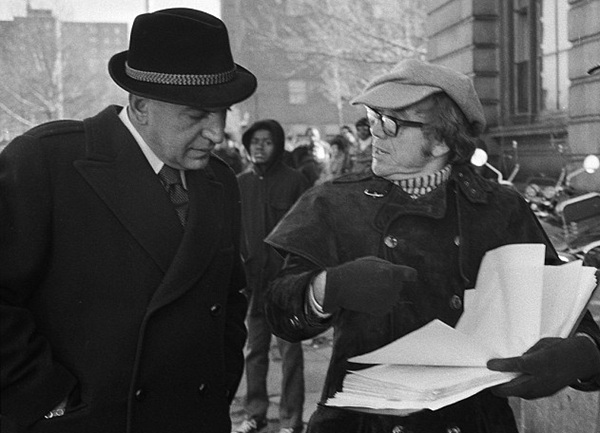
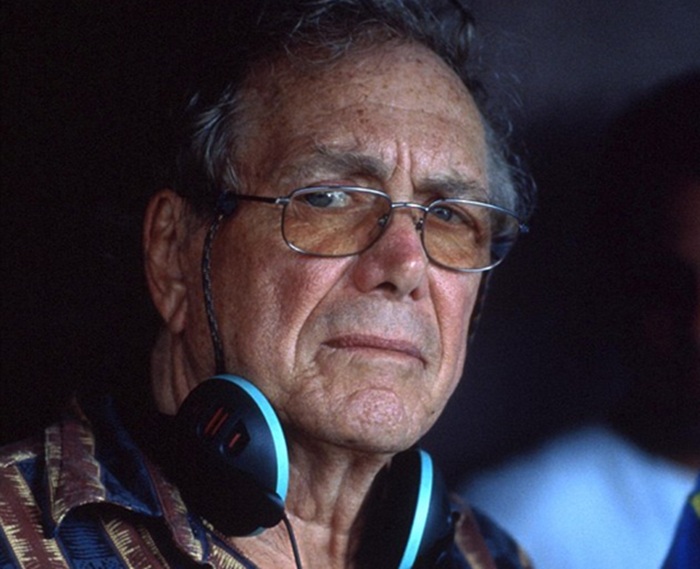
Joseph Sargent was born Giuseppe Danielle Sorgente in Jersey City, New Jersey in 1925, the son of Italian parents Maria (née Noviello) and Domenico Sorgente. Sargent served in The US Army during World War II, where he fought in The Battle Of The Bulge. After returning from the war, Sargent began his career in the entertainment industry as an actor, before shifting to directing with the 1959 B-movie Street-Fighter, a grim but hopeful tale of a juvenile delinquent trying to go straight. After that low-key debut, Sargent took the reins on TV series like Lassie, The Invaders, The Man From U.N.C.L.E., Bonanza, Gunsmoke, The FBI, Star Trek and many, many more, establishing himself as one of the most prolific masters of the form.
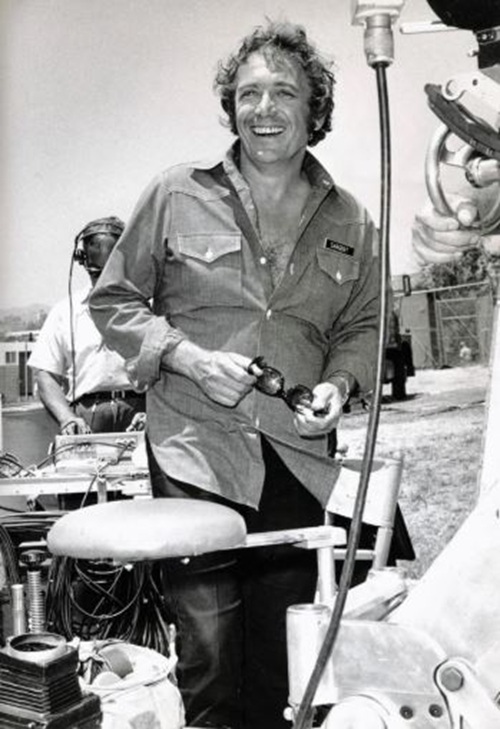
Once firmly established as a director for television, Sargent made occasional incursions into the world of features, where he directed a number of films, most of them notable for their strong sense of pacing and hard-driving narratives. Sargent’s first film since his 1959 debut was 1968’s now largely forgotten The Hell With Heroes, which stars the great Rod Taylor and the gifted but tragic Pete Duel (who committed suicide at 31) as two former pilots caught up with a smuggling ring in 1940s North Africa. It’s a rock-solid action adventure with a surprising sense of ambiguity, and Sargent followed it up in 1970 with Colossus: The Forbin Project, an excellent technology-beware thriller about what happens when the military puts a super-computer in charge of its nuclear arsenal. Note to those currently and happily singing the praises of AI: it doesn’t go well.
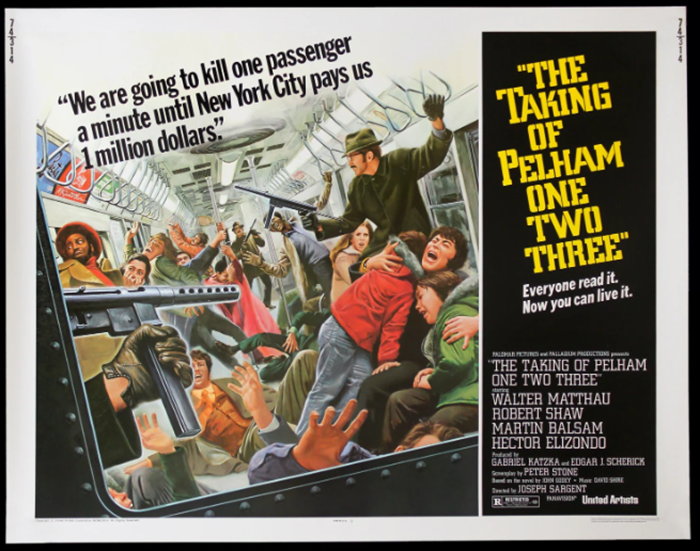
Proving ever versatile, Sargent moved through varied genres, but maintained his knack for propulsive narratives and strong stories with 1972’s The Man (starring James Earl Jones as the first African-American US President) and 1973’s White Lightning, an absolutely cracking good ol’ boy action belter that helped establish Burt Reynolds as a superstar. Sargent directed his best film in 1974 with the nail-biting classic The Taking Of Pelham One Two Three, starring a never-better Walter Matthau as a New York City Transit Police lieutenant charged with stopping a crew of subway train hijackers led by the diabolical Robert Shaw. This is a true 1970s thriller of the first order, boasting a gritty sensibility and non-stop narrative paired with quirky humour, and a few showstopping moments that just wouldn’t fly today. Frequently tagged as one of the best thrillers of the decade and rating as a major box office hit, Sargent nevertheless doesn’t quite receive the cache he deserves for this bona fide classic.
While working at a rapid rate in both episodic TV and telemovies, Sargent continued to make feature films with the varied likes of 1977’s MacArthur (a slightly stolid biopic of the famed US General starring Gregory Peck), 1977’s Goldengirl (an utterly oddball must-see curio that mixes Neo-Nazis, evil scientists, James Coburn, Robert Culp, Aussie tennis legend John Newcombe, and a genetically engineered potential Olympic superstar in the glorious form of the singularly statuesque Susan Anton), 1980’s Coast To Coast (a road movie action comedy romance starring the very unlikely pairing of Dyan Cannon and Robert Blake!), 1983’s Nightmares (a horror portmanteau with a cast that includes Emilio Estevez, Lance Henriksen, Cristina Raines, Lee Ving and Moon Unit Zappa!) and 1987’s Jaws: The Revenge, the disastrous failure of which saw not only the true jumping of the shark of the flagging film franchise, but also the end of Joseph Sargent’s big screen directing career.
Sargent, however, maintained a magisterial presence on the small screen, where he, quite frankly, directed some of the best telemovies ever made. When he passed away in 2014 at the age of 89, Joseph Sargent’s importance to the telemovie form was duly noted by then Directors Guild Of America President Paris Barclay. “When it comes to directing movies for television, Joe’s dominance and craftsmanship were legendary – for the past 50 years. With eight DGA Awards nominations in telemovies, more than any other director in this category, Joe embodied directorial excellence on the small screen. He was unafraid of taking risks, believing in his heart that television audiences demanded the highest quality stories, whether chronicling uncomfortable historic events like the infamous Tuskegee syphilis study in Miss Evers’ Boys, or compelling personal stories about inspiring individuals like heart surgery pioneers Alfred Blalock and Vivien Thomas in Something The Lord Made. His biographies demonstrated an exactitude for period accuracy while simultaneously infusing historical figures with true-to-life spirit and passion. Joe once said that he was drawn to projects possessing ‘edge’ – material that can make some comment or contribution to the condition of man, and it is this ‘edge’ that is his enduring directorial legacy.”
For those with even just a passing interest in telemovies, a cursory run-through of Joseph Sargent’s small screen resume will provide ample indication of just how essential to the form he truly was. Check out some of these small screen classics: 1973’s Sunshine (one of the greatest tearjerkers ever), 1973’s The Marcus-Nelson Murders (the pilot for the legendary Kojak TV series), 1975’s The Night That Panicked America (which tracked Orson Welles’ famed radio broadcast of War Of The Worlds), 1975’s Hustling (starring Jill Clayburgh and Lee Remick), 1980’s Amber Waves (with Dennis Weaver and Kurt Russell), 1983’s searing veteran drama Memorial Day, 1989’s The Karen Carpenter Story, 1997’s Mandela And De Klerk (with Sidney Poitier and Michael Caine) and 2005’s Warm Springs (starring Kenneth Branagh and Cynthia Nixon as Teddy and Eleanor Roosevelt).
Boasting a massive body of small screen work, and a small but frequently fascinating collection of feature films, Joseph Sargent often focused on fast-paced action on the big screen, but ultimately most enjoyed the smaller details when it came to his filmmaking. “The people content is what turns me on,” the late director once said. “I’m not turned on by cops, chases and too much melodrama. But I am turned on by relationship stories.”
If you liked this story, check out our features on other unsung auteurs Jeffrey Schwarz, George Sidney, Philip Dunne, Zak Hilditch, Luke Sparke, Cyrus Nowrasteh, Morgan Matthews, Tom Laughlin, Diane Keaton, Ed Hunt, Nancy Savoca, Robert Vincent O’Neil, Marvin J. Chomsky, Sam Firstenberg, Jack Sholder, Richard Gray, Giuseppe Andrews, Gus Trikonis, Greydon Clark, Frances Doel, Gordon Douglas, Billy Fine, Craig R. Baxley, Harvey Bernhard, Bert I. Gordon, James Fargo, Jeremy Kagan, Robby Benson, Robert Hiltzik, John Carl Buechler, Rick Carter, Paul Dehn, Bob Kelljan, Kevin Connor, Ralph Nelson, William A. Graham, Judith Rascoe, Michael Pressman, Peter Carter, Leo V. Gordon, Dalene Young, Gary Nelson, Fred Walton, James Frawley, Pete Docter, Max Baer Jr., James Clavell, Ronald F. Maxwell, Frank D. Gilroy, John Hough, Dick Richards, William Girdler, Rayland Jensen, Richard T. Heffron, Christopher Jones, Earl Owensby, James Bridges, Jeff Kanew, Robert Butler, Leigh Chapman, Joe Camp, John Patrick Shanley, William Peter Blatty, Peter Clifton, Peter R. Hunt, Shaun Grant, James B. Harris, Gerald Wilson, Patricia Birch, Buzz Kulik, Kris Kristofferson, Rick Rosenthal, Kirsten Smith & Karen McCullah, Jerrold Freeman, William Dear, Anthony Harvey, Douglas Hickox, Karen Arthur, Larry Peerce, Tony Goldwyn, Brian G. Hutton, Shelley Duvall, Robert Towne, David Giler, William D. Wittliff, Tom DeSimone, Ulu Grosbard, Denis Sanders, Daryl Duke, Jack McCoy, James William Guercio, James Goldstone, Daniel Nettheim, Goran Stolevski, Jared & Jerusha Hess, William Richert, Michael Jenkins, Robert M. Young, Robert Thom, Graeme Clifford, Frank Howson, Oliver Hermanus, Jennings Lang, Matthew Saville, Sophie Hyde, John Curran, Jesse Peretz, Anthony Hayes, Stuart Blumberg, Stewart Copeland, Harriet Frank Jr & Irving Ravetch, Angelo Pizzo, John & Joyce Corrington, Robert Dillon, Irene Kamp, Albert Maltz, Nancy Dowd, Barry Michael Cooper, Gladys Hill, Walon Green, Eleanor Bergstein, William W. Norton, Helen Childress, Bill Lancaster, Lucinda Coxon, Ernest Tidyman, Shauna Cross, Troy Kennedy Martin, Kelly Marcel, Alan Sharp, Leslie Dixon, Jeremy Podeswa, Ferd & Beverly Sebastian, Anthony Page, Julie Gavras, Ted Post, Sarah Jacobson, Anton Corbijn, Gillian Robespierre, Brandon Cronenberg, Laszlo Nemes, Ayelat Menahemi, Ivan Tors, Amanda King & Fabio Cavadini, Cathy Henkel, Colin Higgins, Paul McGuigan, Rose Bosch, Dan Gilroy, Tanya Wexler, Clio Barnard, Robert Aldrich, Maya Forbes, Steven Kastrissios, Talya Lavie, Michael Rowe, Rebecca Cremona, Stephen Hopkins, Tony Bill, Sarah Gavron, Martin Davidson, Fran Rubel Kuzui, Elliot Silverstein, Liz Garbus, Victor Fleming, Barbara Peeters, Robert Benton, Lynn Shelton, Tom Gries, Randa Haines, Leslie H. Martinson, Nancy Kelly, Paul Newman, Brett Haley, Lynne Ramsay, Vernon Zimmerman, Lisa Cholodenko, Robert Greenwald, Phyllida Lloyd, Milton Katselas, Karyn Kusama, Seijun Suzuki, Albert Pyun, Cherie Nowlan, Steve Binder, Jack Cardiff, Anne Fletcher ,Bobcat Goldthwait, Donna Deitch, Frank Pierson, Ann Turner, Jerry Schatzberg, Antonia Bird, Jack Smight, Marielle Heller, James Glickenhaus, Euzhan Palcy, Bill L. Norton, Larysa Kondracki, Mel Stuart, Nanette Burstein, George Armitage, Mary Lambert, James Foley, Lewis John Carlino, Debra Granik, Taylor Sheridan, Laurie Collyer, Jay Roach, Barbara Kopple, John D. Hancock, Sara Colangelo, Michael Lindsay-Hogg, Joyce Chopra, Mike Newell, Gina Prince-Bythewood, John Lee Hancock, Allison Anders, Daniel Petrie Sr., Katt Shea, Frank Perry, Amy Holden Jones, Stuart Rosenberg, Penelope Spheeris, Charles B. Pierce, Tamra Davis, Norman Taurog, Jennifer Lee, Paul Wendkos, Marisa Silver, John Mackenzie, Ida Lupino, John V. Soto, Martha Coolidge, Peter Hyams, Tim Hunter, Stephanie Rothman, Betty Thomas, John Flynn, Lizzie Borden, Lionel Jeffries, Lexi Alexander, Alkinos Tsilimidos, Stewart Raffill, Lamont Johnson, Maggie Greenwald and Tamara Jenkins.