By Erin Free
In this regular column, we drag forgotten made-for-TV movies out of the vault and into the light. This week: the famed 1971 drama Brian’s Song, starring James Caan and Billy Dee Williams.
In our review of the vintage telemovie The Boy In The Plastic Bubble (1976), we discussed the rare occasions on which small screen movies have achieved true longevity and a state of real pop cultural significance. Along with the aforementioned The Boy In The Plastic Bubble, we name-checked titles like The Day After (1983), Threads (1984) and The Burning Bed (1984), along with acclaimed, dial-shifting mini-series “events” such as Roots (1977) and Holocaust (1978). We also mentioned 1971’s Brian’s Song, which is without question one of the most iconic and much-loved telemovies of all time.
Until the profoundly adored The Shawshank Redemption was released decades later in 1994, Brian’s Song was perhaps the standard-bearer when it came to films about male friendship, and could safely be described as a rare male-driven tearjerker. Even the classic weepie Beaches (1988) lifts a few moves from its impressive playbook. In their eulogy of Brian’s Song‘s famous tough guy star James Caan, The Washington Post memorably credited him as the man “who taught millions of American males to cry.”
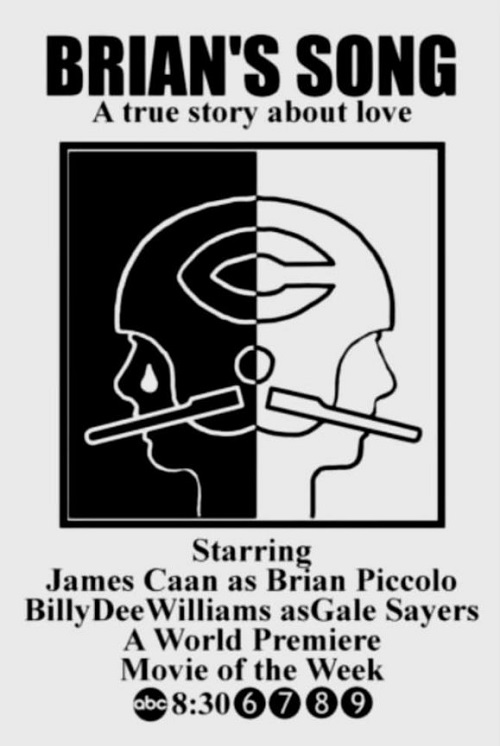
Directed by Unsung Auteur Buzz Kulik (who had previously helmed the underrated 1969 prison movie Riot, and would eventually go on to direct Steve McQueen’s final film, The Hunter) and penned by TV regular William Blinn (who adapted Roots for the small screen, created Starsky & Hutch, and co-wrote, um, Prince’s Purple Rain), Brian’s Song first aired on major US network ABC on November 30, 1971, scoring great acclaim and huge ratings. Based on the non-fiction book I Am Third by Gale Sayers and Al Silverman, the true story of Brian’s Song is a gut-wrencher of profound but simple grace, mixing sport, social commentary and heartbreak to staggering effect, and doing it all in a slim, economic 75 minutes, the standard running time for telemovies of the early 1970s.
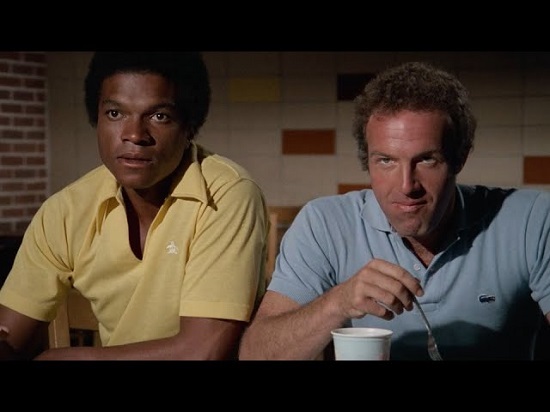
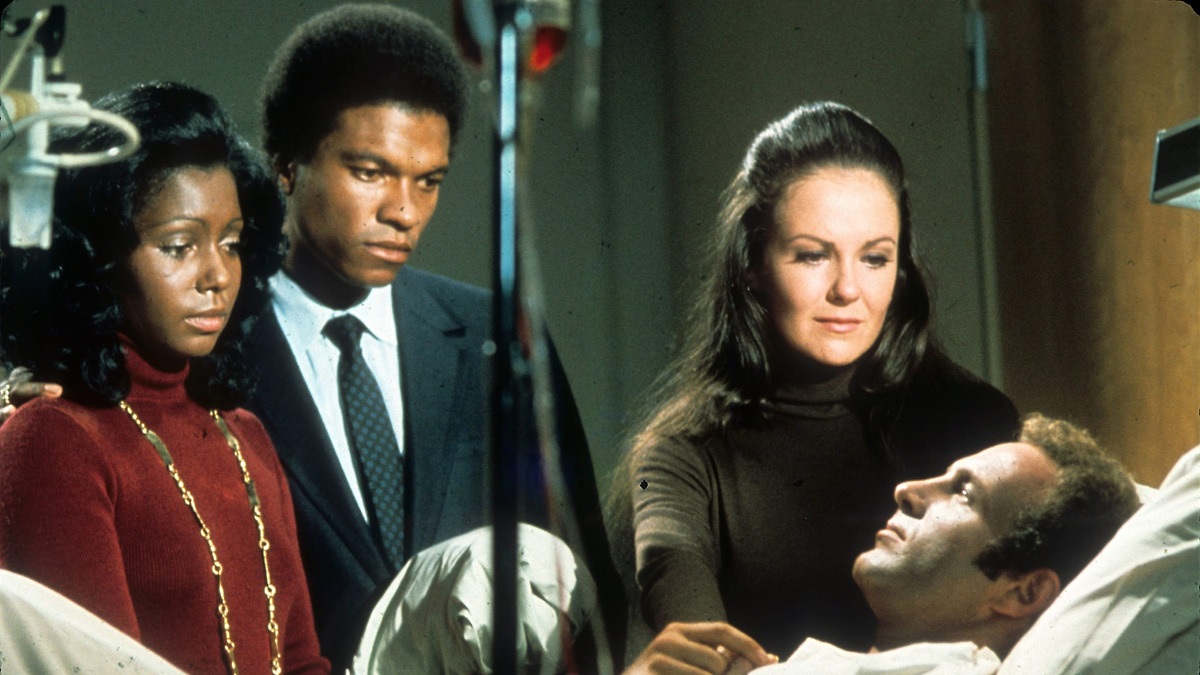
Brian’s Song is the story of Chicago Bears NFL teammates and unlikely friends Brian Piccolo (James Caan) and Gale Sayers (Billy Dee Williams). Whereas Brian is boisterous, loud, rebellious and always looking for fun, Gale is serious and reserved. In a bold move for the time, the two men are also assigned rooms together on away games, a first for white and African-American players. Though always competitive and needling each other, Brian and Gale form a strong bond, and their wives Joy Piccolo (Shelley Fabares) and Linda Sayers (Judy Pace) also become close. Okay, if you haven’t seen Brian’s Song, and you’re not familiar with the film, it’s spoiler time. When Brian Piccolo is struck down in his prime with cancer, the bond of the two men becomes even more strengthened through tragedy, resulting in a host of incredibly emotional moments.
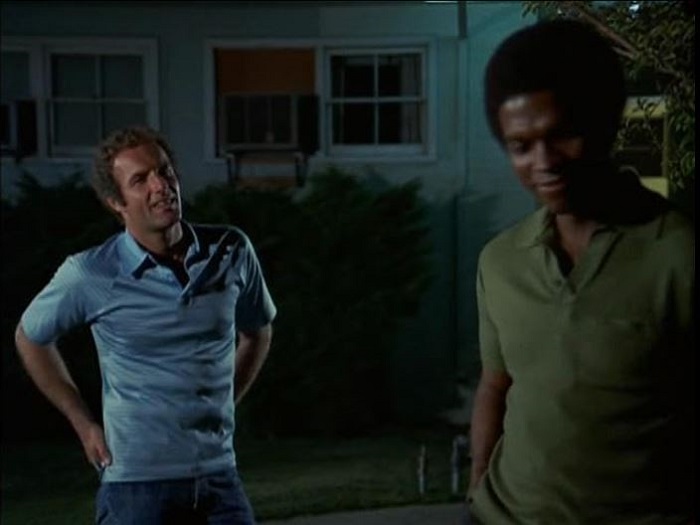
Being a film about men – and sportsmen at that – Brian’s Song is reserved and taciturn in how it deals with the depth of emotion at its narrative core. These are men of the early seventies who don’t talk freely about their emotions, so much of the communication between Brian and Gale is non-verbal and made through action, though there are, of course, some big dialogue moments, especially in a huge – and hugely famous – sequence towards the end of the film for Billy Dee Williams. Much is hinted at and suggested in Brian’s Song, which just goes to make the film all the more powerful and heart-rending.
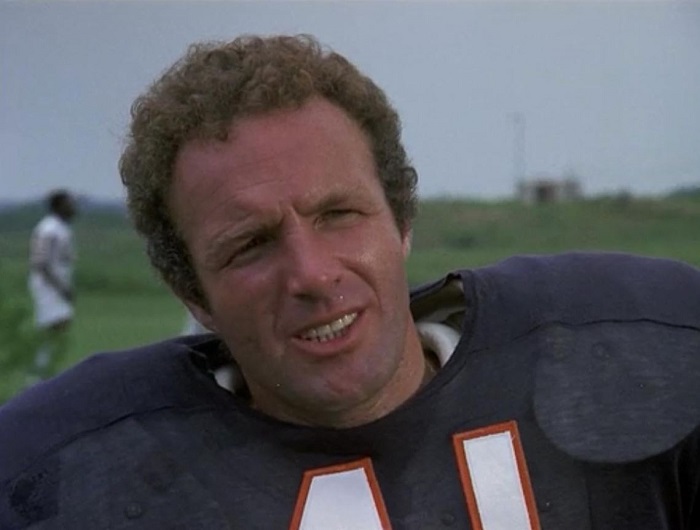
As with most superior films, much of the success of Brian’s Song has to do with the film’s casting and performances. After superb turns in films like El Dorado (1966), Countdown (1967), The Rain People (1969) and Rabbit, Run (1970) and just before his breakout, star-making role in 1972’s The Godfather, James Caan is at his lively, loveable, engaging best in Brian’s Song, though he’s never been as wholly upbeat and positive as this. The jaded world-weariness that would colour Caan’s later performances is nowhere to be seen here. Brian Piccolo is a true life-force, which of course makes his fate all the more tragic and heartbreaking, and James Caan embodies his character beautifully here.
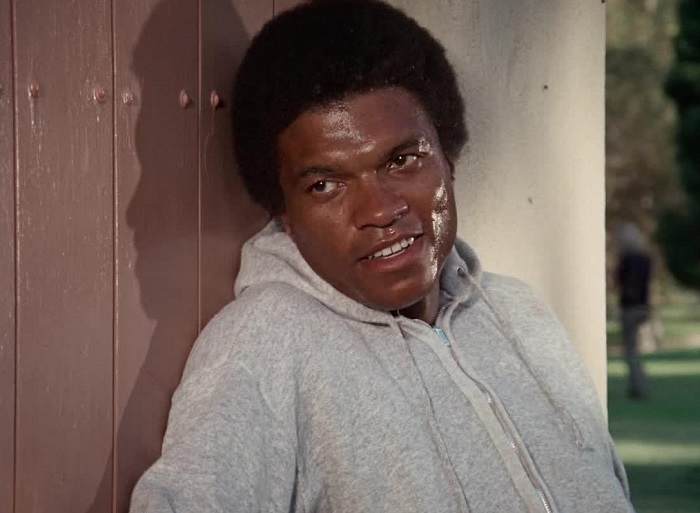
Billy Dee Williams – who had appeared in a long list of TV series guest roles – became a star after Brian’s Song, with his good looks and charisma establishing him as one of the all-time great African-American movie stars, and even something of an heir to the great Sidney Poitier. Williams has the far less flashy role here, but he nicely plays all of the emotion bubbling away under the surface of Gale Sayers, who has lived a whole life of casual, off-handed racism and discrimination. It’s a great turn from the man who would be Lando Calrissian, and it still stands as one of Williams’ best and most iconic performances.
James Caan and Billy Dee Williams are the molten core of Brian’s Song, and they get great support from Shelley Fabares (a seasoned TV regular) and Judy Pace (who would become a minor Blaxploitation star), who further elevate their already well-written roles, which are much more than just standard “wife” parts. Jack Warden is also excellent as blustery but caring Chicago Bears icon Coach Halas, who is deeply affected by Brian’s plight, while Bernie Casey and David Huddleston pop up too in minor roles, lending instant gravitas to proceedings.
A dual Emmy winner and multiple nominee, Brian’s Song has lived on long after its first broadcast, and far longer than most telemovies ever have. It was released theatrically in some international territories, and has been referenced and dialogue-dropped in a swathe of films and TV shows. It also copped the remake treatment in 2001 with Mekhi Phifer and Sean Maher. In short, Brian’s Song is not only a deeply moving drama, it’s a well-deserved social and cultural phenomenon that has stood the time for decades after it first aired.
“The film was really a love story about two guys from different backgrounds coming together,” Billy Dee Williams told The Hollywood Reporter. “What made this movie work was the relationship between these guys and the way it touched people’s lives. I once ran into a guy who told me that when he needed a catharsis, he’d lock himself in the library and put on Brian’s Song. For some, the movie was a religious experience.”
Availability: Released on VHS and DVD in the decades since its release, Brian’s Song is relatively easy to find online in a not-great but definitely watchable presentation.