



By Erin Free
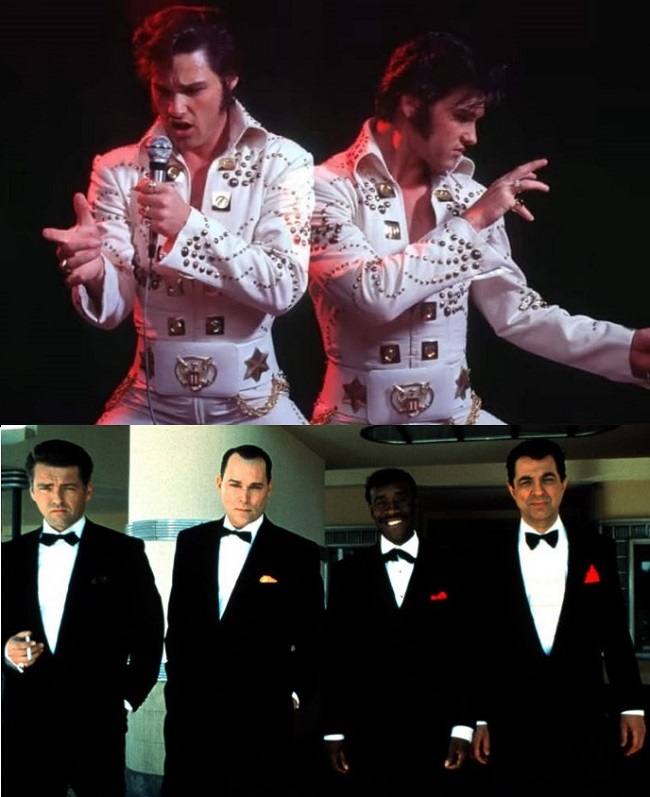
In this regular column, we drag forgotten made-for-TV movies out of the vault and into the light. This week: a high-profile biopic double feature with John Carpenter’s Elvis (1979) and Rob Cohen’s The Rat Pack (1998).
In our previous review of the 1979 telemovie Silent Victory: The Kitty O’Neil Story, we discussed the popularity and prevalence of the biopic when it comes to the made-for-television movie. It’s a form that wades in frequently when it comes to telling true life stories, even more so than films made for the big screen, which have certainly tapped the real-life narrative well on many, many occasions, with even just the last few years seeing biopics on the likes of Bob Marley (Bob Marley: One Love), Amy Winehouse (Back To Black), and Pharell Williams (Piece By Piece). Not hobbled by enormous budgets and huge expectation, however, the telemovie has often been first in when it comes to putting high-profile lives on the screen, with often ropey but frequently fascinating results. While Silent Victory: The Kitty O’Neil Story tracked the life of the eponymous 1970s-era deaf stuntwoman and daredevil – a figure now largely forgotten today – the two telemovies we look at this week have as their subjects two of the most iconic and instantly recognisable male entertainers in musical (and, to a lesser extent, cinema) history: Elvis Presley and Frank Sinatra.
While Baz Luhrmann’s wonderfully kaleidoscopic and enormously large-scale 2022 epic Elvis has arguably become the definitive biopic on rock’n’roll pioneer and pop cultural phenomenon Elvis Presley, prior to the release of that Oscar nominee, the best biopic on The King was an early product of the seminal duo that is director John Carpenter and actor Kurt Russell. Along with John Wayne and John Ford, Martin Scorsese and Robert De Niro/Leonardo DiCaprio, and Akira Kurasawa and Toshiro Mifune, one of the great director/actor relationships is that forged between Carpenter and Russell. They combined for three of the greatest films of the eighties – the cracking sci-fi actioner Escape From New York, the cinder-black existential horror masterpiece The Thing, and the loopy comedy adventure Big Trouble In Little China – and then reunited in 1996 for the execrable sequel Escape From LA…but the less said about that, the better.
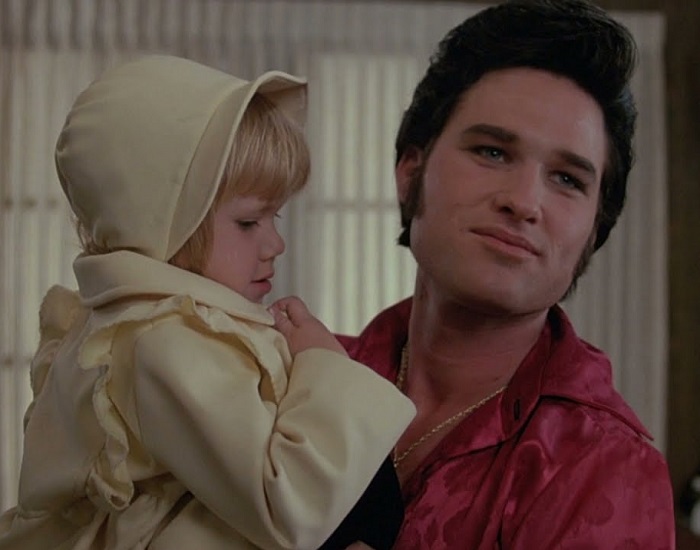
Kindred spirits and fellow rebels, they are both at their absolute best when they’re working together, end of story. The Kurt Russell/John Carpenter cinematic relationship began way back in 1979 on a project that stands out like a sore thumb on both of their resumes: the telemovie biopic Elvis, which tracks the rise and fall of The King. Made after Carpenter’s early cult classics Dark Star, Assault On Precinct 13 and Halloween, the three-hour Elvis (which was edited down to two hours and successfully released in Australian and European cinemas under the title Elvis: The Movie) finds the director at his most restrained and straight-up, as he sticks to the traditional rock biopic format with almost rigid reverence.
Gone are the prowling cameras and indie grit, replaced with an elegance and simplicity that the director would rarely return to. Standing tall at the centre of the film is the dynamic Kurt Russell, who delivers a stunning performance as Elvis Presley. Though he doesn’t do his own singing (that duty falls to impressive Elvis sound-alike Ronnie McDowell), Russell perfectly captures all of the swagger, spirit, confusion and regret that swirled in The King (without resorting to mere impersonation), as he rises from the poor house (where he shares a strong bond with his mother, played with typical gusto by perfectly cast force-of-nature Shelley Winters) to the penthouse (which he shares with child bride Priscilla, played with sweet earnestness by Russell’s then partner Season Hubley, who also later appeared briefly in Escape From New York). Alongside these major players, an impressive supporting cast gives life to various other major figures in Elvis’s life: Kurt Russell’s own real-life father Bing Russell (an actor and baseball player) plays Elvis’s father Vernon Presley; Pat Hingle is all unctuous but sinister bluster as Colonel Tom Parker; Carpenter regular Charles Cyphers makes for an excellent Sam Phillips; and Joe Mantegna and Ed Begley Jr. take on small roles as, respectively, Elvis buddy Joe Esposito and band member DJ Fontana. In a nice touch, Elvis’s friend and sideman Charlie Hodge appears as himself.
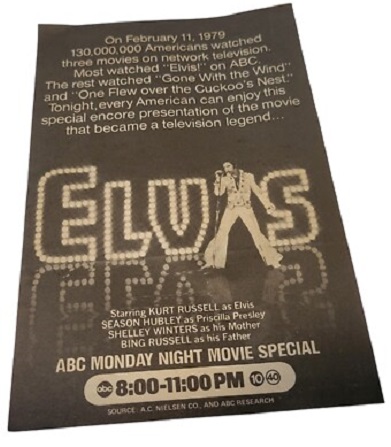
Incredibly, this telemovie aired on major network ABC on February 11, 1979, just just two years after Presley’s death. Unsurprisingly, Elvis veers a little close to hagiography at times, but that said, it’s also rippingly entertaining and beautifully made. Filled with expertly choreographed musical numbers, moments of high drama, and classic beats from the long and hallowed pantheon of Elvis Presley mythology, Elvis was for a very, very long time close to being the definitive biopic on The King, who has been immortalised in telemovie form by everyone from Don Johnson (1981’s Elvis And The Beauty Queen) to Jonathan Rhys-Meyers (2005’s very impressive Elvis). Equally important, this superb biopic was also the birthplace of one of the great cinematic director/star pairings.
In the American pop cultural pantheon, Elvis is rivalled in some ways by the late, great Frank Sinatra, whose early-career teen idol status somewhat foreshadowed that of The King. Unlike Elvis, however, Frank Sinatra has not been frequently essayed on screen, with only occasional entries like Philip Casnoff in the 1992 TV mini-series Sinatra, George De La Pena in the 1997 TV movie Sinatra, and Dennis Hopper in Paul Goldman’s 2003 Aussie comedy The Night We Called It A Day. There have, however, been continuous rumours of Frank Sinatra biopics over the years. Much has been made, for instance, about director Martin Scorsese’s efforts to mount a film based on the exploits of The Rat Pack – the swaggering sixties-era entertainment posse lorded over by musical giant Frank Sinatra, and boasting big names Dean Martin, Sammy Davis Jr., Peter Lawford and Joey Bishop.
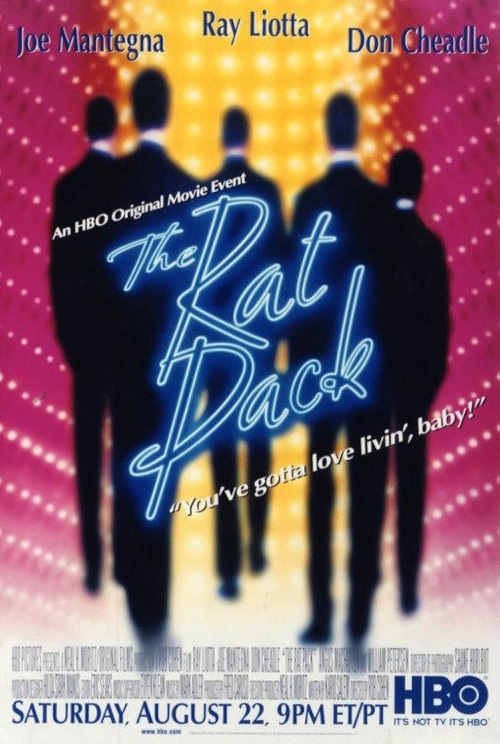
Scorsese initially tried to bring the life story of singer/actor Dean Martin to the screen, but after failing to find the right way to tell the story, his sights have shifted to the considerably more voluble figure of Frank Sinatra, with Leonardo DiCaprio currently pegged to play the iconic performer in a film currently entitled The Old Blue Eyes, with Jennifer Lawrence a chance to play Sinatra paramour and screen goddess Ava Gardner. In amongst all this exciting chatter, what many fail to note is that a particularly strong biopic has already been made about Sinatra and his entourage.
In 1998, the talented Rob Cohen (who had at that stage directed enjoyable films like 1993’s Dragon: The Bruce Lee Story and 1996’s Dragonheart, and would eventually go on to helm action belters like 2001’s franchise-starters The Fast And The Furious and 2002’s xXx) quietly directed The Rat Pack for groundbreaking cable network HBO, which in the 1990s was duly and appropriately recognised as the king of quality small screen filmmaking (see our review of And The Band Played On). Interestingly, this ambitious telemovie remains one of the director’s best films despite the enormous budgets he would later have at his disposal.
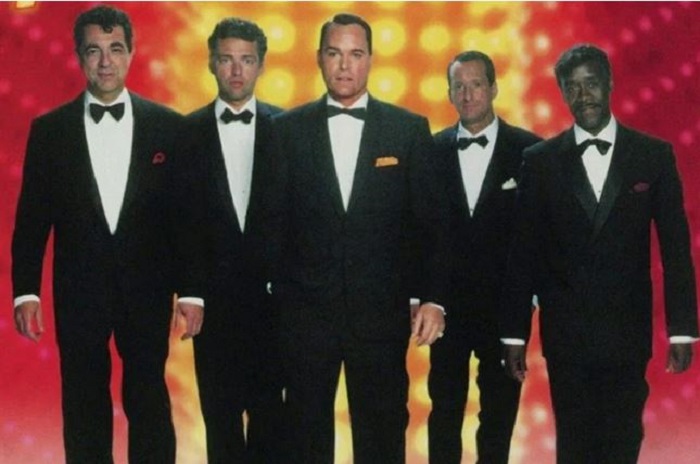
Eschewing the story of the early lives of The Rat Pack, this economic, tightly paced flick instead zeroes in on the titular crew when they were at their most interesting, namely when the explosively tempered but prodigiously gifted and intensely loyal Frank Sinatra (a fine performance from Ray Liotta, who duly captures the singer/actor’s volcanic essence, despite bearing little physical similarity to him) was in deep with The Mob, while also a member of the court of the smarmy President John F. Kennedy (William Petersen having a lot of fun), and his disapproving brother, straight arrow, Bobby Kennedy (Zeljko Ivanek). As Sammy Davis Jr. (Don Cheadle masterfully goes way beyond caricature to give a moving, soulful performance) deals with racism and bigotry, and the reserved Dean Martin (Joe Mantegna is magnificently diffident and laidback) tries to stay safe on the sidelines, the much put upon Peter Lawford (Angus Macfadyen gives the film’s best, but most thankless, performance, finding the compromised dignity in this perennial patsy) feels the heat as Sinatra’s direct link to the powerful but destructive Kennedy clan.
As real life figures drop in – Ava Gardner (Deborah Kara Unger), Marilyn Monroe (Barbara Niven), Joe DiMaggio (John Diehl), and mobsters, Sam Giancana (Robert Miranda) and Mickey Cohen (Alan Woolf) – the forces of history, pop cultural recognition, and perfectly plotted storytelling combine to create a truly entertaining and incisive look at one of the great flashpoint moments on the American timeline. Though sadly forgotten like so many other made-for-television films, The Rat Pack could provide the template for any big screen biopic on the fascinating life of Frank Sinatra.
Availability: Elvis and The Rat Pack are both available on the Region 1 DVD format for fans of physical media, while less “old school” viewers should have little trouble finding these titles elsewhere online.
If you enjoyed this review, check out our other vintage telemovies Silent Victory: The Kitty O’Neil Story, Terror Among Us, The Hanged Man, Hardcase, Charlie’s Angels: Angels In Vegas, Vanishing Point, To Heal A Nation, Fugitive Among Us, To Kill A Cop, Dallas Cowboys Cheerleaders, Police Story: A Chance To Live, Murder On Flight 502, Moon Of The Wolf, The Secret Night Caller, Cotton Candy, And The Band Played On, Gargoyles, Death Car On The Freeway, Short Walk To Daylight, Trapped, Hotline, Killdozer, The Jericho Mile, Mongo’s Back In Town, and Tribes.