




By Erin Free
In this regular column, we drag forgotten made-for-TV movies out of the vault and into the light. This week: the 1972 horror of Moon Of The Wolf, starring David Janssen, Bradford Dillman and Barbara Rush.
Though he had a long, long list of feature credits to his name, the late David Janssen (who passed away in 1980 at the age of just 48 after a life of heavy drinking and smoking) found his greatest successes on the small screen, most notably as the desperate but strikingly resilient Dr. Richard Kimble on the propulsive TV series The Fugitive (1963-1967), as dogged US Treasury agent Jim O’Hara in O’Hara, US Treasury, and as charming cop turned private eye Harry Orwell in Harry O (1974-1976). Janssen also starred in an impressive collection of telemovies, toplining superb examples of the form such as Night Chase (1970), The Longest Night (1972), Stalk The Wild Child (1976), Superdome (1978), City In Fear (1980) and many more.
In amongst this superior bunch was also the atmospheric 1972 werewolf horror telemovie Moon Of The Wolf, one of many fright flicks made for the small screen in the 1970s. Effectively directed by prolific Unsung Auteur Daniel Petrie Sr., who helmed many excellent features (including 1961’s A Raisin In The Sun, 1980’s Resurrection and 1981’s Fort Apache The Bronx) and television works (the mastery of 1976’s Sybil with Sally Field cannot be understated), Moon Of The Wolf is based on a little-known book by Leslie H. Whitten with a tight, economic screenplay by TV regular Alvin Sappinsley (Night Gallery, Bonanza and more). While hardly a classic of the werewolf sub-genre (which isn’t exactly well-stocked with classics, to be honest), there is much to recommend about Moon Of The Wolf, which runs at a brisk, early-1970s-telemovie-typical 75 minutes, and never comes close to outstaying its welcome.

When a young woman from the wrong side of the tracks is found dead and covered in bizarre scratch marks, the insular Louisiana community of Marsh Island is sent into an almost instantaneous frenzy. Controlled, sensible, authoritative and unflappable Sheriff Aaron Whitaker (David Janssen is wonderfully grizzled and dry, and feels right at home as a smalltown lawman) begins to investigate, and a number of suspects quickly emerge: the victim’s agitated brother (Geoffrey Lewis at his wild-eyed best); the brusque town doctor (John Beradino); a rugged local (John Davis Chandler); and Andrew Rodanthe (regular 1970s player Bradford Dillman in a typically assured performance), the scion of Marsh Island’s most wealthy and influential family. But as Sheriff Whitaker continues his investigation, a series of bizarre incidents points to the killer actually being a werewolf. As tensions in Marsh Island threaten to bubble over, Sheriff Whitaker seeks the assistance of Andrew Rodanthe’s sister Louise (the very engaging Barbara Rush), who also happens to be an old flame.
Moon Of The Wolf boasts many great qualities, the first of which is its complete lack of hysteria. Despite its gothic trappings, this nicely shot telemovie unspools more like a police procedural than a horror flick. As Sheriff Whitaker looks for clues, town secrets are exposed, initial suspects are dismissed, and surprise connections are parsed, all at a crackling pace and in the hot southern sun. Even when proceedings take a more distinctly supernatural turn, the film keeps its head and its cool, measured tone. When characters are presented with curious and obviously far from typical happenings, for instance, they thankfully don’t just dismiss them out of hand. Even the jaded Sheriff Whitaker knows he’s not dealing with a standard backwoods killer when prison bars are ripped out of brick walls and bodies are torn asunder.
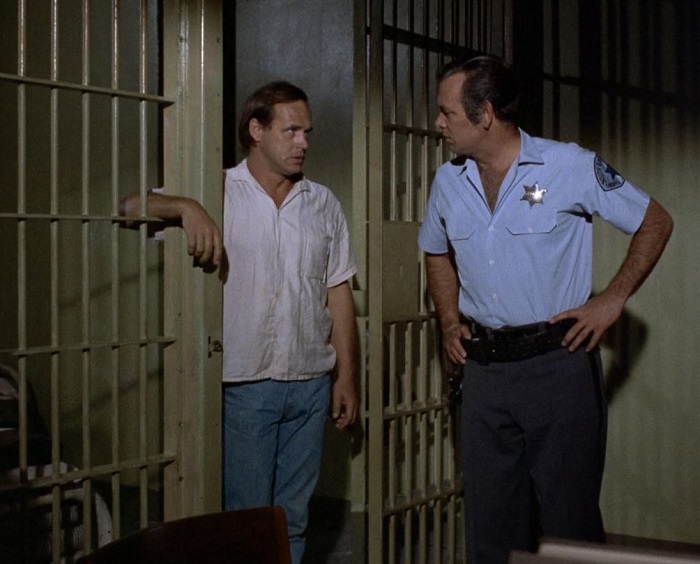
The film’s controlled tone is further anchored by its strong performances and rich characterisations (the genteel but considerable romantic tension between Janssen and Rush is a highlight), while the sweaty southern atmosphere is effectively evinced, with the humidity and fecund fauna of Louisiana practically dripping from the screen. Director Daniel Petrie and screenwriter Alvin Sappinsley also create a believable small southern town quietly divided by race, wealth and social standing, and provide pithy comment on the various social injustices that plague seemingly benign Marsh Island, with its werewolf even perhaps suggested as a physical manifestation of the community’s divisions. And when said werewolf arrives, sure, the lycanthropic wonders of An American Werewolf In London remain blissfully unchallenged, but there’s also something charmingly understated about the simplicity of the hairy mask and sharp-nailed hands of Moon Of The Wolf’s menacing man-animal. Considering that this film is more about the effect the werewolf has on the community from which he springs than the werewolf himself, that’s even curiously appropriate.

Though it has a tiny cult following, Moon Of The Wolf – like most telemovies – has pretty much disappeared from the cinematic consciousness, which is a crying shame. Perfectly cast and performed, steeped strongly in southern atmosphere, and offering a few tasty wrinkles to the werewolf sub-genre, Moon Of The Wolf is a highly effective slice of small screen horror.
Availability: Currently in the public domain, and released on VHS and DVD by nefarious companies many times since its initial broadcast as an ABC Movie Of The Week, Moon Of The Wolf is also currently available in a slick, crystal clear presentation via YouTube Movies, which you can enjoy “free with ads.”
If you enjoyed this review, check out our other vintage telemovies The Secret Night Caller, Cotton Candy, And The Band Played On, Gargoyles, Death Car On The Freeway, Short Walk To Daylight, Trapped, Hotline, Killdozer, The Jericho Mile, Mongo’s Back In Town, and Tribes.

