




By Erin Free
In this regular column, we drag forgotten made-for-TV movies out of the vault and into the light. This week: 1971’s A Step Out Of Line, a compelling heist drama starring Peter Falk, Vic Morrow and Peter Lawford.
The vintage telemovie is a much-maligned format, frequently dismissed as little more than a poor, badly dressed, and under-nourished cousin of the big screen feature film. Pilloried for focusing on fads, pulling stories from headlines, offering showcases for cheesy small screen performers and big screen has-beens, and for rolling out in a safe, sanitised fashion, the vintage telemovie has never really gotten its due. Sure, some of the claims made against this most humble of mediums are not without merit, but those who simply dismiss the telemovie with a haughty wave of their oh-so-superior hand are missing out on a vast, virtually untapped well of little-known cinematic wonder.
Wedged in amongst the tepid Valerie Bertinelli vehicles (some of which, mind you, are actually very good!) and disease-of-the-week weepies (again, many of these sneered-at telemovies are actually singularly impressive works) are telemovies that look and feel, to all intents and purposes, just like big screen features. Furthermore, many of these American telemovies could also capably hold their own against big screen features of the same style and genre, with such examples often being picked up for outside international theatrical distribution.

Though it didn’t play in cinemas in Europe or Australia like some of its high-quality brethren, the 1971 American heist-themed telemovie A Step Out Of Line is a supremely classy and truly compelling example of the small screen film. Considering the cache of its creative team, it’s no surprise. The tight, highly nuanced script was written by producer Steve Shagan (who would later receive an Oscar nomination for his screenplay for the searing 1973 Jack Lemmon classic Save The Tiger) and TV crime show specialists S.S Schweitzer and Albert Ruben, while the economic, character-focused direction is courtesy of prolific small screen helmer Bernard McEveety, whose resume features everything from Combat! and Police Woman to The Rockford Files and Eight Is Enough. There’s also a wonderfully imaginative, jazzy score by the legendary Jerry Goldsmith, which holds things together beautifully. Most importantly, however, A Step Out Of Line boasts a superb cast, with Peter Falk, Vic Morrow and Peter Lawford all delivering exemplary and fascinatingly against-type performances.
Against the sweeping, well-captured background of early seventies San Francisco, A Step Out Of Line opens with the quietly desperate figure of insurance company mainstay Harry Connors (Peter Falk), whose life gets a shake-up when he helps a young woman being mugged in a city park. Shocked by this brazen act of lawlessness, Harry literally starts to question the very nature of the society in which he lives. With his beloved father seriously ill and in need of expensive dialysis treatment to treat his damaged kidneys, Harry needs money…and he needs it fast. Perversely inspired by the mugging he interrupted, the previously law-abiding Harry opportunistically seizes upon some information gleaned from his workplace and gets the bizarre idea to rob a bank.
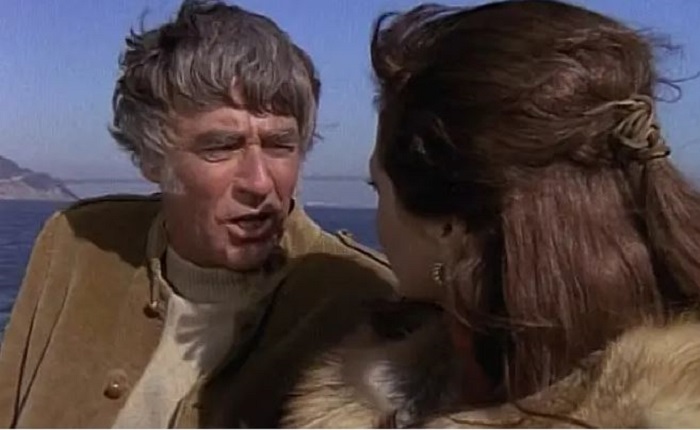
Harry sees a big payday as the salve to all his problems, and he quickly ropes in his longtime buddies Joe Rawlins (Vic Morrow) and Art Stoyer (Peter Lawford), both of whom have financial worries of their own. Joe is about to be let go from his engineering job, and TV commercials director Art is constantly scratching away to get his next job. Joe and Art reluctantly agree to join Harry in the heist, and the three use their own particular skills – along with those the trio picked up while serving in The Korean War – to pull off the complicated job. Unsurprisingly, as with most heist movies, things don’t go exactly according to plan.
While the heist itself is thrillingly shot and constructed, A Step Out Of Line is no Ocean’s 11-style good-time crime flick. This is a film about good, decent men who take the bait of an easy score purely out of financial desperation, with a little indignation thrown in as well. Miles away from his sly, jocular work as famed TV detective Columbo, Peter Falk is all sweaty, dishevelled, jittery brilliance here, cajoling his friends into action while also clearly attempting to convince himself that what he’s doing is in its own way strangely justified. It’s a vivid, arresting performance, and Falk gets incredible support from his co-stars.
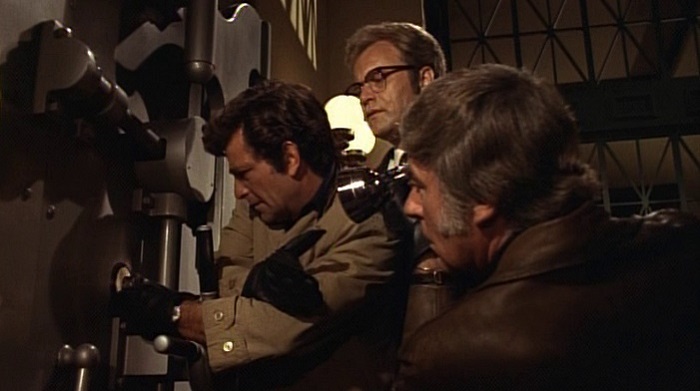
Usually a heavy or tough guy, Vic Morrow disappears completely into the role of Joe Rawlins, a quiet, introverted, hard-working family man who unravels emotionally and begins to seethe with rage when he gets news that he’s to be made redundant. The role of swinging ad-man Art Stoyer initially looks like an easy fit for one-time Rat Packer Peter Lawford (who sports an odd comb-forward hairstyle and a fine selection of cravats, while referring to people as “cats” and responding to questions with “I’m hip”), but as the film progresses, the character is revealed to have far greater depths than first suggested. Constantly under-celebrated as an actor, Lawford gives a soulful, committed performance in A Step Out Of Line.
Peter Falk, Vic Morrow and Peter Lawford are the rock-solid core of A Step Out Of Line, but there are a number of other fascinating characters and strong performances in the film. Happy Days icon Tom Bosley is amusingly droll as Falk’s wisecracking boss; always delightful TV regular Jo Ann Pflug is impressively steely and composed as Lawford’s girlfriend; Lynn Carlin and Susan Adams are excellent as the respective wives of Harry and Joe; and master character actor John Randolph steals his scenes as a wonderfully jaded and near-nihilistic police detective whose very dim and unforgiving world view has become horribly rusted on after decades on the job.
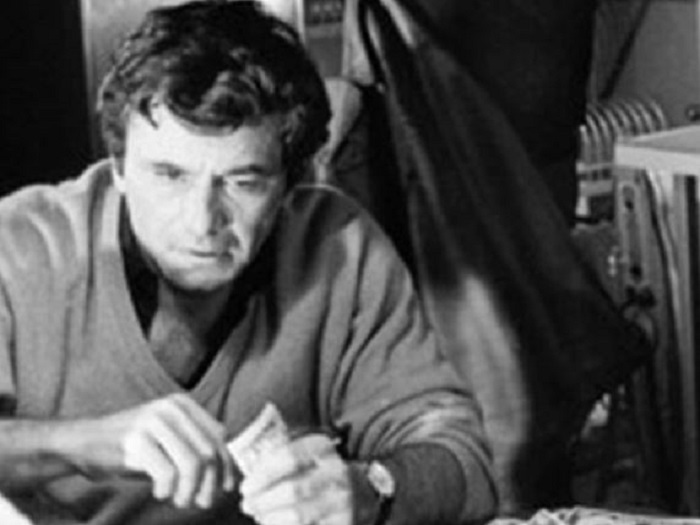
Though ostensibly a heist movie, A Step Out Of Line is much, much more than that. It’s a poetic scream arcing out against the crushing forces of capitalism and the true desperation that financial anxiety can cause, which makes it strangely prescient today. It’s also a pointed critique on the fallacy of crime as a quick fix; as incisively shown here, once you cross the line into criminality, you will be forever changed, no matter how pure your motives. A stylishly made and beautifully performed work that literally pulsates with ideas, A Step Out Of Line is the humble telemovie at its absolute best.
Availability: Despite its vintage, A Step Out Of Line is very easy to find online in a nice, clear presentation.
If you enjoyed this review, check out our other vintage telemovies The Boy In The Plastic Bubble, The Dirty Dozen: Next Mission, A Very Brady Christmas, The Gladiator, Elvis, The Rat Pack, Silent Victory: The Kitty O’Neil Story, Terror Among Us, The Hanged Man, Hardcase, Charlie’s Angels: Angels In Vegas, Vanishing Point, To Heal A Nation, Fugitive Among Us, To Kill A Cop, Dallas Cowboys Cheerleaders, Police Story: A Chance To Live, Murder On Flight 502, Moon Of The Wolf, The Secret Night Caller, Cotton Candy, And The Band Played On, Gargoyles, Death Car On The Freeway, Short Walk To Daylight, Trapped, Hotline, Killdozer, The Jericho Mile, Mongo’s Back In Town and Tribes.
