



By John Noonan
With a career spanning nearly sixty years, Canadian filmmaker, Ted Kotcheff, has worked with the likes of Donald Pleasence, Sylvester Stallone, Richard Dreyfuss, and Jane Fonda to name but a few. Whether working on big screen entrainment (with films like First Blood, The Apprenticeship Of Duddy Kravitz, Fun With Dick And Jane, North Dallas Forty, Split Image, Weekend At Bernie’s, and Uncommon Valor), or small screen police procedurals like Law & Order: Special Victims Unit, there appears to be nothing that he won’t lend his hand to. With Monster Fest holding a retrospective of his work including several in-person Q&As, FilmInk was lucky enough to chat with the veteran filmmaker about fist fights, the French and, of course, his seminal Aussie classic, Wake In Fright.

Monster Fest is holding a retrospective of your work. Do you ever revisit your films? “I don’t make a profession of it, I can tell you that. [Laughs] No, I don’t do it. But I see them often enough because of festivals like this. I need see the films again because I need to be able to talk intelligently about them. It’s got to stir up memories. But I’ve seen Wake In Fright so many times that I don’t need to see it again. I know it so well, and it’s one of my favourite films. It’s one of the very, very few films that have been screened twice at The Cannes Film Festival. It was screened in 1971, and it was screened two years ago. At the time, there were only two films that have screened twice: Michelangelo Antonioni’s L’Avventura and Wake In Fright! It’s a deeply important film to me. It’s one of my best films, if not the best film.”
What are your other best films? “The Apprenticeship Of Duddy Kravitz, with Richard Dreyfuss. I achieved what I set out to do. I had that same goal with Wake In Fright…I saw that film in my head. The French have the best word for director. Director sounds stupid… it sounds like a guy who runs a bank or who works at a corporation. The French word is ‘réalisateur’ – a realiser! I have this vision of a film in my head and I turn it into a reality. That’s the whole trick of being a director. It’s one thing to see it in your head. It’s another to put it onto celluloid. With Wake In Fright, I think I really succeeded in doing practically 100% of what I saw. And it was the same with The Apprenticeship Of Duddy Kravitz. They had something profound to say as well. They were not just entrainment pictures.”

With regards to Wake in Fright, you said you had people telling you this was the renaissance of Australian Cinema. And at the same time, you had people asking if you were mocking Australia. That’s quite a dichotomy to have in terms of feedback. “Well, when I said that, it was because it was told to me by Australian directors. They were ones who said to me, ‘Ted, you really created the situation for a renaissance for Australian films.’ They said, ‘The first time that we saw that film we said, ‘By God, you can make great films in Australia.’ They thought – like a lot of Canadians including myself – that Hollywood makes great films or Europe makes great films, but that you couldn’t make a great film in Australia. They said, ‘You’ve proved us wrong. We’re ready now to really make films in Australia.’ And that’s what I meant by that. They said that. I wouldn’t be so pretentious. [Laughs] I loved Australia when I was there. The outback was so unusual and incredible. I loved it so much that I spent the next five years trying to find a subject that I could shoot in the outback. I never did. Subjects were offered, but I needed to find something great. I really admired the men of the outback. Their fortitude, their comradery, their humour, their generosity, and their support of each other in the most inhospitable circumstances in the whole world. I mean, to face the outback, wow! I had a fantastic time.”
You’ve previously compared Canada to Australia, I was wondering if you could explain that. “When I set out to go to Australia, I thought to myself, ‘Oh dear, I know nothing about the outback. I know nothing about Australia or Australians.’ [Laughs] And that’s the kind of knowledge that you need to make the film. So I was a bit trepidatious at first. When I got out there, I saw that in many ways, it was similar to Northern Canada, with its vast empty spaces, which, far from being liberating, are imprisoning. It imprisons you. I used to say that Canada is, ‘Australia on the rocks.’ [Laughs] Also, there are the same kind of men in Northern Canada, and the same hyper-masculinity of the society. The separation of the two sexes. So there were many similarities. Of course, they’re not the same, but at least I had a basis on which to proceed.”
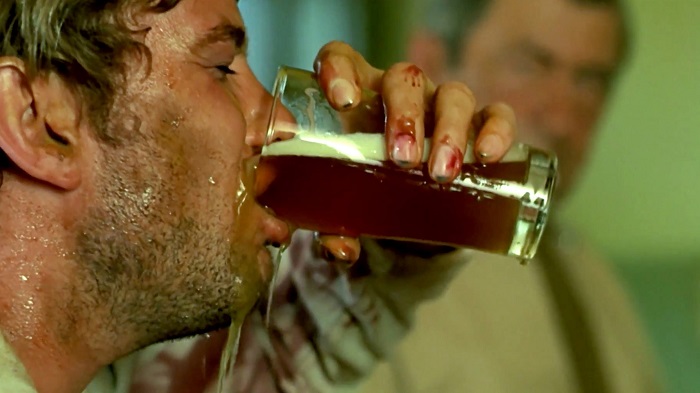
How did you adapt to Australia? “When I make my films, I spend lots of time doing research. I tell directors this: if you come into a strange society, a strange culture, the first thing that you should do is take the editor of the local newspaper out for dinner. And in Broken Hill, I took the editor of The Barrier Daily Truth out for dinner. I asked him about this and about that. And he told me something which I didn’t know, which affected my script tremendously. He told me, ‘Ted, you do know that the men outnumber the women three to one?’ I said, ‘Three to one? Where are the brothels?’ He said, ‘There are none.’ I said, ‘What do people do for human contact?’ He said, ‘They fight!’ That was a revelation for me. There’s a fight scene in Wake In Fright, where the two hunters and Donald Pleasence are rolling around pretending to be wrestling, but they’re not. Well, I used to go around to all the pubs [in Broken Hill]. At the time, I was like a 1960s hippy. I had hair down to here and a handlebar moustache. My location manager said to me, ‘They don’t like outsiders….especially those who look like you.’ So I go into a pub and this guy is like, ‘Come on! Let’s fight!’ I grew up on the streets; I was a slum boy. I used to say, ‘How do you win a street fight? You hit first, the person goes down, then you kick them in the nuts and you immobilise them. But these guys put their jaw up [sticks out his chin]. Well, if I went BOOM, I’d break their jaw in three places. So, I finally realised, ‘Ted, they don’t want to hit you.’ They wanted me to hit them; they wanted the contact. Maybe you don’t believe me, but it happened so many times. There are periods where I’ve been without women, in lonely places making films, and the loneliness was corroding my soul. I met a lot of men in the outback who were in a similar position.”
You have such a long career with a wide variety of films and genres. What attracts you to a project? “A lot of my characters, when I look back at them, are people who don’t know themselves. Duddy Kravitz doesn’t know himself. He doesn’t know what’s driving him. The teacher in Wake In Fright doesn’t know what he’s capable of. There’s a yahoo in him that he’s never ever seen, that emerges in the situation. So a lot of my films have characters who don’t know themselves but, like Wake In Fright, they’re also voyages of self-discovery. There’s a man, an outsider, who suddenly finds out about himself. He didn’t like anybody around him, and he didn’t like the society, but he basically discovered that all of us are in the same existential boat. I’m not better than you. I don’t know how to live my life any better than you do [Laughs] If I was going to say that there was any generous theme, that would be it: people who don’t know themselves and face themselves in the course of the film.”
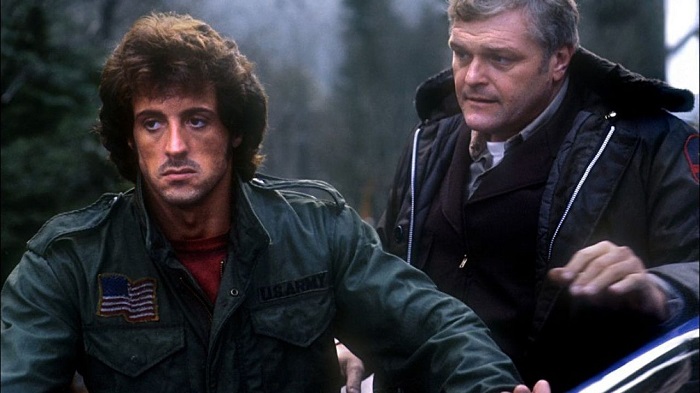
Are there genres that are easier to do than others? “Action films are the easiest. Like with First Blood, there’s a natural structure. You’ve got the pursued and the pursuer. And you keep cutting between the pursued and the pursuer, until you realise that they’re gonna finally face each other and come to a climax. It’s has a wonderful natural structure. Comedy is by far the most difficult. People say, ‘Comedies are so much fun – why are they so difficult?’ And I say, ‘Okay, go ahead, say something and do something that’ll make me laugh.’ It’s a very difficult genre. But I’m not the only director who’s ever said that.”
Going back to the retrospective, what film do you think you’ll be remembered for the most? “Well, in terms of art, Wake In Fright and The Apprenticeship Of Duddy Kravitz. They’re both Cannes classics. As for audience response, the two films of mine that practically everybody seems to have seen in the whole world are Sylvester Stallone in First Blood, and Weekend At Bernie’s. I go to Brazil, I go to Africa and it’s [pretends that someone is recognising him] ‘Bernie!’ [Laughs] They’ve seen it everywhere. You can’t argue with success or enjoyment. Sure, there are other films that I like, but these appear to be the cornerstones of my career.”
Monster Fest will be hosting a very special retrospective of Ted Kotcheff’s films, complete with screenings (First Blood, Weekend At Bernie’s, Split Image), Q&As, and a special masterclass conversation at Swinburne University. For all information, head to Monster Fest.
