


by FIlmInk Staff
Sonnenfeld enhances the controlled interplay between warm and cool tones for Guillermo del Toro’s iconic adaptation.
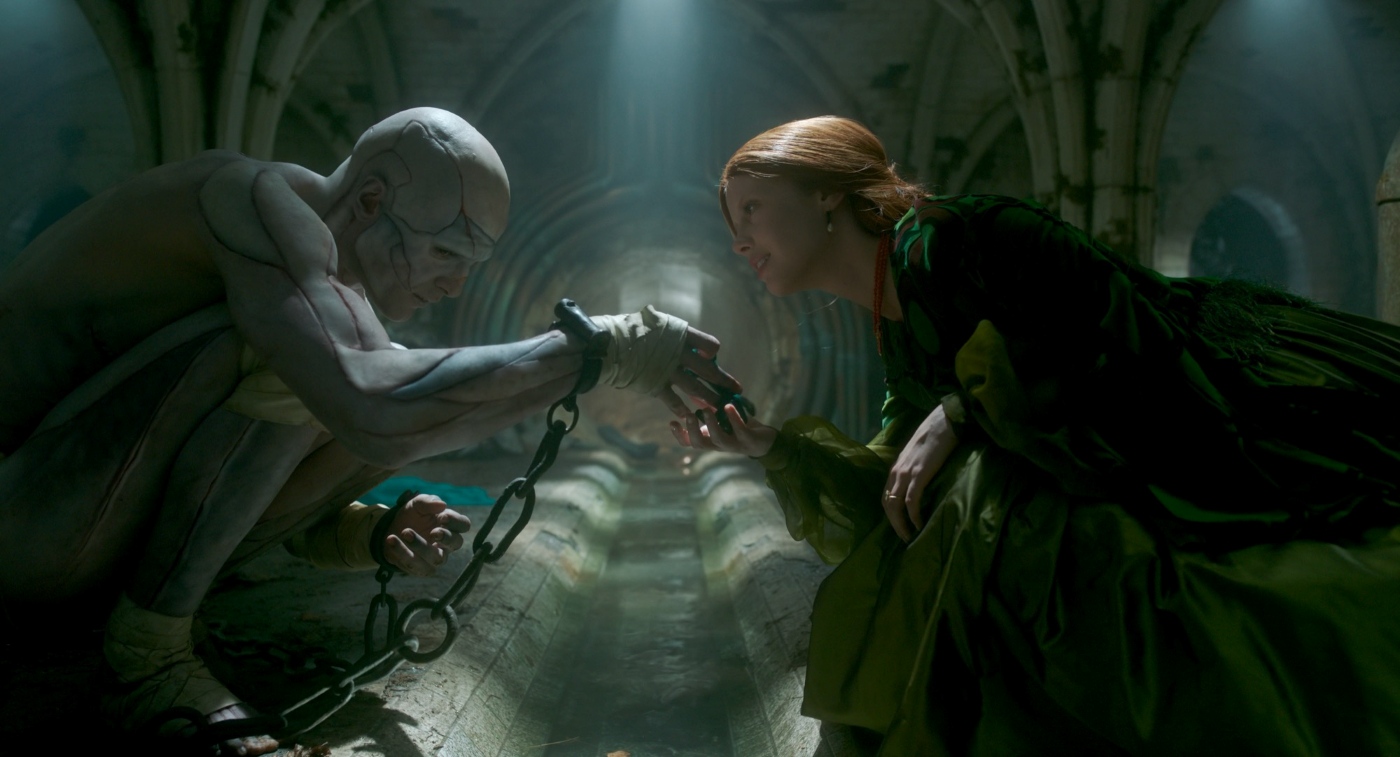
A lavish new take on Mary Shelley’s classic story, Frankenstein follows the eponymous scientist (Oscar Isaac) as he harnesses lightning to bring a stitched together creature (Jacob Elordi) to life. Longtime collaborators del Toro and Cinematographer Dan Laustsen, ASC, DFF, approached the film as a classic movie made with modern tools, leaning into fully built sets, practical effects, miniatures and real world locations to keep the world tactile and grounded.
Company 3’s Senior Colorist Stefan Sonnenfeld worked closely with del Toro and Laustsen to carry that organic, in camera aesthetic through the final grade. Using DaVinci Resolve Studio’s editing, color grading, visual effects (VFX) and audio post production software, Sonnenfeld focused on preserving the integrity of what was captured on set while maintaining visual continuity across the feature.
Having worked together for decades, del Toro and Laustsen share a deeply aligned visual language from contrast and colour to camera movement and lighting philosophy, allowing the cinematography to seamlessly support the director’s distinct aesthetic from the outset. Sonnenfeld said that same clarity carried straight into the grade, because so much of the visual language was already built into the photography, production design and lighting.
“I’ve done a number of movies with Guillermo and Dan and, as always, Guillermo had a definite vision about art direction and costume design from the start,” said Sonnenfeld. “Dan is very much keyed into Guillermo’s aesthetic and exactly how to use lighting and framing to realise that vision.”
Rather than reinventing what was captured, Sonnenfeld described his work as refinement. In DaVinci Resolve Studio, he focused on balancing the inevitable shot to shot and day to day variations that happened across a long schedule, using split screen comparisons, stills and DaVinci Resolve Studio’s grading tools to keep scenes seamless as conditions changed.
“I wouldn’t say ‘developing a roadmap’ so much as taking what was in the material and fine tuning and enhancing it,” said Sonnenfeld. “Much of the work is smoothing out the subtle differences that happen when shots for a single scene are shot days or weeks apart, weather changes and all those practical issues that we address in the colour grading theatre.”
Laustsen designed the production so that the dailies and final grade would remain closely aligned, with the colour palette and contrast largely established in camera. From the specificity of the costumes and wallpaper to the quality of light coming through windows, the intention was to make creative decisions on set rather than reshape the image later in post.
A key part of that palette was a controlled interplay between warm and cool. Sonnenfeld said the filmmakers wanted a pronounced golden tone for scenes motivated by candles or torches, supported by real firelight and tungsten, while also maintaining a restrained steel blue presence in day interiors and open shade. Using DaVinci Resolve Studio, Sonnenfeld built and maintained those looks with targeted adjustments, keeping the intent consistent without pushing the image into something artificial.
“We set some looks for that amber, so there’s a consistency throughout,” said Sonnenfeld. “There’s also a kind of ‘steel blue’ that the filmmakers liked, especially for day interiors and open shade. That’s something we enhanced just a bit and made sure it was consistent where appropriate.”
Sonnenfeld said his approach remained intentionally simple, leaning on fundamentals and restraint to keep the final image feeling honest. “I try to keep my colour grading fairly simple,” he said. “There’s a place for using elaborate techniques to completely alter what was captured in camera, but in a film like this, the final look should retain an untouched, organic quality.”
Frankenstein is now streaming on Netflix.
About Blackmagic Design
Blackmagic Design creates the world’s highest quality video editing products, digital film cameras, color correctors, video converters, video monitoring, routers, live production switchers, disk recorders, waveform monitors and real time film scanners for the feature film, post production and television broadcast industries. Blackmagic Design’s DeckLink capture cards launched a revolution in quality and affordability in post production, while the company’s Emmy™ award winning DaVinci color correction products have dominated the television and film industry since 1984. Blackmagic Design continues ground breaking innovations including 6G-SDI and 12G-SDI products and stereoscopic 3D and Ultra HD workflows. Founded by world leading post production editors and engineers, Blackmagic Design has offices in the USA, UK, Japan, Singapore and Australia. For more information, please go to www.blackmagicdesign.com/au.
