



by Stephen Vagg
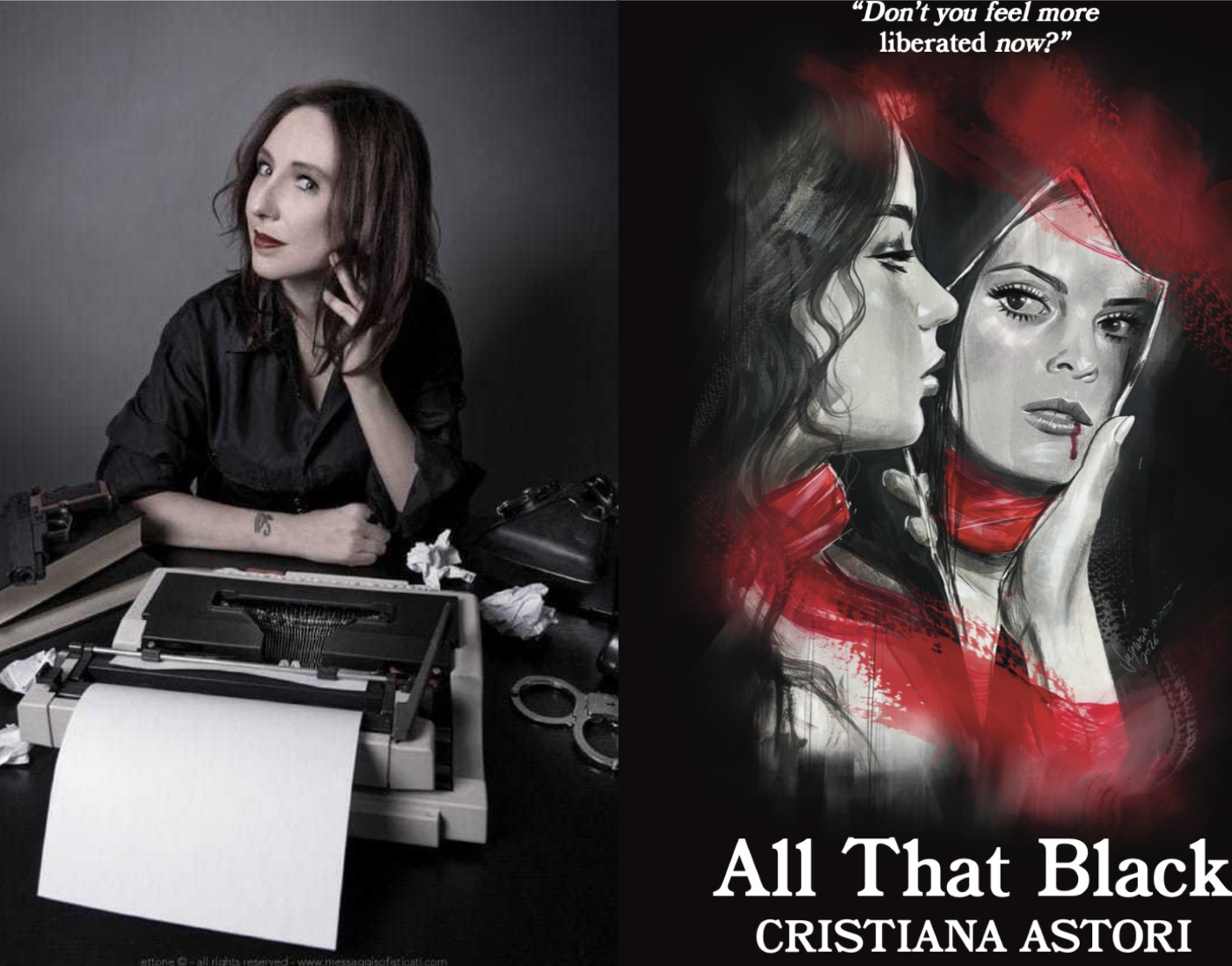
Horror cinema and literature often go hand in hand – Dracula, Frankenstein, etc – and that’s never truer than in the case of Italian author Cristiana Astori who has written a series of novels about heroine Susanna Marino, a university student with a passion for horror films. The first novel in the series, 2011’s Tutto quel nero, touches on the making of legendary director Jess Franco and his beautiful, enigmatic star Soledad Miranda, who died in a car crash in 1970. A best seller in its native country, Tutto quel nero is finally being published in English by Sticking Place Books under the title All That Black with a translation from Australian writer Patrick Moroney.
We spoke with both Cristiana and Patrick in the lead up to the book’s release.
Cristiana Astori
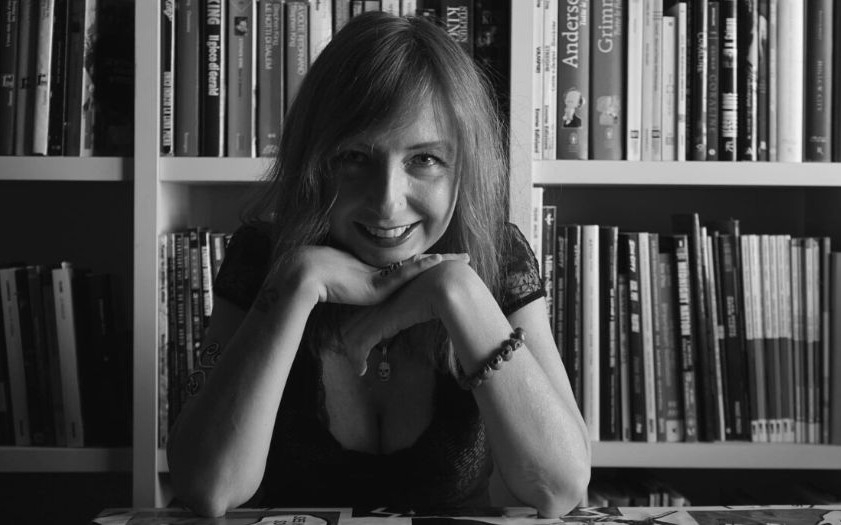
Tell us a little about yourself.
“When I was a child, I lived across the street from a cinema that showed lots of R-rated horror films – which, of course, were forbidden to me when I was 10 – and I remember writing horror stories inspired by movie posters. The idea of becoming a writer came to me when I was 15 and read Stephen King’s It. I fell in love with the way it grabbed you in the gut while simultaneously opening your mind and imagination, and I thought, ‘When I grow up, I want to write stuff like that, or at least something close to it’.
“Despite telling fantastic stories, horror is a sincere genre: it’s moving and cathartic, revealing the dark side that our society hypocritically keeps hidden. And I’ve also always loved fairy tales.”
Tell us a little about All That Black/Tutto quel nero.
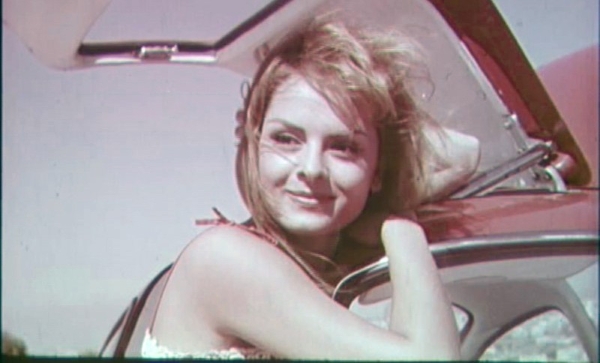 “It’s the story of Susanna Marino, an unemployed student who accepts a job from a shadowy agency to find a print of a missing film to support her studies. The movie (1964’s Un día en Lisboa [left], dir. Alfonso Nieva) stars the mysterious actress Soledad Miranda, who died too soon, and whose fate eventually intersects with Susanna’s. At first glance, Tutto quel nero is a detective narrative with a rational solution, but it gradually derails into noir and finally into a ghost story.
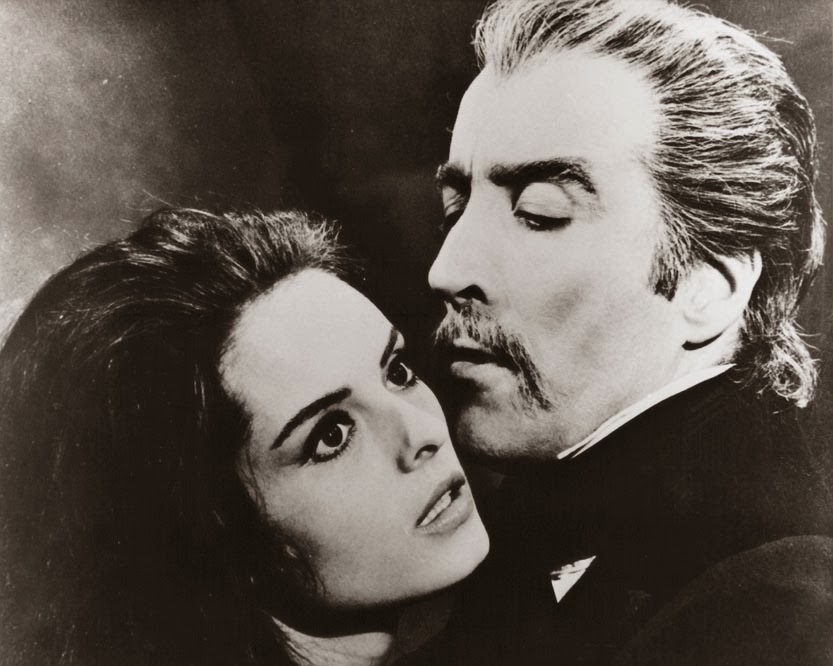
“The inspiration to write Tutto quel nero came to me after watching a scene from Jess Franco’s Count Dracula: the kiss between Christopher Lee’s Dracula and Soledad’s Lucy. In that scene, it seemed like she was the real vampire, with how sensual, hypnotic, and dark she was. The victim was scarier than the vampire! I immediately researched Soledad, and when I discovered her sad fate and the legend of her ghost appearing on the sets of Franco’s films, I was struck and decided to dedicate this book to her.
“Telling this story was fun but also challenging, because I researched as much as I could about Soledad, Franco, and all the genre cinema of the era, trying to be as faithful as possible to those atmospheres. It was fun because I experimented with a new style, writing as if I were making a film. I imagined long takes, cuts, tracking shots, editing… all through writing.
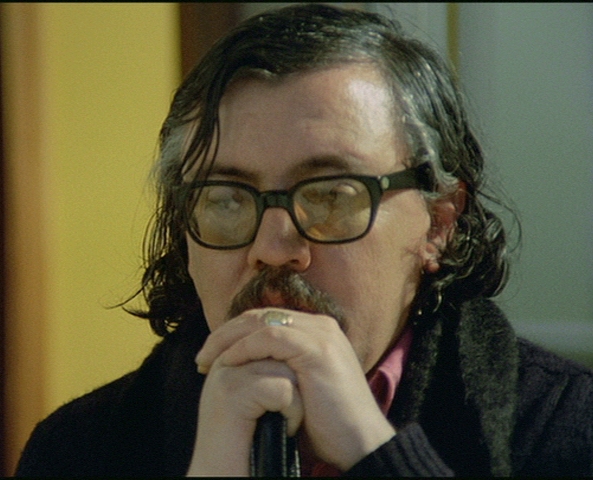 “The most difficult parts to write were those involving Soledad, who doesn’t move independently, but by my choice, had to be seen through the eyes of Franco [left], who is her director and the one who, in a certain sense, brought out the dark side of a sunny girl from Seville. I wanted both sides of her to coexist, the light and the dark, which is what her gaze conveys.”
How was the book received when it came out in Italy in 2011?
“It was warmly received, selling a large number of copies, as it appealed to a diverse audience: readers of Il Giallo Mondadori, lovers of mystery and detective stories, as well as fans of genre films and horror and fantasy aficionados. But it also confused some readers, because nothing like it had existed before.
“I’m curious to see what readers overseas will think of my stories. In any case, I’d like my little novel to instil a sense of wonder and mystery in its readers, even in today’s frenetic and pragmatic times.”
All That Black is the first in a series about protagonist Susanna’s search for rare and lost films. Can you give us an idea of what the sequels are about?
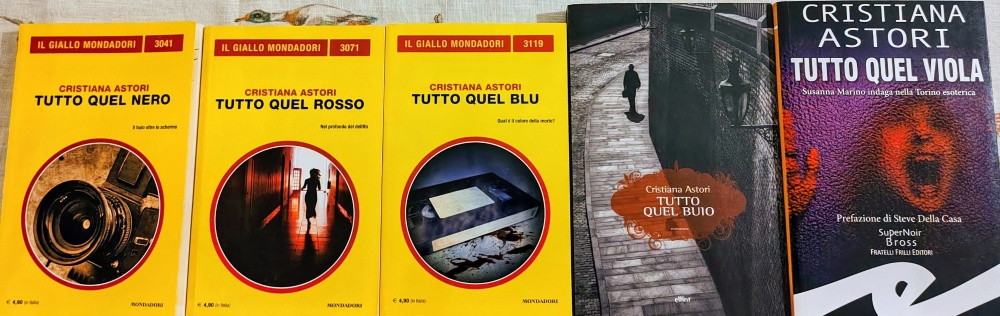
“Tutto quel nero was intended as a standalone. Then, readers became fond of Susanna Marino’s character, with many writing to me asking if she graduated or got engaged to this or that character. So, since I too had grown fond of Susanna, I enjoyed recounting her other adventures. They all revolve around her role as a hunter of missing films and the mysteries surrounding them.
“Tutto quel rosso tells the story of a killer who kills using the same methodology as the murders in Dario Argento’s Deep Red (which I enjoyed emulating in every nuance of my writing). The missing film refers to an alternate version of Deep Red that apparently really existed but has never been found: the book explains why.
“Tutto quel blu is a personal homage to 1980s cinema, written before Stranger Things: it references The Terminator, buddy movies, the music of the era, and features a young boy who joins Susanna in her investigation. It’s also a tribute to Bon Scott, the unforgettable frontman of AC/DC: in the novel, he appears as an unlikely spirit guide for the boy.
“In Tutto quel buio, our heroine is sent to an expressionist Budapest to search for Drakula halála, a missing film said to be the first movie inspired by Bram Stoker’s Dracula, predating FW Murnau’s Nosferatu.
“Finally, Tutto quel viola explores esoteric Turin. The missing film this time is Nardo Bonomi’s Sortilegio, and Susanna is drawn into a tale of evocations and satanic cults. The mysterious Turin painter Lorenzo Alessandri, who had ties to the occult, appears in it.
“The only short story starring Susanna is Tutto quel pulp, where she investigates the death of a director named Vincent Cosentino, who evokes Quentin Tarantino. While visiting Turin’s National Museum of Cinema with his entourage, the director is stabbed with a katana in the museum’s glass elevator. It’s a locked-room mystery, ironic and full of references to Tarantino’s world.”
What’s next on the horizon for you?
“I just signed a contract with a major Italian publishing house whose name I can’t reveal yet. This time, Susanna is taking a break from her stormy adventures and giving way to a new protagonist. I had fun writing her, and I’m curious to know what my readers think… hoping I don’t end up like Paul Sheldon in Misery!”
Brisbane-based translator Patrick Moroney
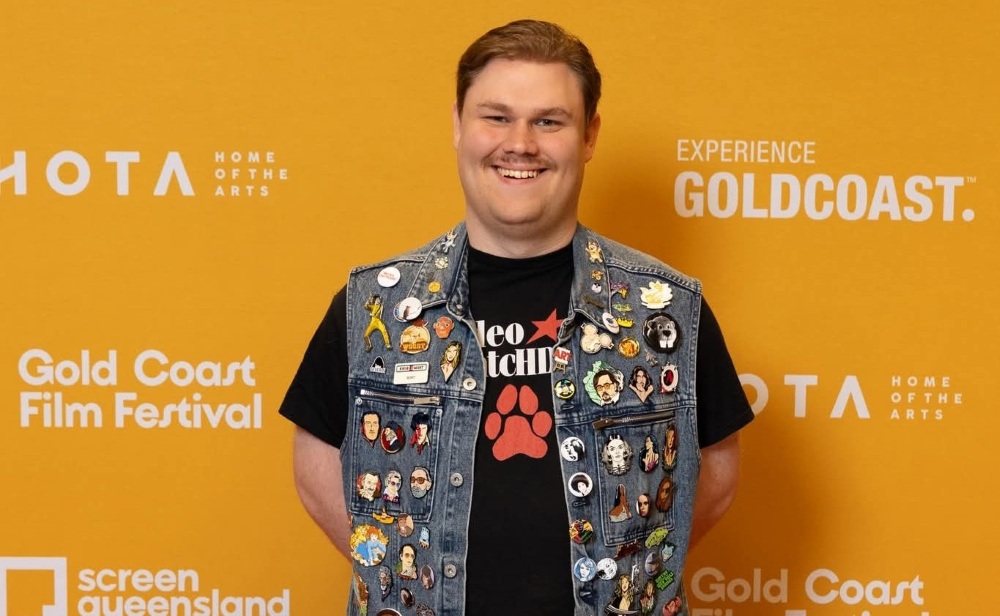
How’d you get involved in translating All That Black?
“I became friends with Video Watchdog’s Tim Lucas in 2022 after being enthralled by his novels (I’ve been interviewing him for another book for Sticking Place that we hope to put out later this year). In May 2024, he posted a review of Tutto quel nero (he and Cristiana have been Facebook chums for ages), in which he noted its similarities to his own novel, the cult classic Throat Sprockets, as well as its Tarantino-esque blending of fact and fiction. I was intrigued, so he introduced me to Cristiana, who sent me a PDF of the manuscript.
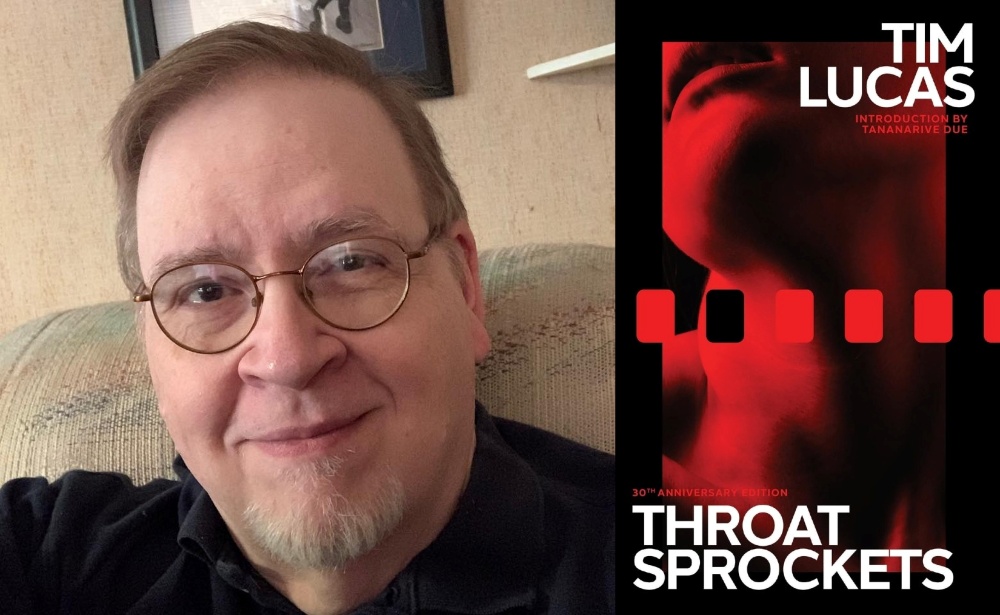
“After running the first chapter through Google Drive’s Translate function, I was blown away by how intoxicating her prose is, even in a rough form. I then ran the entire book through Translate, and what began as my tinkering with the awkwardness of the literal translation quickly snowballed into a passion project. Between June 2024 and now, I’ve done about seven big revisions of the English version – Cristiana, Tim, Soledad biographer Amy Brown and historian Roberto Curti were especially helpful with feedback.
“My attitudes towards translation are mostly inspired by Anthea Bell (the original translator of Asterix) and Jeremy Blaustein (the translator of Metal Gear Solid). In interviews, they often noted that a translator must bring their own experiences and influences to their work, even when seeking to retain the voice of the original author. They also indicated the importance of building a rapport with your author (if said author is still alive).
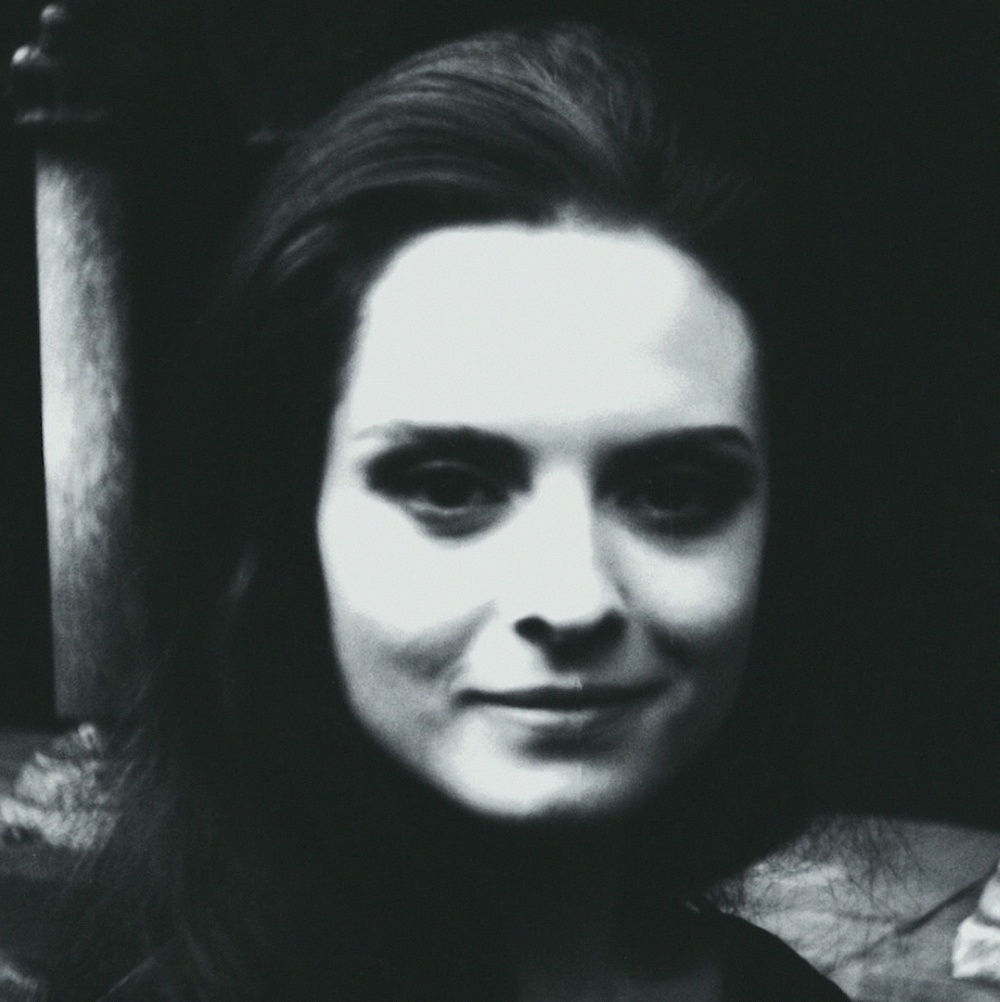
“While working on All That Black, I sought to correct every error from the original PDF as interpreted by Drive, while also bringing what I saw as Cristiana’s propulsive vision to the translation, which often required reworking phrases, puns and characterisation moments to ensure that their intentions came across. With Cristiana’s permission, I also sprinkled additional cultural references throughout the novel (the references that were in the Italian text remain intact), ranging from Lupin III (an anime franchise she and I are fans of) to George Lazenby’s role in Brian Trenchard-Smith’s The Man from Hong Kong. I also had various characters refer to Soledad [below] as “the Dark Lady”, a call-back to a character based on her that appears in Throat Sprockets – it’s my tribute to Tim’s influence on the translation, not only in his bringing the book to my attention, but in how I handled the prose. Other personal sources of textual influence included the works of Trent Dalton, Future D. Fidel and Kier-La Janisse.
“Even when staying within the boundaries of how the characters are defined in the original text, as with writing an original book or script, it often helped to have existing characters or real people “playing” a text’s characters in my mind – for example, my friend, local artist/performer Charli Burrowes, heavily influenced my take on the character of Eva, a nightclub singer.
“I would love to eventually translate all of Susanna’s adventures, as she’s an incredibly layered protagonist. Working with Cristiana, Paul from Sticking Place and our amazing cover artist, Suspiria Vilchez, has also been a godsend. But for now, I hope readers will be surprised and thrilled by All That Black as much as I was, and that it fosters a greater appreciation for Soledad and Franco, as well as rare/lost films in general. The renewed enthusiasm surrounding Ken Russell’s The Devils suggests that there’s an audience for this kind of fiction!”
All That Black is available via Sticking Place Books
Main photo of Cristiana by Ettone
