


by Cain Noble-Davies
Worth: $16.00
FilmInk rates movies out of $20 — the score indicates the amount we believe a ticket to the movie to be worth
Cast:
Jean-Christophe Folly, Maren Eggert, Nathalie Richard, Anna Diakhere Thiandoum
Intro:
… a superb metatextual drama …
The word ‘gavagai’ is not really a word. It’s taken from a thought experiment by philosopher Willard Van Orman Quine, used as part of his thesis concerning the complexities of translating language, what he called the “interdeterminacy of translation”. In his example, a native speaker of a fictional language says “gavagai” while pointing at a rabbit. A theoretical English speaker witnessing this would thereby infer that it is their word for rabbit… but it could also refer to food, the start of a collective hunt, part of a cultural superstition concerning the weather, or just a specific part of the animal rather than the animal as a whole. From that outside perspective, without further understanding of context and cultural background, the English speaker doesn’t truly know what gavagai means.
While left unexplained in the film, the title does establish the frictions between cultures, languages, and ‘races’ that are central to Gavagai’s narrative. It is both a radical reinterpretation of the classic Greek tragedy Medea, and a behind-the-scenes drama about the making of that very film along with the ensuing press and discourse surrounding it.
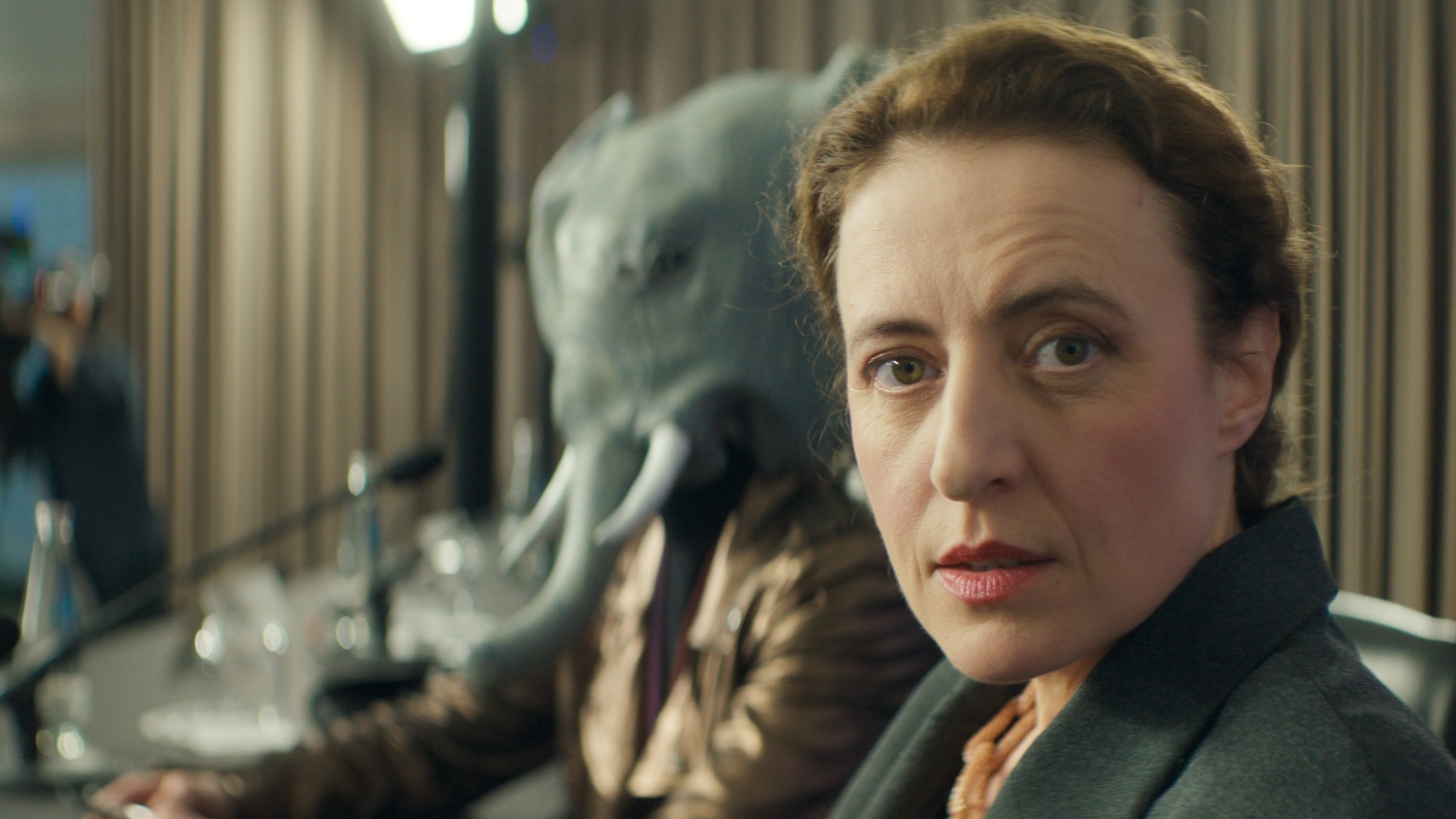
There are three crucial characters to the overlapped framing: Jean-Christophe Folly as Nourou, a Senegalese-French actor who plays Jason; Maren Eggert as actress Maja who plays Medea; and Nathalie Richard as director Caroline, who is essentially playing an ersatz Claire Denis, right down to the fixation on French colonialism on the African continent.
The film-within-a-film is legitimately fascinating, both for its in-universe filmmaking style and for its changes to the text.
Filmed in Senegal with a primarily-Senegalese cast, with a White French actress in the title role, it evokes a similar tone of flagrantly performative White allyship as the recent recasting of Severus Snape for the Harry Potter streaming series. And it draws questions, even in-universe, for the same reason: the ethnic shift creates new and not-necessarily-healthy tension within the narrative, from the more modern feminist evaluation of the original text into one centred on race.
A White “barbarian” who is kept away with her own children by a predominantly-Black society; it’s like a plain-faced parody of the formula behind racially-charged ‘Oscar bait’ (along with the kind of woefully misguided fetishism behind trash like Antebellum), where flipping the labels is considered profound, inner guilt means more than external empathy, and performative White audiences are being catered to more so than the actual cultures presented.
Beyond the Denis connection, the White guilt was primarily borne from writer/director Ulrich Köhler’s experiences filming for Sleeping Sickness (set and shot in Cameroon, the location of Denis’ own debut Chocolat), where he had a ‘Scorsese filming Killers Of The Flower Moon’ moment and realised that his approach was only reinforcing the same colonialist attitudes he was trying to break down with the film itself. But rather than just digging into that discomfort as it pertained to himself (like, say, by making Caroline the lead character), he shows a reflexive understanding of what went awry and (knowingly) reiterates it here to highlight how easily good intentions can end up exacerbating the gavagai problem when it comes to art.
The drama in the ‘real’ world is just as intriguing, with Nourou and Maja engaging in an extramarital affair, and with the framing of the children both in Medea and in their own lives, the film actually goes some way to recontextualise Nourou, both in reality and in performance, as Medea. As tempting as it may be to start making Tyler Perry jokes at that idea, it works quite well as fully realised here. The racial tensions he experiences throughout, from serving as a human shield against directorial criticism during a press event, to recurring static between himself and a Polish security guard, to the push-and-pull between Senegalese and European cultural norms, provide some exacting but well-executed microaggressions that add further layers to the film’s larger musings on what gets lost in translation, even between people who speak the same language (the film’s dialogue is a mixture of French, English, German, and Wolof).
Gavagai is a superb metatextual drama as much about dialectic language barriers as it is about theatrical and cinematic language barriers. Both the film as a whole and the film-within-the-film are thematic treasure troves that make for highly engaging viewing, and the bigger questions they raise about artistic interpretation, the politics of the film industry, and the still-painfully relevant strains of existing while dark-skinned only add to its compelling nature. It’s quite a lot to digest as a full film, and its pulling from various artistic and cultural markers asks much of the audience’s own worldliness, but that’s the thing about the successful translation of ideas: it takes work, but when done properly, it can be incredibly enriching and eye-opening.
