


Worth: $12.50
FilmInk rates movies out of $20 — the score indicates the amount we believe a ticket to the movie to be worth
Cast:
Zafreen Zairizal, Deena Ezral, Piqa, Shaheizy Sam, Jun Lojong, Khairunazwan Rodzy, Fatimah Abu Bakar
Intro:
As feminine body horror, Tiger Stripes shows enough understanding of the sub-genre’s trappings to make them speak to the reality of young girls living in modern Islamist Malaysia.
Horror as a genre examines what is considered monstrous in everyday society, as opposed to strictly being what our imaginations can conjure up. And in a male-centric society, which covers most of the ‘civilised’ world, femininity and even feminine presentation is systematically Othered, particularly at a time when it first begins to manifest, puberty.
A lot of fine cinematic work has come out of taking the undertones of body horror present in just about every adolescent narrative (when sudden strange changes happen to one’s body) and making them more overt, from the lupine symbolism of Ginger Snaps to the cannibalism of Raw to the boy band-induced squee of Turning Red. The feature debut of Malaysian filmmaker Amanda Nell Eu has its claws sharpened and ready to tear into that same tapestry.
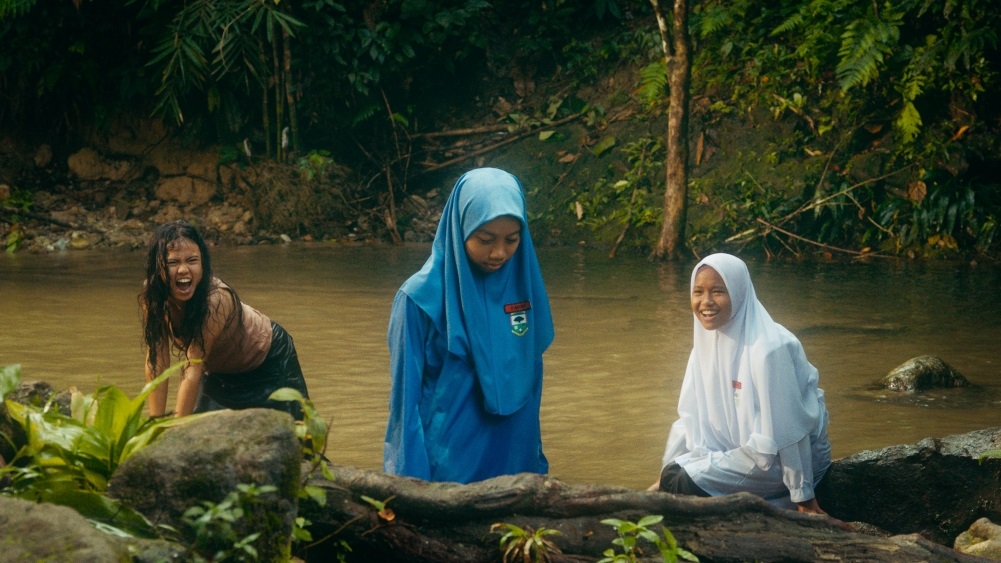
The depiction of 11-year-old Zaffan (Zafreen Zairizal) as she enters into puberty amidst social and societal pressures from kids and adults alike hits a lot of familiar notes. It operates within a similar cultural tension as Cuties, where Zaffan is at the centre of a tug-of-war between the conservative Islamic society she was born into, and the influence of social media influencers that she finds herself drawn to; albeit with a more campy bent, epitomised by how Zairizal goes all-in when the script calls for her to let out her inner lion. It’s a bit panto, but it fits the tone of the story… for better or worse.
In-between her gradual understanding of what exists inside of herself, and her recurring conflicts with those around her (Deena Ezral’s Farah especially), the film unfortunately doesn’t reach any revelatory statements as far as what happens when femininity is suppressed, even through this particular cultural lens. The film does a good job of detailing the extent of the patriarchal system within the setting, and Shaheizy Sam as the exorcist Dr. Rahim works well as a centerpiece for that mentality, but it lacks the impact to really get its point across. When taken as straight drama, it’s both slight and a bit too silly to engage, while also being too straight-edged to be as camp as it seemingly intends to be.
To say nothing of its approach to body horror, which fall short of a lot of its clear influences (Zaffan’s transformation into what we guess is meant to be a tiger follows all the Brundlefly mile markers). The practical effects are rather meh across the board, while the rare moments of digital effects are… well, let’s just say we’re thankful that more of them weren’t required. These aspects end up mingling with the general cheapness of the production at large, from DP Jimmy Gimferrer’s stale colour grading to the initially-banging-but-eventually-grating techno soundtrack from Gabber Modus Operandi, to give an even larger impression that their ambition went beyond their means.
As feminine body horror, Tiger Stripes shows enough understanding of the sub-genre’s trappings to make them speak to the reality of young girls living in modern Islamist Malaysia. Even with everything that’s been stated above, there’s no denying that everyone involved gave their all to make this come together, which makes this film’s censored release in its native country heavily disappointing (suppressing art all about the dangers of suppression? You are now tuned in to Missing The Point FM). But when taking a larger look at what this motley cinematic zoo was going for, this ends up falling short of the current average.
