


by Stephen Vagg
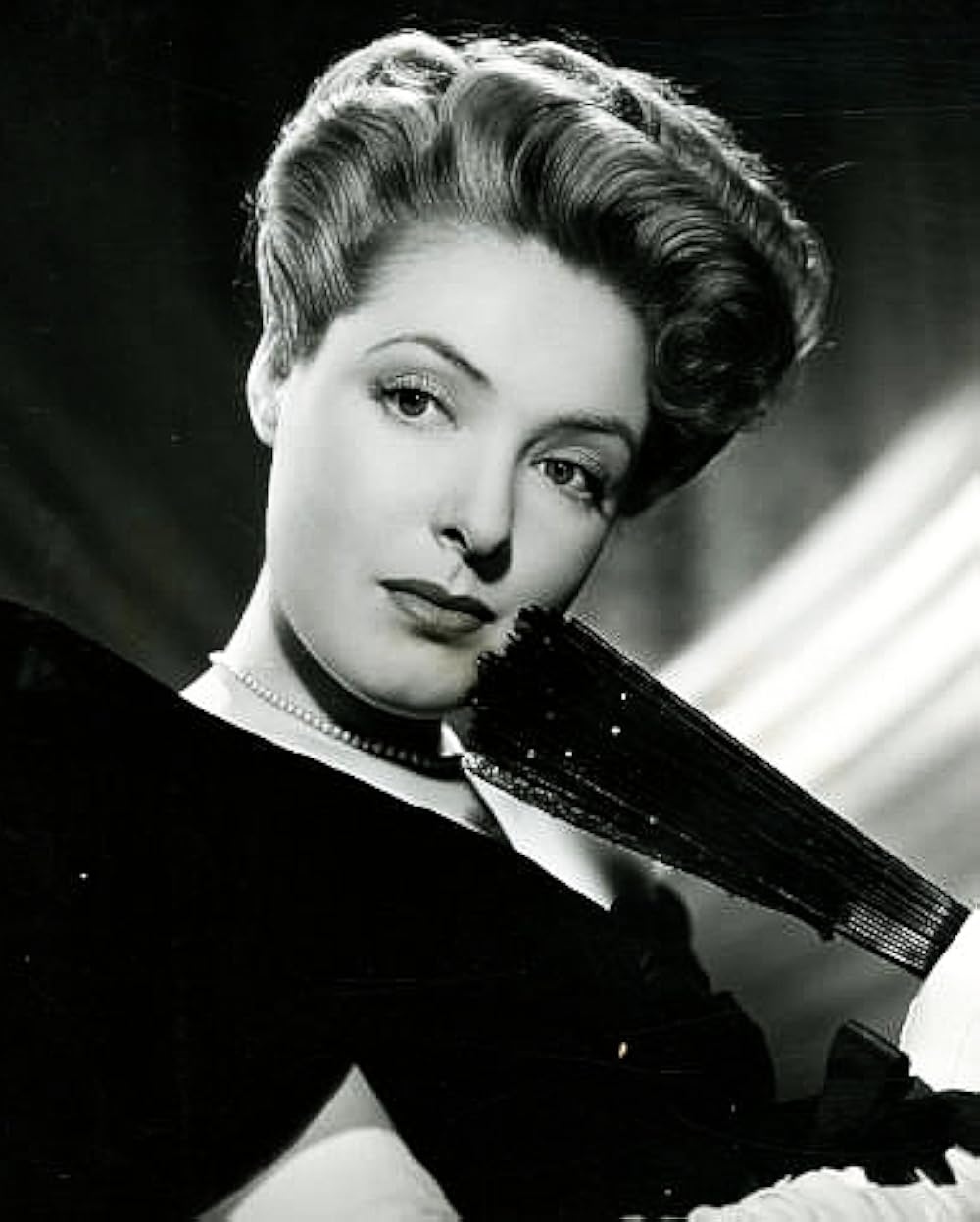
Shirley Ann Richards livened up several Australian movies in the 1930s before having a crack at Hollywood. She started brilliantly but things didn’t quite turn out as well as she’d hope. Professionally, that is – on a personal level, she did just fine.
She was born in Sydney in 1917, the daughter of an American father and New Zealand mother. Richards’ upbringing was privileged on one hand – she lived in Mosman and went to school at Ascham – but her father did die when Shirley was only ten, so swings and roundabouts.
She worked for an ad agency, did some modelling and began acting in amateur productions. Richards was seen in a play – Haunted Houses – by a talent scout for Cinesound Productions, who were looking for someone to play the daughter of Cecil Kellaway in a fish out of water comedy, It Isn’t Done (1937), about a farmer (Kellaway) whose life is transported when he inherits a baronetcy. On stage, Kellaway specialised in playing the bewildered dad of romantically active daughters, and the girl part in It Isn’t Done was a decent one – well educated but not snobby, someone far more successful in British society than her father but who wouldn’t turn her back on Australia, and who would ultimately find true love with the next in line for the title (John Longden).
 Cinesound’s director Ken G Hall had a decent track record of unearthing female talent, but actresses he’d used in the past had either gone to Hollywood (Jocelyn Howarth) or gave off a “too sophisticated” vibe for It Isn’t Done (Gwen Munro, Elaine Hamill). Richards auditioned and got the gig. She was bright, pretty, energetic – a good girl with a twinkle in the eye and full of warmth. The best analogy would be Olivia de Havilland, and like de Havilland (indeed, like most leading ladies in the movies), Richards had to romance someone much older – Longden was seventeen years her senior.
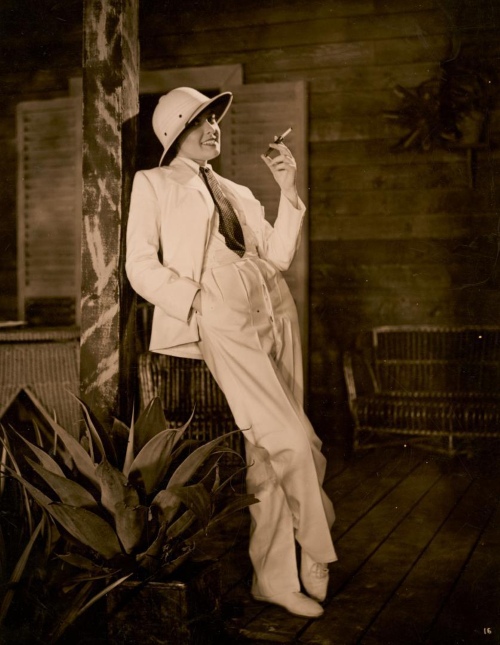
Cinesound put Richards under long term contract and kept her busy making public appearances. She was given the female lead in Tall Timbers (1937), as a rich man’s daughter who shags hunky foreman Frank Leighton out of wedlock … if we’re not mistaken. Richards had another “hot daughter” part in Lovers and Luggers (1937), playing the daughter of a seedy ship captain (Sydney Wheeler), walking around Thursday Island at night in male drag, and romancing a pearl diver (American import Lloyd Hughes, twenty years older than Richards).
Richards’ best role came in Dad and Dave Come to Town (1938), playing Jill, the daughter of Dad Rudd (Bert Bailey). Dad Rudd films always featured a hot daughter/niece/granddaughter, but the part of Jill Rudd was the best in the series – she was smart, pretty, ambitious, leeched after by a villain, romanced by a snappy publicity agent (Billy Rayes). It’s probably the best female role in an Australian film of the 1930s, and yes, while that bar was low, it wasn’t that low and Richards smashed it out of the park. The film was warm, loving and affectionate: people help each other out, city folk are the same underneath, the gays are fun (Alec Kellaway), trashy blondes can be redeemed, publicity rules. Well, the main villain (Sydney Wheeler) was Jewish. We can’t defend that. Billy Rayes was easily Richards’ best co-star.
Richards’ next feature for Cinesound was her worst: Come Up Smiling (1939), a Will Mahoney comedy, where she is wasted in a nothing role, romancing John Fleeting – screentime that might have gone to Richards, instead went to Evie Hayes and Jean Hatton.
It should be noted that in all these films, Richards wasn’t the star – that would be a comic or an action man. She only got to play someone who drove the plot in Dad and Dave Come to Town; in her other films, she was a reward for the leading man.
Ken Hall didn’t cast Richards as the female lead in every film that he and Cinesound were making at the time. She didn’t appear in The Broken Melody (that part was taken by Diana du Cane), Gone to the Dogs (Lois Green), Let George Do It (Gwen Munro), Mr Chedworth Steps Out (Joan Deering) or Dad Rudd MP (Yvonne East). We understand that Hall didn’t want to over-expose her, and wished to develop new talent – you can get some idea of how many young women wanted to be stars in the ‘30s via this Cinesound scrapbook here. Not being able to sing would have ruled her out of Gone to the Dogs.
Still, we would’ve loved to have seen what Shirley Richards could have done with a dramatic part in Broken Melody (maybe Hall was worried about that age gap with Hughes), as well as seeing her reunited with Kellaway in Chedworth. Presumably, Hall would have used Richards in some of the projects Cinesound would have made had not war intervened, notably Overland Telegraph, and Robbery Under Arms – it’s not hard to see Shirley Ann Richards being feisty and flirty with some older male star the way that she was in Tall Timbers and Lovers and Luggers.
Richards was given her own star vehicle on radio in the serial All That Glitters. She decided to go to England to further her career, but plans were interrupted by war, so she toured New Zealand for several months in a stage play instead. She made one last film for Hall, the featurette 100,000 Cobbers (1942), where she’s wonderful as ever, flirting so effectively with Grant Taylor that you just want a whole feature built around them.
The Australian film industry completely stalled during World War Two, and since going to England was tricky, Richards decided to try her luck in Hollywood – after all, her father was American, and she knew some people who’d moved there, like Howarth, Cecil Kellaway and It Isn’t Done co-writer Carl Dudley. She left Sydney only a few days after the attack on Pearl Harbour, but Richards’ luck held and she arrived in the US safely.
Richards’ hot streak continued when she was cast almost immediately in a short for MGM, The Woman in the House (1942), as a woman scared to go out of the house. It was one of Richards’ favourite roles and led to a contract with MGM, who insisted that she change her name to Ann Richards, to avoid confusion with Anne Shirley.
MGM gave Richards a tiny role in Random Harvest (1942), starring Greer Garson – in publicity, the studio referred to Richards as a “Greer Garson type”, which gave her a niche and presumably helped MGM keep Greer Garson in line, but misrepresented Richards’ appeal: Garson typically played regal types, whereas Richards was more mischievous; an “Olivia de Havilland type” would have been closer to the mark – but then, de Havilland was over at Warners.
Richards had a tiny role in Three Hearts for Julia (1942), as a member of an all-female orchestra (the plot has musician Ann Sothern kidnapped by her ex, Melvyn Douglas). She had two scenes as an Australian nurse in Dr Gillespie’s New Assistant (1942). In this, her character romances an Australian doctor played by Richard Quine. They meet, talk in slang, bond over how Americans can’t understand them, which is funny actually, and fall in love straight away. Richards is gorgeous and fun, and we wish her part had been bigger, or she’d played Quine’s role. Quine’s performance is an absolute shocker – he wrestles with the Australian accent like it’s a crocodile, but you can’t stop watching. Another cast member of Dr Gillespie’s Assistant was Susan Peters, who had also been in Random Harvest; she married Quine and wound up in a wheelchair after a hunting accident, dying aged 31. But for a time there, Peters probably nabbed a few roles that might’ve gone to Richards. Indeed, MGM had a lot of pretty young women under contract at the time, such as Peters, Laraine Day, Ann Rutherford, Diana Lewis, Dorothy Morris and Donna Reed. In hindsight, it might have not been the best studio for her to have gone to.
For some reason, Richards wasn’t cast in MGM’s Australia-set The Man from Down Under (1943) with Charles Laughton as an Anzac; Reed took the role instead. Another movie that would have seemed natural was Cry Havoc (1943), MGM’s war nurses epic, but she did not make the cut for that either.
Richards was cast as the female lead in King Vidor’s $3 million An American Romance (1944), a tale of an immigrant manufacturer (Brian Donlevy). The movie was super dull and a huge flop. Vidor blamed MGM, saying that the studio cut down the running time and insisted he use Richards and Donlevy instead of original choices Ingrid Bergman and Spencer Tracy. Richards isn’t great in American Romance, but in her defence, she doesn’t have a character to play – we never know why she likes Donlevy or what her opinions are about anything. The whole film is dull, sunk by indifferent acting (Donlevy is terrible), bad European accents, and lots and lots of shots of industrial production. It feels like a Dore Schary movie before Schary went to MGM.
Richards said that she was promised parts in Gaslight and The Picture of Dorian Gray, but didn’t get them (Angela Lansbury played both). Richards left MGM in 1944, later claiming that the straw that broke the camel’s back was the studio refusing to loan her out to Cecil B. de Mille for The Story of Dr Wassel (1944) (presumably the Laraine Day part).
She did some radio, notably a version of Disputed Passage with Alan Ladd and “Story of Ivy” for Suspense. She also signed contracts with RKO and Hal Wallis.
Richards only made one film for RKO, a Randolph Scott Western, Badman’s Territory (1946). She was The Girl, but at least had a character to play: a brave, crusading newspaper editor who was jealous of Belle Starr; there is definite novelty seeing her introduced on a horse with a gun.
Richards had more luck with Hal Wallis; she was one of a number of stars he had under contract, others included Robert Cummings, Kirk Douglas, Don deFore, Barbara Stanwyck, Lizabeth Scott, Betsy Drake, Wendell Corey, and Derek Cooper. He put her in three movies, all prestige pictures: Love Letters (1945), The Searching Wind (1946) and Sorry Wrong Number (1948).
Love Letters was a sort of reverse Random Harvest, with amnesiac Jennifer Jones forgetting that she once loved Joseph Cotten, mixed in with Cyrano de Bergerac (Ayn Rand wrote the script). Richards is very good as Jones’ friend, a decent, pretty loyal person who has to provide a lot of exposition. Richards claimed that she was up for the lead but then was gazumped by Jones who was a bigger name; to be fair, Jones was better casting than Richards because Jones had a whiff of insanity about her, which helped sell a silly story. Richards’ old Australian co-star, Cecil Kellaway, pops up, which is nice.
In The Searching Wind, Richards played the wife of diplomat Robert Young, watching on as her husband pines for his ex, principled journalist Sylvia Sidney. This was based on a play by Lillian Hellman, who was a superb writer, but Searching Wind was one of her weaker efforts (people only remember the original play today because Montgomery Clift was in it on Broadway). Richards was better than the script and her two co-stars, a very believable “let’s let it slide” type, but the film didn’t do much for her career.
Sorry Wrong Number, based on Lucille Fletcher’s classic radio play about a crippled woman discovering that she’s going to be murdered, was probably Richards’ best American film. She had another thankless best friend role but got some decent screen time and had a suspenseful scene at the beach.
Richards returned to Australia in 1946 to attend the premiere of Hall’s Smithy (1946) (he had apparently wanted her to play the part taken by Muriel Steinbeck). She also paid tribute to her brother Roderick, who had been a POW during the war and murdered on the Sandakan Death March.
Richards appeared in two films for Eagle Lion, Lost Honeymoon (1947) and Love from a Stranger (1947). Love From a Stranger was a gaslighting thriller, poorly done, with John Hodiak out to get wife Sylvia Sidney; Richards is wasted in the movie as Sidney’s friend – she could be cut out of the film.
Lost Honeymoon actually gave Richards a lead role, as a woman pretending to be the wife of Franchot Tone; the movie is well directed and had very good actors (including Tom Conway and Frances Rafferty) but is sunk by its stupid story – she’s pretending to be Tone’s wife so that he’ll look after the children of her dead best friend and Tone just happens to have had amnesia and… Oh, it’s so dumb. Richards does well – this could have been a game-changing movie for her, if plotted better.
In 1949, Richards married theatre director and electronics engineer Edmond Angelo, then retired to raise a family. She came out of retirement to make a film with her husband, Breakdown (1952). This is a half-decent low-budget noir with Richards as a woman in love with boxer William Bishop, who is out of prison and looking to get revenge against the person who framed him. The movie is quite well made and acted but is hurt by a lack of focus and having too many subplots. Financial returns were poor and Angelo quit showbusiness to work in engineering, where he did extremely well. He and Richards had three children. She kept up her artistic pursuits, painting and writing poetry, but never returned to acting. A great summary of her life is here
Shirley Ann Richards was one of the most delightful, vivacious Australian actors of her generation. The only film that really did her justice was Dad and Dave Come to Town, although she was a lot of fun in most of her other Australian films. She had far better material in Australia than America, where her career was dogged by bad luck – either she was in decent films with little to do (Random Harvest, Sorry Wrong Number), so-so films where she should have done far more than she did (Dr Gillespie’s New Assistant, Love Letters), or had decent parts in wobbly movies (Lost Honeymoon, Breakdown, The Searching Wind). She missed out on several “young Australian woman” roles going around Hollywood at the time, including The Man from Down Under, Abroad with Two Yanks, Under Capricorn, Botany Bay, Million Dollar Mermaid, Interrupted Journey, Hurricane Smith, The Road to Bali, Kangaroo, Three Came Home.
None of this was Shirley Ann Richards’ fault – she gave it a good try and certainly made more films than if she’d stayed in Australia. From all accounts she had a rich, rewarding life, despite the loss of her father and brother.
She certainly had a happier life than fellow Cinesound-girl-goes-to-Hollywood Jocelyn Howarth, who was a right old hot mess, attempting suicide, developing a drinking problem, marrying notorious George Brent, having affairs with married men, losing her money, never getting out of B-pictures, dying young. Another cautionary tale was Mary Maguire, star of two Chauvel movies, who moved to Hollywood in the 1930s; despite an affair with Joe Schenk, she couldn’t escape B pictures, moved to Britain and married an aristocrat who was interned for fascist beliefs, lost a child, and later died of alcoholism. There are certainly worse things than appearing in some underwhelming movies.
