


by Stephen Vagg
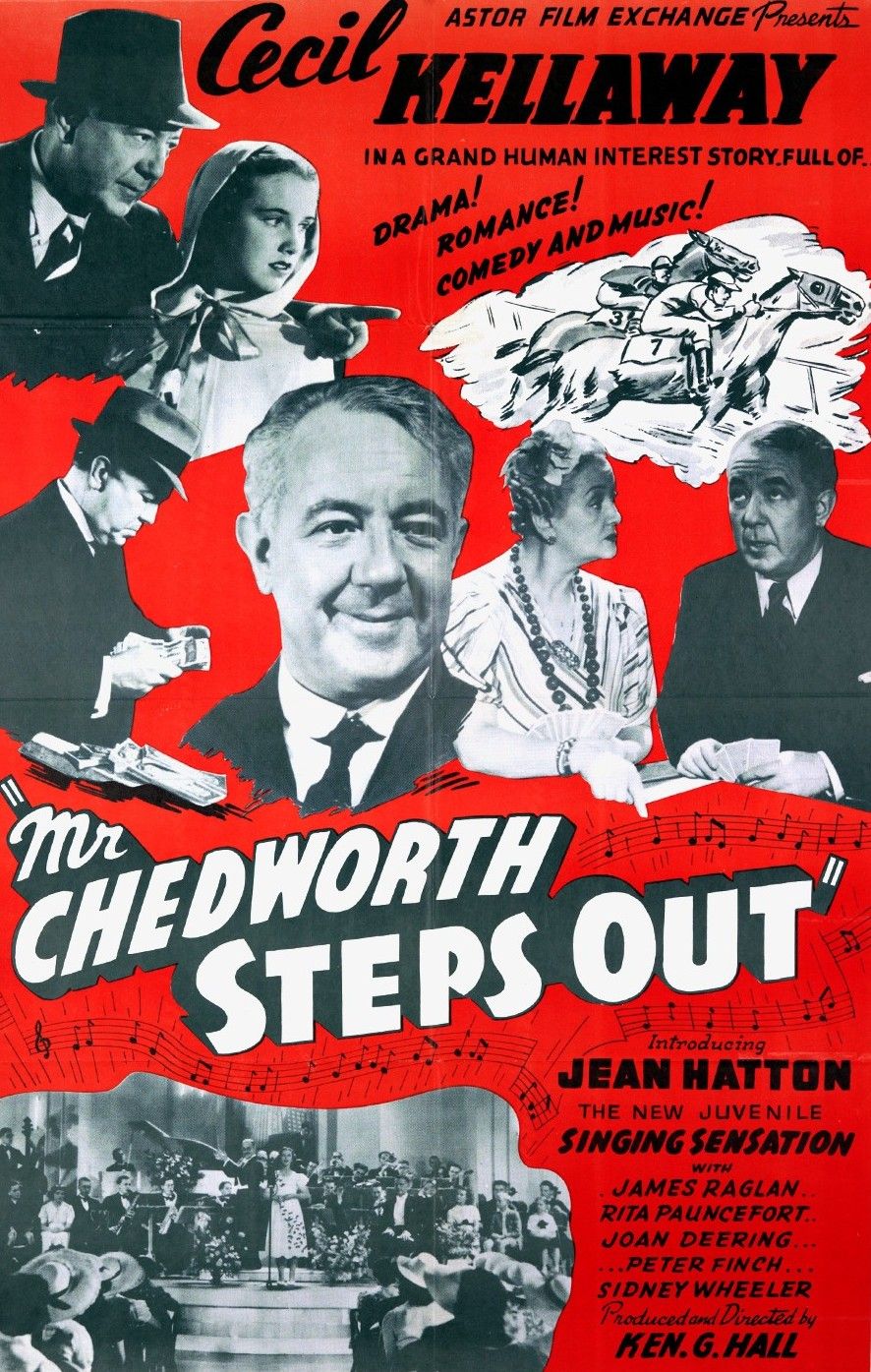
A 1939 Cecil Kellaway vehicle
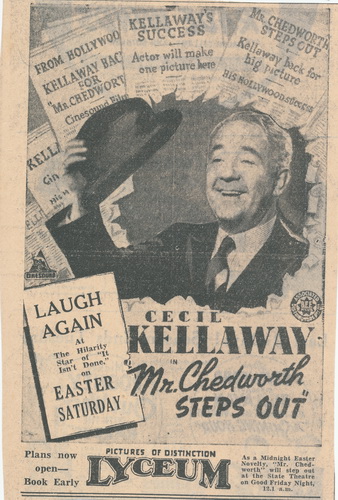
We wrote an earlier piece in this series on the 1937 comedy It Isn’t Done, devised as a vehicle for South African-born comic Cecil Kellaway, then nationally famous in Australia for playing the bewildered dad of hot daughters in stage musicals. The movie was a hit – so much so, that Kellaway was offered a contract by RKO Pictures in Hollywood and promptly took off to Los Angeles. Kellaway promised director Ken G Hall that he’d come back for another movie if the latter wanted – the sort of undertaking people routinely make before heading for greener pastures. But to Kellaway’s credit, he was good to his word, returning to make Mr Chedworth Steps Out in 1938.
Chedworth was based on a novel by Francis Morton Howard, a South African-British writer about whom we know very little. It wasn’t a well-known book, and Howard wasn’t that famous an author, and thus the title had little pre-sold-IP factor. However, the novel did offer a splendid role for Kellaway, as a bewildered, henpecked family man (Mr Chedworth) – with a nagging wife – who inherits a fortune. Chedworth decides to hide this fact from his family, suspecting that they’ll blow it all, and instead makes up a job as a commercial traveller, saying that he’s got a raise.
Hall got the rights and had his regular writer Frank Harvey turn it into a screenplay. We haven’t read the original novel – it seems very hard to locate one – but we have read reviews, so we can take a fair guess as to the changes Hall/Harvey made. The inheritance plot was adjusted so that instead, Chedworth (Kellaway) discovers a pile of cash in a building site… this was presumably because (a) Kellaway played a character who had inherited money in It Isn’t Done and (b) discovering cash would give the film more plot complications… as the money turns out to be counterfeit, and deposited by criminals. Chedworth’s nagging wife remains, as do the kids; we’re pretty sure that making one of the daughters a singer was a purely Ken G Hall invention to showcase the talent of teen soprano Jean Hatton.

The resulting script is an interesting concoction. Being a vehicle for Kellaway, it was a comedy but allowed for more dramatic scenes – particularly the sensational sequence where Chedworth, a clerk, is called in to see his boss at work, walks in happily, gets fired, then walks back to his desk in a state of shock. The financial pressure on Chedworth is very well conveyed, although the movie totally caricatures the money-hungry wife (who, after all, was part of a generation of women who were not allowed to work and whose financial well-being was totally in the hands of their husbands).
There’s a string of subplots – Chedworth’s youngest daughter (Jean Hatton) wants to enter a singing competition, his elder (hot) daughter (Joan Deering) has a deadbeat boyfriend, Chedworth’s eldest son (Peter Finch) is in debt to bookies, Chedworth is given a racing tip from these bookies, which unexpectedly results in him winning money, Chedworth is fired and given a job by his guilty boss (Harvey Adams) as a nightwatchman and finds money which is counterfeit, Chedworth’s son works at a stockbroking firm who are secretly responsible for the counterfeit money, his son’s boss (Sydney Wheeler) is also involved in gold speculation and gets Chedworth to invest in some gold shares via the dodgy stockbroker’s wife (Charmaine Ross), the gold shares unexpectedly go up in value, making Chedworth genuinely rich, a federal agent (James Raglan) befriends Chedworth as part of an investigation into the counterfeit money and romances the hot daughter, the singing daughter performs in the competition, Chedworth buys a house and his wife blows a lot of money, Chedworth hires a fake bailiff, the stockbroker and his henchmen kidnap Chedworth on the night of the singing competition, and… anyway, there’s a lot of story!
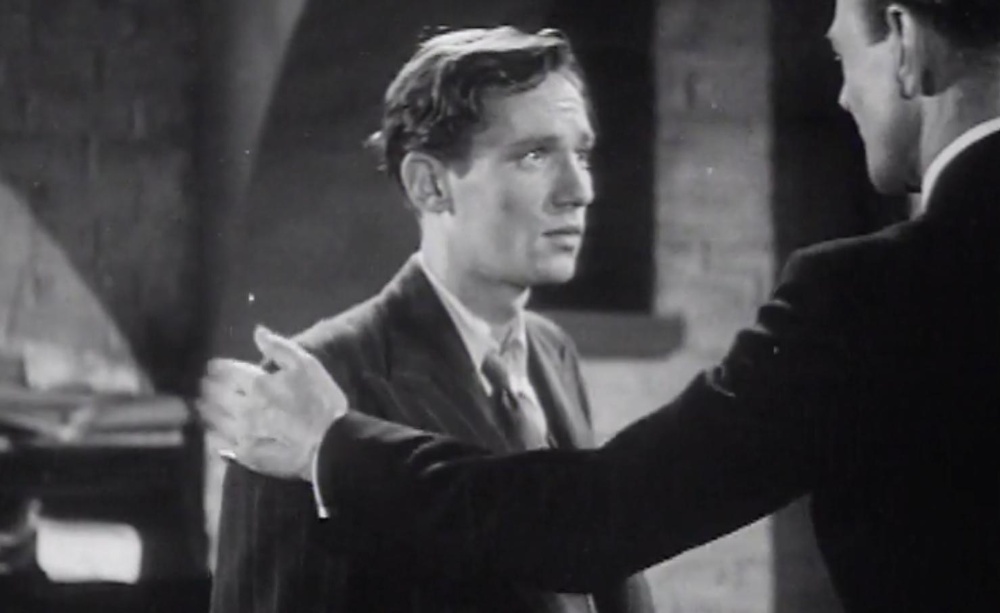
Harvey cobbles it together well enough, although the script has a patchwork quilt aspect, as you might guess from the above synopsis. It’s full of contrivances and repetition – Chedworth twice gains money accidentally (via lucky horse gambling and gold investments), twice stands up to his wife with his wife not changing her behaviour, the fake bailiff story comes and goes, the bookies don’t have anything to do with the counterfeiters, Chedworth’s son just happens to work for a gang who just happen to deposit money where Chedworth works, etc.
Furthermore, Mr Chedworth Steps Out doesn’t really lean into its central concept that much, i.e. what happens when a little battler comes into cash and invents a job to cover for that fact and hides the income from his grasping family. We wonder why this wasn’t done. Perhaps because Hall/Harvey had just made a great movie in Dad and Dave, which juggled a whole bunch of subplots, and tried to repeat that with this movie – but the subplots in Dad and Dave Come to Town all centred around the fashion shop, giving them a unity which isn’t present in Chedworth.
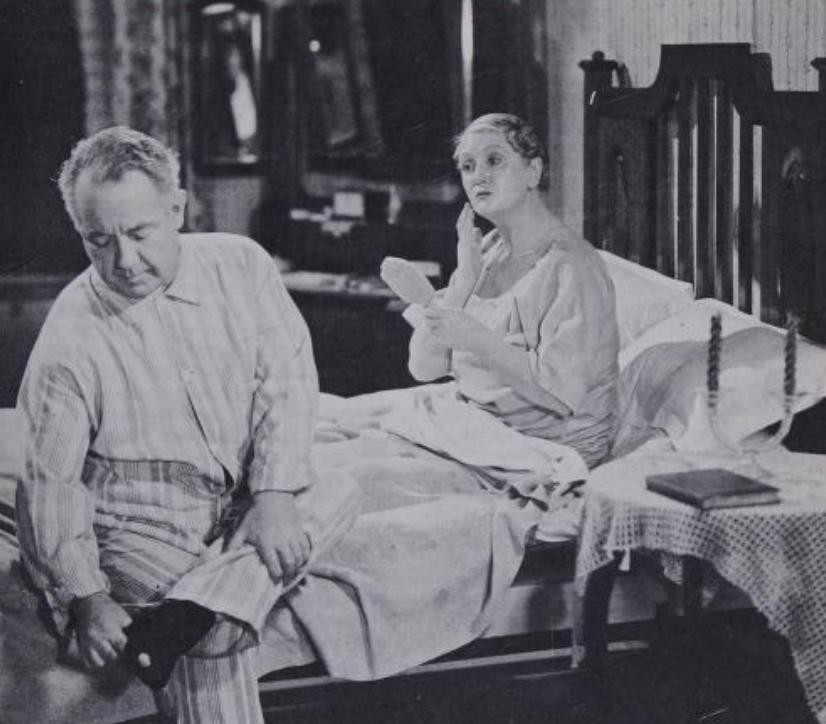
We also wonder if Hall was anxious about sustaining audience interest with a “little person” drama and thus added more road-tested, execution-proof elements like gangsters, undercover federal agents and daughters who enter singing competitions. This is all speculation, but Chedworth is not a cohesive a film in the way, say, It Isn’t Done was, or his George Wallace/Dad and Dave movies were. Instead, it’s one part well-observed comedy drama along the lines of Alice Adams (1935) (which had many similar elements to this – greedy wife, henpecked husband, useless son), one part Deanna Durbin film (singing competition finale, sentimental father-daughter scenes), and one part broad comedy (gangsters, agents). The romance subplot, which Harvey and Hall traditionally did so well, isn’t much here – it has tremendous potential (detective going undercover to investigate possible criminal Mr Chedworth falls in love with Chedworth’s daughter) but it’s all rushed through. In fairness, we think the original cut of the movie was 92 minutes but the one at the National Film and Sound Archive is 79 minutes, so there may be some scenes on the cutting room floor.
Nonetheless, we will say this: the gangsters do ensure pace and stakes, and the script is no more of a patchwork quilt than some Hollywood movies of the 1930s with big stars, films like Riffraff (1936).
The acting is mostly excellent, as it was for all later Cinesound films. Kellaway is perfect in the title role, with his little man energy, sexless marriage, well-meaning blundering, and touching warmth in the scenes with Jean Hatton. As well as the sacking scene, Kellaway has a great moment asking gangsters if he can listen to his daughter sing before they kill him (Ken Hall handles the violence of these scenes excellently – he was a very accomplished director). We wonder why Cecil Kellaway’s brother Alec wasn’t in the film; he was in most Cinesound movies of the late 1930s, and there’s plenty of parts in Chedworth that he could have played – perhaps Hall was worried about clashing egos or weird sibling stuff.
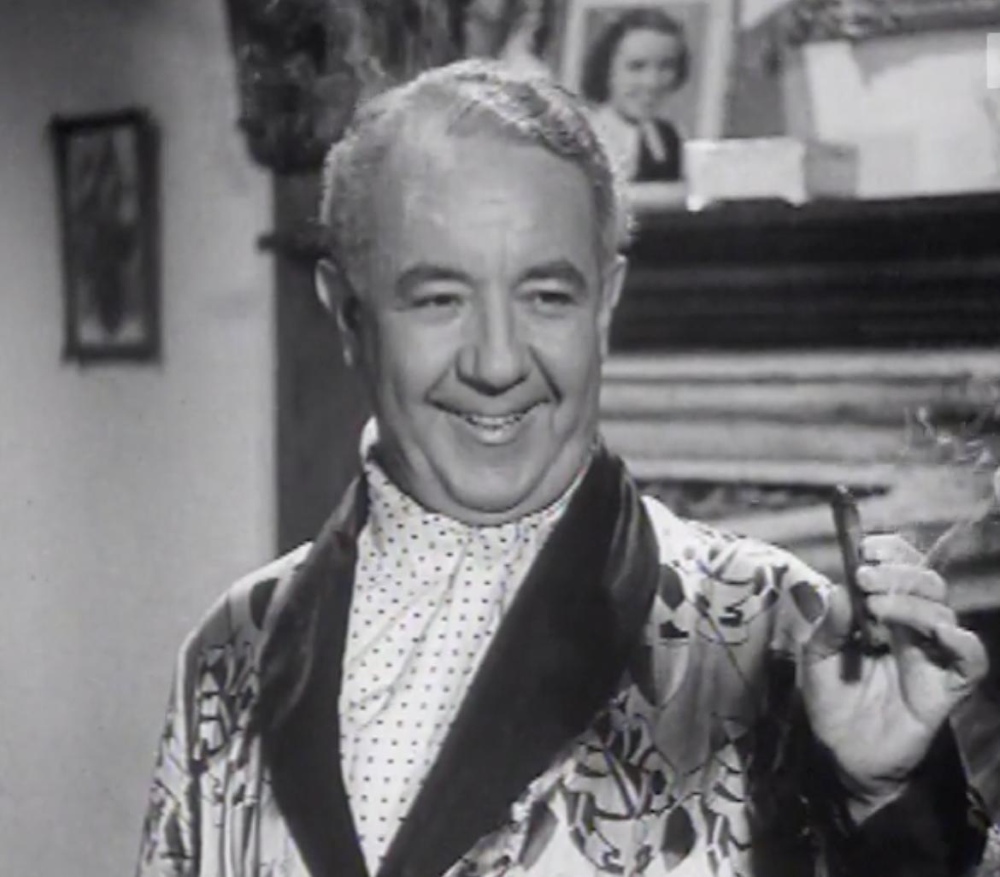
Peter Finch had just impressed Hall with a brilliant comic turn in Dad and Dave Come to Town, so the director gave him a bigger part in Mr Chedworth Steps Out as Chedworth’s useless son – it’s another excellent performance. Rita Pauncefort does all that she’s asked for as the wife – it’s not the actor’s fault that she’s not allowed to show any depth to her character.
 Joan Deering, who plays the hot daughter, was a new discovery of Hall’s. Such roles were normally played by Shirley Ann Richards, but we presume that Hall didn’t use her because she’d already played Kellaway’s daughter in It Isn’t Done (and Chedworth’s daughter is required to be more of a doormat than the parts Richards played) – that was probably a mistake, Deering simply isn’t as good. In her defence, she has to play love scenes against James Raglan, who is far too old and gaunt looking as her love interest – it’s a shame that Billy Rayes, so much fun as the juvenile lead in Dad and Dave Come to Town, couldn’t have played this part (Peter Finch was another option, though he was likely considered too young and skinny-looking). Mind you, we really like how the film starts with Deering having an old dodgy boyfriend, so her hooking up with Raglan seems like an improvement.
Jean Hatton is very sweet and engaging as the singing Chedworth daughter – Hatton soon got sick of being called Australia’s Deanna Durbin, but she does look a lot like Durbin. She went on to appear in Hall’s Come Up Smiling, have her own radio series, Sweetheart of the Regiment, and perform for the troops before retiring to become a mum and housewife (again, like Deanna Durbin).
The minor roles are expertly played by people like Harvey Adams (kindly boss), Cecil Perry (crook), Sydney Wheeler (head of the counterfeiters), Ron Whelan (gangster). The sets are wonderful and it’s made with accomplished technical sheen.
Mr Chedworth Steps Out is a movie with great stuff in it that feels as though it was rushed into production because that’s when everyone was available and the script probably needed a bit more work. Still, it’s absolutely worth watching.
The author would like to thank Graham Shirley and the National Film and Sound Archive for their assistance with this article. Unless specified, all options are those of the author.
