



by Stephen Vagg
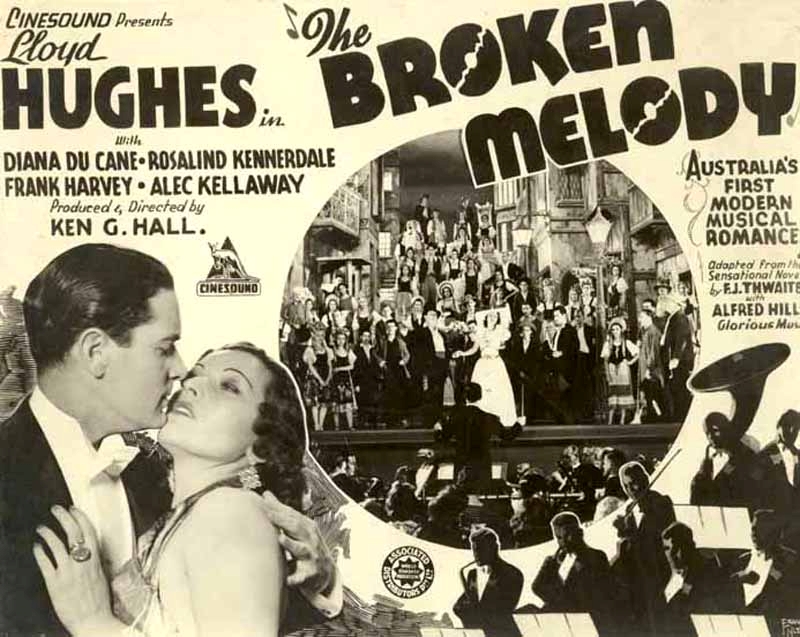
A 1938 Ken G. Hall musical melodrama
The name FJ Thwaites means very little now, but once upon a time – specifically the 1930s to the 1960s – he was one of the most popular authors in Australia, regularly pumping out plot-heavy melodramas that found an enthusiastic readership among an audience once unkindly dismissed as comprising of “maiden aunts”.
Thwaites’ first novel was The Broken Melody, which he wrote in his late teens; unable to find a publisher, he published it himself (in 1930), then sold it door-to-door, eventually getting some traction in the Wagga Wagga region after which it became a bestseller and launched Thwaite’s career; he usually turned out one to two books a year, including non-fiction travel tales as well as novels.
Like pretty much every writer who ever lived, Thwaites was keen for his work to be adapted into movies. (Some trivia: he married an actress, Jessica Harcourt, who had been in the 1927 film of For the Term of His Natural Life.) Several of his books were done for radio but only one film was made – The Broken Melody, produced and directed by Ken G Hall for Cinesound.
Hall is best remembered today for his comedies, but he had a lot of luck with melodramas as well. These ranged from outdoor adventure tales like Tall Timbers and Lovers and Luggers to more “indoorsy” dramas like The Silence of Dean Maitland and Broken Melody.
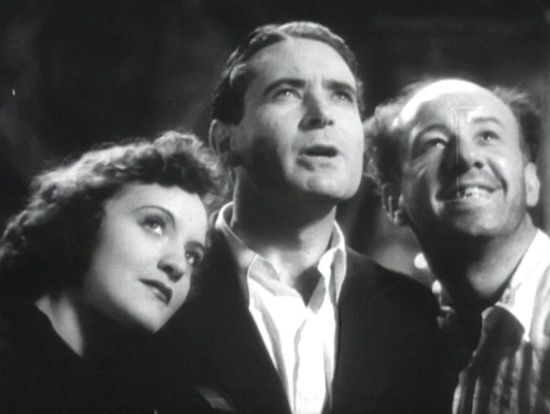 The Broken Melody focused on John Ainsworth, a violin-playing, hard-drinking, champion-rowing uni student, who gets expelled after brawling in a night cub (in Thwaites’ novel it was drug addiction). Disowned by his grazier father, and unable to get a job in the depression, John is down and out in Sydney but forms a friendship with Joe, a pickpocket, and Ann, a former nightclub singer that he saves from suicide. John’s violin talent is overheard by some impresarios, leading to him becoming a star performer/conductor/composer in London, although he loses Ann who “lets him go”. John returns to Australia to perform an opera based on Ann’s character; he is reunited with his father and with Ann, who turns out to be performing in the opera.
We think that Hall was attracted to The Broken Melody for several reasons – the story, some juicy acting roles, the fact that it was pre-existing IP, the opportunity for the Cinesound team to create memorable sets (a homeless camp on the Sydney foreshore, concert halls, night clubs) and most of all, a big massive musical finale, where he got Alfred Hill to write a whole opera. It’s not often appreciated how musical Hall’s movies were – many of them had so many musical numbers that they could be classified as semi-musicals: Cinesound Varieties, Strike Me Lucky, the George Wallace films, Come Up Smiling, Mr Chedworth Steps Out. But nothing was quite on the scale of The Broken Melody.
The star of the film was Lloyd Hughes, an American C-lister who had just been in Lovers and Luggers. He would retire soon after Broken Melody, incidentally, probably figuring if he could only get leads playing musicians in Australia it was time to pull up stumps. Hughes is spectacularly miscast as an Australian uni student who’s the son of a farmer, but as with Lovers and Luggers he’s amicable enough and has the range to believably convey a character who is a champion athlete and top level musician (after all, that’s what he played in Lovers and Luggers… incidentally, in the original novel of The Broken Melody his character even becomes a pearl diver on Thursday Island, a sequence that was understandably cut in the adaptation because of its similarity to Luggers).
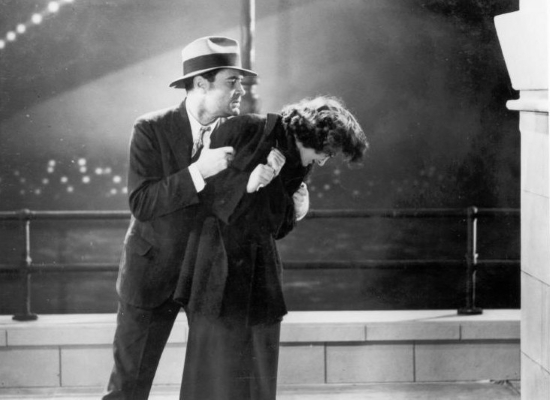 John’s love interest, Ann, was played by Diana du Cane, a stage musical comedy star. Female leads in Cinesound pictures around this time typically went to Shirley Ann Richards but not this one – the studio reported Richards was too exhausted to play the part and maybe there was some truth to this, but we think the real reason is that Hall wanted someone who could sing (although apparently he dubbed du Cane in the end because her musical comedy voice couldn’t handle the tunes). Du Cane is fine but we would have been keen to see what Richards, who usually played happy-go-lucky types, could do when playing a suicidal woman.
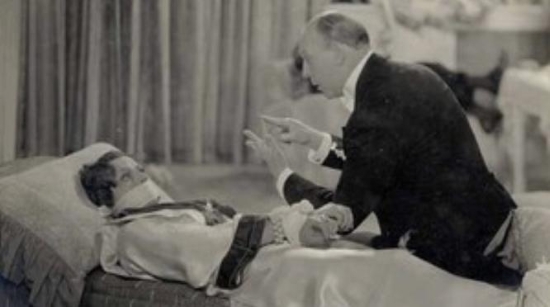 The best roles go to the support players – Rosalind Kennerdale as the diva Madame de Lange, Frank Harvey as John’s manager, Alec Kellaway as the likeable pickpocket. Kennerdale being tied up at the end was probably funnier in the 1930s than it is now.
The script, by Frank Harvey, is a little on the iffy side. The first half is strong, with John and Ann falling in love in poverty, but things become less sure after he is “discovered”. The estrangement between John and his father is dealt with far too simply, and the climax seems contrived, with Ann having an unconvincing change of heart and not revealing herself to John until she’s on stage singing (we know why Harvey and Hall did this – to get a big reveal – but the mechanics to get them there do not work). There are no real stakes for the final concert – John’s rich and famous when he comes home, the concert won’t change that, or the fact that Ann has changed her mind about she and John as a couple.
Thwaites’ novel was far more emotional – the John character had a childhood sweetheart who he could be reunited with (“Nibs”, who is turned into his sister here), the Ann character died in an accident, his father died. It was fine to change Ann into the heroine but they should have killed John’s dad on screen (maybe there’s a longer version of the film where this happened), and Ann should have had a more grounded romantic rival for John than Madame de Lange.
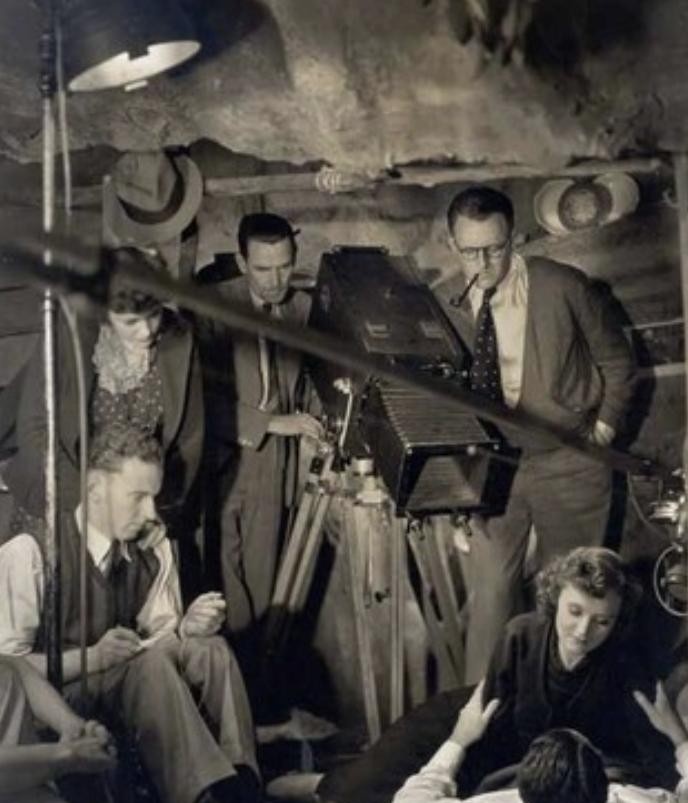 There may have been a reluctance from Hall to go too heavy – none of his films were overly dark, really, except for The Silence of Dean Maitland and Smithy (and even that latter picture only gets dark in its second half). Hall was an upbeat sort of person, at least at this stage of his life, and this is reflected in his movies, even the melodramas, most notably Broken Melody, which has a far greater emphasis on musical and comedy than drama. We can tell Frank Harvey had a lot of fun working on the screenplay for this – not only is there a lot of his patented epigrammatical dialogue and showbiz in-jokes, he writes himself a juicy support part where he hams it up and a beautiful girl flings herself at him.
The movie did well at the box office but we wonder how profitable it was, as Cinesound’s next six movies would all be comedies. This was because in 1938, the British government ruled that Australian films no longer counted as British for purposes of the local quota, and therefore could not be guaranteed release over there. So, he had to go for more surefire material, although just prior to World War Two, he announced plans to make Overland Telegraph and Robbery Under Arms… thus, if it hadn’t been for Hitler, Hall would have made more melodrama.
The Broken Melody doesn’t quite work as a film – it’s too tonally inconsistent, is weighed down by Hughes and has a reluctance to go for the emotional jugular – but there are terrific things in it and it is very entertaining. Alas, as of writing, it’s only available at the National Film and Sound Archive.
The author would like to thank Graham Shirley and the National Film and Sound Archive for their assistance with this piece. Unless otherwise specified, all opinions are those of the author’s.
