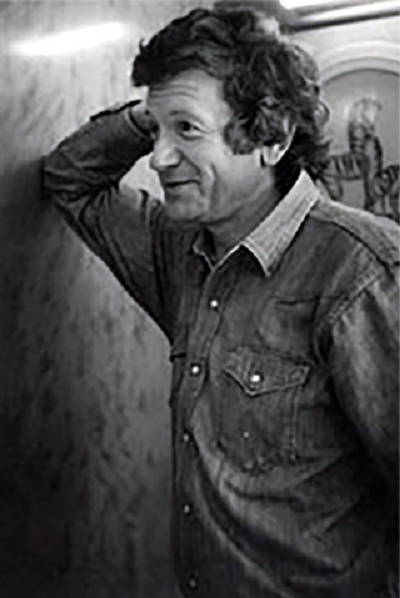
By Erin Free
FilmInk salutes the work of creatives who have never truly received the credit that they deserve. In this installment: director Dick Richards, who helmed The Culpepper Cattle Co., Farewell, My Lovely, Rafferty And The Gold Dust Twins and Death Valley.
Dick Richards is one of many directors whose lack of due recognition can be traced both to his relatively small output, and also to his facility for wilfully jumping across genres, thus limiting his access to an obvious, clearly spelled out directorial “identity.” With the added factor that Richards’ greatest financial and cultural success came as one of the producers on director Sidney Pollack’s mammoth hit Tootsie (Richards’ only career credit in the producer role), Dick Richards’ status as an Unsung Auteur is pretty much locked in. Though he’s only directed seven feature films, all are fascinating in their own way, and most rate comfortably as genuinely neglected cinematic gems.
Born in 1936 in New York, Dick Richards enjoyed a meteoric rise during the 1960s advertising revolution, becoming a world-renowned photographer and television commercial director, nutting out spots and layouts for major players like Coca-Cola, Volkswagen, Polaroid, General Motors, Hertz, Pepsi and many, many more. Richards won many awards in the advertising world, while also crafting more artistic work as a photographer in the hallowed pages of Life Magazine. His eventual film career would appear to be a mix of Richards’ talent, confidence and positive thinking. “My earliest dream was to be a photographer,” Richards has said. “That came true. Then I dreamed, ‘How about making movies?’ So I wrote and directed one – dreams becoming reality.”
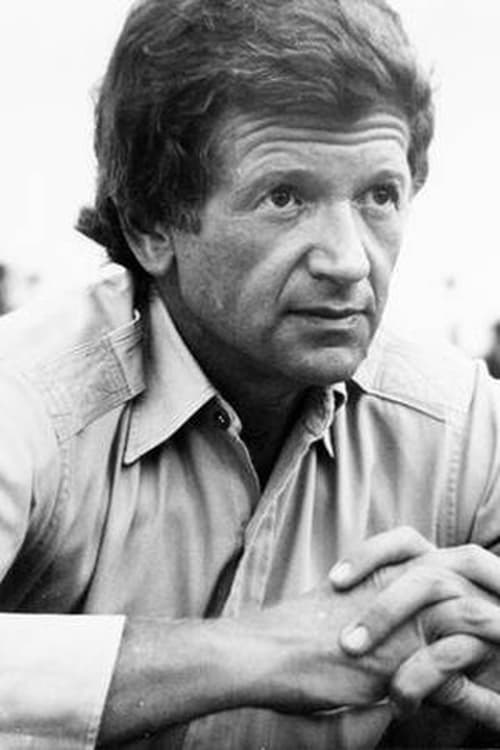
That film was 1972’s The Culpepper Cattle Co., a wonderfully authentic-feeling revisionist western that has genuine love for its storied genre but also an obvious desire to drag it into cinematic modernity. Grim and grimy in its depiction of the decidedly non-glamorous and even unsanitary Old West (Richards was also the cinematographer, and his images are wonderfully, artfully grungy), this tough-minded coming-of-age adventure drama stars Gary Grimes (a breakout in the gorgeous 1971 hit Summer Of ’42) as a green-around-the-gills, wide-eyed young man who seeks excitement by joining up with the cowboy cattle drive crew of reformed gunslinger Frank Culpepper (Billy “Green” Bush), leading him into a life of shocking violence and hardship. A terrific and very 1970s western, the earthy The Culpepper Cattle Co. looks, feels and sounds like the real deal, and boasts fine performances from its two leads and a colourful supporting cast including Luke Askew, Bo Hopkins, Geoffrey Lewis, Royal Dano and Charles Martin Smith.
The highly original and deeply compelling style of The Culpepper Cattle Co. saw Richards tapped by daring producers Richard D. Zanuck and David Brown to direct the blockbuster Jaws, but his ideas were at odds with theirs, and, well, we all know who was eventually hired to direct the film. Though he didn’t finish his journey on the Orca, Richards did direct a host of impressive movies, following up The Culpepper Cattle Co. with the warm, funny but spiky 1975 road movie Rafferty And The Gold Dust Twins, in which Alan Arkin’s depressed former military man turned driving instructor gets car-jacked by two nutty, freewheeling women (Sally Kellerman, Mackenzie Phillips) and ends up joining them in a series of oddball misadventures. Richards gets the most out of his eccentric trio of actors here, and effortlessly rolls with the grooves of John Kaye’s script, crafting a sadly forgotten film of abundant energy and humour.
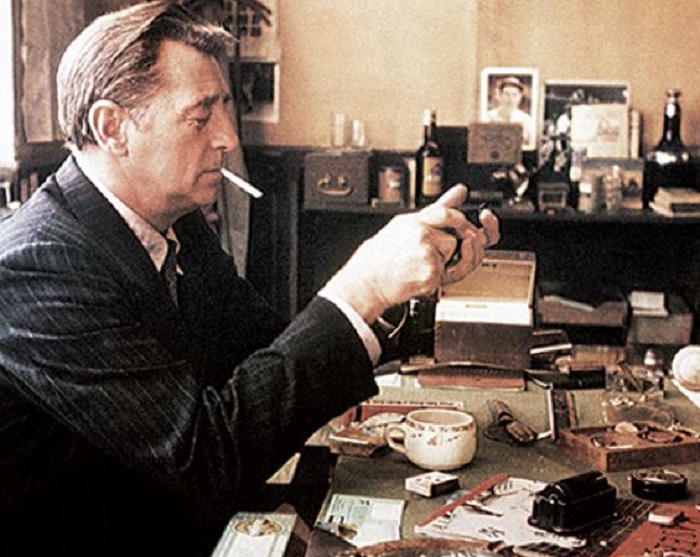
Richards made something of a detour with his next film, ingeniously adapting Raymond Chandler’s literary classic Farewell, My Lovely for the screen in 1975, instantly joining other 1970s noir-inflected classics like Chinatown, The Long Goodbye (a far less traditional Chandler adaptation from the great Robert Altman), Night Moves and others. Easily navigating the impenetrable nature of Chandler’s plotting, and pulling off a major casting coup by slotting screen legend Robert Mitchum into the role of noble private eye Phillip Marlowe, Richards crafts something truly special here, mining classic Hollywood tropes but presenting them in a fresh and contemporary way. Just as he’d refocused the western genre with The Culpepper Cattle Co., Richards did the same thing with the private eye movie, while also creating a stunning image of 1940s Los Angeles.
“My favourite quote I ever heard about one of my films was from [film critic] Rex Reed, who said, ‘Farewell, My Lovely is the kind of movie Humphrey Bogart would have stood in line to see.” Considering the fine work that he did on Farewell, My Lovely, Richards disappointingly did not return for the Mitchum-starring 1978 adaptation of Chandler’s novel The Big Sleep, with British director Michael Winner (Death Wish, Chato’s Land) instead in the director’s chair for the contemporary London-set (!) crime drama, which is excellent in its own right but takes the material in a decidedly unusual new direction.
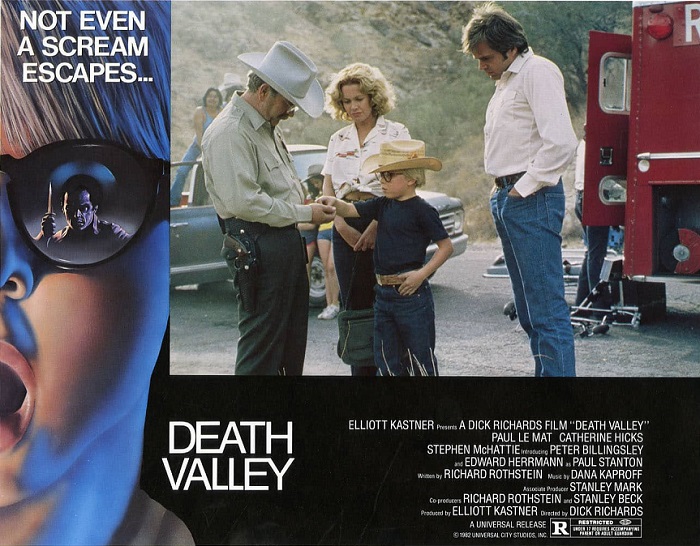
Another hoary old genre enjoyed the Dick Richards refresh with 1977’s March Or Die, an epic and engaging take on the French Foreign Legion picture which sees Gene Hackman’s small garrison under attack from Arab forces. Though exciting and intriguingly cast (Italian superstar Terence Hill, Max Von Sydow and Catherine Deneuve also star), the film didn’t fare well at the box office, and Richards took on something smaller for his next project with 1981’s Death Valley. A truly unheralded little gem of a film, this one sees Richards take an enjoyably cock-eyed look at the horror genre courtesy of a terrific script by Richard Rothstein. Shifting away from the “final girls” of the slasher genre, Death Valley instead posits a pre-teen boy (brilliantly played by A Christmas Story legend Peter Billingsley) as the accidental prey of a serial killer after he witnesses a crime. Creepy, thrilling, nicely characterised, excellently performed (Paul Le Mat, Catherin Hicks, Wilford Brimley and Stephen McHattie also star) and profoundly engaging, Death Valley is another unheralded gem from Dick Richards, and desperately deserves to be rediscovered.
Around this time, Richards also came across the script for Tootsie, which he developed and eventually produced with director Sidney Pollack, watching the film dominate at the box office and various awards ceremonies before becoming something of a cultural phenomenon. After Tootsie, Richards directed 1983’s Man, Woman And Child, a superior domestic drama adapted from a novel by Erich Sagal (Love Story) with Martin Sheen on absolute top form as a husband and father who takes in the son of the woman he had an affair with when she dies. Blythe Danner is equally impressive as the wife who has to take all of this in, while Richards handles this potentially sudsy material with grace, intelligence and sensitivity, delivering an excellent drama deserving of much greater acclaim.
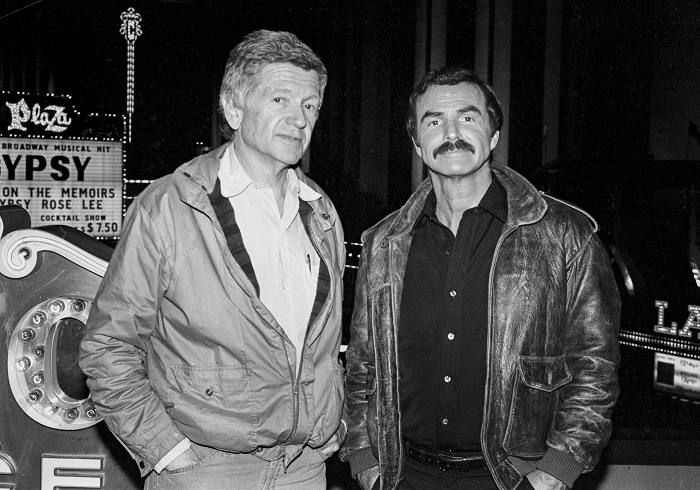
After this, Richards had a reportedly unpleasant experience on the 1986 William Goldman-penned, Burt Reynolds-starring thriller Heat. Richards was brought in to replace the departing Robert Altman, and was then himself replaced by Jerry Jameson. Heat is certainly an interesting film with many rewards for the viewer, but Richards has distanced himself from the project, with Reynolds actually punching the director out during filming, leading to an unpleasant court case. “I had nothing to do with the editing of the film,” Richards – who is credited as R.M Richards on the film – has said. “I was one of five directors. All I did was the casting and thirteen days of shooting…I should have taken my name off it entirely.”
Heat stands somewhat desultorily and disappointingly as Dick Richards’ final film credit, but according to the 89-year-old’s website, this Unsung Auteur “continues to work on creative projects, focusing on writing. His first play, Hooray For Hollywood!, is in development; and his novel, Exposed, is due in 2025. He currently sits on the board of the non-profit Enrichment Theatre Works, whose mission is to create and present professional theatre to inspire learning.” We’re very, very glad to see that the gifted Dick Richards is still out there…
If you liked this story, check out our features on other unsung auteurs William Girdler, Rayland Jensen, Richard T. Heffron, Christopher Jones, Earl Owensby, James Bridges, Jeff Kanew, Robert Butler, Leigh Chapman, Joe Camp, John Patrick Shanley, William Peter Blatty, Peter Clifton, Peter R. Hunt, Shaun Grant, James B. Harris, Gerald Wilson, Patricia Birch, Buzz Kulik, Kris Kristofferson, Rick Rosenthal, Kirsten Smith & Karen McCullah, Jerrold Freeman, William Dear, Anthony Harvey, Douglas Hickox, Karen Arthur, Larry Peerce, Tony Goldwyn, Brian G. Hutton, Shelley Duvall, Robert Towne, David Giler, William D. Wittliff, Tom DeSimone, Ulu Grosbard, Denis Sanders, Daryl Duke, Jack McCoy, James William Guercio, James Goldstone, Daniel Nettheim, Goran Stolevski, Jared & Jerusha Hess, William Richert, Michael Jenkins, Robert M. Young, Robert Thom, Graeme Clifford, Frank Howson, Oliver Hermanus, Jennings Lang, Matthew Saville, Sophie Hyde, John Curran, Jesse Peretz, Anthony Hayes, Stuart Blumberg, Stewart Copeland, Harriet Frank Jr & Irving Ravetch, Angelo Pizzo, John & Joyce Corrington, Robert Dillon, Irene Kamp, Albert Maltz, Nancy Dowd, Barry Michael Cooper, Gladys Hill, Walon Green, Eleanor Bergstein, William W. Norton, Helen Childress, Bill Lancaster, Lucinda Coxon, Ernest Tidyman, Shauna Cross, Troy Kennedy Martin, Kelly Marcel, Alan Sharp, Leslie Dixon, Jeremy Podeswa, Ferd & Beverly Sebastian, Anthony Page, Julie Gavras, Ted Post, Sarah Jacobson, Anton Corbijn, Gillian Robespierre, Brandon Cronenberg, Laszlo Nemes, Ayelat Menahemi, Ivan Tors, Amanda King & Fabio Cavadini, Cathy Henkel, Colin Higgins, Paul McGuigan, Rose Bosch, Dan Gilroy, Tanya Wexler, Clio Barnard, Robert Aldrich, Maya Forbes, Steven Kastrissios, Talya Lavie, Michael Rowe, Rebecca Cremona, Stephen Hopkins, Tony Bill, Sarah Gavron, Martin Davidson, Fran Rubel Kuzui, Elliot Silverstein, Liz Garbus, Victor Fleming, Barbara Peeters, Robert Benton, Lynn Shelton, Tom Gries, Randa Haines, Leslie H. Martinson, Nancy Kelly, Paul Newman, Brett Haley, Lynne Ramsay, Vernon Zimmerman, Lisa Cholodenko, Robert Greenwald, Phyllida Lloyd, Milton Katselas, Karyn Kusama, Seijun Suzuki, Albert Pyun, Cherie Nowlan, Steve Binder, Jack Cardiff, Anne Fletcher ,Bobcat Goldthwait, Donna Deitch, Frank Pierson, Ann Turner, Jerry Schatzberg, Antonia Bird, Jack Smight, Marielle Heller, James Glickenhaus, Euzhan Palcy, Bill L. Norton, Larysa Kondracki, Mel Stuart, Nanette Burstein, George Armitage, Mary Lambert, James Foley, Lewis John Carlino, Debra Granik, Taylor Sheridan, Laurie Collyer, Jay Roach, Barbara Kopple, John D. Hancock, Sara Colangelo, Michael Lindsay-Hogg, Joyce Chopra, Mike Newell, Gina Prince-Bythewood, John Lee Hancock, Allison Anders, Daniel Petrie Sr., Katt Shea, Frank Perry, Amy Holden Jones, Stuart Rosenberg, Penelope Spheeris, Charles B. Pierce, Tamra Davis, Norman Taurog, Jennifer Lee, Paul Wendkos, Marisa Silver, John Mackenzie, Ida Lupino, John V. Soto, Martha Coolidge, Peter Hyams, Tim Hunter, Stephanie Rothman, Betty Thomas, John Flynn, Lizzie Borden, Lionel Jeffries, Lexi Alexander, Alkinos Tsilimidos, Stewart Raffill, Lamont Johnson, Maggie Greenwald and Tamara Jenkins.