


By Adrian Nguyen
Fifty years on from its initial release in 1976, Martin Scorsese’s seamy, gritty, ultra-violent masterpiece Taxi Driver remains gloriously unbowed, and just as relevant today as it was when it first stormed its way into cinemas.
“Taxi Driver really has to do with a fellow who becomes obsessed with something he can’t have,” director Martin Scorsese once said of his shattering, now-fifty-years-old classic. “Eventually, the film is a kind of religious film in the sense that it explodes into great violence. Repression into violence…almost like a cleansing, you know?”
In Fyodor Dostoyevsky’s classic 1864 novella Notes From Underground, the story’s embittered, socially isolated, unnamed narrator meets Liza, a prostitute abandoned by her family, and manipulates her into a blissful marriage. But upon self-reflection, the narrator regrets what he has done to her, as well as his observations of the society that he distanced himself from. But the narrator continues into his descent, further abusing Liza, before telling the reader, “I have merely carried to an extreme in my life what you have not dared to carry even halfway.”
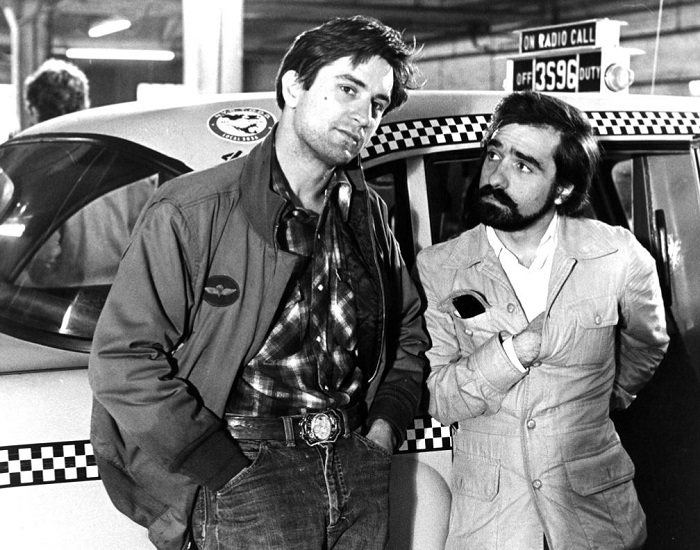
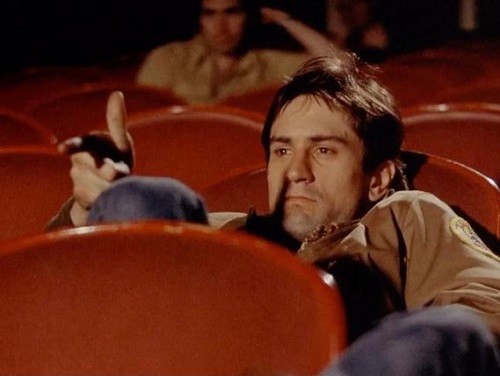
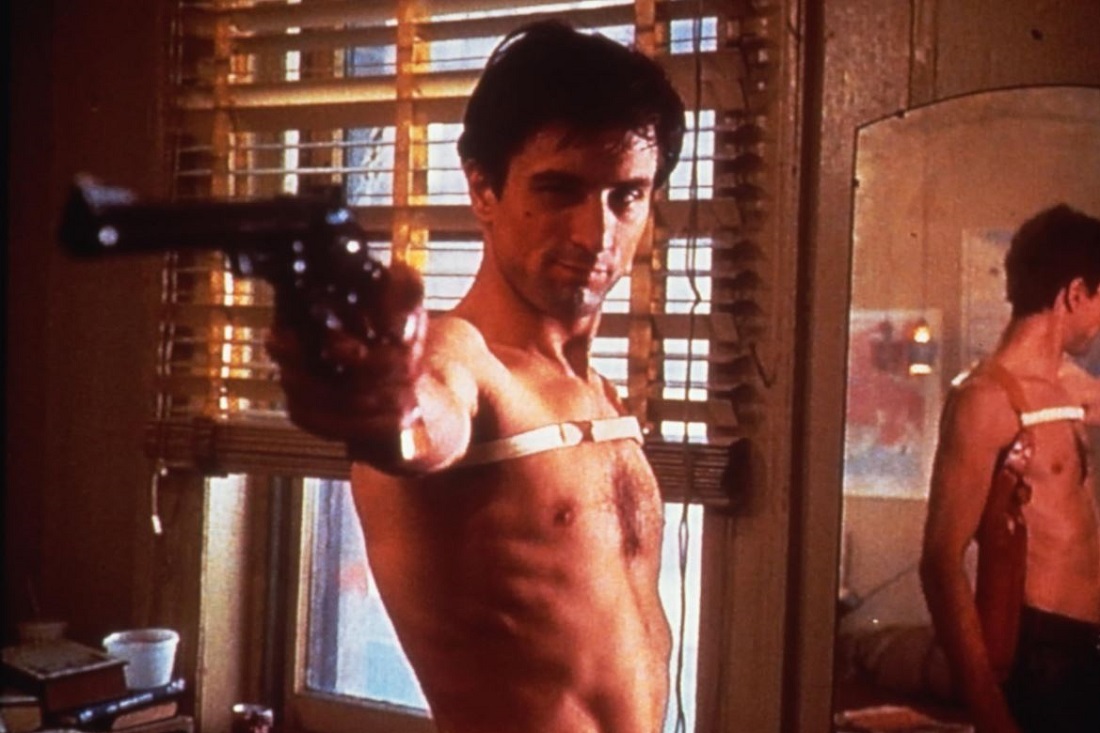
There’s a similar scene in Martin Scorsese’s 1976 classic Taxi Driver which draws heavily on Notes From Underground. The eponymous cabbie and Vietnam veteran, Travis Bickle (Robert De Niro), learns that prostitute Iris (Jodie Foster) is only twelve-years-old after witnessing her escaping from her pimp, Sport (Harvey Keitel). Fascinated and enraged, the unbalanced Bickle then begins a dark journey to extricate Iris from the grimy sex trade.
With no emotional anchor, Travis Bickle doesn’t develop a conscience – he is a lost man with distorted ideas of heroism and justice. For two hours, we see Travis Bickle descend into madness, and yet, we are fascinated by his emotional state. On paper, he’s far from relatable, but his alienation is also the viewer’s.
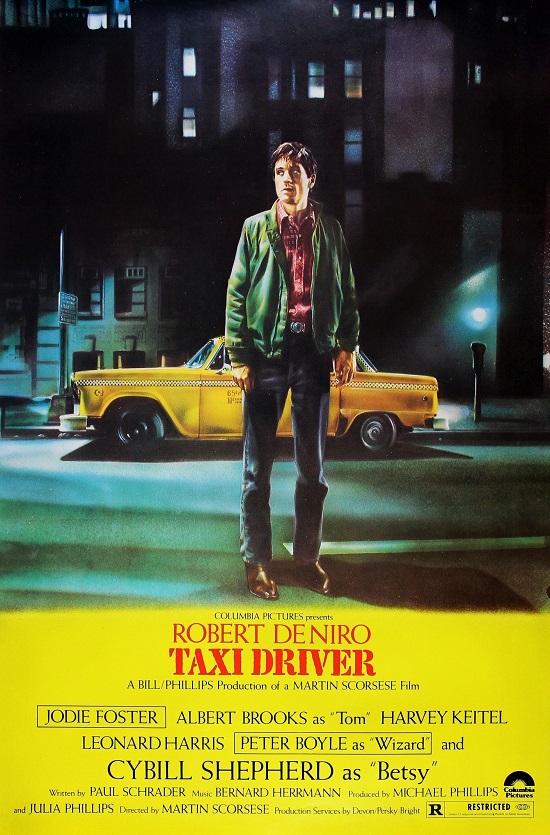
Upon release, Taxi Driver (Scorsese’s follow-up to 1973’s deeply autobiographical Mean Streets) proved controversial. One of the first criticisms levelled at the film was its casting of child star Jodie Foster – who was then twelve years old – as child prostitute Iris. Foster was protected and not traumatised during the shoot, however, and has said that De Niro mentored her during filming. “There was a welfare worker on the set every day,” Foster has said. “She saw the daily rushes of all my scenes and made sure I wasn’t on set when Robert De Niro said a dirty word.”
When Taxi Driver won the Palme d’Or at the Cannes Film Festival, the jury president, Tennessee Williams, was reportedly disgusted by the film’s violent imagery. The film almost received a restrictive X rating, a strong classification which instantly limits a film’s commercial viability. Scorsese ingeniously avoided the dreaded X rating by desaturating the colours in the film. This is most apparent in the climactic shootout between Travis and the various reprobates at the brothel where Iris works. Strikingly pulled back, the vibrant reds of the abundant blood on display take on a darker, less confronting, and vaguely surreal hue.
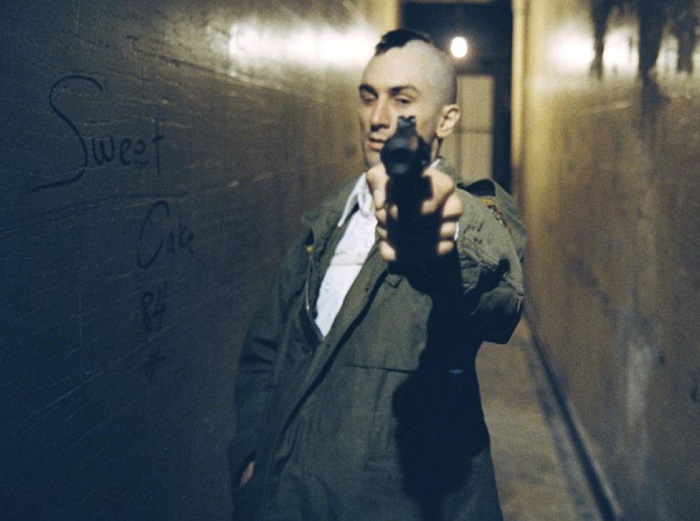
While Scorsese was happy with the changes, the film’s cinematographer, Michael Chapman, has expressed regret about the choice. “The final big shoot-out scene had to be toned-down in colour,” Chapman told The Film Stage. “They threatened to give it an X rating, and they wouldn’t give it an R unless we took the blood down. The whole last scene is completely screwed when they first put it out. I was very angry, but there wasn’t anything I could do about it.”
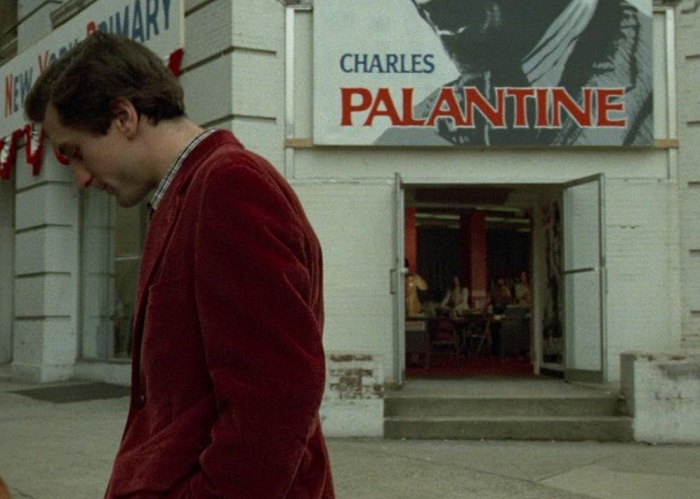
Taxi Driver became even more contentious in the public sphere when the notorious John Hinckley Jr. claimed that his repeated viewings of the film – during which he became infatuated with the young Jodie Foster – influenced his 1981 attempted assassination of US President Ronald Reagan. Hinckley Jr’s horrific act of violence mirrors a scene from Taxi Driver in which the increasingly unhinged Travis Bickle, sporting a mohawk, attempts to assassinate the ambitious Senator Charles Palantine (Leonard Harris).
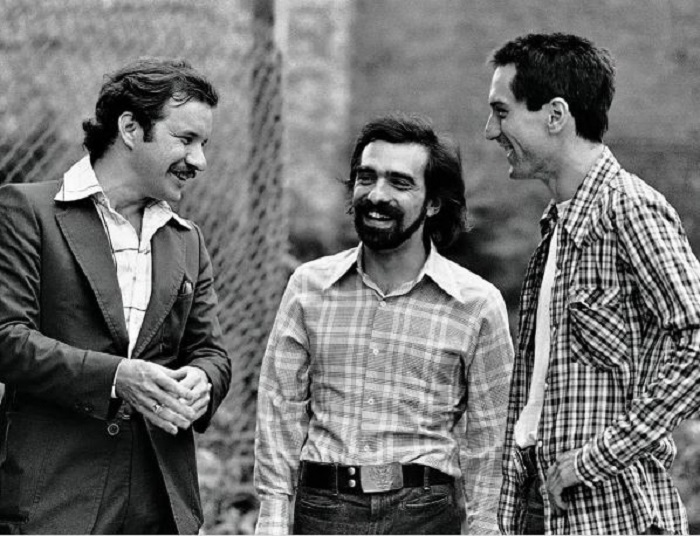
Taxi Driver screenwriter Paul Schrader has admitted that Arthur Bremer, who attempted to assassinate former Alabama governor George Wallace in 1972, also partly shaped the character of Travis Bickle. Schrader has said that writing the screenplay was like “self-therapy” and demonstrates that “you can exorcise demons through art.” Clearly, art and life have a cyclical relationship.
Fifty years on, Taxi Driver remains hugely influential. Its high cinematic merit has provided a template for many films featuring isolated, alienated and marginalised male characters, including the likes of Fight Club, Drive, and Joker. The film marked the first collaboration between Scorsese and Paul Schrader, which continued through Raging Bull and The Last Temptation Of Christ. A noted filmmaker in his own right, Schrader has directed many films centered on the alienation of men, from American Gigolo and Light Sleeper through to First Reformed and Master Gardener.
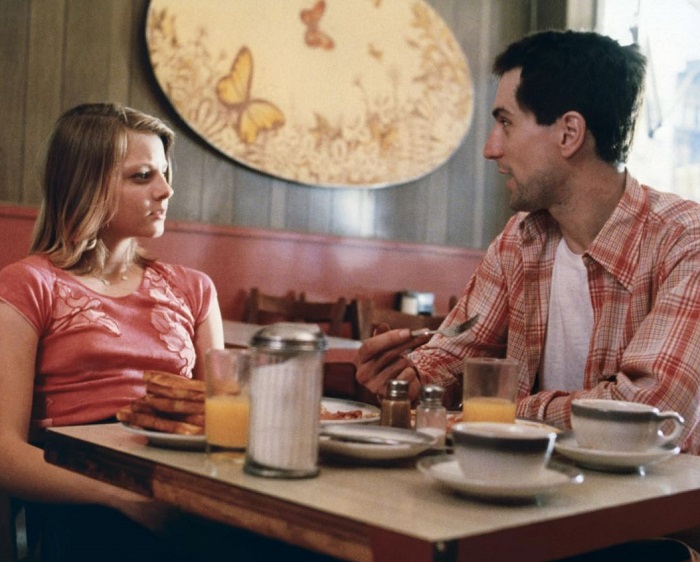
Taxi Driver also exists on a broader canvas. The film was a product of the turbulent 1970s, when inner-city crime was a hot-button topic, and cinema was not shy about depicting New York as a decadent moral cesspool. Another product of that time was 1974’s Death Wish, which puts the viewer into the shoes of an ordinary man who takes revenge on the criminals who murdered and raped his family. While Death Wish was shunned for its simple-minded portrayal of vigilantism, Taxi Driver is far more cerebral. Its dread, as accompanied by Bernard Herrmann’s jazz score, seamlessly seduces the viewer.
Like some of Scorsese’s other main characters – Henry Hill in Goodfellas and Jordan Belfort in The Wolf Of Wall Street – Travis Bickle’s unreliable narration risks getting misinterpreted by the viewer as an endorsement of his behaviour. Yet Scorsese has often made the case that the film, while unquestionably masculine, defends women to the point where he told the film critic Roger Ebert that Taxi Driver is a “feminist film”, because “it takes macho to its logical conclusion.” Prior to Taxi Driver, Scorsese had directed 1974’s masterful Alice Doesn’t Live Here Anymore, which tracks the turbulent misfortunes of a single mother, and proved the director’s feminist bona fides.
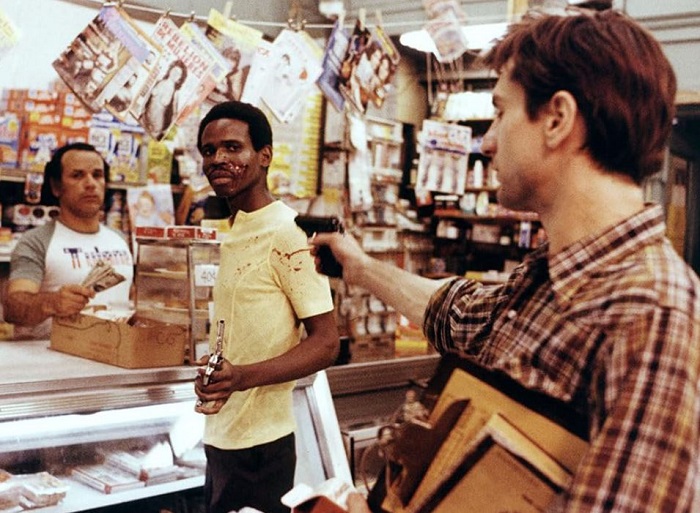
Equally contentious, but just as important, is Taxi Driver’s approach to African-Americans. Many scholars and critics view Taxi Driver as an anti-racist film. Bickle treats African-Americans with suspicion. He also picks up a passenger (played by Scorsese himself) who talks about murdering his ex-wife, who he thinks is being unfaithful with a black man. When Bickle watches television alone, he aims his gun as he sees happy couples dancing to Jackson Browne’s “Late for the Sky”, and a woman hoping to reunite with her partner. He then kills a black man who robbed a bodega run by a Puerto Rican shopkeeper.
Schrader’s screenplay initially depicted Iris’s pimp, played by Harvey Keitel, as an African-American. Bickle kills him and many men of the same skin colour in the scripted climactic shootout to save Iris. The film’s producers requested changes to avoid charges of social irresponsibility.
While Taxi Driver is still considered one of the greatest films of all time, the criticism around its problematic depiction of African-Americans still sticks. In his book Cinema Speculation, Quentin Tarantino argued that Columbia Pictures watered down Bickle’s true perspectives on black males. “The film makes it obvious he sees black males as figures of malevolent criminality,” Tarantino writes of Bickle. “He’s repelled by any contact with them. They are to be feared or at the very least avoided. And since we watch the film from Travis’ point of view, we do as well. Scorsese was asked by Columbia Pictures to change the character of [Harvey Keitel’s] Sport from black to white because the race riots a few years earlier still cast a long shadow.”
The film critic Amy Taubin wrote a foreword in 2012 in a reprinted monograph of Taxi Driver, and called Bickle an avatar of “the millions of Americans who claim that Obama has no right to be President because he is a Muslim and in cahoots with those who attacked us on 9/11. What they are really thinking but dare not say is that he is black, black, black.” Taubin browbeats Schrader and Scorsese for “pulling their punches” on this issue, painting the idea that racism was the driving motive for Bickle’s homicidal ideation.
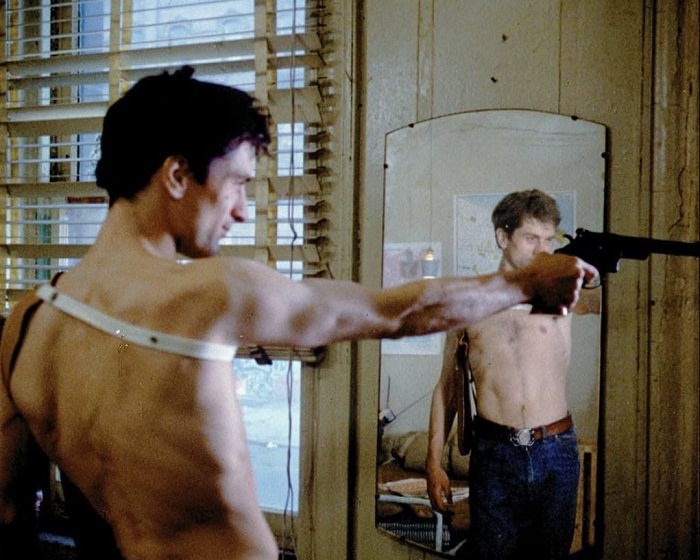
But Travis Bickle is hardly political, and his interactions with African-Americans – his colleague Charlie T, and a duo of flamboyant pimps – prove that he is socially inept, and that the colour of these characters’ skin runs adjacent to his paranoia and contempt towards every individual he encounters, rather than forming a big picture of certain demographics. What shapes this giant layer of cynicism that snowballs into an act of bloody violence is Travis Bickle’s subconscious.
The events of the film and Bickle’s reliability as a narrator should serve as a warning sign, not only to viewers who find something valuable in identifying with his alienation, but to those who act shocked that these people feel and think that way. Critics will go out of their way to dismiss them for having poor media literacy, and labelling them “racists” or “misogynists”, which misses the complex way that Taxi Driver depicts how humans interact with each other, sometimes by masking or repressing their worst tendencies.
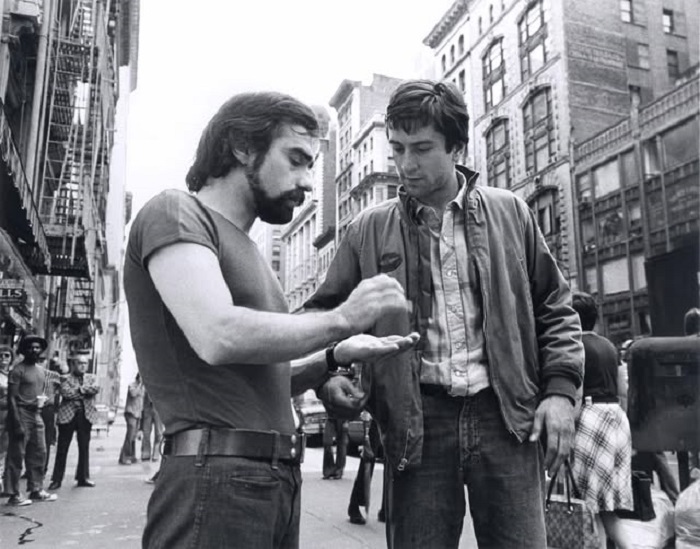
Travis Bickle was not the only man in pop culture whose loneliness led him to delusion and violence, nor will he be the last. As the feeling of loneliness has transformed into a systemic global issue due to highly saturated technology and political polarisation, Taxi Driver remains relevant to the modern man’s uncertainty in mainstream society. Paul Schrader declared in an interview with The Guardian that “Travis Bickle is me.” So did many others.
Look out for special 50th Anniversary screenings of Taxi Driver soon.