



by James Mottram
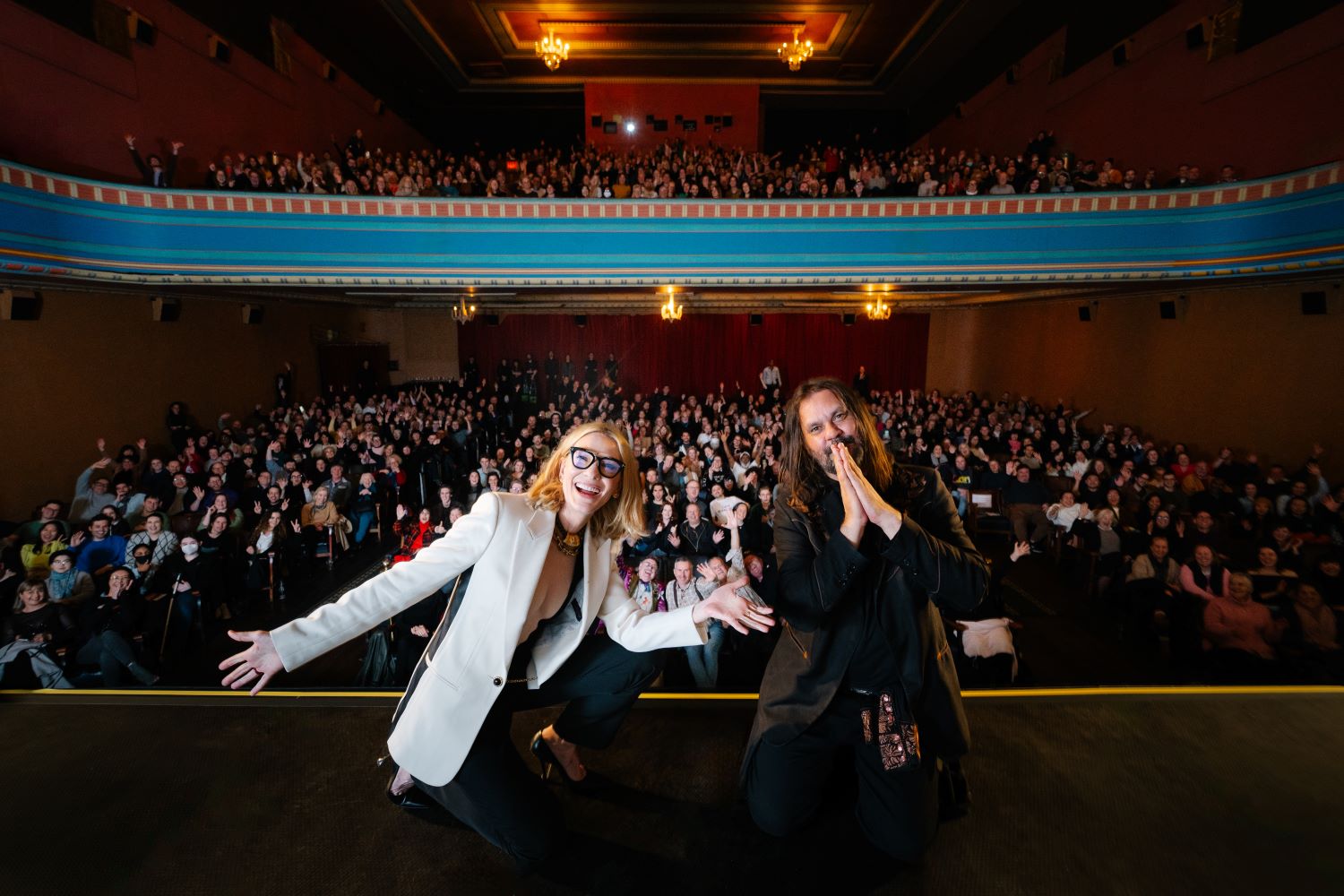
With a glittering A-List film and stage career, Cate Blanchett is in that enviable position of being able to pick and choose. When FilmInk meets her, at this year’s Cannes Film Festival, she’s hanging out with director Warwick Thornton. They’re in town to talk up The New Boy, their first film together, a collaboration that came out of lockdown. “The pandemic happened,” recalls Blanchett, “and one asks oneself, ‘Gosh, if it all ended tomorrow, or in six months, who would I want to work with? Who would I want to spend time with? Who would I want to be in conversation with? Where do I want to be?’”
At the time, she and her husband Andrew Upton “were really homesick” and felt the urge to do something back in Australia for their production company Dirty Films. Blanchett knew Thornton through mutual friends, and they began talking. The filmmaker behind such beguiling indigenous stories as Samson and Delilah and Sweet Country, Thornton mentioned he had a script that he’d written long ago, “a thorn in your paw” as Blanchett puts it. “We found it really mysterious and knew that there was something really special in there that we didn’t quite understand. But we knew it was a document from which you could make an amazing film. And so, we just kept talking about it.”
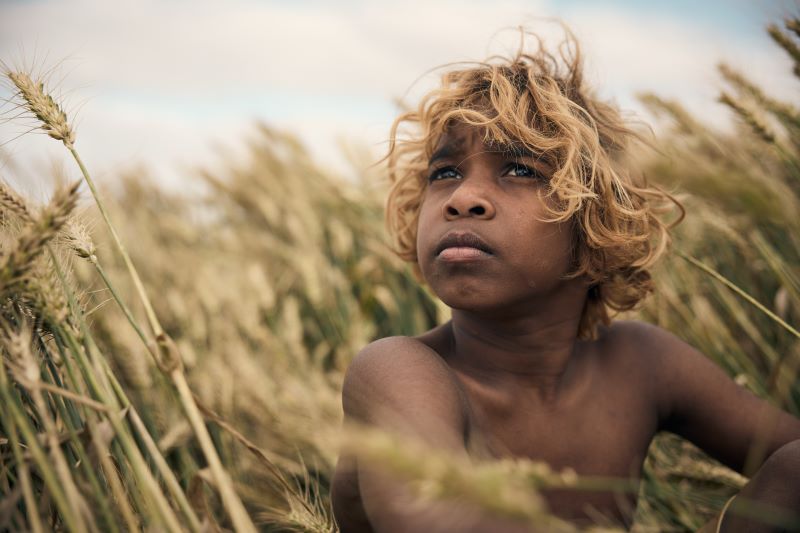
The New Boy is certainly mysterious, that’s for sure. Set in 1940s Australia, it begins as an Aboriginal boy (Aswan Reid) is left at the door of a remote Outback monastery, where Blanchett’s Sister Eileen oversees a shelter for abandoned children. With no name, or command of English, the boy eats with his hands and sleeps under his bed. But the arrival of this child, at a time when the world is at war, changes things; as Thornton hints, the new boy may have Christ-like spiritual healing powers of his own. Intriguingly, the story came inspired by Thornton’s experiences in his youth, when he was an Aboriginal boy attending a Christian boarding school.
“[As an Aboriginal], we have lots of different spiritual connections, creators, all that sort of stuff,” he says. “It empowers me every day, wakes me up. It makes me feel special. I don’t understand organised religion. I mean, the corporate version of this, where there is a right…I don’t understand that stuff. So, I will spend the rest of my life looking for signs and having a great time with spirituality and believing and waiting for all my beautiful friends who died to visit me from the other side. They never do. But still waiting. And one day, I’ll die, and I’ll get an answer. And until then, I don’t really want an answer. Because I’m so happy.”
Unquestionably, it’s a relief to see a film about Catholicism that doesn’t involve physical or sexual abuse of youngsters. “Well, you do expect it,” admits Blanchett. “You see a white nun, and an indigenous child and think ‘Ah.’ You can’t help but make assumptions. Not unfounded assumptions. But I think it’s interesting. This film, having percolated with Warwick for so long… time has kind of made it manifest in a different way perhaps than [he] would have imagined eighteen years ago.”
By all accounts, the script for The New Boy has been through quite a transition over the years. “It used to be about a priest and a boy,” explains Thornton. “I’d always say if I walk past a cinema, and I’ve seen that poster – a film by Warwick Thornton – there’s no fucking way I’d go see that! He was actually a nice, confused priest, asked more questions about his own faith. Was still looking for answers. But that version was quite black-and-white. Right, wrong, all that kind of stuff. Bringing in Cate and converting the gender roles created this beautiful shade of grey for the whole film with no real black-and-white. It complicated the film in a beautiful way.”
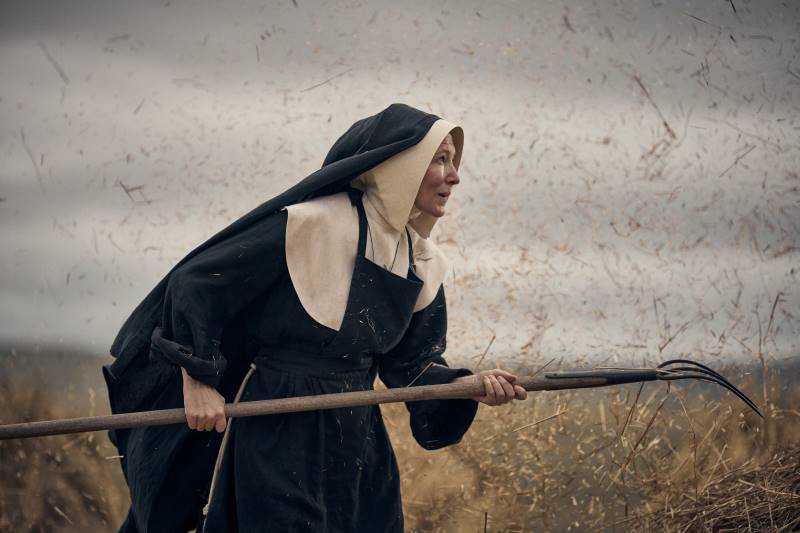
As Blanchett notes, Sister Eileen “is quite spiritually lost” in her life. “So, I think it makes for an interesting dynamic with the new boy who was also outside. He’s off country. He’s a child. He doesn’t know what his abilities or capabilities or what his destiny is. And so, when he gets dropped in, she’s at the point where she’s prepared to be open to it. Andrew was saying, ‘It’s so interesting, it’s never discussed but the new boy is just allowed to wander through shirtless. He’s allowed to eat with his feet until he wants to eat with a spoon’. Whereas you see all the other boys… there’s something that she identifies on an unconscious level with him being something unique. But it could also be that she’s slightly hungover!”
Blanchett’s return to shooting in South Australia evoked all sorts of emotions. “It was a real homecoming,” she says. “Maybe it’s sentimental. I shot my very first featurette [1996’s Parklands] in South Australia. I’ve had a long history with South Australia. I performed on stage there too.”
Filming in a remote part of the region, Thornton became “obsessed”, she says, with shooting on a particular hill, near to where the production built the monastery from scratch. Despite the fact that Thornton’s team had to contend with wind turbines spoiling the 1940s vibe, it was an ideal setting. “[It] looked like the middle of nowhere to a white person’s eyes,” the actress adds. “But you walked up to the top of that hill and the vista was incredible.”
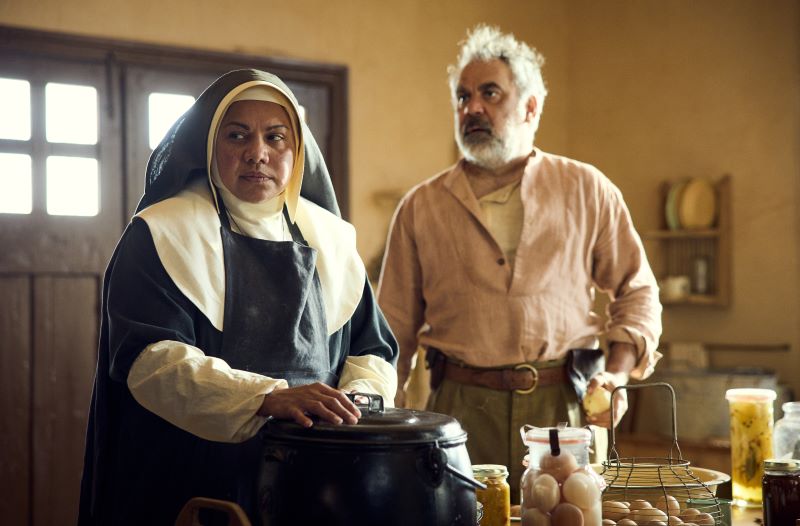
While Blanchett wasn’t the only adult on set – Deborah Mailman and Wayne Blair, former collaborators on 2012 film The Sapphires, both feature as two more members of the monastery – she was outnumbered by her younger charges. In total, Thornton cast eight children, dubbing them his “pack of wolves”. “Every single scene, they would surprise me and empower me and just do stuff that I couldn’t mentally see, to be that good every single day,” he says. “And I’ll be exhausted by the end of the day, and then suddenly in the morning, this pack of wolves rocked up!”
So, how did Blanchett cope? “Well, I’ve got four [children at home]! So, it was only twice as many! I must say, I approach a set with trepidation when I know there are going to be children on it, from a duty of care level obviously, but also just knowing, ‘okay, animals and children, there’s going to be massive limitations on what one can do’. Often, filming can be freewheeling and bit chaotic. But they were absolutely extraordinary. I mean, extraordinary! The level of support they showed to Aswan, their discipline, their curiosity, but also, they were so alive to the situations and were really fantastic to play with.”
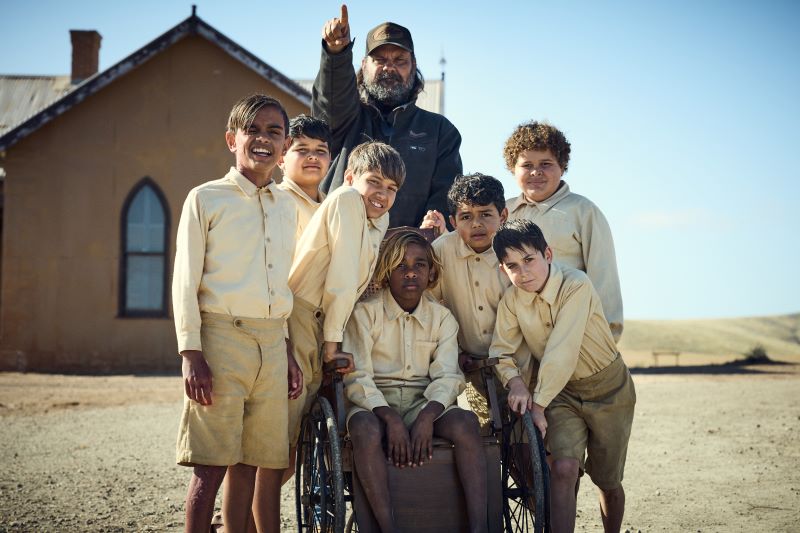
Blanchett’s youngest child, her 8-year-old daughter Edith, was even on set, playing with Reid and the others. “They were angels!” trills Blanchett. “It’s a film where there’s no father figure, obviously. There’s an absent father, but Warwick was the father figure. And there’s a beautiful photo that I’ve got on my phone, when we had the wrap party – which the children totally took over and they were singing on stage. And Warwick went up and you thanked them all and cried, and they all just ran and hugged him. Something they’d been waiting to do.” Thornton looks moved at the memory. “They all gave me a massive cuddle. And then they proceeded to spend the rest of the night going, ‘You cried!’”
The New Boy opens in cinemas on July 7, 2023
