


by Cain Noble-Davies
Worth: $15.50
FilmInk rates movies out of $20 — the score indicates the amount we believe a ticket to the movie to be worth
Cast:
Trost, Tally Wickham, Ryan Gibson, David Hellmore, Meg Woodcraft, Will Bromley, Inês Ferreira
Intro:
… effectively uses its smaller means to great effect within the realm of surreal psycho-horror.
Jason Trost is the most gamer-brained filmmaker working today. He may not be the only one incorporating video game aesthetics into films outside of direct adaptations, from Ilya Naishuller’s FPS actioner Hardcore Henry to the bizarre influence Tomb Raider had on Gus Van Sant’s cinematic endurance test Gerry. But between his Rocky–Rocky Revolution series The FP, the Power Glove power fantasy of How To Save Us, and even the superpowered Saw fanfiction of All Superheroes Must Die, he remains the most consistent and adamant advocate for bridging these two worlds. And with his latest, he takes that mission one step further by presenting what has been billed as the world’s first-ever side-scrolling film.
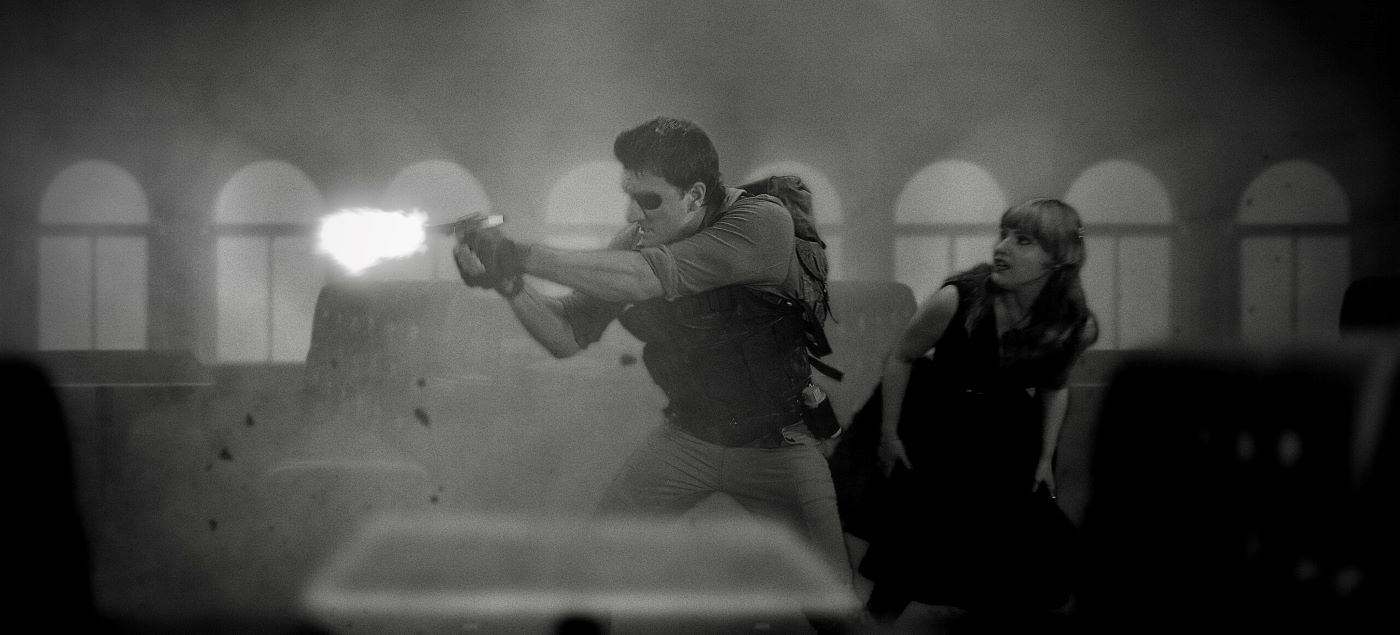
Building from the Lovecraftian undertones of games like Silent Hill and Alone In The Dark, Trost – both as writer/director and as lead role Agent Legrasse – explores a (seemingly) deserted cruise ship lost in the South Pacific by… well, scrolling across from scene to scene. While it mirrors classic 2D adventure and horror games, the static and theatrical staging also evokes silent cinema from the days before mobile camera rigs, along with frequent bursts of scratchy editing like something out of an analog horror video. Past and future collide, much like in the story proper.
That intersection, aside from bringing Layers Of Fear 2 vibes of old-school cinema for psycho-terror cosmic horror, provides a literally warped perspective on reality to emphasise the underlying threat that eldritch forces pose to it. It even helps smoothen out the chintzy quality of the production itself, from the OG Resident Evil-quality line reads to the dodgy digital effects, applying naïve surrealism (basically, the way that cheap filmmaking can make the audience actively question whether filmed events are even ‘real’) in a way that works in the film’s favour.
At such a scant running time, including post-credits sequel teaser, the whole package sticks around just long enough to make its point without outstaying its welcome as a modernised trick film. It also manages to deliver a decent character portrait that eclipses an unfortunate number of lengthier films. Trost’s acting on its own isn’t amazing, but the way he carries himself as the PTSD-addled mercenary, aided by the film craft around him (complete with intercuts to therapy sessions with Ryan Gibson’s Dr. Birkin that feel pulled directly from Silent Hill: Shattered Memories), adds to the prevailing sense of unease and the mind-twisting trappings of the genre. His conviction in front of the camera matches his conviction behind it.
The Waves Of Madness, like fellow lo-fi Lovecraftian exercise Glorious, effectively uses its smaller means to great effect within the realm of surreal psycho-horror. Its cross-breeding of classic filmmaking techniques and Trost’s trademark video game fixations lend equal strength to the presentation, all of which breaks the minds of men, allowing even its own technical shortcomings to add, rather than subtract, from the overall atmosphere. It’s also got a surprising amount of Aussie representation throughout [Trost, although American is now based in Sydney], making for a nice shaking-of-hands between two independent film cultures.
