


by Nataliia Serebriakova
Worth: $16.00
FilmInk rates movies out of $20 — the score indicates the amount we believe a ticket to the movie to be worth
Screened at Far East Film Festival in Udine
Cast:
Lien Binh Phat, Do Thi Hai Yen
Intro:
… weaves a dramatic narrative into a rich historical context, effectively merging two stories into one: the legacy of French influence in Vietnam and a deeply beautiful love story composed of glances, hints, and layered emotional meanings.
A young French-language translator named Khang (Lien Binh Phat) arrives in postwar Saigon and settles into a modest apartment building. On the ground floor lives a slightly older widow named Ky Nam (Do Thi Hai Yen). During the day, she cooks for her small home restaurant, and in the evenings, she lays out solitaire to the sound of Vietnamese songs. Also living in the house are Khan’s elderly uncle and aunt, as well as several young women who take an interest in the promising bachelor–translator.
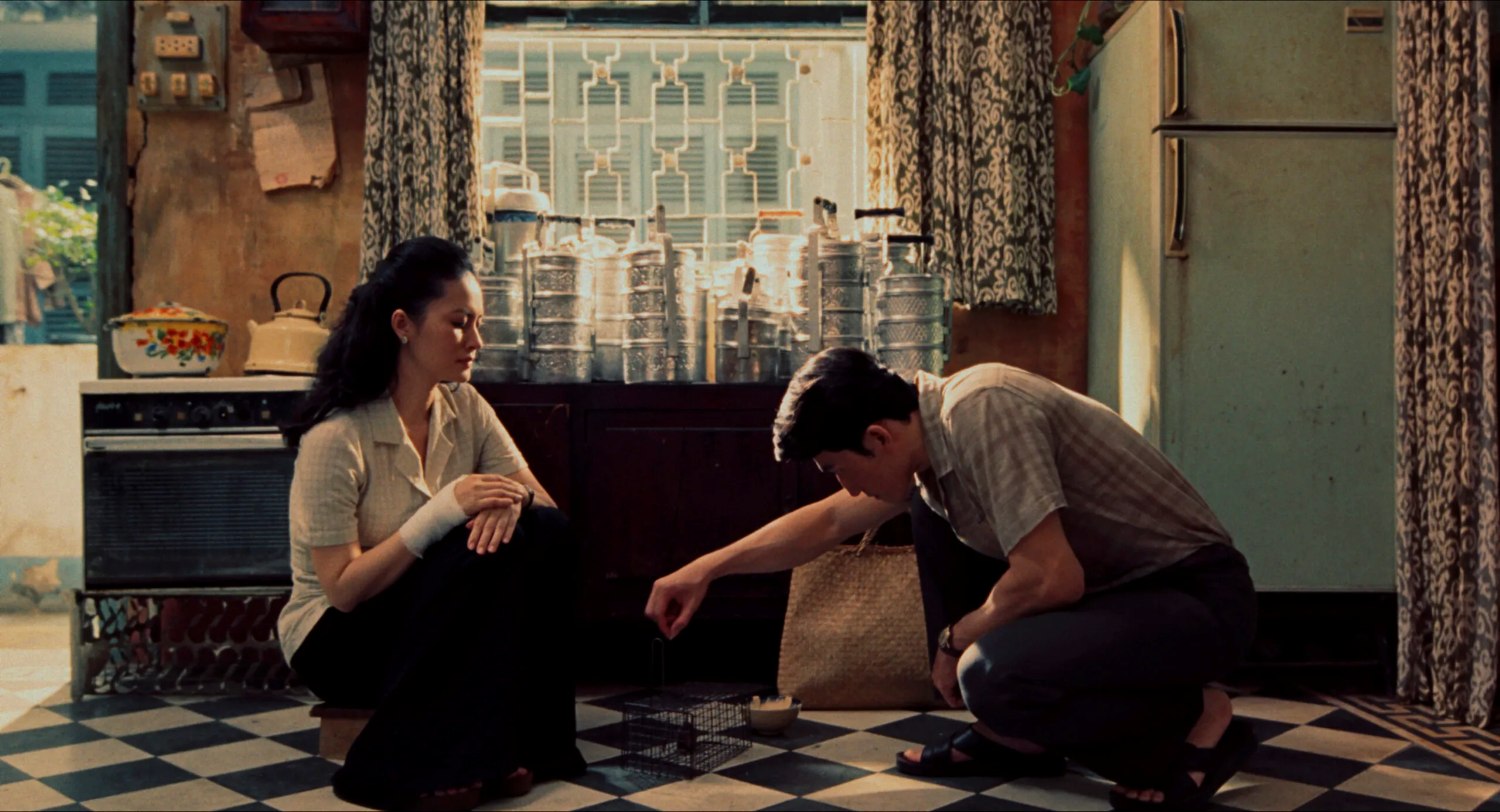
At first, the relationship between Ky Nam and Khang does not develop easily. Like with many in the house, she keeps her distance from him. However, when she injures her hand and can no longer peel vegetables for her restaurant, Khan begins to come by to help. Before long, rumours start spreading through the neighbourhood.
The film’s writer and director is the relatively young Vietnamese actor Leon Le, known for having previously written and directed Song Lang, another retro-set love story (set in the 1990s) unfolding against the backdrop of opera performance. In Ky Nam Inn, the period is even earlier — the mid-1970s. The film is set among worn-down Vietnamese courtyards, and much of the story takes place inside the characters’ apartments, filled with traditional objects of everyday Vietnamese life.
In spirit and atmosphere, the film recalls Wong Kar-wai’s In the Mood for Love — though it is even slower and more meticulous in its attention to gesture and behaviour. Over the course of its lengthy runtime, the director gradually leads the narrative toward a moment of true intimacy between Khang and Ky Nam. Along the way, the story is enriched by conversations about the book Khang is translating — The Little Prince by Antoine de Saint-Exupery — with references to the fox and the prince woven into the film’s emotional fabric.
The characters rarely speak openly about their feelings. Ky Nam only begins to understand Khang’s emotions through the notes that he leaves in the Vietnamese translation of The Little Prince. For a long time, they are forced to conceal what they feel, surrounded by an atmosphere of gossip that dominates this enclosed world. Even at the cinema, they sit with a seat between them and arrive separately. Notably, they are shown watching the Soviet classic Moscow Does Not Believe in Tears, and at times children in uniform appear in the frame.
Leon Le, who spent his teenage years and early adulthood in California and performed on Broadway, demonstrates a strong command of his material. He weaves a dramatic narrative into a rich historical context, effectively merging two stories into one: the legacy of French influence in Vietnam and a deeply beautiful love story composed of glances, hints, and layered emotional meanings.
In doing so, he creates a film where history and intimacy become inseparable, and where the quietest gestures carry the weight of an entire era. It is a cinema of restraint and suggestion, where emotions are not declared but carefully observed, accumulating in silence until they become almost unbearable. Leon Le lingers on pauses, on the space between words, allowing the viewer to inhabit the same fragile tension as his characters — a world where love exists not in grand confessions, but in proximity, patience, and the courage to remain.
