


by Cain Noble-Davies
Worth: $15.50
FilmInk rates movies out of $20 — the score indicates the amount we believe a ticket to the movie to be worth
Cast:
Ian McKellen, Michaela Coel, James Corden, Jessica Gunning, Daniel Fearn
Intro:
… an enriching look at art and the complicated relationships we share with it.
It is tempting to describe Steven Soderbergh’s latest film as a continuation of his hot streak with clandestine capering after Black Bag… Much like Black Bag, its central conceit involves deception and criminal activity, in this case art forgery, but with a more rickety presentation. Gone is the flash and polish of photogenic spy work, and in its place a lot of shaky handheld camera work and a central locale that looks more like a museum of regret than what can reasonably be called a ‘home’. The frame as a revealing canvas, as opposed to a curated selection of pretty colours and effects.
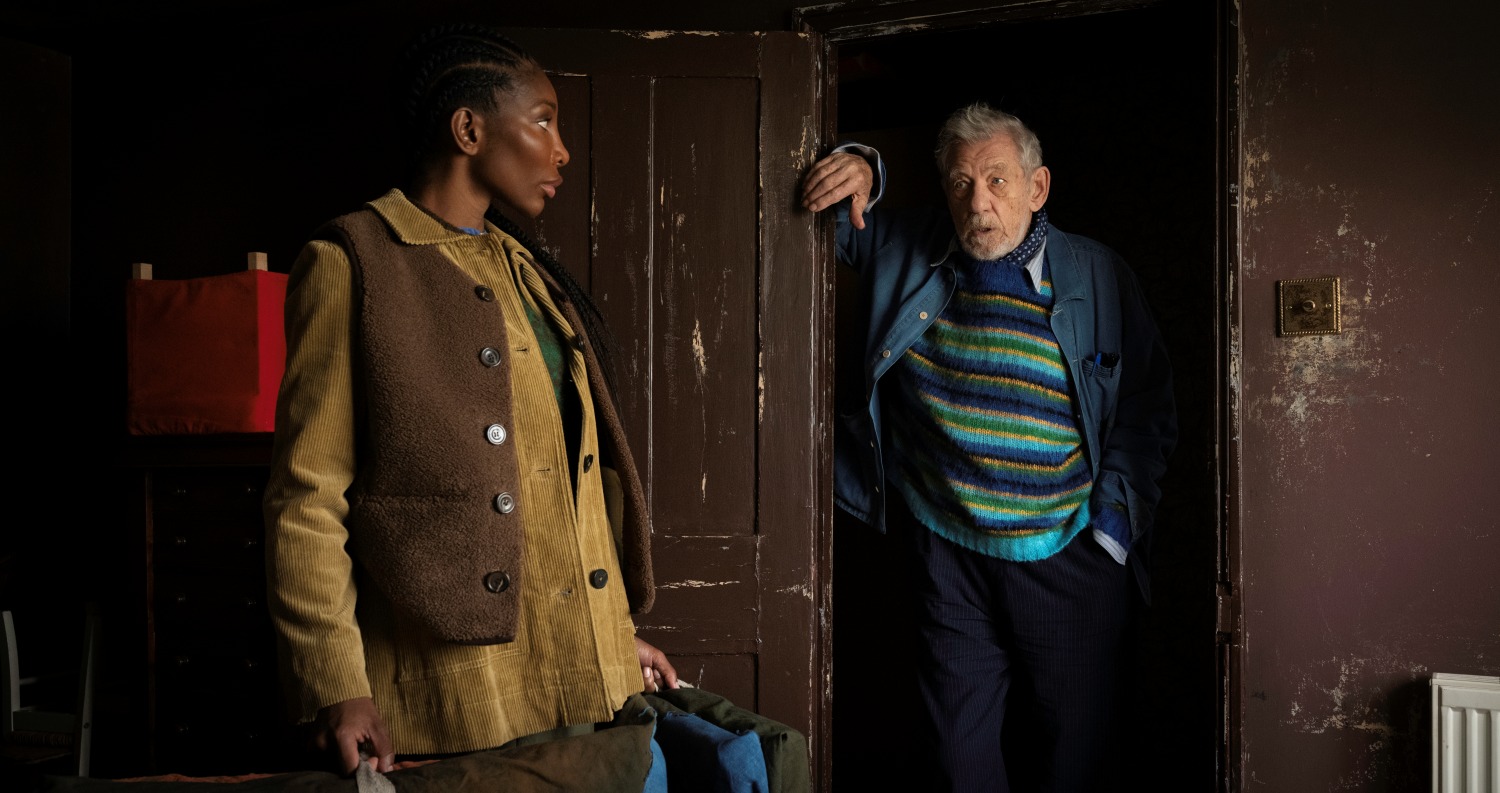
At its simplest level, the film is a continued back-and-forth between retired artist Julian (Ian McKellen) and lapsed artist turned forger Lori (Michaela Coel), with the latter hired to forge a completion of the unfinished works of the former. McKellen hasn’t been this energetic and vibrant on the big screen in a long time, imbuing his forlorn creator with an infectious, if grumbly, spirit with splatterings of self-loathing and self-deception that, in lock-step with the film around him, betray a myriad of facets beneath the weathered veneer. As for Coel, she follows up her turn in Mother Mary with a further dive into the mechanisms of creating a work of art, with her ever-evolving rapport with Julian creating an aggressively watchable tension between the two.
We’d also be remiss if we didn’t point out what might be a genuine miracle in the casting of James Corden as Julian’s conniving son, who hires Lori for the aforementioned forgery. Shedding the feigned ‘affable best friend’ archetype that he broke out with and, in the process of portraying someone who’s so inept that they aren’t even good at being bad, Corden delivers easily his best film performance. Baby Reindeer’s Jessica Gunning as Julian’s daughter does a great job as well.
While the script from Ed Solomon contains musings on the Death Of The Author (with Julian even remarking at one point that he gets paid double for his Cameo videos if he signs them), the film’s approach to authorship is a might more complex than that. And no, despite the brief mentions of “cancel culture”, it’s not dealing in the ‘person who made a thing I like did a thing I didn’t like in real life’ dilemma that DOTA is often mistaken for in modern parlance either.
Instead, it rhymes with the understanding behind Soderbergh’s own disdain for putting focus on his own name in projects: Art is a collaborative process. Even for someone who wears as many hates as Soderbergh, his work has never been the product of a single person. Hell, his specific choice of go-to pseudonyms (the given names of his own parents) might even speak to him wanting to acknowledge the people most responsible for his own contributions. And as Julian and Lori’s connection deepens, and their respective notions of ‘fake art’ take on delightfully twisty dimensions, the film not only weaves through sentiments about authorship in art, but also appraises the validity of art in its many forms, from the intensive process of painting to the seemingly-frivolous act of filming quickie videos on a smartphone. It’s another example of Soderbergh’s democratic approach to film art, just as invested in the ease of its creation as the ease of its patronage, that doesn’t nullify the importance of a creator behind a given work, but rather, emphasises that all fingerprints should be visible and noted – the importance of people, not just the names they’re presented under.
The Christophers is an enriching look at art and the complicated relationships we share with it. Getting to see Ian McKellen do his best Simon Cowell impression as a crotchety reality TV judge is the kind of joy that should sell a film as is, but its equal parts smart and tender approach to its characters and subject matter marks it as one of the more emotive features in Steven Soderbergh’s extensive body of work. It deals in timely queries about art both as personal endeavour and as commercial product in deft fashion, managing to highlight that every exhibited painting will always belong to the people, but never downplaying the people whose fingerprints are in that very paint.
