



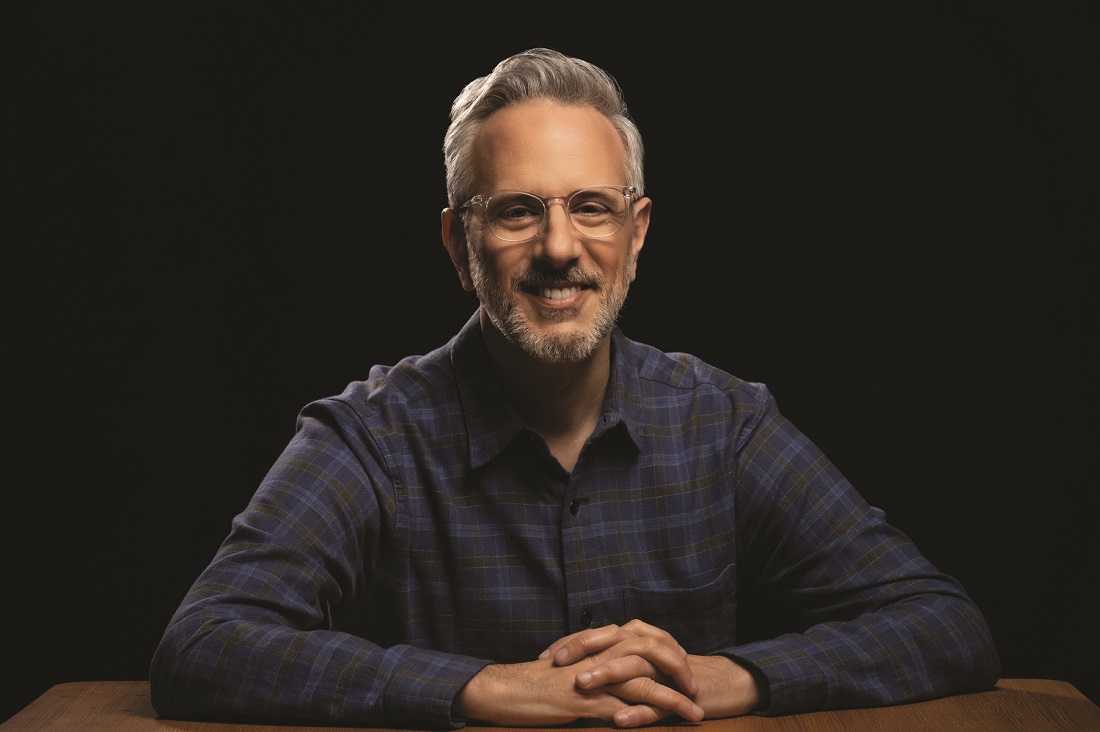
by Dov Kornits
Acclaimed documentary filmmaker Jeffrey Schwarz (Tab Hunter Confidential, I Am Divine, Vito, Wrangler: Anatomy Of An Icon) revisits a compromised gay 1980s classic and the real-life murder that inspired it with Mineshaft: The Cruising Murders.
“I think most documentary filmmakers are juggling several things at once, at least all the ones that I know,” says a characteristically busy Jeffrey Schwarz when FilmInk nabs the acclaimed documentarian on zoom. “That’s because you’re following the story, and sometimes it can take you down all these different rabbit holes that you don’t expect to go down. There are a lot of reasons why a film like Mineshaft took ten years to make, from the first steps toward reaching out to some of the stakeholders in the story, all the way to our world premiere, which was just a couple of weeks ago in Tribeca.”
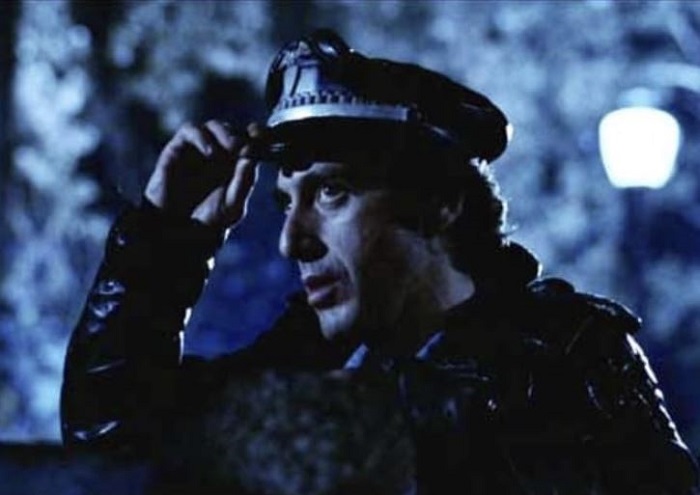
An openly gay documentarian with a keen, now highly developed interest in covering little-known gay-themed stories, particularly in the entertainment field, Schwarz has directed fascinating, highly entertaining documentaries in the likes of Tab Hunter Confidential, I Am Divine, Vito, Wrangler: Anatomy of an Icon and many more. He now turns his incisive eye to the controversial 1980 film Cruising with the utterly compelling and eye-opening Mineshaft: The Cruising Murders. Directed by William Friedkin (The Exorcist, The French Connection), this dark, disturbing thriller stars Al Pacino as a straight cop who goes undercover in New York’s gay, leatherbound S&M scene to catch a serial killer preying on gay men.
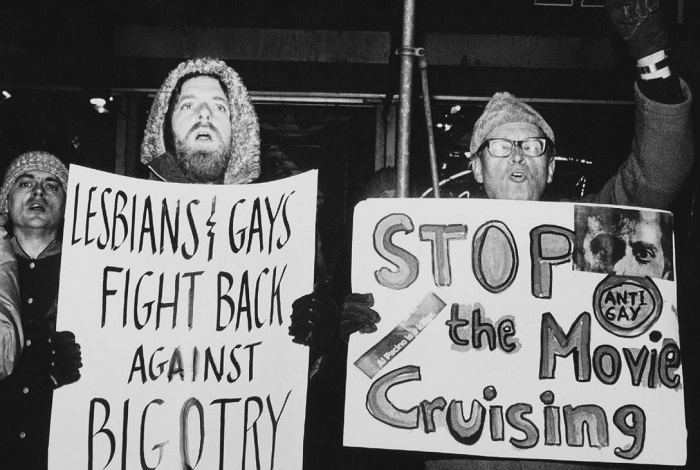
Partially inspired by the 1977 murder of longtime Variety film reporter Addison Verrill, and the subject of enormous protest both during its making and upon its release, Cruising has long been a polarising film, especially in the gay community, with some hailing it a brave, pioneering work, and others damning it as a homophobic, “gay panic” smear-job. Tackling the divisive nature of Cruising, its curious legacy, and the role that the murder of Addison Verrill played in it, Jeffrey Schwarz has delivered another essential documentary with Mineshaft: The Cruising Murders.
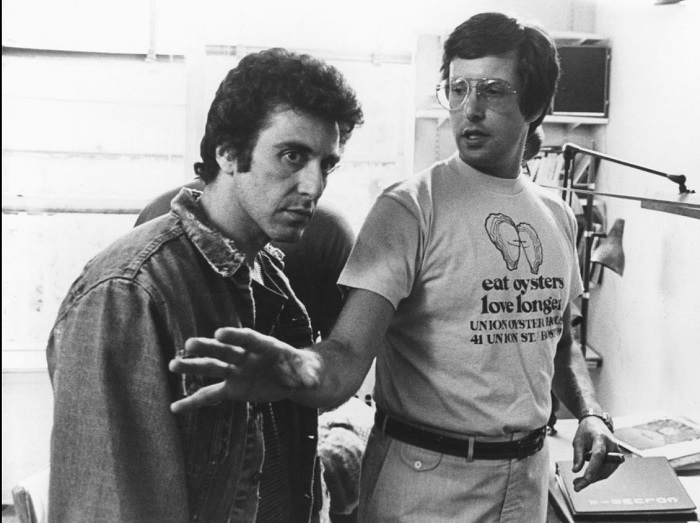
What’s your relationship to Cruising?
“I’ve seen that movie so many times. The conversation about where you come down on it is very complicated. That’s why I wanted to make this film. It’s a very complex issue. My memories of Cruising started when it came out. I was eleven. I remember seeing clips of it on [the movie review show] Siskel & Ebert. The images they showed weren’t all that violent, but there were images of this gay leather underground scene. Those images just burned into my head. I just knew right away that this is a forbidden movie. It was a controversial movie. I didn’t really have any concept of my own sexuality at that age, of course. But as time went on, I kept finding myself drawn to the film. And then when I was coming out, I read The Celluloid Closet, Vito Russo’s book about LGBT film representation and Cruising, of course, was a big part of that. Vito was there when it was being filmed and he wrote about it. He was not in favour of shutting down the film or censoring the film, but he did have a very particular point of view on it. He basically called it a homosexual horror film.”
There hadn’t been anything like it at the time…
“It was depicting a community that most people didn’t really know about. There were so few films about gay life, especially movies that were mainstream with big stars like Al Pacino. This was a mainstream movie that was going to be playing at your local shopping mall. It was really for a straight audience who had never had any experience of gay life. This is what they were being offered: a movie about an underworld… an important part of our community but not necessarily what a lot of the gay activists at the time wanted to portray as the mainstream of gay life. This was a time when we were trying to come out. We were trying to show the world that we’re your kid’s schoolteacher, we’re the grocery store clerk, we work at the bank, we’re just like you.
“And here we are in the world of Cruising, where we’re definitely not just like you. This was a violent world where you can be murdered for participating in the more extreme parts of gay life, of the leather world. But now what we’re left with is more of a time capsule… a film stripped of its incendiary nature. In 1980 when it came out, it was heavily protested. It’s always been this forbidden object. But over time, with everything that has happened since, it doesn’t have the power that it once had as a forbidden film.”
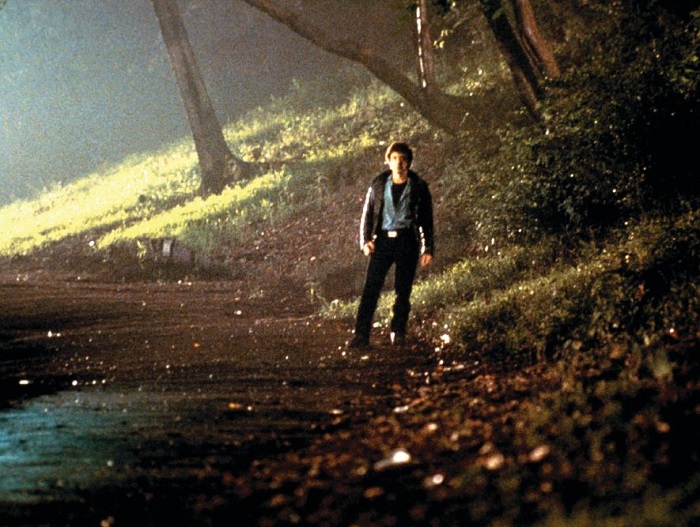
It’s a different beast now…
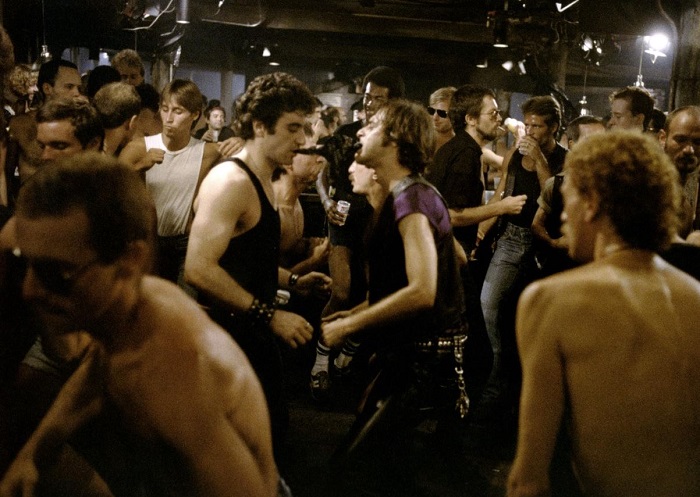
“Younger viewers can look at a world that is completely vanished. They look at a world that they never got a chance to participate in, especially the younger leather folk that I talked to… they love the movie. They understand that it’s complicated and that there are mixed messages going on in the film, but they also get a chance to see the world as it was in the summer of 1979. Those are the real bars. Those are actual leather guys who just walked in off the street in their gear to be part of the film. Young viewers get to see the sort of exuberant, celebratory, ecstatic nature of what those bars were like in the day. And yes, it’s filtered through William Friedkin’s perspective. It’s from a straight guy’s point of view who got off on the shock value of it all because he’s a filmmaker and he loves to shock. I mean, it’s the guy that made The Exorcist. He knew that that would be a world that people would be fascinated with; they were then and they are now.”
William Friedken isn’t in your film…he was still alive when you were making the doco…
“I definitely reached out to him. I’m a huge fan. I love his films and I’ve always been fascinated with him. I reached out to him early on and he shut it down pretty quickly. He was very hesitant about talking about Cruising, at least at that time because of the reaction the film got from the press, and from the community. He was raked over the coals, and I don’t think he’s a homophobic guy at all. I don’t think he had an agenda in making Cruising to come down one way or the other on what he was depicting. The movie does send some mixed messages for sure, but I don’t think he personally had an axe to grind with the gay community. In fact, he was fascinated by the gay community.”
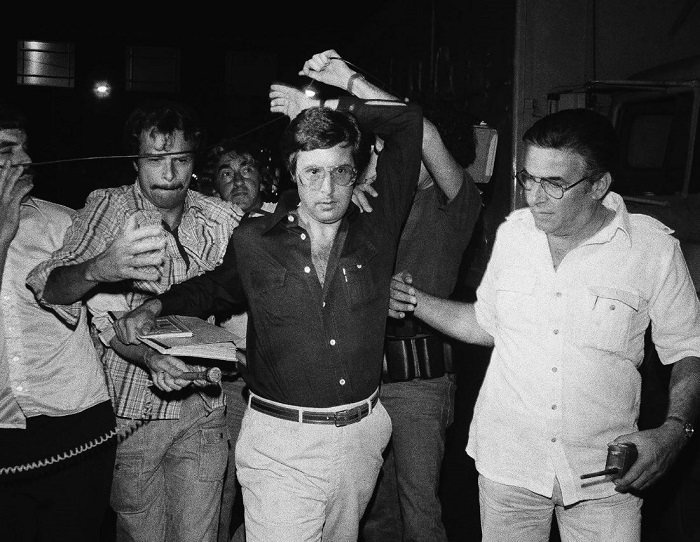
He was fascinated by the leather world. He was fascinated by the S&M subculture of the gay community at that time. He spent a lot of time at those bars. He went to The Mineshaft, undercover. Incredible…
“That’s what he says. I mean, if you’ve listened to enough of his interviews, he tends to exaggerate, but I think that’s part of why we love him. We tried to represent him as well as we could in the film through his own voice. There’s a lot of archival material that had never really been mined before. There’s this great press conference that he gave that we found in the archives of The Motion Picture Academy. There’s archival footage of him on news shows and things like that.
“And this is him without the benefit of forty years or more perspective. This is him in the thick of it. He really enjoyed the conflict and enjoyed the controversy, much like Paul Verhoeven did later when he was making Basic Instinct. There was a similar protest in the streets during the making of that film. That’s a whole other story. I hope William Friedkin would like the documentary. I feel that it treats him fairly and it treats him as an artist. This was the film that he set out to make.”
Did Cruising blow your mind when you first saw it?
“I first saw it after I read The Celluloid Closet. I wanted to go through every single movie that Vito wrote about and I wanted to see it. was fascinated with it. I mean, I could see that if you look at it a certain way, it is sending a message that gay sex equals death… that if you are going to participate in this, you’re never going to come out the same way again. Either you’ll be killed or you’re going to be shattered forever like Al Pacino is in the film. He goes in as the straight guy and who knows what’s going on with him by the end. He’s definitely broken by the end of the movie. It shows this shadowy side of gay life, a dangerous side of gay life, but it also shows this ecstatic exuberance as well.
“The movie itself is rather confused. A lot of that probably had to do with what was going on in the production, and how difficult the production was. There were a lot of changes made during the editing process. Friedkin mixed things up and he added multiple killers into the storyline. If you look at the movie closely, there are multiple killers. The killer at the beginning of the movie is not the killer that’s arrested, and the killer who walks into the bar at the very end, that’s the same killer at the beginning. There are at least three actors playing different killers. It’s very strange. I can’t explain what that’s all about other than it’s like there’s just no hope for this world. There are killers around every corner, so you better watch yourself.
“Now, at the same time, what fascinated me about this film was the mythology about it and the fact that it was inspired by a real murder of a gay man in New York City in 1977 named Addison Verrill. So you can’t say that this never happens…you can go home with the wrong person and you might be murdered in the middle of the night. That has happened, and it continues to happen. It happens to straight people too. In this case, it was gay-on-gay crime and it turns out that the killer who was arrested for the murder of Addison Verrill was a man named Paul Bateson, who was also a gay man. He had his own story, and we worked that into the documentary. He had his own strange connections to William Friedkin as well.” [A practicing radiographer, Bateson actually appeared as a radiologic technologist in a scene in Friedkin’s The Exorcist]
How did the doco evolve while you were developing it?
“I assumed this was going to be a more traditional doco about the making of this film, the protests around it, and the eventual reclamation of the film by a new generation as a gay classic. I knew that we would touch on the Addison Verrill murder, but what I didn’t know is that it would become such a big part of the film. Almost half the film is talking about Addison. The first step was to try to figure out who was around who could talk about Addison and tell that story. And through some detective work, we were able to track down Addison’s sister, who was in Canada. We wrote her a letter. She was, to say the very least, extremely surprised to hear from me.
“The murder of Addison Verrill was many, many decades ago, and it was probably the most traumatic thing that had ever happened to her in her family. It took some time to help her to understand what I was trying to do. I had to assure her that I was not trying to exploit her brother’s death in any way. I was trying to rehumanize him and to give him some of the dignity that he was denied by his murder and by all those sensational press articles. If you look him up on the internet, there are just a few little details about him here and there. There’s not a lot of information about him, but we found out a lot.
“Just before I called her, she told me that she had been thinking about Addison for the first time in a long time and she decided to go up to the attic and pull down a whole bunch of boxes with all his writings and photographs and memorabilia. And then she got my letter. There was something going on in the universe… I do believe that we’re all connected in some ways and something told her it was the right time to do that. And then she shared all that material with me. I got to know her brother. She also got to know him again. And the next step was to find Bob Geary, who was Addison’s partner at the time of his murder. That was another process too of just establishing a trust. It took him a little while to come around. So, we have both of them in the film. And then we were able to find a very close friend of Paul Bateson’s who wanted to tell that side of the story, which I’m glad we did. That has rubbed some people the wrong way.”
Do you feel as a documentarian that you have to be objective?
“I’m like a vessel, and I feel like the people in the film are the ones who are going to present their point of view. I wanted to present various points of view about Cruising itself. I presented various points of views on Paul Bateson and whether or not he is responsible for additional murders besides Addison’s. It’s not up to me to decide that. It’s not a true crime film where at the end we’re going to solve a murder. It’s not this kind of film. My feelings about Cruising hopefully come through in the film. I’m presenting the protestors’ point of view and I’m presenting the defenders’ point of view… you can watch the documentary, and you can watch Cruising, and then you have to make up your own mind about it.
“Friedkin splices in frames of hardcore porn in the murder scenes in Cruising. That is a judgment call in my mind. Whether or not he meant it that way, he is equating gay sex with death and murder. It’s almost like The Catholic Church could have made the movie. It’s still shocking to me to this day. But then on the other hand, there’s ridiculous dialogue that is so laughable that you just can’t take it seriously. At the same time as it’s presenting this hyper-realistic portrait of that scene, some of the dialogue that comes out of these people’s mouths is just ridiculous. He wrote many, many drafts. He wasn’t the first director to try to make the movie. There was a novel called Cruising that has nothing to do with the story of the film. Friedkin just took the title and made his own story. We didn’t cover that in the documentary, but that novel had been kicking around for a few years and Brian DePalma was at one point going to make that. Steven Spielberg was attached at one point. Richard Gere was attached to star. It would be fascinating to see other people’s versions of that same story.”
You’re making a Showgirls documentary next, is that right?
“Yes, yes. I’m hoping that’ll be out on the festival circuit next year. I’ve been working on that one for almost ten years. That’s another movie that was raked over the coals and crucified, and so was the star of the film.”
How do you feel about Mineshaft: The Cruising Murders screening at The Revelation Perth International Film Festival?
“I’m so happy it’s screening at Revelation. I’ve had films at the festival before. I’ve had the pleasure of being there in person, and I’m excited to hear what the reaction is. I wish I could be there in person to see it.”
Mineshaft: The Cruising Murders screens at the Sydney Underground Film Festival on Saturday September 12 at Factory Theatre. Click here for all tickets
