



by Stephen Vagg
In the late 1960s, the American television network CBS decided to enter the world of feature film production. There were a variety of reasons for this, including a desire to diversify and to ensure a constant supply of movies for television, but the main one was, we feel, “an attack of the sillies” – CBS got swept up in the romance of it all, and felt it could apply its entertainment know-how from television to film, as if the mediums and business models weren’t entirely different.
The network was further motivated by the fact that rival ABC was also getting into feature film production around the same time.
CBS’ motion picture arm – eventually titled “Cinema Center Films” – lasted around seven years (1967-73), producing more than thirty movies, and losing approximately $30 million.
So, it has been regarded as a failure, and we guess it was, certainly financially, but also it wasn’t, because the studio’s track record wasn’t bad. Indeed, part of the scary thing about the Cinema Center Films story is that the people who ran it made a lot of smart decisions, weren’t incompetent, and turned out some decent movies, but still lost a truckload of money.
That’s Hollywood for you. Or was there something else at play? Read on…
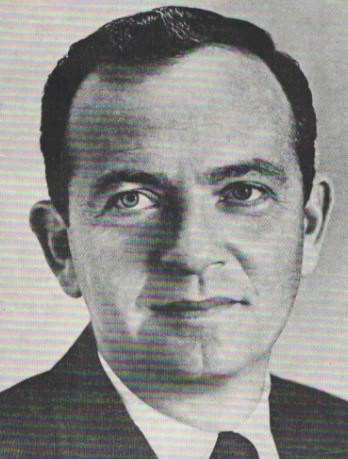 For most of its existence, CCF (we’ll use the abbreviation for convenience’s sake) was run by president Gordon Stulberg [left] in association with Jere Henshaw, who was vice-president in charge of production. Neither man was a hands-on filmmaker, but both had executive experience – Stulberg at Columbia, Henshaw at Universal – and they would work well together; so well, in fact, that when Stulberg left CCF to go to 20th Century Fox in 1971, Henshaw joined him (in the early 1980s, the two also worked together at Polygram Pictures). When they left CCF, they were replaced as head of production by Robert Rosen, but we think that it’s fair to say that Stulberg and Henshaw were the ones who greenlit the bulk of CCF’s films.
In 1981, Stulberg said: “It’s really crazy how I choose a script, particularly in original submission. I close my eyes and try to visualise whether the kids are going to line up in Westwood [a Los Angeles suburb] on Friday night to see it.”
What did he (and Henshaw) greenlight at CCF? By our count (and this may not be entirely accurate), CCF made 33 features during its existence. The movies were mostly distributed through National General Pictures, a US cinema chain, who had its own production company, leading to some confusion on various credit listings. Also, CCF often co-financed with other partners, so its films weren’t always entirely “pure CCF” pictures.
Still, we’ve managed to group the studio’s output into four broad categories:
1) Comedies
– a Doris Day “blended family” comedy – With Six You Get Eggroll (1968) (this was the first movie made by CCF);
– a Rock Hudson rom com – A Fine Pair (1968) with Claudia Cardinale;
– a Patty Duke rom com – Me Natalie (1969) with Al Pacino in his first role;
– a black comedy from theatre legend Hal Prince – Something for Everyone (1971) with Angela Lansbury;
– a pair of Jack Lemmon rom coms – The April Fools (1969) and The War Between Men and Women (1972);
– some animated musical comedies based on the Peanuts comic strip – A Boy Named Charlie Brown (1969) and Snoopy Come Home (1971);
– a children’s film, The Little Ark (1972);
– a Leslie Bricusse musical adaptation of A Christmas Carol – Scrooge! (1972) with Albert Finney (this movie probably deserves its own category, but we’re grouping it with comedies).
2) Action adventure
– some ostensibly pro-Indian Westerns with white stars: A Man Called Horse (1970) with Richard Harris and Little Big Man (1970) with Dustin Hoffman;
– some Lee Marvin vehicles: a thriller Prime Cut (1972) (which had Sissy Spacek in her first real movie role) and Western, Monte Walsh (1970);
– a pair of John Wayne Westerns: Rio Lobo (1970) (Howard Hawks’ last feature) and Big Jake (1971) (George Sherman’s last feature);
– a comic Dean Martin Western, Something Big (1971);
– a Wild Bunch-ish William Holden, Western – The Revengers (1972);
– an attempt to launch a franchise from John D. MacDonald’s Travis McGee novels – Darker than Amber (1970) with Australia’s own Rod Taylor;
– some Steve McQueen films – the road trip/coming of age period piece The Reivers (1969) and the Formula One racing movie Le Mans (1971);
– a British thriller from Joe Losey and Robert Shaw, Figures in a Landscape (1971).
3) Documentaries
– Blue Water, White Death (1970) – about sharks, with footage from Australia’s own Ron and Valerie Taylor;
– The African Elephant (1972) – about, well, an elephant;
– Come to Your Senses (1971) – about a social experiment;
– Cutting Loose – from the director of Blue Water, White Death about some youths taking a boat across the Pacific; made for $700,000, it was never released in cinemas.
4) Contemporary drama
– an adaptation of Mart Crowley’s off-Broadway stage hit about gay men, Boys in the Band (1970), directed by William Friedkin;
– several moody young man dramas released between 1969-71: stars included Michael Douglas (Hail Hero!, Adam at 6 A.M.), Beau Bridges (The Christian Licorice Store), Dustin Hoffman (Who Is Harry Kellerman and Why Is He Saying Those Terrible Things About Me?) and someone called Don Scardino (Homer);
– an adaptation of Peter Schaffer’s stage hit about Pizarro and the Incas which Stulberg financed because he considered it contemporary due to its theme of racial conflict – The Royal Hunt of the Sun (1969) with Robert Shaw.
Right. If we’ve overlooked a film, we apologise, but those are definitely the main ones. It doesn’t include films that CCF announced that were not made (The Looters from Peter Bogdanovich which sounds intriguing), or ended up being made by other studios (Lady Sings the Blues, Two Lane Blacktop).
Let’s look at the comedies first. The Doris Day vehicle, With Six You Get Eggroll, was a huge hit, as was A Boy Named Charlie Brown, which makes it odd that CCF didn’t make many other family style comedies. Animation takes time, we get that, but Day could have kept her film career going longer if she’d leaned more into mum roles. The Charlie Brown films were a risk by the company, and their success reflects well on CCF.
The Jack Lemmon films disappointed, but at least they had a profile, especially April Fools (War Between Men and Women is more obscure). Something for Everyone vanished and A Fine Pair didn’t reverse Rock Hudson’s poor box office record in the late ‘60s. Me Natalie has been forgotten but it made a little money. Scrooge! was a relative disappointment – maybe it needed to star Rex Harrison or someone else more obviously musical-ish than Albert Finney – but it has had a long life and we wouldn’t be surprised if it went into profit. CCF’s record on comedies was decent. None of the studio’s choices were inherently dumb – even the Harold Prince comedy was worth a risk.
Now for the action films. Appropriately cast stars in action is always a safe-ish bet because the movies travel internationally and have a long tail. CCF’s pro Indian movies were blockbusters: A Man Called Horse and Little Big Man (though the profits on both were reduced by cost overruns). The studio earned decent coin on the John Waynes, especially the surprisingly violent Big Jake; Rio Lobo (wheezy, sloppy, but fun) gets more attention because it was Howard Hawks’ last film, but Big Jake was the bigger hit.
The Lee Marvin movies underperformed – Monte Walsh is fondly remembered but not a hit; and Prime Cut, which Stulberg later called “terrible”, was a flop. (Both have cult reputations though – Monte Walsh was even remade.) Something Big proved that Dean Martin struggled to draw audiences in Westerns without a big name co-star; The Revengers failed to be Wild Bunch 2 but probably made a profit eventually. Darker Than Amber should have been better, lost money on its original run, but its fist fight scene became legendary. No one much seemed to like Figures in a Landscape.
CCF stumbled a little with its two Steve McQueen films, even though McQueen was one of the biggest stars in the world at the time. The Reivers enjoyed a reasonable popularity, though nothing like Bullitt or The Thomas Crown Affair. Le Mans was a famously troubled production: it lost its original director John Sturges, never locked down a script, costs blew out, CCF took over the movie from McQueen, box office returns were disappointing. It’s a huge cult movie among race fans though, and its ambition is admirable. Indeed, CCF’s action films were very respectable – varied, bold, interesting. If some didn’t turn out as well as hoped, they all tried to elevate the genre.
For documentaries, Blue Water, White Death (1970) was a huge success, and a big influence on Jaws. African Elephant and Come to Your Senses were not as widely seen and Cutting Loose was not seen at all. Still, we guess that profits from Blue Water covered these.
The dramas, however, are another story. They all flopped. All of them: Hail Hero!, Adam at 6AM, The Christian Licorice Store, Who Is Harry Kellerman and Why is He Saying Terrible Things About Me?, Homer, The Boys in the Band, Royal Hunt of the Sun. Not only did these flop, they made minimal cultural impact and almost all are forgotten today. None even became a cult movie – unlike say Two Lane Blacktop, which the studio was going to finance before it backed out at the last minute (Universal stepped in). The one exception is Boys in the Band, a generally admired version of the landmark stage play; the movie didn’t “cross over” into broad commercial success, but its reputation has lingered, which is far more than you can say about any of the others. It was definitely gutsy of Stulberg to make Boys in the Band – he admitted that he greenlit the film after With Six you Get Eggroll to prove that CBS weren’t just going to make old timey movies. The strategy didn’t pay off.
In May 1971, Stulberg admitted that CCF’s “failure has been in contemporary drama. That is like pursuing a will-o-the-wisp, hoping to get your picture to the market at exactly the right time, as with Joe or Easy Rider.”
CCF has a reputation as a conservative studio mostly because it was owned by CBS and its biggest hits were conservative (Snoopy, Big Jake, Eggroll). But one third of its output was super risky – it’s just that it was forgotten.
As mentioned, Stulberg and Henshaw were poached to work at Fox in 1971, and Bob Rosen became head of production. The following year, Rosen declared: “I think the future looks good. We’ve learned a great deal in four years. If there is a motion picture business out there, an operation like ours is in the best situation to succeed. With no overhead and no distribution company to feed, we don’t have to make ten features a year. We can afford to sit back and evaluable the market and plan accordingly.”
His optimism proved to be unfounded. CCF lacked a big hit in 1972, the losses piled up, and CBS pulled the plug on its filmmaking arm. Some CCF movies stayed in circulation; others kind of disappeared, contributing to the relative anonymity of the studio amongst film fans.
Looking back, Cinema Center Films did a lot of things right – it used established stars in genres which made them famous, offered a diversified slate, going with old veterans (Howard Hawks, John Wayne) but also new talent (Ulu Gosbard, William Friedkin, Michael Douglas, Sissy Spacek). We think it failed because of two main reasons:
a) Letting costs slip away. CCF signed expensive deals with big stars (Lee Marvin, Steve McQueen, Jack Lemmon) that gave it instant credibility as a studio but ultimately were not worth it. Also, the budget blew out on several of its productions (Le Mans, Little Big Man) and one film was never released (Cutting Loose); these things happen in filmmaking, but new companies really can’t incur that sort of cost.
b) Chasing the too cool for school youth market instead of leaning into its CBS-ness. Credibility is over-rated.
In fairness to CCF, the late ‘60s and early ‘70s was a tough time for Hollywood studios – cinema audiences were in decline, all the majors except AIP recorded losses in 1969, and all of the new feature film companies formed in the late 1960s alongside CCF (ABC, Cinerama, Commonwealth United, National General) went broke eventually, except for Roger Corman’s thriftily-run New World Pictures. Corman knew how to establish a studio – keep your costs low, follow trends, make genre pictures, and only go for credibility after you are financially established.
Stulberg worked at Fox for three years, during which time he greenlit some films that had their origin at CCF such as The Paper Chase (1973); he returned to law, but later had a stint as head of Polygram Pictures (Endless Love, The Pursuit of DB Cooper). Henshaw worked at Fox (where he hired legendary exec Alan Ladd Jr) and Universal before becoming one of the last heads of production at AIP, overseeing some of the studio’s biggest hits (Love at First Bite, Amityville Horror, Dressed to Kill) and flops (Meteor).
And so, CCF became a blip in Hollywood history. Although it wasn’t, because it left quite a legacy: Boys in the Band, A Boy Named Charlie Brown, Big Jake, Blue Water White Death, Le Mans, The Reivers, Scrooge!, Rio Lobo, Darker Than Amber, Little Big Man, A Man Called Horse… that’s not peak New Hollywood, but it’s not nothing either. Cinema Center Films (and its moguls) deserves to be better remembered.
