



By Danny Peary
The whimsical, disarming, slice-of life comedy, The Tenth Man, is the eleventh feature by esteemed Argentine writer-director, Daniel Burman. Titled El Rey Del Once in his native country, it is his fourth film with a lead character named Ariel, following Waiting For The Messiah (2000), Lost Embrace (2004), and Family Law (2006). In those three Buenos Aires-set films, the Jewish protagonist was played by Uruguayan actor, Daniel Handler, but this time, the older Ariel is portrayed by Argentine, Alan Sabbagh, and his terrific performance earned him the Best Actor Award at this year’s Tribeca Film Festival.
In the film, Ariel has left his past behind. After growing up in the close-knit Jewish community of Buenos Aires [El Once], he has built a new and to all appearances successful metropolitan life as an economist in New York. He is summoned back to his native city to rendezvous with his distant father, Usher, but for days they miss one another as Usher continues to issue instructions to Ariel for a plethora of unusual errands. Usher’s life’s mission, often to the detriment of his family, has been the running of a Jewish aid foundation in El Once. What ensues is a comedy of errors, of missed and found people and connections, as Ariel is drawn back into the community. After a few days, he meets Eva [the striking Julieta Zylberberg], a seemingly mute, intriguing woman who works at the foundation.
FilmInk spoke with the personable Daniel Burman in April during The Tribeca Film Festival.
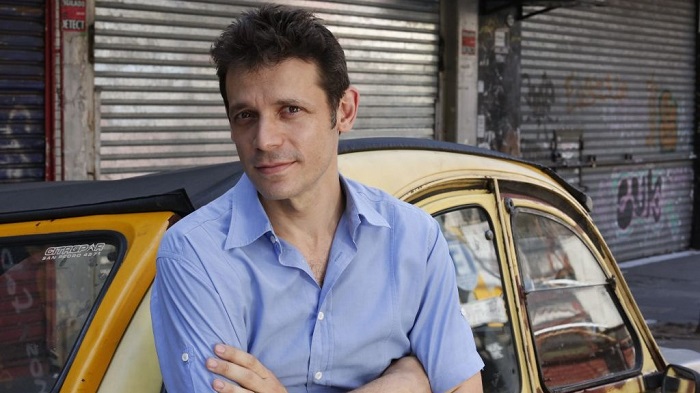
I recently saw Pablo Trapero’s The Clan, a political-crime film from Argentina. First question: Is there a film community in Argentina, and do all the filmmakers know each other? “Yes, there is, and I have known him for twenty years.”
Second question: Are your two completely different movies considered parts of genres, or are they both considered unique? “They’re not true genre films, but in Argentina, Trapero and I, as well as other filmmakers, are recognised for having our own particular styles. You can tell that The Tenth Man is a Burman movie and that The Clan is a Trapero movie. The majority of filmmakers have their particular styles, and their movies are seen mostly as auteur works. The concept of auteur still exists in Argentina, even if a film is of a specific genre, like Trapero’s.”
When Woody Allen started making his movies, there were a lot of copycats and people trying to imitate him. Did the same thing happen to you? “No, not at all. Woody Allen is worth imitating! [Laughs]”
Did you ever watch François Truffaut’s Antoine Doinel movies, with Jean-Pierre Léaud playing a recurring character? And were they an influence? “Yes, of course. I love those films, and I especially love how the characters fly above the story and aren’t buried in the story. In a sense, they kind of lean their feet on the surface of the film, like birds. In general, I reject intensity in all aspects of life and in films as well. I like lightness. You can actually access a deeper place in a story through lightness.”
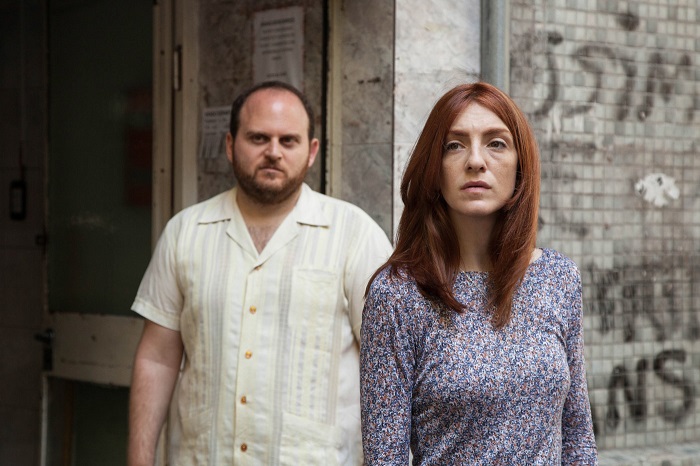
I read that you’d wanted to work with Alan Sabbagh for a long time. You cast him as Ariel, which is the name that Uruguayan actor, Daniel Hendler, had in your three earlier films. Is Sabbagh playing the same Ariel that Hendler played? “I don’t know myself. There may be something that has been transformed, but it has also to do with a generational break. It’s maybe the same character, but now he doesn’t agree with what he did in the first part of his life, in the same way that happens in real life as people get older.”
Could you have made this same film when you were ten years younger? “No. It’s important to have died a little bit to understand certain things.”
So it’s a more mature film than you would have made earlier in life? “Definitely.”
In one of the Ariel films, he wanted to go to Poland. But in this film, Ariel fled Argentina – specifically the old Jewish quarter of Buenos Aires – and went to live in New York City. Tell me why he went there. “I wanted him to go to a place that was the exact opposite of El Once. New York, with all its straight lines and its symmetry, seemed exactly the opposite. It’s a city where everybody has a specific place – the Chinese neighbourhood, the Korean neighbourhood – and where everybody is contained within a space. Whereas in El Once, in Buenos Aires, everything is mixed up, and life is much more chaotic. I was just running late on my way here to talk to you and I was walking straight through a traffic light as if there weren’t any cars. People were just staring at me because I was walking in a straight line. When would you do that in Buenos Aires? My rationale was, ‘Why would a traffic light be important there, if there are no cars?’ That kind of thinking symbolises the big difference between Buenos Aires and New York.”
When Ariel left Argentina, was it spontaneous or did he plan it for a long time? “He left escaping his father, Usher. I think he did it abruptly. He was escaping his childhood, and like every escape from childhood, you leave some traces along the path. So, you always have to go back. You can no longer move forward at a certain point if you can’t go back and pick up those pieces. That’s what Ariel does when he returns to El Once at the request of Usher. He basically goes back in order to move forward, but he decides to stay.”
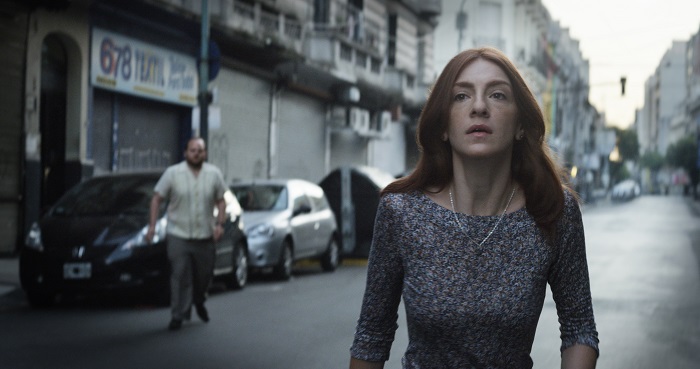
When he was in New York, did he go to synagogue? “No, I don’t believe so.” [Laughs]
Did he resist going? “He didn’t resist because that would mean that it is still with him. He had actually left it behind. He abandoned it. He decided to deny his religion. Denial is the most extreme act when establishing a distance from childhood; it takes up so much energy that you can do it only for so long. That’s why mothers are so exhausted after a while because they spend their lives trying to deny the fact that time is going by and that their kids are growing up. Denial requires a lot of energy, so he got burned out and that’s why he went back.”
Usher isn’t around, but he talks to Ariel on the phone. He seems to be orchestrating and manipulating his son in major ways. For instance, is his goal for his son to come back and meet and be with Eve? “It is part of a plan, but it’s not a Machiavellian plan. It’s kind of a natural plan. Usher’s making destiny move toward this particular place. He’s giving it a very soft push toward that place. He’s pushing his kid towards that destiny.”
I can obviously see why Ariel is attracted to Eva…she’s beautiful! Why is she attracted to him? “I was very interested in this idea of two characters that come from completely different places in life but at some point have their paths intersect. Something happens where they each can provide the other one with tools that one of them doesn’t need any more, but the other does. They exchange certain tools that are necessary for the other in life. Be it belief or faith in a certain religion or a certain naivety. Whatever the reason. So this exchange happens and you can call it love, but at a certain point, it will exhaust, and then each one will have to find a new path in life.”
The Tenth Man will screen at The 2016 Jewish International Film Festival, which will tour through Sydney (October 26-November 23), Melbourne (October 27-November 23), Canberra (November 10-20), Perth (October 26-November 6), Brisbane (November 10-20), and Auckland (November 10-20). For more on The Tenth Man, and to buy tickets, head to the official website.
