


By John Noonan
Under The Shadow, the directorial debut of, Babak Anvari, is set in 1980s Tehran, and sees a mother, Shideh (Narges Rashidi), and her daughter, Dorsa (Avin Manshadi), discover that there’s more to worry about than just the Iraq-Iran conflict, when their apartment block becomes the playground of a Djinn.
Tell me how your paths crossed because of Under the Shadow.
Babak: “Basically, before this film, I made a short film called Two And Two, which was nominated for a BAFTA. I signed with an agent in the UK, and he said, ‘What are you going to do now?’ And I said, ‘I have an idea for a Farsi language horror film, set in ‘80s Tehran. I want that as my first feature.’ And he just looked at me and said [laughs] ‘Are you absolutely crazy?’ And I said, ‘Unfortunately I am.’ I wrote the script and almost all of the producers that I met were like, ‘This is too risky.’ And [production company] Wigwam were the only ones who didn’t flinch.”
Oliver: “We’d seen Two And Two and thought, ‘Wow! That’s a pretty special film!’ We thought, ‘This is someone that we need to work with!’”
Babak, you’re originally from Tehran…
Babak: “Yes, I was born in Tehran, right in the middle of the Iran-Iraq war actually. And I left when I was 19. So I spent my childhood and teenage years in Tehran, and my adult years in the UK.”
When you were making the film, and even just writing it, was it stirring up memories of that time?
Babak: “100%. It all started by tapping into those childhood memories of wartime, post revolution Iran. I was the same age as Dorsa in the film, so I have vague memories, but the fears and the paranoia…they were the key inspiration. Because it was such a dark and intense time, it was a great setting for a horror film or psychological thriller.”
Were you raised on tales of the Djinn?
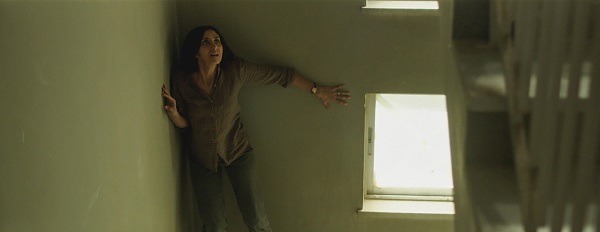
Babak: “Djinn were like the bogey man when I was child. You know how children tend to scare each other with tales? We used to tell each other, ‘Don’t go in that derelict building, because it’s haunted by Djinn.’ It’s a very popular myth across The Middle East, and every Middle Eastern country has their own take on it. Tehran’s is just one of them. But the key thing for me, in this film, was to make sure that an international audience got the idea that it’s an evil supernatural entity. Luckily, all cultures have them, whether it’s demons or poltergeists, so I didn’t have to delve too deep into the details.”
The film is set in Iran, but was made in Jordan. Presumably that was down to restrictions in Iran.
Babak: “Jordan is a fantastic place to recreate Iran. Obviously, we did tons of research to mimic ‘80s Tehran; we looked at family pictures and folders full of photos. We didn’t shoot in Iran because of the limitations. There are fantastic filmmakers in Iran, who work out ways to get around them. But having lived and worked in the UK for so long, I’d become so spoilt that I wanted to do the film and the story the way that I wanted.”
Oliver: “When you look at where Iranian films have been shot, it’s usually between Turkey and Jordan. And Jordan felt like the better fit for us. We even entertained the idea, because the majority of the film is in an apartment building, of actually filming it in the UK and having more control over it.”
Babak: “But we decided that was too much.”
What were your influences when it came to the film?
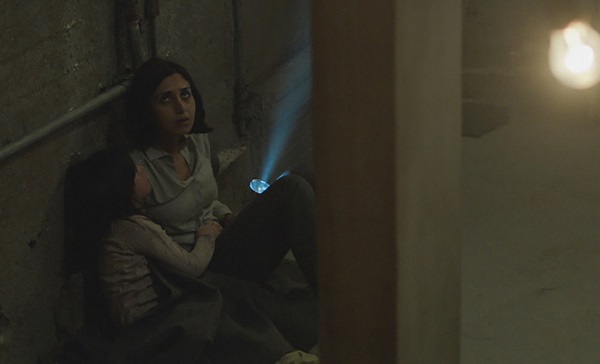
Babak: “The main source of inspiration was Roman Polanski: Rosemary’s Baby, The Tenant, Repulsion. Then obviously there’s Guillermo Del Toro and telling a surreal tale against a real backdrop. Other films influenced me atmospherically, like The Haunting from Robert Wise, and a great British film called The Innocents (Jack Clayton 1961). There were a lot of Iranian films as well, because I wanted it to have that signature of Iranian cinema. I wanted it to feel like a social drama before shifting bit by bit into a different genre.”
With the Iran-Iraq conflict in the background, at any point during production, did you think people would interpret this film to be political as well as a horror?
Babak: “To be honest with you, being born as an Iranian, no matter what you do, people will always think that you have a political agenda. [Laughs] I always get stopped for questions at airports.”
Oliver: “Tell them what happened yesterday…”
Babak: [Laughs] When I arrived in Melbourne yesterday, even though I have a British passport, as soon as I got to immigration, they looked at my place of birth and went, ‘We have a few questions to ask.’ They took me to one side and the gentleman was like, ‘Why are you here?’ ‘I’m a filmmaker. I have a film in The Melbourne Film Festival.’ ‘Which one’s that?’ ‘It’s called Under The Shadow.’ [Laughs] And he goes, ‘Oh my god! I just read about that on Twitch.com!’ He suddenly had a massive smile on his face going, ‘Welcome!’ [Laughs] I’ve never had that before.”
Did you think that something would be lost if the script was translated into English?
Oliver: “Well, Babak would write in Farsi, translate it into English, and we’d get that version. We’d then give notes. Then he’d go back into Farsi, write in the notes in Farsi, and then translate them back in English.”
Babak: “It was actually very useful, because it forced me to do revisions. Because as I was translating, I’d change things and then make those changes in the original script.”
Were there any particular scenes that you clung onto during the process?
Babak: “No, I think that’s the danger. You need to stick by your guns if you truly believe in something. But I think being precious for the sake of being precious is dangerous.”
What were the test screenings like?
Babak: “We only had one, but it was very, very helpful.”
Oliver: “They’re essential to any filmmaking process because you live inside a bubble for so many months or years and you need to litmus test it. The ironic thing is that the one person who just said, ‘I don’t like it’ was Iranian.”
Babak: “Every question had the response, ‘I just hate it.’ [Laughs] They weren’t explaining what they didn’t like about it. That’s not really helpful!”
And I believe Netflix has snapped up your film!
Babak: “Yeah, right before our Sundance premiere, which was great.”
Oliver: “They picked it up, so it goes worldwide in January. And we’re also doing the theatrical release in Australia in October, through Rialto, who have been extraordinarily supportive of this project. Independent cinema is just so important. Whether it’s for enjoyment or the culture. We suffer when the big cinema chains are taken up by tent pole franchises. It’s really nice to get something like Under The Shadow on the big screen. But we’re also aware that we’ve sold it to a VOD service, and a lot of people will get to watch it on their laptops.”
Babak: “The pretentious filmmaker in me [laughs], the ego, he would like people to see it first on the big screen. And then see it again, and again, and again on Netflix.”
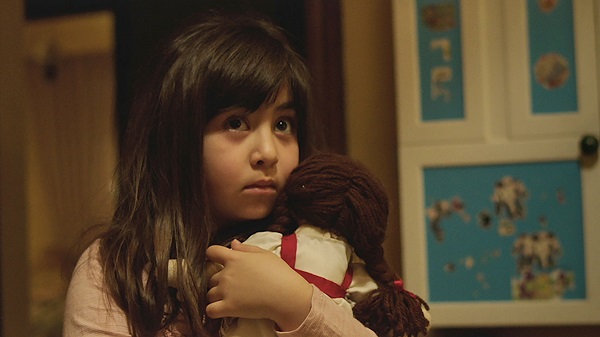
You have a great cast and, not to overshadow Narges Rashidi’s part in the film, but your young star, Avin Manshadi, has a lot to take on board during the film.
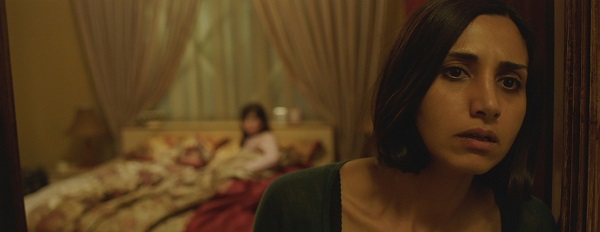
Babak: “This was the first time that she’d ever acted. We found her by approaching the Iranian community in London, and they recommended some children. I saw about a dozen children, and as soon as she walked into the room, I just knew that she was the one. Once I decided that he was my daughter, the producers faced a different challenge.”
Oliver: “Yeah, Avin is a refugee. Her family are refugees from Iran. And refugees don’t have passports. They have paperwork. Paperwork gets you around Europe. It doesn’t get you to Jordan. We had a couple of days before we left where we didn’t have the paperwork in place. We had conversations with the Jordanian government, and the embassy in the UK. It got to the point where we didn’t think that we could do the film, because it was simply Avin or nothing. Eventually, the Jordanian Royal family stepped in to help us and push things along, which was amazing. They didn’t have to do that. The production gods were on our side! We can look back on it in hindsight now and laugh, ‘Ha-ha! Do you remember that time when we didn’t have our lead actress?!’
So what’s next?
Babak: “It’s early days, but I’ve started writing my second feature with Wigwam. This one is more of a Hitchcockian thriller, in the English language this time. And I have a couple of other ideas that I’m just developing.”
Oliver: “And obviously, the romantic comedy trilogy.”
Babak: [Laughs] “Maybe Under The Shadow: The Musical!”
Oliver: “Well, if they can make Spiderman: The Musical…”
Under The Shadow is released in cinemas on October 6.
