


By Tom Derwin
The music of Brian Wilson and The Beach Boys is an iconic part of pop culture. It’s fascinating then that Wilson’s personal history remains largely unknown to legions of Beach Boys fans. In 1966, The Beach Boys released what many consider the greatest pop album of all time, Pet Sounds. It was an album that marked a sonic departure from their previous surf-pop hits like “Surfin’ Safari” and “I Get Around”, and heralded Brian Wilson as a genius. As Bill Pohlad points out in his unconventional 2014 biopic, Love & Mercy, The Beach Boys couldn’t be further from “beach boys” – they couldn’t surf and rarely frequented the coast, posing with boards only for press shoots. Theirs was a cultivated and mass consumed product that was as affecting and emotional as the story of the man who fronted them.
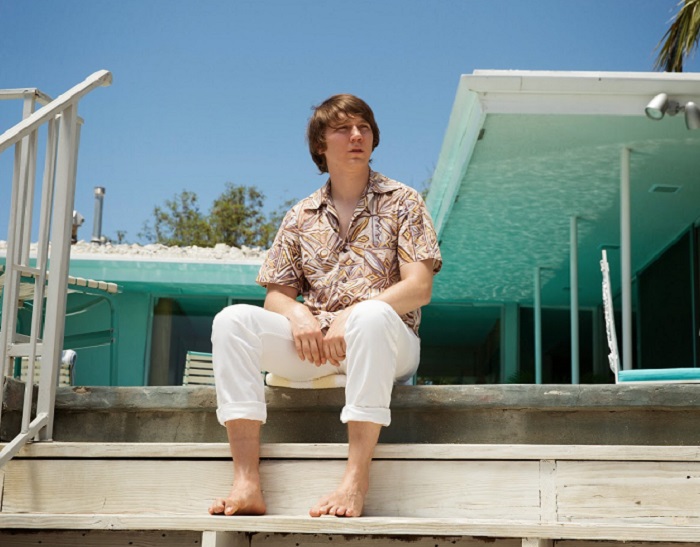
Bill Pohlad (a prolific producer who directed his first film here since 1990’s Old Explorers, and who sadly hasn’t directed another feature since) and screenwriter, Oren Moverman (who also penned the unconventional Bob Dylan biopic, I’m Not There), choose to tell Wilson’s story as a diptych, two timelines of a man at two very different stages of his life, some twenty years apart. Using the creative period surrounding the recording of Pet Sounds and Wilson’s experimentation with hallucinogenics, we’re given sixties California through the lens of Wilson, played masterfully by Paul Dano (There Will Be Blood). Wilson’s Pet Sounds-era creativity is contrasted against a very different Brian Wilson of the eighties: an over-medicated, schizophrenic shell of his former self.
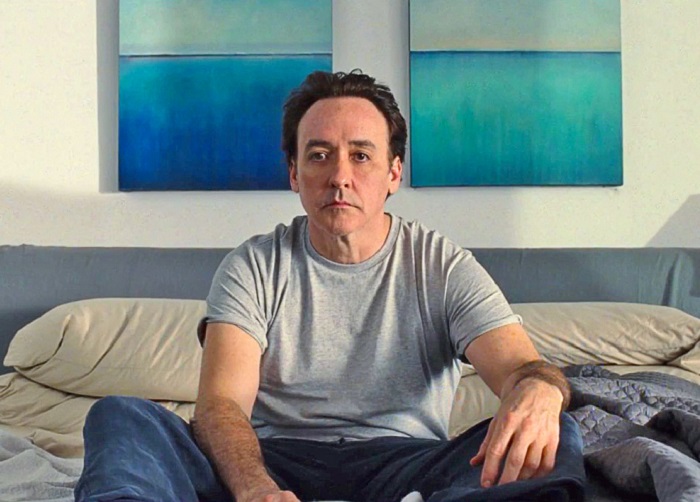
Now in his forties, John Cusack’s Wilson is first shown on screen buying a new car. He is an unusually placid man, taking his Nikes off so he doesn’t get sand in the car. As he chats to the model-turned-car-dealer, Melinda (Elizabeth Banks in her finest role), he casually mentions his abusive relationship with his father. This is as shocking to the viewer as it is to Melinda. She handles the situation lovingly before she even knows the man. This is Pohlad’s way of introducing the second chapter of Wilson’s explored life – a period of constant drugging and abuse by therapist, Eugene Landy (Paul Giamatti), told from the perspective of his future wife, Melinda.
The skill of Love & Mercy lies in Pohlad’s ability to weave these two very specific periods together, while also making them as detail-rich as possible, allowing much of Wilson’s life to be fleshed out over two hours. This would not be possible without the fantastic performances of Dano and Cusack. Dano brings not only a physical resemblance but also a darkness, adding depth to the gentleness and sensitivity of a young Wilson. Portraying the creative genius of Wilson during the sixties, Pohlad brings to life the meticulous studio sessions that went into Pet Sounds, with dozens of musicians (and the occasional animal) playing every instrument that you could think of, often for hours on end, to perfect Wilson’s vision. His relationship with sound is one of paradox, and it’s during this period that the mental and sonic agitations begin to creep into Wilson’s head. There is a particularly tense dinner scene at his California house where Wilson’s illness is exposed to his band mates. Pohlad focuses his camera on idiosyncratic movements and sounds tersely made by Wilson’s band mates and guests. The aural assault builds until Wilson can no longer take it, exploding in a fit of rage at his friends. But these early signs of psychosis are nothing compared to what is to come.
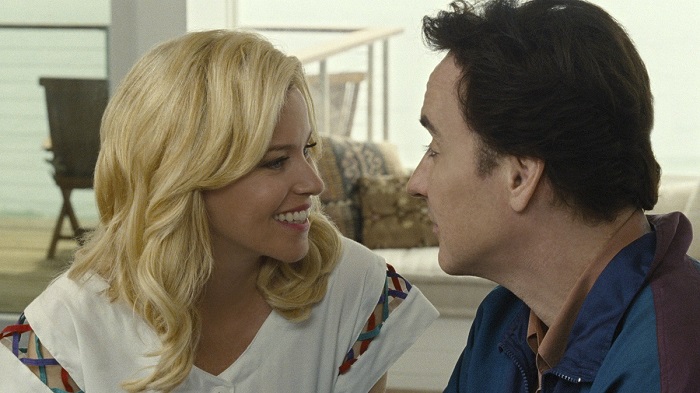
Equally brilliant as Wilson is John Cusack. At the hands of his therapist, Eugene Landy, Wilson is kept in an over-medicated state, manipulated by his therapist to feel helpless. Cusack lulls in a trance, as placid as Snoop Dogg at the height of G-Funk. A tender moment with Melinda is very soon contrasted with a panic attack – what’s real and what is not is as blurred as Wilson’s mental coherence. Pohlad treats these scenes with both love and mercy; it can almost appear as his own sort of protection of an idol. However, in the hands of Banks and Cusack, there is believability in love’s redemptive power.
As a producer, Pohlad has worked with directors like Terrence Malick and Steve McQueen. He has also produced a raft of music-centred films like The Runaways (2010) and A Prairie Home Companion (2006), so it’s no surprise that he brings a focused vision to Love & Mercy. Particularly interesting is his pivotal use of sound throughout the film. Balancing the songs of The Beach Boys with Atticus Ross’ score, Pohlad effectively takes us inside the head of Brian Wilson. What is at one moment gentle quickly turns horrifying with the use of sonic shifts. Love & Mercy captures the fragility at the core of Wilson’s genius, and paints an entirely different portrait of Wilson and his Beach Boys. As Wilson beautifully sings in the closing credits, “Love and mercy, that’s what you need tonight/Love and mercy to you and your friends tonight.”