


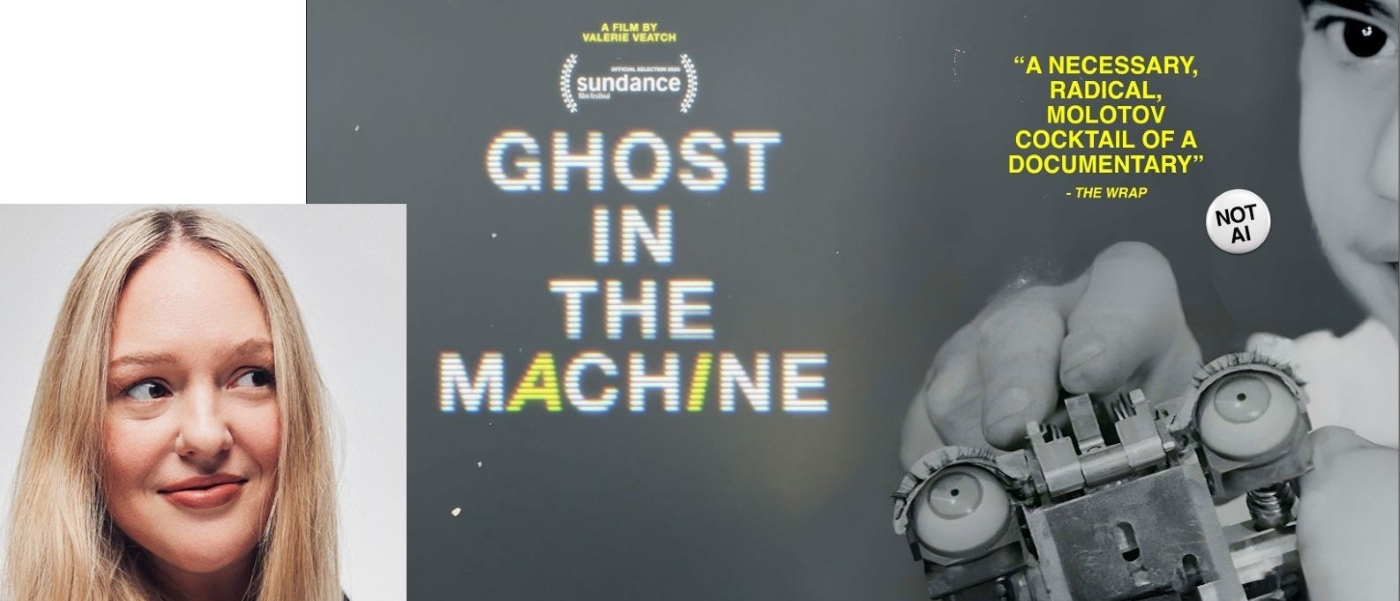
by Anthony Frajman
The topic of AI is one that continues to dominate, with hype for the technology arguably at an all-time-high.
Yet, few seem to be asking questions about the impacts of AI and what it actually is.
Amidst the hype, Valerie Veatch’s documentary, Ghost in the Machine, attempts to examine the origins of AI and asks difficult questions about the technology.
AI is the big issue at the moment. What compelled you to make Ghost in the Machine?
 “In October of 2025, my friend signed me up for the Sora artist group, OpenAI’s video generator before they launched their product. I was just amazed that this technology existed where you could just give it an image and it would come to life. And the rhetoric around this technology was soaring. It was going to democratise filmmaking and collapse the barriers of access to making super imaginative visual content.
“Like anyone experimenting with this technology, almost immediately I noticed and experienced the outputs to be horrifically racist and sexist. And as a filmmaker, as a feminist, as a woman filmmaker, the intentional production of images is sacred. And that, to me is what we do as storytellers and why this technology felt deeply different and fundamentally flawed.
“I approached OpenAI about this, and basically, it was like cringy that I was bringing up that this technology was so problematic. And then I started just researching and looking at white papers and looking at footnotes and contacting researchers. And over the following nine months or so, this story emerged, and there’s over 40 people in the film.
“It’s amazing how there’s a story that everyone’s telling about this technology … And that story is not a story of technology. It’s a story of power and how power functions and how we got here in this moment we’re seeing with the consolidation of authority via technology.”
What do you make of the current conversation about AI?
“I think on every level it is problematic. The moment that we anthropomorphise these systems, we start to lose traction. To perceive these systems as performing human level intelligence is to engage in all of these ideologies that trace right back to super exploitive hyper-capitalist, colonial-like problematic ideas. Right now, there’s a lot of noise in this space around AI. And one thing that I’ve learned in making this film is that there’s a kind of camp of thinking where people are really engaged in existential risk of super-intelligence, whatever that is. It’s not a real thing. It’s gonna climb out of the computer and create the singularity and it’s gonna take over everything. It’s that kind of anxiety about how people perceive this technology that drove me to make this film.
“Bernie Sanders in America, beloved senator, he goes into the Senate and he decries Superintelligence and expresses this existential worry. And I think the problem is we focus on this existential concern, which is not real. We overlook the actual harms, the real things that are occurring, the environmental damage of datacentres. You know this in Australia quite well, the data theft, which apparently, we’re now fine with. And also, the ways that these systems do function, which is facial recognition, border control, ways that extend autocracies in really invasive and scary ways.
“I think that the dialogue, while focusing on existential risk, overlooks the real harms that are occurring because of the technology.”
What were some of the biggest challenges of making Ghost in the Machine?
“Compressing all of this really relevant information, that when stacked together, tells the story. And wanting to make sure that each beat has enough time. So, compressing an immense amount of information into a 90-minute format. It’s interesting, young people really love the film and are like, ‘oh, it kept my attention’. And I’ve noticed that some folks who are a bit older, it is so much information, and I have compassion that it can be a viewing experience that’s not for everyone. So, one of the things I’m doing right now is I’m recutting the film for broadcast length. I’m trying to take in some of that feedback and how to jam all the information in, but not make it feel like a fire hose.”
Were you conscious of how much you used AI in making the film?
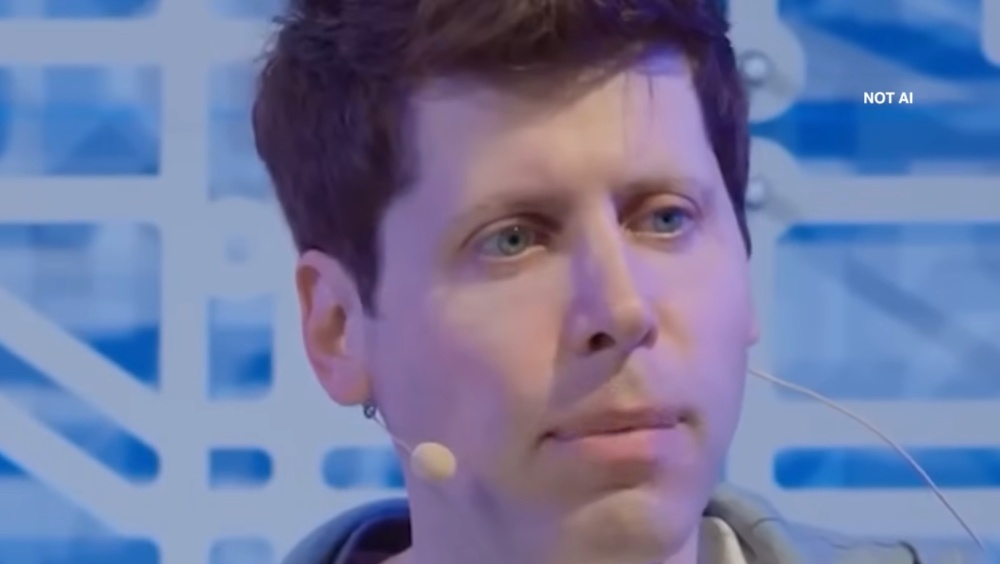
“Totally. This is a topic of huge discussion. I use generative AI video in the film as a punchline, it’s like, we’re talking about the singularity, and then bros are podcasting about the singularity. And then there’s a microphone with no cable, a coffee cup with no handle. Those things are meant to underscore the absurdity of the whole endeavour. And then, the tradition of feminist video art, internalising the aesthetic of the oppressor and then deploying it in critique, was sort of the gesture. The degree to which that has landed, I’m not sure, but it was an experiment.”
Do you have thoughts on the future of AI if it’s not regulated?
“The reining in of AI needs to be about looking at how do we create community. How do we centre care? How do we dismantle the destructive aspects of capitalism? All of those things will keep AI in check. Regulation around where and how to build hyperscale data centres.”
What do you hope audiences get out of watching the film?
“That’s a really good question. Right now, I’m just cutting the trailer, so I’m like, ‘out of all of these things, what are the takeaways?’ And the first thing is that computers cannot think, that is an invented concept. And rather than computers being able to think, we’ve reinvented thinking to be something computers can do. And when we do that, all manner of power consolidation, wealth consolidation, technological monopolies happen and we are looking at this fantasy enemy instead of the real political work and community work to be done. That I think is the point of the film.”
